

Property owners along the Southeastern coastline rely on docks for recreational boating, fishing, and waterfront access. However, constant exposure to saltwater, storms, marine life, and shifting tides results in significant wear and tear. Deteriorating wooden pilings, rotting decking, and damaged supports require timely repairs to ensure safety and functionality. Regular maintenance is essential to prevent costly damage and extend the lifespan of these structures.
Understanding Dock Damage: Common Issues
Docks face several common issues that often require repair. One of the most frequent problems is wood rot. Constant exposure to moisture weakens timber planks and beams, potentially leading to structural collapse. Saltwater is also highly corrosive, damaging metal components such as bolts, brackets, and railings. Storms bring high winds, heavy rains, and surge tides that can destabilize or break dock sections, leaving them unsafe. Regular use, including foot traffic and boat movements, causes decking to splinter or become slippery, increasing the risk of accidents.
According to Austin Porter of Shoreline Plastics, the condition of the pilings is the most critical aspect of dock maintenance. “People often aren’t aware that their pilings are in bad shape until it’s too late and extremely costly to repair,” Porter said.
The Hidden Threat of Shipworms
Shipworms, a type of marine mollusk, burrow into wooden pilings and feed on cellulose. Over time, they create extensive internal damage, leaving pilings structurally unsound. Porter explains that the damage is often invisible, as the exterior of the pole may appear intact while the interior is severely compromised. A simple test, such as poking a screwdriver into the wood, can reveal whether the piling has become soft and mushy.
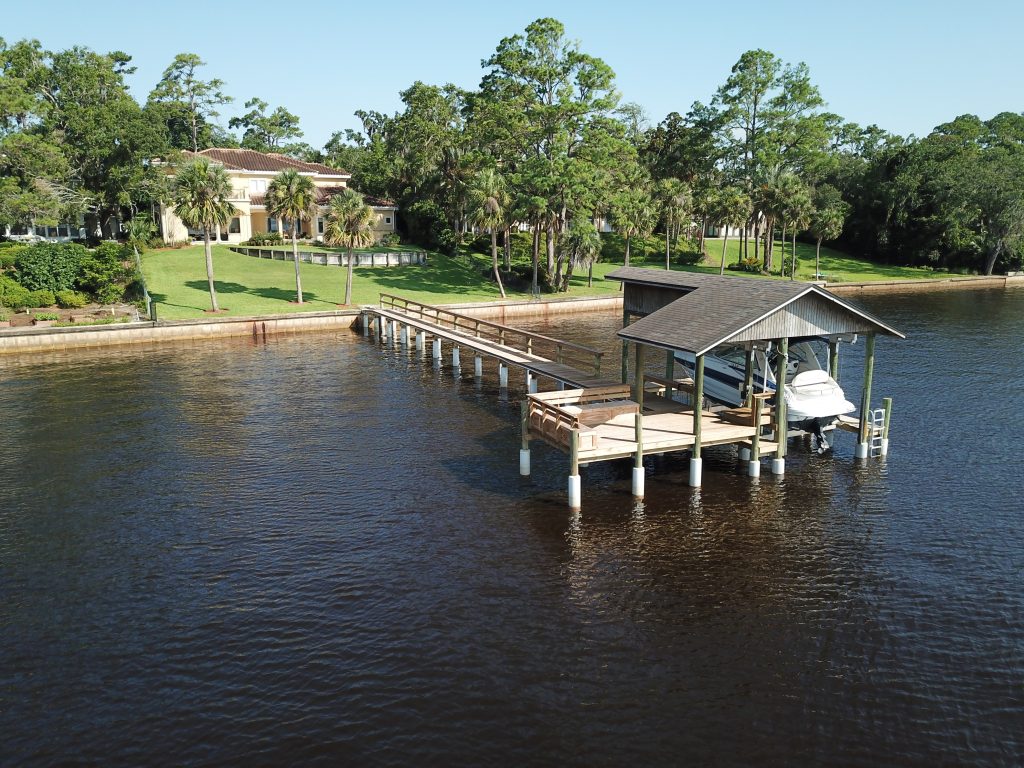
Storms or heavy tidal surges can cause severely weakened pilings to collapse. Preventive treatments and regular inspections are essential to protect docks from these destructive organisms. Porter notes that the problem has become more prevalent in recent decades due to cleaner water, which supports more marine life, and the use of genetically engineered, less-dense wood.
Steps to Assess Dock Damage
Before starting repairs, dock owners should thoroughly inspect their structures. Rotting wood, loose fasteners, and rusted metal components are common signs of damage. In tidal areas, low tide provides a good opportunity to examine pilings for wormholes, which indicate internal damage. Even if the exterior of the pilings appears fine, wormholes often suggest severe internal deterioration. Porter emphasizes the importance of inspecting all pilings, as damage is often widespread rather than isolated.
DIY Dock Repair Tips

The SnapJacket Solution
The SnapJacket is a high-density polyethylene (HDPE) jacket designed to repair and protect wooden pilings by creating a protective barrier against water and decay. The system involves sliding the jacket over the piling, securing it with a locking device, and filling the void with concrete. This process strengthens the piling, kills any organisms inside, and provides long-term protection from further damage.
Porter explains that the SnapJacket is designed to be cost-effective and accessible for DIYers. Its lightweight material makes installation easy, while its advanced weather-resistant design ensures durability. Once installed, the SnapJacket preserves the piling by fossilizing the wood inside, preventing future deterioration.
Dealing with Major Dock Damage
For significant structural damage, the SnapJacket provides an effective alternative to full piling replacement. Traditional jacket systems, often used for commercial or government projects, are expensive and challenging to install for small-scale operations. The SnapJacket simplifies the process, making it feasible and affordable for residential dock owners.
Materials Used in Dock Repair
Dock repair requires a variety of durable materials to ensure longevity and safety. Treated wood is commonly used for decking and pilings due to its resistance to water and decay. Steel, aluminum, and concrete are often incorporated into areas requiring additional support. Epoxy adhesives and coatings are useful for sealing joints and preventing water infiltration, while marine-grade paints protect metal components from corrosion and UV damage.
Sustainable Dock Repair Options
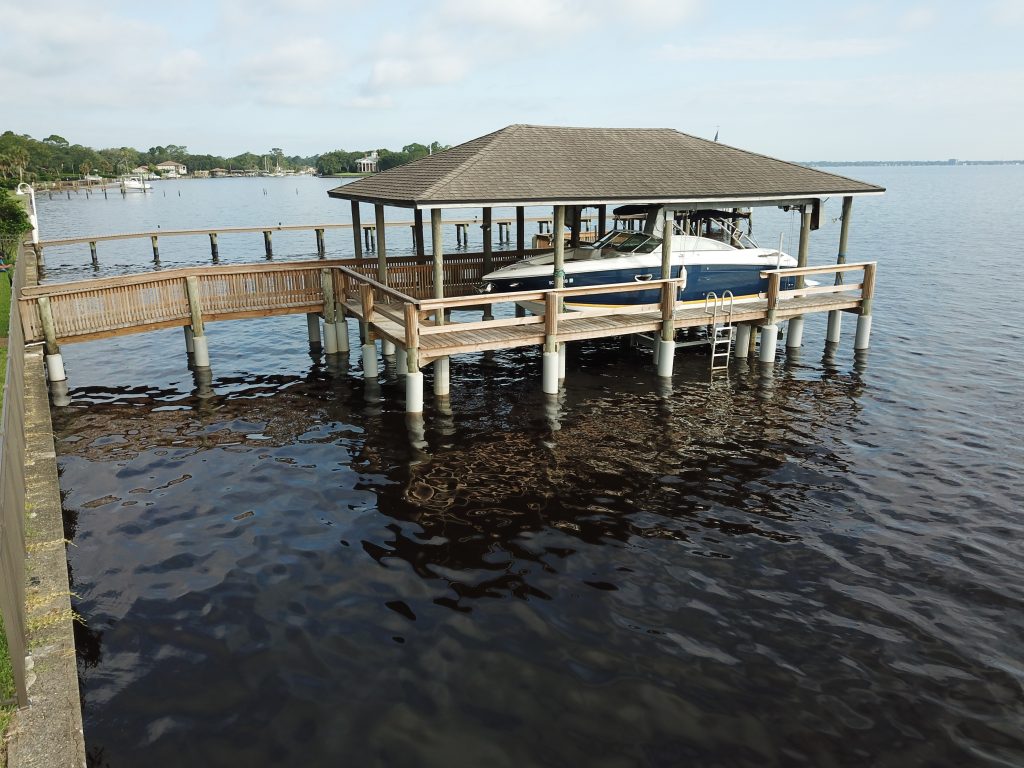
Sustainable repair practices help minimize environmental impact while ensuring long-term durability. Recycled plastic lumber and sustainably sourced wood are excellent alternatives to pressure-treated wood. Marine-grade aluminum and stainless steel offer corrosion resistance and require fewer replacements over time. Non-toxic, biodegradable sealants and paints protect water quality and aquatic life.
The SnapJacket is an eco-friendly option for piling repair. Its recyclable material eliminates the need for new wood and avoids the use of harmful chemicals. By extending the lifespan of existing pilings, the SnapJacket reduces waste and promotes sustainability.
Weatherproofing and Long-Term Maintenance Tips
Weatherproofing is essential for protecting docks against the Southeastern coastline’s harsh environmental conditions. Applying marine-grade sealants, waterproof coatings, and anti-corrosive paints protects wooden and metal components from water, UV rays, and weather damage. Using pressure-treated lumber, marine-grade aluminum, and stainless steel further enhances durability. Routine cleaning to remove algae, barnacles, and debris prevents corrosive buildup and extends the dock’s lifespan.
For docks equipped with SnapJackets, maintenance is simple. Pressure washing keeps the jackets clean, while innovative cleaning tools, such as floating scrubber rings, can help remove debris. By maintaining and weatherproofing their docks, owners can ensure functionality and safety for years to come.
Conclusion
The Southeastern coastline’s challenging environment demands durable materials and innovative solutions for dock repair. Regular maintenance and advanced options, such as the SnapJacket, enable dock owners to preserve their structures and minimize environmental impact. By addressing repairs promptly and using high-quality, sustainable materials, dock owners can enjoy safe and functional waterfront structures for decades.