
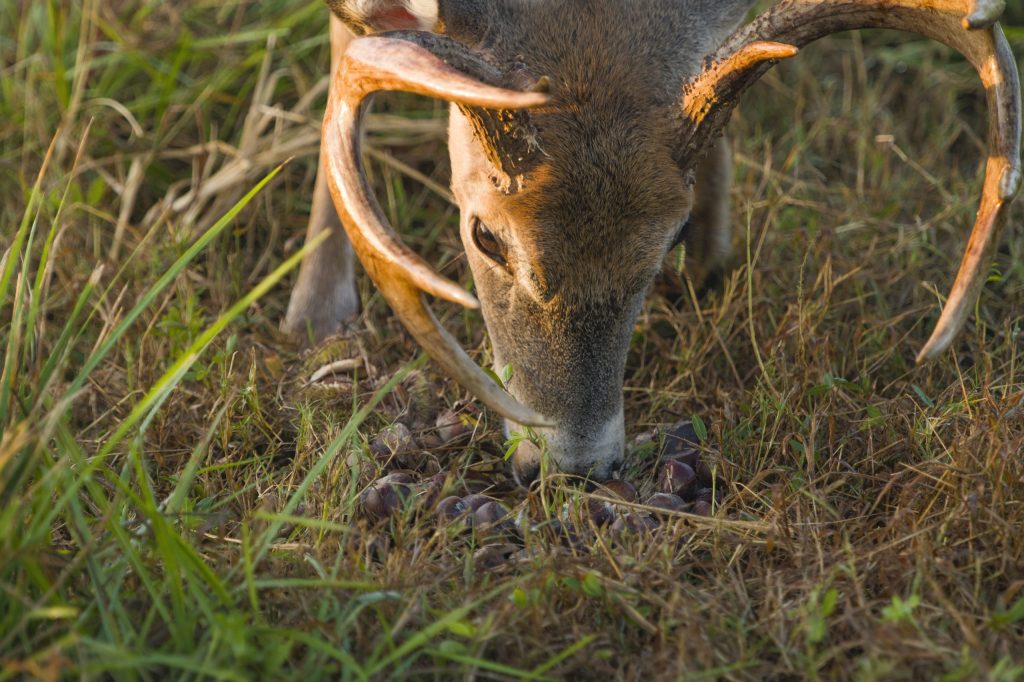
If you want to hold and keep deer on your property, delicious and nutritious chestnuts can do it. Sadly, few Americans have actually even seen a real chestnut. The American chestnut, which produced the healthiest, most attractive mast crop for deer, was wiped out by a Chestnut Blight introduced from the Orient in the early 1900s. Fortunately, hunters can plant the hybrid Dunstan chestnut, which is blight-resistant and produces a tasty and nourishing nut ideal for attracting and keeping deer on your property.
The Chestnut Blight
Iain Wallace, the CEO of Chestnut Hill Outdoors, a nursery and tree farm famous for being the originators of the Dunstan chestnut tree, says over a span of 40 years, the Chestnut Blight killed more than 30 million acres of chestnut trees from Maine to Georgia and west to the Mississippi. The chestnut blight caused a nutritional loss that was tremendously detrimental to both wildlife and people. In addition, the chestnut’s disappearance amounted to millions of dollars in economic loss. The blight is considered by many to be the worst ecological disaster in American history.
He says the chestnut’s rapid disappearance was especially devastating because chestnut trees produce delicious nuts that provide essential nutrients that play an important part of a deer’s diet, as well as other species, such as bear, elk, squirrels, turkeys and more, especially as they prepare for winter.

Fortunately, in the 1950s, James Carpenter discovered a surviving American chestnut tree in a grove of dead and dying trees in Ohio. He sent budwood to Dr. Robert T. Dunstan, a well-known plant breeder, who took stock cuttings from the blight-resistant tree and crossed them with a Chinese chestnut, which was naturally resistant to the blight. Dunstan then crossed the seedlings from the first cross back to both parent trees.
These future varieties would eventually become known as Dunstan Chestnuts, which are now widely considered the No. 1 food plot tree in America.
Bred specifically for orcharding, the Dunstan Chestnut produces large-size quality nuts with a sweet taste that are easy to peel. Most importantly, it is resistant to the blight.
The No. 1 Food Plot Tree in America
“Chestnuts are widely recognized as the perfect food plot tree, but when asked, many a hunter will say that oaks or acorns make a good food plot tree. And they’re right. They do. Acorns are a good and healthy source of fat and protein. But acorns have a significant amount of tannic acid, which makes them bitter to the taste. Although deer will eat them for nutrition, they prefer chestnuts. Deer have thousands more tastebuds than humans and are sensitive to bitter-tasting tannins. On the other hand, chestnuts have very little tannin. They are sweet, delicious and highly nutritious and deer are naturally attracted to them,” Wallace said.
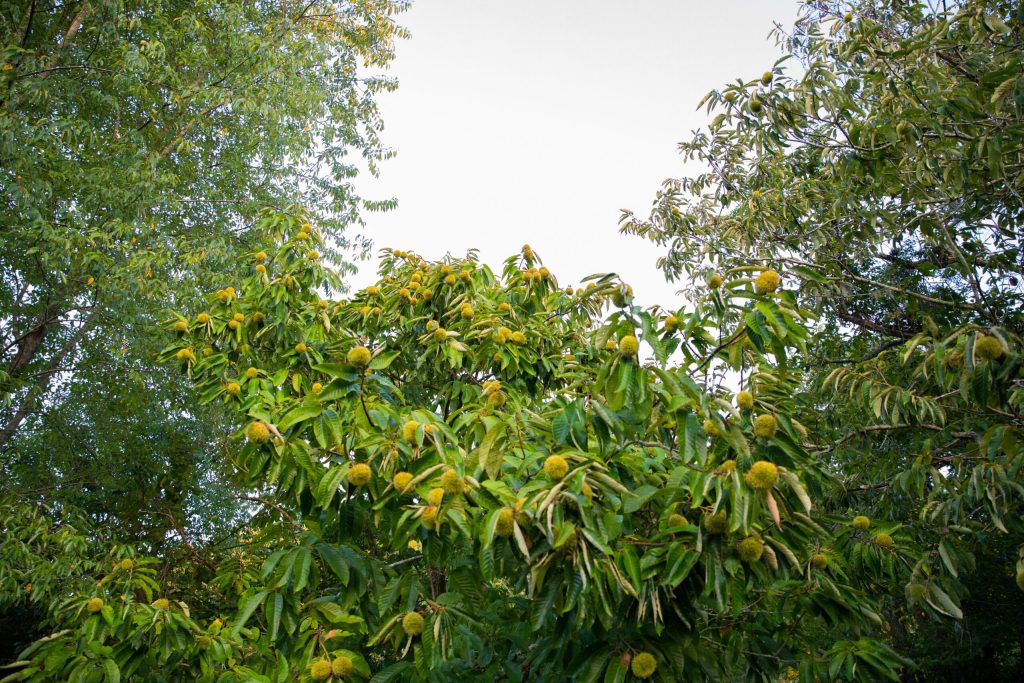
This hardy, fast-growing tree has a vast growing range that stretches from Florida to Wisconsin. Dunstan chestnuts bear nuts in three to five years, compared to 10 to 20 years for oaks.
“Chestnuts flower heavily during the spring, providing homes for pollinator species, benefiting all kinds of bugs, birds, and local wildlife. Many other animals feed on the nuts, from small animals like squirrels and chipmunks, to turkeys, hogs and deer. Chestnuts also produce nuts every year, whereas many oaks species will only produce once every two to three years. The tree is very productive yielding anywhere from 2000 to 3000 pounds per acre. The chestnut tree has a very long lifespan and will produce these benefits with very little upkeep for generations,” Wallace said.
As a Food Source
Not only are chestnuts tasty to deer, but they are very nutritious as well with a high amount of carbs and protein. They are comprised of approximately 40 percent carbohydrates, five to eight percent protein and two percent fat. That high carb percentage is important to pack on energy and fat before the winter months. This highly nutrient-rich food source provides critical energy during the rut in the fall.
Easy to Plant and Grow
Chestnut trees will keep your deer herd coming back year after year because they will learn there’s a consistent food source that’s available at times the trees are producing. The trees will ensure the deer will stay more on your property than your neighbor’s property.
Unlike typical foliage-based food plot crops, chestnut trees don’t have to be replanted, tilled and maintained at certain times of the year to keep the nutrition choice producing. After planting, a chestnut tree will need to be maintained for the first couple of years, but after that point, it will be a self-sufficient food source that will be there, possibly for the lifetime of the human who planted it.
How, When and Where to Plant
Wallace says you really can’t go wrong by planting your chestnut trees in the spring or fall, and you can even plant year-round in warmer climates if the ground doesn’t freeze.
“Most people plant their food plot trees in the spring, when things start to green. Spring is a great time to plant, but planting in the fall can be beneficial as well. In the fall, plants start to go dormant for the winter, which means they won’t need as much water and nutrients as they would in the summer, so they’re easier to care for. The roots will grow during those dormant months, establishing the plants in the environment,” Wallace said.

Wallace says that soil conditions and location are even more important than time of year when it comes to the tree’s health.
He stresses that the trees need to be planted in well-draining soil to thrive. If you don’t know what type of soil you have, you can take a sample to your local ag extension office for testing.
Choosing a Location
“The three types of soil are clay, sandy and sandy loam, and each type has a different level of water retention. Chestnut trees can’t be planted where there is standing water or they will get root rot and die. You need to know if your soil will retain or drain a lot of water so you will know how much and how often you need to water your trees. Sandy soil will drain, clay may hold onto water and sandy loam is somewhere in the middle,” Wallace said.
When picking a location to plant your chestnut trees, choose an area with six to eight hours of sunlight a day. The edges of food plots often make a good location. If you are planting in the forest, pick tree fall gaps or open areas where the trees can grow toward the sunlight. You’ll also need to be careful of spacing. Trees need to be planted at least 35 to 40 feet apart.
Study the movement of wildlife on your property and plant according to your goals. Plant your trees where you want to drive your herd, such as along the edge of your food plot or along a high-traffic route to encourage even more movement. Planting near a water source is wise, but don’t plant too close to the water as it can result in root rot.
The Dunstan Chestnut fills the gap that the American Chestnut Blight left behind. Chestnuts are a unique and valuable nutrition that deer naturally want and crave. With a little effort up front, you’ll reap the benefits provided by chestnut trees on your property for years to come.