

Fluorocarbon fishing leader line plays an important role in many anglers’ rigs. However, the variety of options available and various properties advertised can often lead to confusion for anglers. This article aims to simplify the process and provide guidance on how to compare fluorocarbon leaders based on the most important characteristics for on-the-water performance.
To provide expert insight on fluorocarbon leaders, we spoke with AFTCO’s Tackle Brand Manager, Robby Gant. Robby is responsible for testing and evaluating tackle materials such as AFTCO’s popular Saiko Pro fluorocarbon leader line. With extensive experience testing leader materials side-by-side, Robby offers a wealth of knowledge on how various properties impact fishing performance and what anglers should focus on when comparing fluorocarbon options.
What Is A Fluorocarbon Fishing Leader Line?
A leader is a short (usually 2-3 ft) length of fluorocarbon fishing line added to the terminal end of a (usually braided) fishing line. This leader is “where the rubber meets the road,” in Robby’s words. Braided fishing line has tremendous tensile strength for its diameter, but it’s notoriously vulnerable to things like coral, shell, concrete, barnacles, debris, and fish teeth. Therefore, it’s customary for anglers to tie on a leader of either monofilament nylon or fluorocarbon to safeguard against abrasion.
Fluorocarbon VS Monofilament Fishing Leader Line
Before we discuss leader materials, an important clarification needs to be made. All fluorocarbon is technically monofilament. Traditionally, the term “monofilament fishing line” referred exclusively to a continuous, single strand of extruded nylon. Monofilament fishing line was a tremendous technological leap forwards for anglers, as previous fishing lines were usually braided silk, hair, or other natural materials. Rightly speaking, “monofilament” refers not to the material used in the construction of a line, but in its manufacturing process. But “nylon monofilament fishing line” is a mouthful, and since every monofilament line was nylon, the phrase was shortened to “monofilament” or “mono.”
Dupont first synthesized nylon in 1935, and monofilament nylon line and leader material hit the market shortly thereafter. It wasn’t until 1971 that fluorocarbon was introduced by Seaguar. “Monofilament fluorocarbon leader” is even more of a mouthful than “monofilament nylon leader,” so anglers just referred to it as “fluorocarbon” or “fluoro.”

History and etymology lesson aside, there are a few key differences between fluorocarbon and monofilament leaders that anglers need to be aware of. First, fluorocarbon is generally the more expensive of the two materials. Fluorocarbon is also harder and denser than nylon mono. Mono, in contrast, is cheaper, softer, more elastic, and absorbs more water than fluorocarbon.
These differences make small but important differences out on the water. Nylon mono excels as a shock absorbing material. Its softness and elasticity means it also moves a bit more naturally in current and is easier to tie knots in. Fluorocarbon, on the other hand, is capable of greater tensile strength than nylon mono at equivalent line diameters, sinks slightly faster, and is more abrasion resistant.
How To Choose The Best Fluorocarbon Leader
Choosing the right fluorocarbon leader is crucial for enhancing your fishing experience, particularly in terms of line performance and durability. One of the most critical aspects, according to Gant, is abrasion resistance. He explains, “When you’re fishing, the environment is filled with potential hazards like rocks and fish teeth. High abrasion resistance means your line can withstand more of these challenges without breaking.” However, Gant also notes that improving abrasion resistance often involves trade-offs with other properties, such as suppleness, stating, “It’s a juggling act. As you increase abrasion resistance, you might lose some suppleness.”
Strength and diameter are also vital considerations. Gant advises looking at the diameter to gauge strength, explaining, “A thinner line with the same strength rating is generally better as it is less visible and easier to manage.” However, he cautions that a balance must be struck since a thicker line inherently possesses more strength.
The issue of memory—how much the line retains its coiled shape after being unwound—also plays a significant role. Gant points out, “High memory can affect your casting and how naturally your bait behaves in the water.” A line with low memory is preferable, though it might compromise on abrasion resistance and strength.
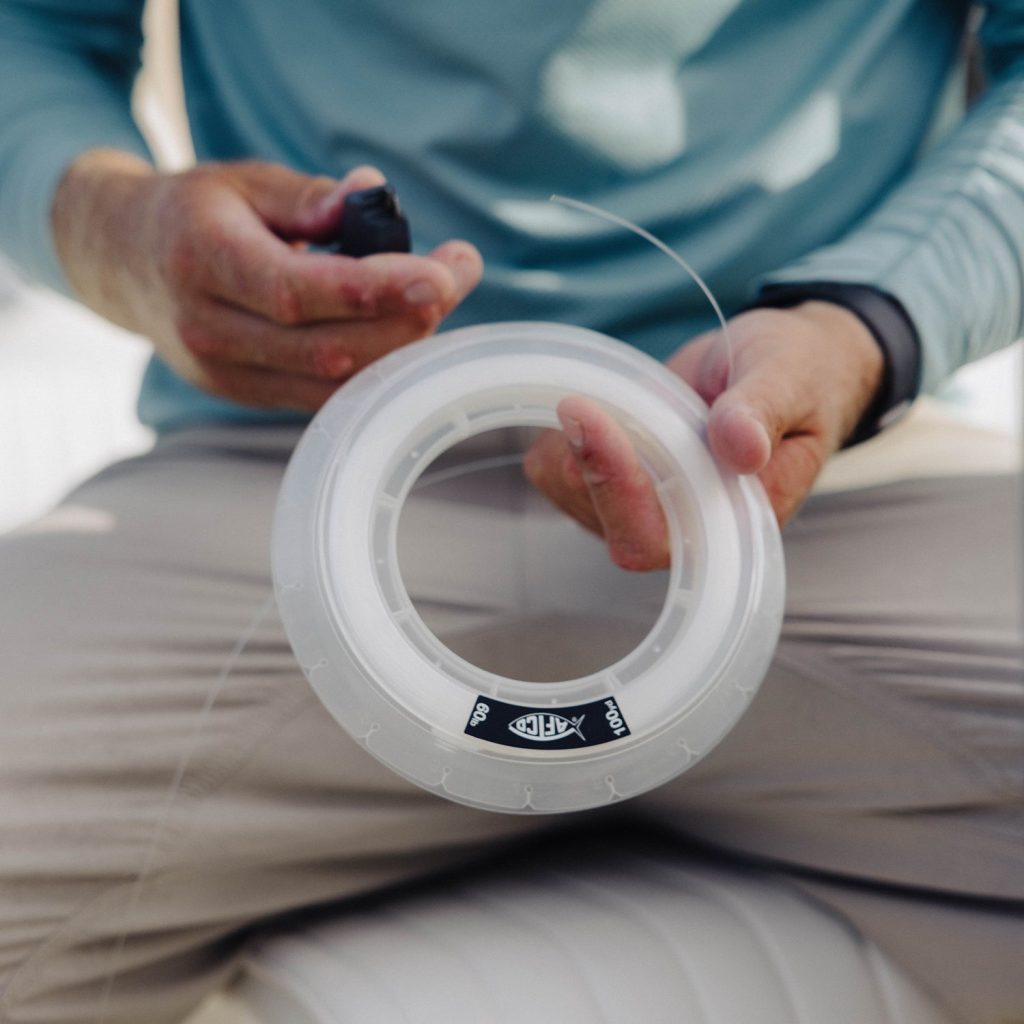
Visibility and color are equally important. Fluorocarbon’s popularity stems from its low visibility underwater due to its similar refractive index to water. Gant mentions, “Clear fluorocarbon is king in most situations due to its near invisibility, but in some regions, like the clear blue waters of Florida, pink fluorocarbon blends exceptionally well with the environmental light conditions.”
Another aspect to consider is the UV resistance of the line, which affects its longevity. “Our line is UV coated,” Gant shares, “which significantly extends its life by protecting it from sunlight degradation.” This feature is especially important for anglers who fish in bright conditions or store their equipment where it can be exposed to sunlight.
The origin of the fluorocarbon also impacts its quality. Gant recommends sticking with reputable brands known for their rigorous manufacturing standards, particularly those from Japan. “Japanese-made fluorocarbons are typically superior due to their advanced production techniques,” he asserts.
Finally, Gant addresses the price versus quality debate, noting that the highest price doesn’t always mean the best quality. He suggests, “Look beyond the price. Check the specifications and performance, and rely on trusted brands that provide transparency about their products.” “Some of the lines out there that are advertised as “fluorocarbon” are actually fluorocarbon-coated mono,” he remarked in our interview. “Those lines may be cheaper, but they don’t perform like pure fluorocarbon leader material.” According to Robby, pure fluorocarbon should “disappear” when placed in a glass of water. If you can see the line in the glass, chances are you don’t have a 100% fluorocarbon line. The best way to avoid falling victim to less-than-honest advertising? Stick with known brands that offer Japanese-produced fluorocarbon leaders.
In sum, when selecting a fluorocarbon leader, consider factors like abrasion resistance, strength relative to diameter, memory, visibility, UV resistance, and the product’s origin. Evaluating these aspects will help ensure you choose a leader that performs well in your specific fishing conditions, as Gant concludes, “It’s about finding the right balance that suits your fishing style and environment.”
Best Knot For Tying Fluorocarbon Leader To Braid
The FG knot, also known as the Sebile Knot, is considered the best option for tying fluorocarbon leader to braided line, prized for its strength and compact size. This knot is particularly effective because it creates a strong, durable connection that can withstand heavy loads, making it ideal for targeting large fish. One of the standout features of the FG knot is its slim profile, which allows it to glide smoothly through rod guides, reducing the chance of snagging and minimizing wear on the line. This feature is crucial for anglers who need reliable, long casts without interruption.
The process of tying the FG knot involves securing the braided line to a stationary object to keep it taut. This setup frees both hands, allowing the angler to manage the fluorocarbon leader more easily. The knot is created by wrapping the braided line around the fluorocarbon leader, typically recommending about 20 wraps to ensure maximum strength and stability. These wraps are alternated in direction to evenly distribute pressure and increase the friction that holds the knot securely in place.

To complete the knot, a series of half hitches are tied around both the leader and the main line, which helps prevent the wraps from unraveling. For added security, some anglers choose to apply a drop of super glue to the finished knot. Finally, the excess tag ends of both the fluorocarbon and the braided line are trimmed close to the knot.
Anglers value the FG knot not only for its robustness and low profile but also for its ability to maintain the line’s sensitivity and action. This makes it an excellent choice for both casting lures and battling big game fish, ensuring that the fishing setup performs optimally without compromising the integrity of the line. Whether you’re fishing inshore or offshore, the FG knot is a reliable choice for connecting fluorocarbon leaders to braided lines, enhancing both performance and reliability of your fishing gear.
Final Thoughts
In conclusion, selecting the right fluorocarbon leader is vital for any angler looking to enhance their fishing performance through improved line characteristics. As Robby Gant from AFTCO suggests, understanding the trade-offs between abrasion resistance, suppleness, and other physical properties of the line is crucial. He emphasizes that “finding the right balance that suits your fishing style and environment” is essential. Remember to consider factors like the strength relative to diameter, memory, visibility, UV resistance, and the origin of the product when making your choice.
Moreover, tying these leaders to your mainline requires attention to detail, where using a reliable knot like the FG knot can significantly impact performance. This knot’s strength, low profile, and ease of casting make it a top choice for seamlessly connecting fluorocarbon leaders to braided lines, ensuring durability and efficiency in various fishing conditions.
Ultimately, by focusing on these critical aspects and heeding expert advice from industry professionals like Gant, anglers can make informed decisions that enhance their chances of success on the water. Whether battling large game fish or casting in crystal clear waters, the right fluorocarbon leader, tied with an effective knot, can make all the difference.