

When you are on or around the water, especially on the coast, inclement weather can come out of nowhere. Nobody wants to spend a day of fishing while cold, wet and miserable. But even more importantly, nobody wants to leave a hot bite, even when Mother Nature is acting up. Having the right fishing rain gear with you at all times is a must if you want to keep fishing longer after others have run for shelter.
Your rain gear should protect you from rain and shield you from cold winds so that you can focus on the fish and not on your discomfort. But with so many options to choose from, how do you know which rain gear best suits your needs?
Prescott Hughes, marketing manager for HUK, a maker of best-in-class performance fishing gear built to make life on the water “more enjoyable from the first cast to the last,” dives into technical performance features and why they matter.
Understanding Rain Gear For Fishing
He explains that there are a variety of factors that can affect the potential for wet weather and influence the levels of moisture and environmental challenges, such as the region where you’re fishing and the time of year. You’ll need to take these factors into consideration and select rain gear tailored to those specific conditions.
Rain suits, depending on the material, designs and features, offer varying levels of protection. Some rain suits are built to provide lightweight coverage, making them ideal for mildly damp conditions or occasional showers, while others boast more technical materials and reinforced seams to provide protection against downpours and harsh winds.
To decide on the protection you need, you must first determine the weather conditions you are likely to encounter.
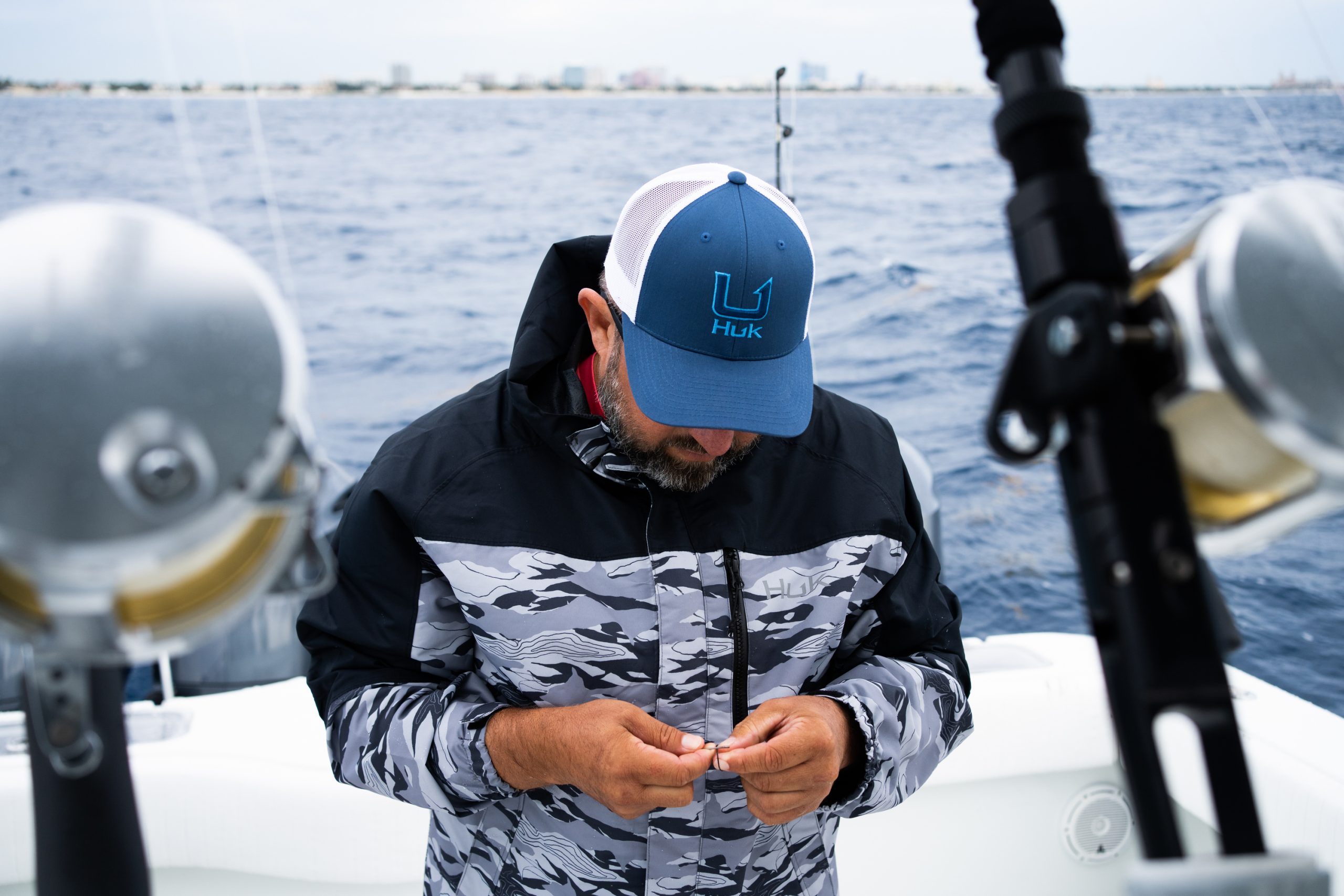
Comfort and mobility should also be considered. Look for raingear that does not hinder your movement or get in your way while casting a line. Your raingear should be breathable, adjustable and ergonomic so you can move about as you need to with compromising protection.
Waterproof Versus Water-Resistant
“When selecting fishing rain gear and apparel, you want to consider the wind/waterproof rating, breathability and adjustments,” Hughes said.
When a garment is waterproof, that means the material does not let water through the garment. It offers the highest level of protection against rain and water and that level of protection is determined by the waterproof rating.
“Water-resistance means that the garment will keep you dry for a period of time but is not built to repel a substantial amount of water. This is accomplished by using a DWR (durable water repellant) that repels the water away from the garment. Think of how your car repels water after a coat of wax,” Hughes said.
Deciphering Waterproof Jacket Ratings
Rain gear manufacturers often rate jackets using two numbers. The first number in the rating, such as 10k or 20k, describes the water column pressure, which is the amount of water in millimeters that can be exerted on the fabric before water starts to penetrate through it. For example, a garment with a 15k rating can withstand a water column pressure of 15,000mm before water penetrates the material.
A jacket with a 10K rating means it can handle light to average rain for a limited amount of time. A rating between 10K and 15K means it can handle a moderate amount of rain for a longer amount of time. A rating between 15K and 20K or higher means the jacket can withstand heavy, intense rain over a prolonged period of time.
The second number in the rating –10k or 20k — refers to breathability and reflects the amount of moisture in grams that can pass through a square meter of fabric in 24 hours.
“The Huk Tournament jacket and bib is built with a wind/waterproof rating of 20k/15k – meaning until you reach 20,000 millimeters of water, in a 1-inch diameter column, stacked on top of the fabric, the water will not penetrate the membrane. This is extremely important when you are stuck in foul weather. The Huk Grand Banks is another great set that is built with a water/wind rating of 15k/10k,” Hughes said.
What Goes Into The Best Fishing Rain Gear
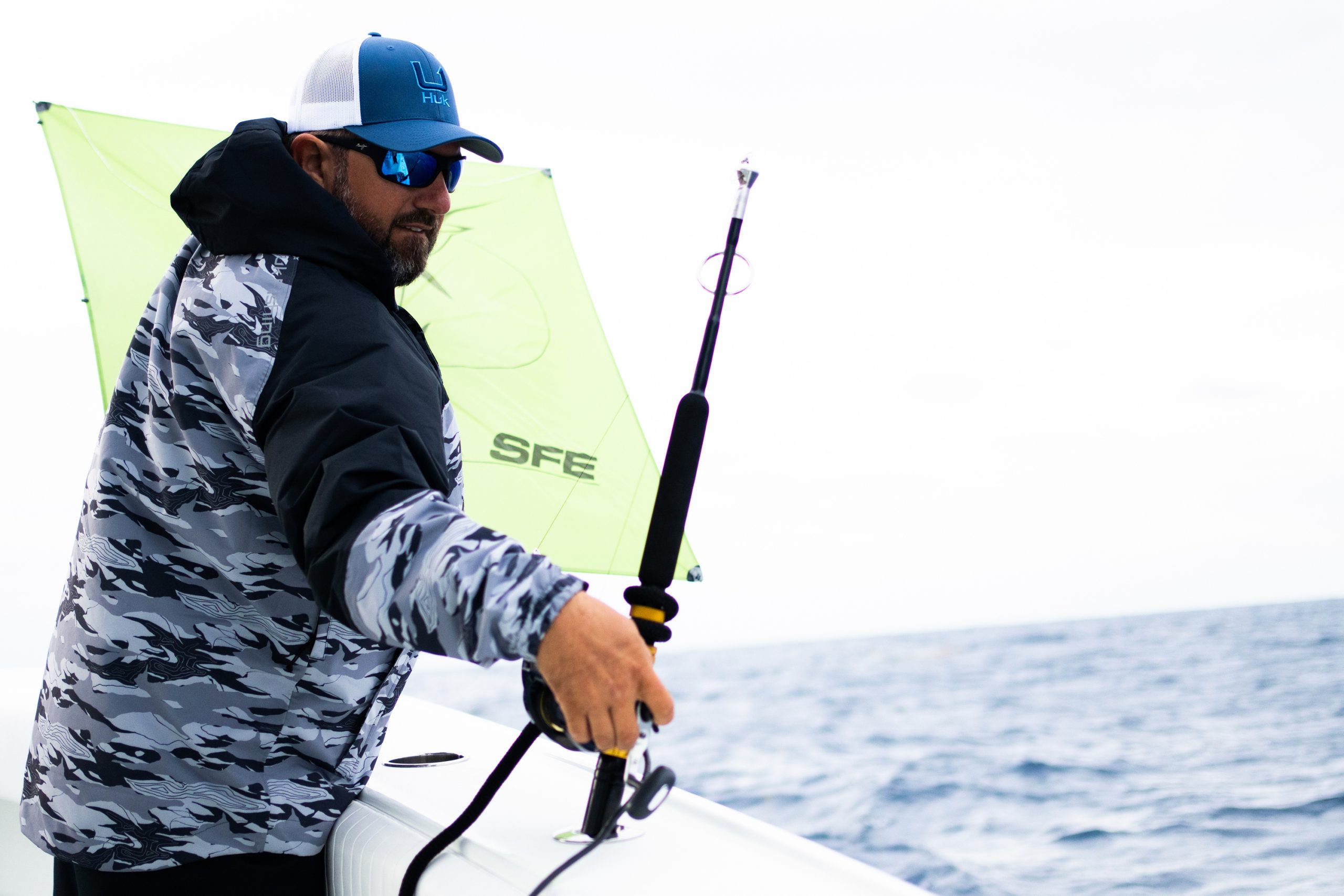
Hughes said in addition to checking on the waterproof rating, you also want to make sure your apparel includes adjustable seams around the waist, arm cuffs, neck and face.
“Being able to adjust access points is crucial to helping keep water away from your core,” Hughes said.
When it comes to manufacturing top-of-the-line gear, much goes into consideration.
“A lot of testing goes into designing our fishing jackets. Being in these conditions and understanding the anglers’ needs when they are out fishing is imperative. All of our outerwear is built from experience and tested to perform in the ugliest conditions,” Hughes said.
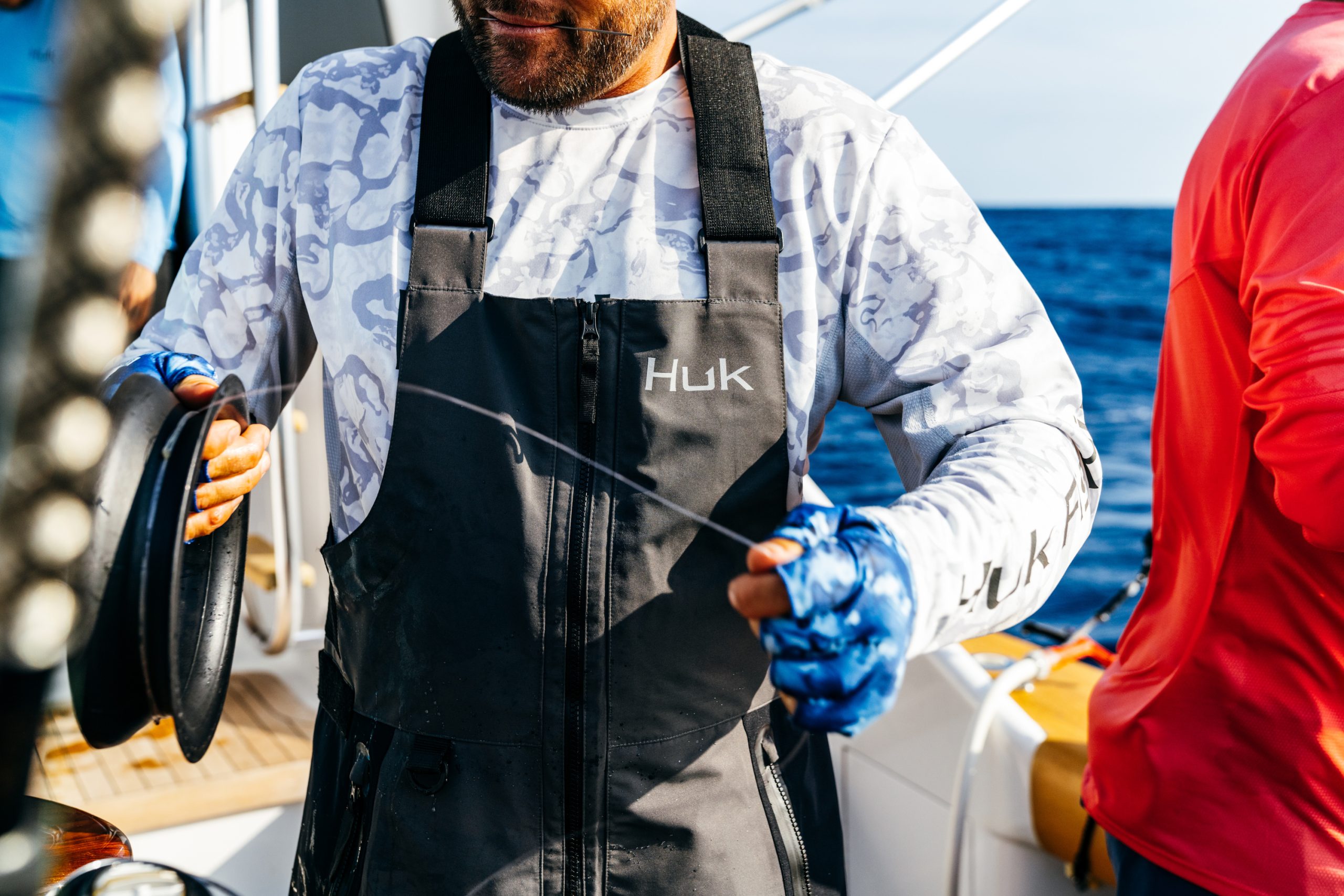
He said much testing also goes into designing Huk’s waterproof fishing bibs with the understanding that they are often worn without a jacket, so they need to provide plenty of wet-weather protection when worn alone.
“Many anglers will wear bibs when they are not wearing a jacket, such as when they are throwing a cast net to catch bait. Huk’s bibs are designed to keep your body dry so you do not have to start your day wet once you have caught bait,” Hughes said.
Hughes said when it comes to their boots, Huk focuses on durability and designs that keep the water completely out. He said non-skid traction is also a top priority.
“We test many different fabrics for waterproofness and durability. Much of our testing is done by our sponsored pros who can truly put our gear to the test week in and week out. Their input is very valuable when it comes to seams, comfort, and function in many fishing environments from the offshore angler to the fly angler. The raingear simply must keep you dry, keep you comfortable, and function in a way that is beneficial to your style of fishing.”
Tips For Fishing In The Rain
Hughes acknowledges that fishing in the rain can be difficult because you lose visibility, but he says using bait that is a color contrast to the darker water can always help. He says if possible, fish before the storm because the pressure drops and the fish get hungry.
“You also want to find places with water movement where bait can be trapped because the fish you are targeting are likely looking for food. But, most of all, when it comes to fishing in rainy weather, expect the unexpected and pack accordingly. It’s also good to have a backup plan,” Hughes said.
Remember that just because it is raining it does not mean the fish will stop eating. Changing your tactics to accommodate the soggy conditions can pay off in a big way. And if you’re outfitted well with raingear that can protect you from harsh weather and you feel comfortable and confident to remain on the water, you’ll likely be one of the few who are fishing, which means less competition, and that’s a good thing.