
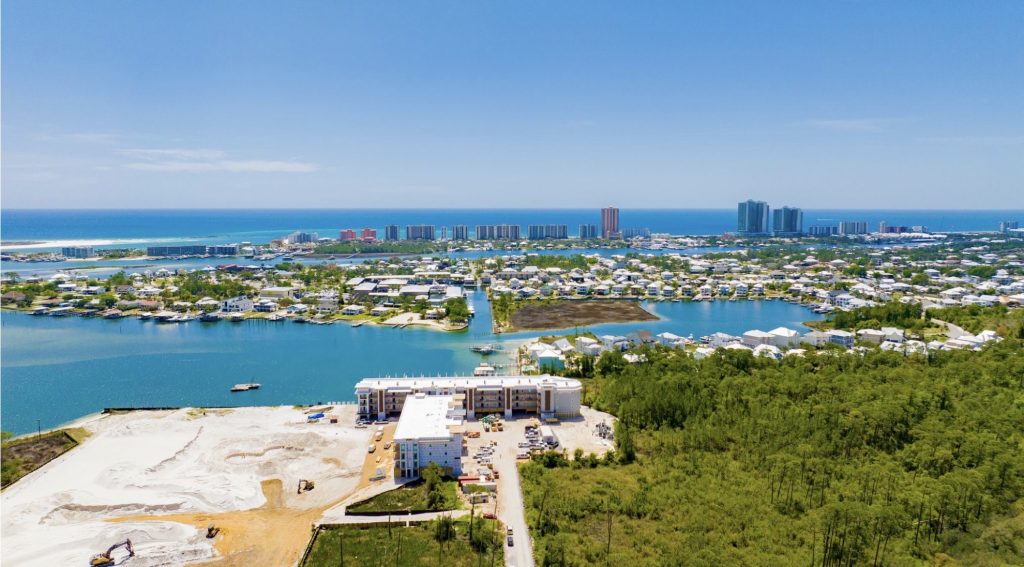
Most people don’t start shopping for waterfront property because they want another list of responsibilities. They picture the lifestyle: a boat behind the house, kids in the pool, friends arriving by water, fish on the cleaning table, and sunsets over the bay.
But waterfront real estate comes with unique considerations that many buyers overlook. Beyond the home itself, buyers must evaluate docks, seawalls, water depth, boat access, tides, permits, flood maps, insurance, and long-term maintenance.
That’s why Angelo DePaola encourages buyers to think beyond the view.
“You have got to figure out what kind of buyer you are,” DePaola said. A good waterfront purchase starts with a simple question: How are you actually going to use the place?
Start With the Water, Not the House
One of the most important boating considerations is water depth, and it’s often misunderstood.
“When you’re thinking about water depth, you need to have a full understanding of the depths at all tides,” DePaola said. “If you don’t know any better, you can visit a property at high tide, stick a pole in the ground and think, ‘Great, I’ve got six feet here, and that’s plenty of draft for my boat.’ But what’s that like in winter when you have a really low tide?”
Buyers also need to understand what lies beneath the water.
“You need to know what kind of bottom you have,” DePaola said. “Is it soft mud or is it sand? Because you might have a place where you bump and the soft mud may not do anything, but if you’ve got hard sand, you could mess up your running gear.”
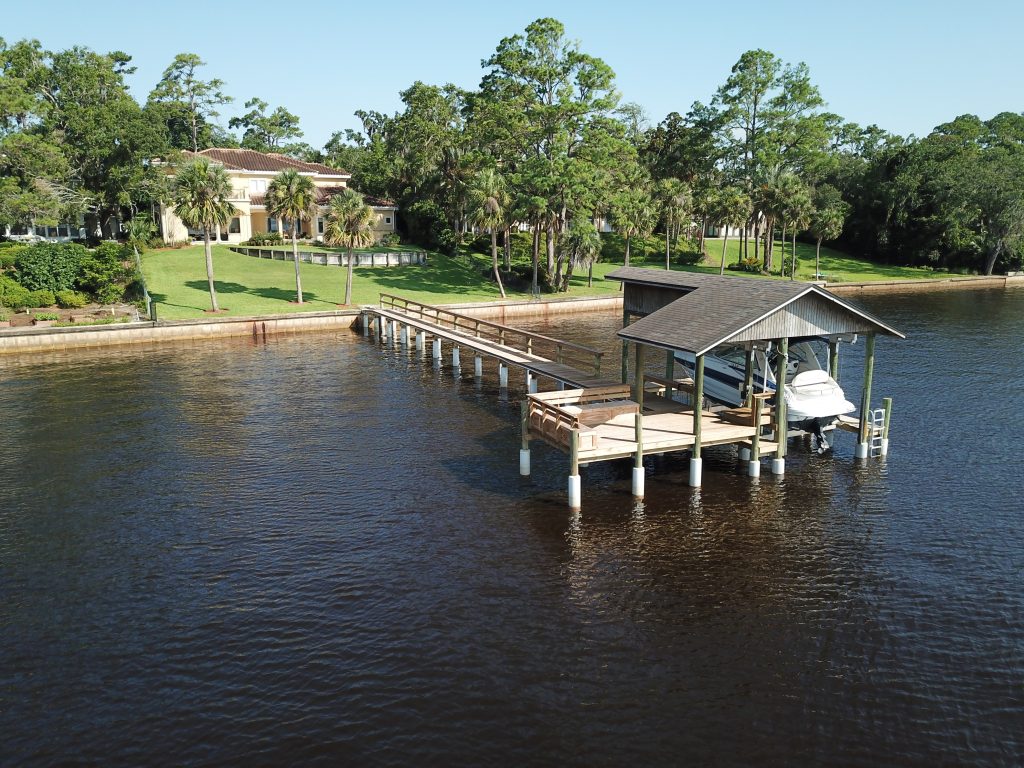
Low tides can create challenges at boat lifts as well.
“You might be going to go catch tuna in the middle of February, and you catch one of these lows, and you didn’t get your boat off the lift the night before,” DePaola said. “Now your cradle touches the bottom and it’s too shallow to get your boat off.”
For serious boaters, the water itself deserves as much attention as the property.
The Dock Is Only the Beginning
A good slip doesn’t mean much if access to your desired water is difficult.
“Access to open water is huge,” DePaola said.
Buyers should evaluate no-wake zones, bridge clearances, travel times to the pass, and seasonal boat traffic. Current is another often-overlooked factor.
“You can expect a few knots of current there,” DePaola said, referring to certain waterfront locations. “So you want to think about, how’s my boat going to fit into the slip and how comfortable are you docking a boat into a slip with a three-and-a-half or four-knot cross current?”
A confident captain may welcome the challenge. Others may find it frustrating every time they return to the dock.
A Dock Can Look Fine and Still Be Trouble
Waterfront buyers should never assume a dock is in good condition simply because it looks good from above.
DePaola recalled one buyer he was representing where a closer inspection on the home that was meeting all the marks, ended up revealing significant hidden damage.

“We get the piling guy out there, and there are a half dozen pilings that are being held together by something as big as a pencil where the aquatic worms have eaten away at it,” he said.
Repairs involving pilings, lifts, electrical systems, seawalls, or riprap can become expensive quickly. That’s why waterfront purchases often require specialists beyond a standard home inspection.
“One tip is to look at your neighbor’s seawall,” DePaola said. “If they’re getting eaten away on either side of you, then what’s going to eventually happen?”
Water doesn’t recognize property lines. Problems on neighboring shorelines can eventually affect your property as well.
Don’t Assume You Can Build a Dock
Many buyers assume waterfront automatically means dockable. That’s not always true.
Wetlands, aquatic vegetation, riparian rights, neighboring property boundaries, and permitting requirements can all affect what can be built.
“Having a wetlands report and a survey are two vital elements, to really understand what you can do with your dock,” DePaola said.
For boating-focused buyers, understanding those limitations before closing is critical.
Not All Boat Slips Are Equal
A slip that technically fits a boat may still be the wrong slip.
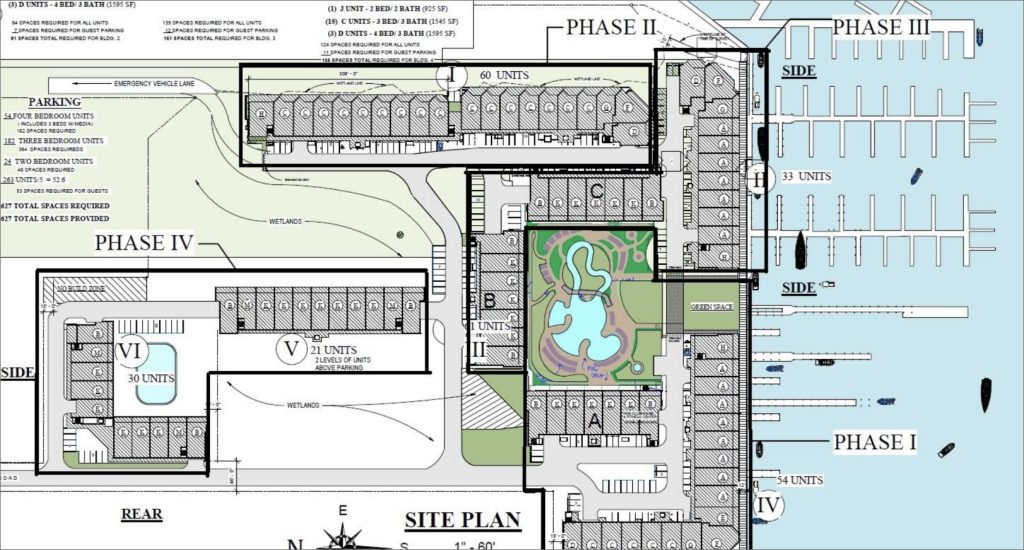
Buyers should understand slip length, beam restrictions, water depth, lift capacity, fairway width, power availability, and ownership structure.
“A lot of developments don’t have a slip for every unit,” DePaola said. “Buying slips in those developments from another homeowner is going to get expensive because it becomes a supply and demand issue.”
Fairway width matters too. A boat may fit in the slip but still be difficult to maneuver in wind or current.
These details become even more important as boats continue getting larger.
Boats Are Getting Bigger
Many waterfront developments were designed decades ago when smaller boats dominated the market.
“A thirty-footer was a big boat in 2006,” DePaola said. “Back then if you rode around looking, there were a handful of thirty-five and thirty-six-foot center consoles, but very few. In 2026? The amount of forty-foot and up center consoles… heck, that’s the majority of the people that offshore fish in today’s world.”

That shift affects both current usability and future resale value. Properties with deep water, larger slips, adequate beam, and easy access to open water will likely remain more attractive to boaters.
Less Friction Means More Boating
One of DePaola’s simplest observations may be his most important.
“The more friction you put between you and using your boat, the less likely you are to use it,” he said.
Easy access encourages more time on the water. Storage lots, trailers, crowded ramps, and lengthy launch procedures often have the opposite effect.
“What’s your Sunday look like?” DePaola said. “Instead of going and taking that leisurely cruise with the family, just sticking it back on a boat lift and cleaning it off and going home, versus am I going to have to spend half my Sunday taking the boat, putting it on the trailer, flushing the engines, cleaning the boat, taking all the fishing tackle off and trailoring it back?”
The easier boating becomes, the more likely owners are to enjoy it regularly.
The Waterfront Property Needs to Work for the Family
Many waterfront purchases begin with a boater’s dream. The challenge is making sure the rest of the family shares that enthusiasm.
“There are a few developments that are beachfront and have a marina on the other side of the road, where you can keep your boat,” DePaola said. “Those can be great, because everybody gets a little bit of what they want.”
Amenities matter. Pools, cabanas, beach access, restaurants, golf cart connectivity, pickleball courts, outdoor kitchens, and gathering spaces often determine whether the family embraces the property.
DePaola recalled one family where the boating amenities appealed to the husband but offered little for everyone else.
“She was like, ‘Why would I come down here? We have a pool at our house,'” he said.
Creating reasons for the entire family to spend time together is essential.
“I especially love fire pits,” DePaola said. “I know this sounds hokey, but I think it goes back to caveman times. If you want to deepen relationships, you tend to do that around fire and food.”
When a Condo Makes More Sense
A private waterfront home offers control, but it also comes with responsibility.
For buyers who want boating access without constantly managing maintenance, a waterfront condo can be a compelling alternative.
“What I find, especially for our condo buyers, is,they just want to come here, use it, and then leave their clothes and personal belongings. Then go home without the hassle of packing everything back up, and come back and use it again,” DePaola said.
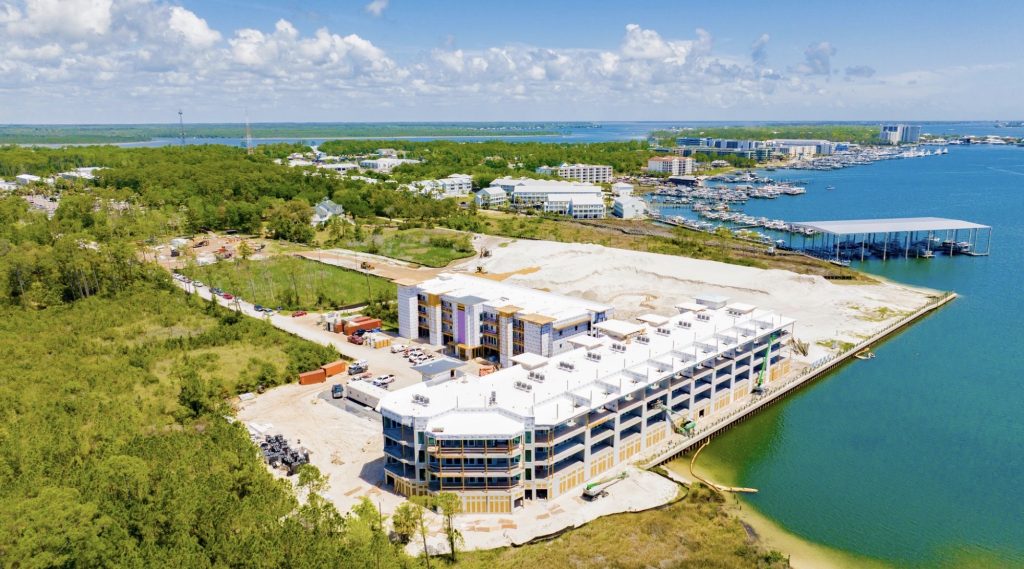
Developments like Abaco, a new waterfront condominium development being built for Terry Cove in Orange Beach, are designed around that concept, combining serious boating access with family-friendly amenities and a lower-maintenance ownership experience.
“If you are in a condo, all of the maintenance that typically comes with a house is built into the responsibilities of the HOA to handle,” DePaola said. “The pool is not your concern. The boat slip is not your concern. The exterior of your building is not your problem.”
For many families, that convenience becomes a significant advantage.
Work With Waterfront Property Experts
Waterfront transactions involve complexities that many traditional real estate transactions do not.
“You want to be working with an agent that not only has a deep knowledge and understanding of the area and property particulars, but also that does a lot of transactions within that space,” DePaola said. “The more transactions you do, the higher likelihood you are to have come across issues that somebody that hasn’t done that many is not going to be thinking of.”
Waterfront buyers should work with professionals who understand and have experience with surveys, wetlands reports, dock construction, marine electrical systems, lifts, and waterfront permitting, to name a few.
“One major factor most buyers miss is the value of working with an agent who knows the trusted experts needed like wetlands mitigation specialists, surveyors, dock and boat lift construction, electricians; all of the local resources that you are going to need,” DePaola said.
And don’t rely solely on a traditional home inspection.
“Not just a home inspector,” he said, “because a home inspector is not adequate alone to thoroughly understand a waterfront property.”
Buy the Place You’ll Actually Use
The best waterfront property isn’t simply the one with the best view. It’s the one that makes it easy to enjoy the lifestyle you envisioned when you started looking.
Whether that’s a private waterfront home, a buildable lot, or a boating-focused development like Abaco, buyers should evaluate how well the property supports boating, fishing, entertaining, and family life.
The goal isn’t just to own waterfront property. The goal is to use it—and enjoy it—for years to come.