
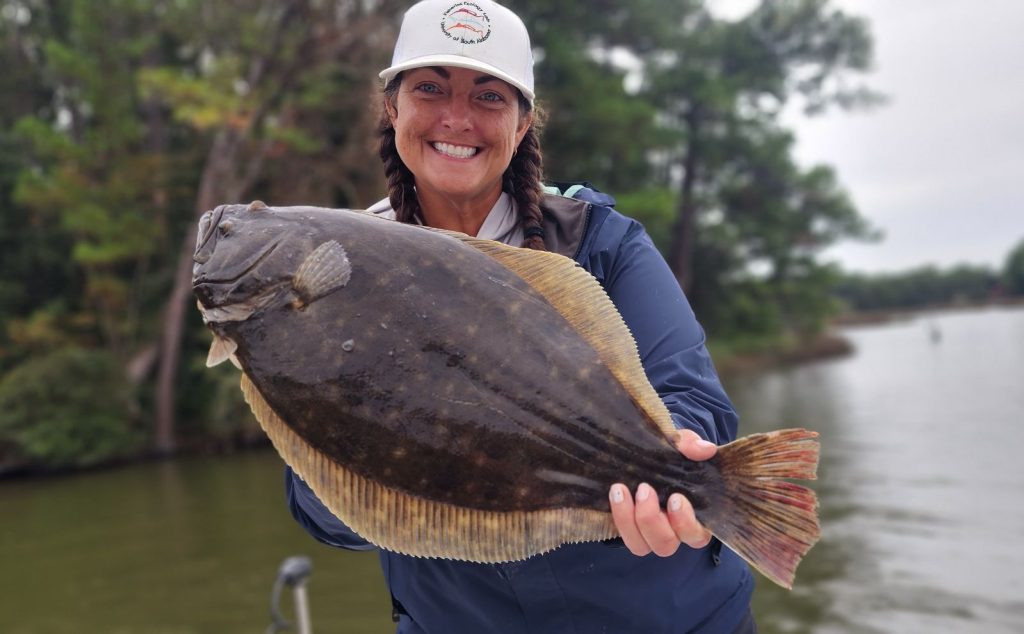
When the spring weather finally starts to settle along the Alabama coast, most anglers begin looking hard for speckled trout and redfish. The trout start sliding toward their warm-weather haunts. Redfish push bait against the beaches and marshes. Mullet begin showing up in larger schools. But anglers wondering how to fish for flounder right now should be paying close attention to the same shallow marshes, beach drop-offs, rocks, docks, jetties, and ledges where bait is moving with the tide. For Capt. Richard Rutland of Cold Blooded Fishing, one of the most impressive bites lately has not been trout or redfish.
It has been flounder.
“The flounder fishing up there is really what’s blown me away,” Rutland said while talking about the north end of Mobile Bay and areas near the Causeway. “It has been really, really good up there.”
Why Flounder Are Showing Up In More Places
Rutland has been fishing a little bit of everything lately, from the north end of the bay to the south end around beaches, rocks, wrecks, and jetties. What has stood out is not just that flounder are biting, but that they are showing up in several different kinds of places. That means anglers have more than one way to target them, as long as they match their approach to the water depth, structure, tide, and current.
One of the more interesting pieces of the current pattern is how much life remains farther north in the system. Rutland said the dry winter and dry spring have helped keep salinity higher than normal in places that are often flooded out this time of year. Usually, spring rain pushes a lot of freshwater through the upper bay and nearby rivers, moving fish toward higher-salinity areas farther south. This year, that has not happened as strongly.
That has left plenty of bait and gamefish in the northern part of the bay.
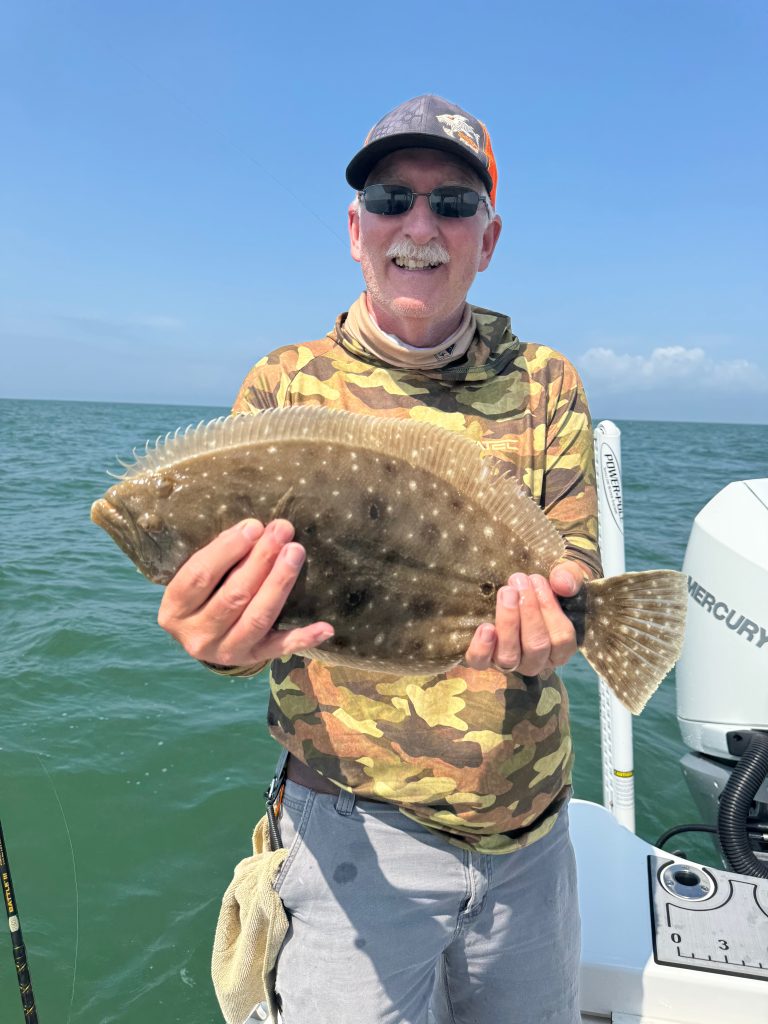
“Nothing’s flushed them out,” Rutland said. “Usually, it’s flooded out. We just had very little rain.”
While that observation came up during a discussion about trout, the same broader idea matters for flounder. When salinity, bait, and water levels line up, flounder can remain active in places where anglers might not expect them to be this time of year. The key is not simply fishing a spot because it was good last year. It is reading what the water is doing right now.
Find The Drop-Offs On The Beach
Down south, Rutland has also been finding flounder in more classic structure-oriented areas. He said fish are starting to group up around rock piles, jetties, wrecks, and beach drop-offs. Those areas give flounder exactly what they want: current, bait, and an easy place to lie in ambush.
“Some of the flounder fishing we’ve already been doing down south has been really good,” he said. “They’re starting to group up around some of the rock piles, the jetties, some of the wrecks, and we’ve been catching a fair amount of them out on the beach.”
The beach pattern is especially specific. Rutland is not just walking or drifting along any stretch of pretty water. He is looking for a sharp depth change. The ideal setup is a shallow bar or beach edge where the water may be only ankle deep, then suddenly drops into four, five, or six feet of water. That kind of ledge is a natural feeding station. Bait moving across the shallow water gets swept or chased toward the deeper edge, and flounder can sit just off the drop waiting for food to come to them.
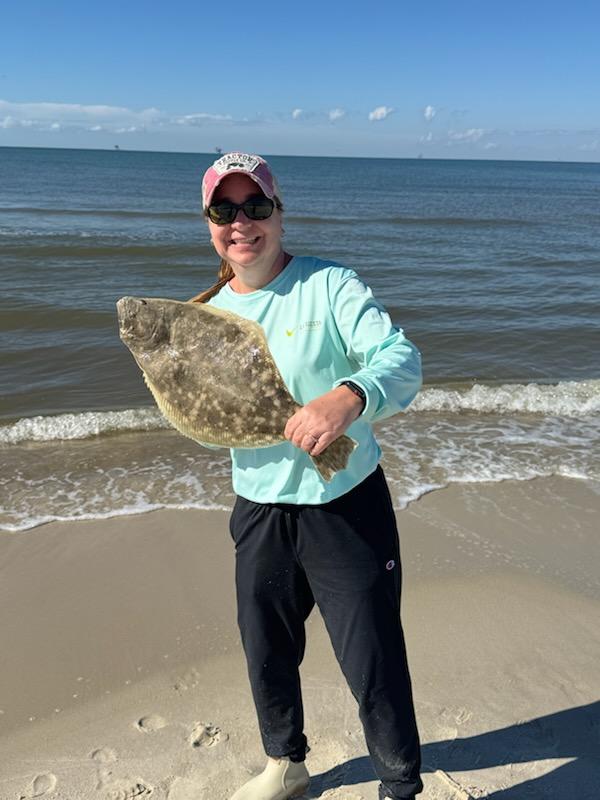
“The trick on the beach or around the southern end is finding some real steep drop-offs,” Rutland said. “Where you have water that’s about ankle deep, and it drops down to about four to five feet, six feet sometimes.”
Cast Along The Ledge, Not Just Across It
Once he finds that kind of setup, Rutland wants to make his cast work with the structure. The goal is to keep the lure in the strike zone as long as possible, instead of just crossing the ledge for a second or two. If he can, he lines up so he can cast up and down the drop-off. That may mean throwing onto the shallow side and bringing the lure down the ledge into deeper water. It may also mean casting parallel to the break so the lure tracks along the edge.
“If you can line it up where you can cast up and down those drop-off ledges, that’s really money,” Rutland said. “You’re throwing your lure up on top of the shallow water and bringing it down to deep water, or running it parallel to those drop-offs.”
That one detail can make a huge difference. A flounder lying on a ledge may not move far to eat. If your lure only passes by one fish for half a second, you may never get a bite. But if your lure crawls, glides, or hops along the ledge for much of the retrieve, you are showing it to more fish and giving each one more time to react.
Use Soft Plastics With A Little Extra Scent
Rutland has been catching these fish on several of the same soft plastics and lures that have also been producing redfish. He mentioned the Slick Jr., the MirrOlure Lil John XL, and the full-size Slick as all being successful choices. He also likes adding Pro-Cure to give the lure some scent.
“Adding some Pro-Cure to those things to give them a little bit of stink” has been part of the program, he said.
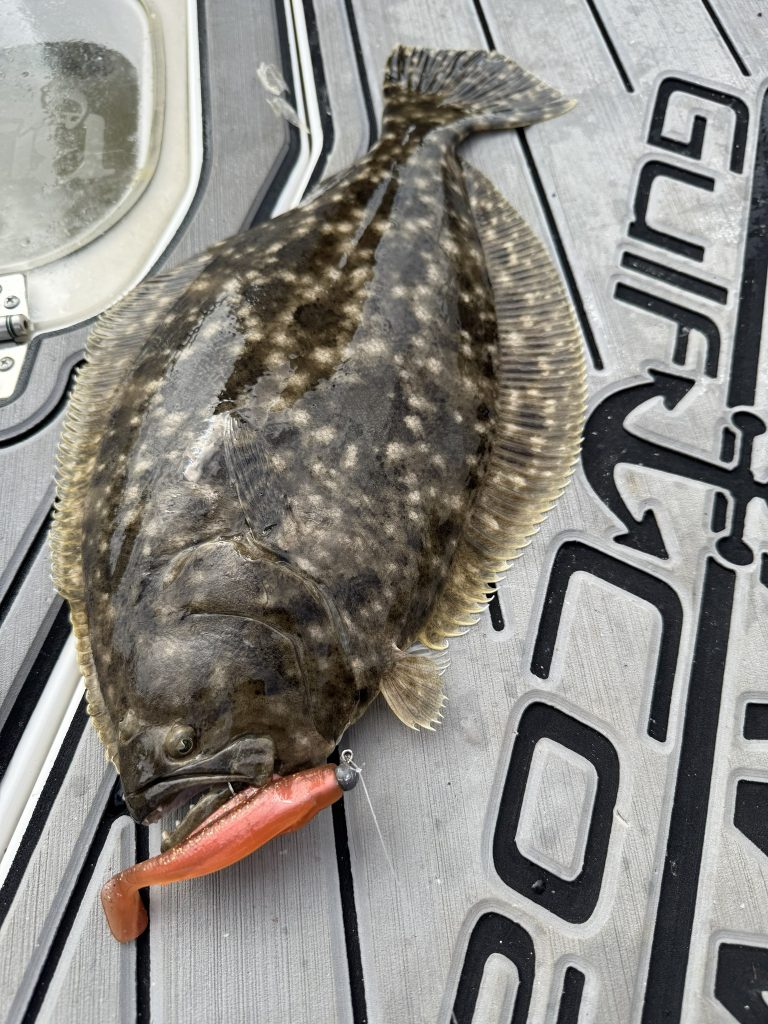
Scent can matter with flounder because of how they feed. Unlike a trout that may slash at a bait and keep moving, a flounder often pins a lure or bait to the bottom. Sometimes the bite feels like a thump. Other times it feels more like weight. A scented lure can make a fish hold on a little longer, and that extra second can be the difference between missing the bite and driving the hook home.
Change Your Angle Before You Leave
Current direction also matters. Rutland described one recent situation where he was wading and fishing a likely-looking ledge. At first, he set up so he was casting up-current and bringing the lure back with the flow. It looked right, but he was not getting bit. Then he changed positions.
“I walked to the other side of it, and I got up on the shallow side, and I started dragging it against the current,” he said. “I started getting bit more regularly that way.”
That is a subtle but important lesson. Anglers often assume the lure should always move naturally with the current. Sometimes that is true. But with flounder, especially around ledges and ambush points, a lure moving against the current may stay in the strike zone better. It may also move slower, dig closer to the bottom, or come across the fish at a more visible angle. The larger point is that if a spot looks right but does not produce, do not leave too quickly. Change your angle first.
“You’d never know there was any fish there if I wouldn’t have swapped around and started dragging it against the current,” Rutland said.
Cover Water First On Marsh Banks
That same idea applies in the marsh, but the approach changes. When Rutland is fishing broad marsh banks, he thinks of it differently than fishing a dock, rock pile, jetty, or tight piece of structure. A marsh bank can be wide open. There may be long stretches of grass, points, drains, shell, and subtle changes that all look similar. In that scenario, Rutland starts in search mode.
“With a marsh bank, it’s really big, it’s wide open,” he said. “It’s not like fishing a dock or some rocks or something like that.”
To cover water, he may go a little heavier on the jig head, often a quarter-ounce or three-eighths-ounce jig. He keeps the rod tip low and works the bait along a little faster. The goal is not to perfectly pick apart every inch right away. The goal is to get the first bite.
“I’ll start out in search mode, if you will, working it a little bit faster, trying to cover a lot more water,” Rutland said. “And then once you get a bite, you can start to slow down and start to pick apart everything a little bit more.”
Let The First Bite Tell You The Pattern
That is where the real pattern begins. After the first bite, Rutland starts asking why that fish was there. Was it sitting on a point? Was there a feeder creek nearby? Was it on shell? Was there a small change in depth? Was bait moving through that one section of bank?
“When you do catch a fish, why was that fish sitting right there?” Rutland said. “Was he right up against the point? Was there a feeder creek somewhere close? Or was he sitting on some oyster shells?”
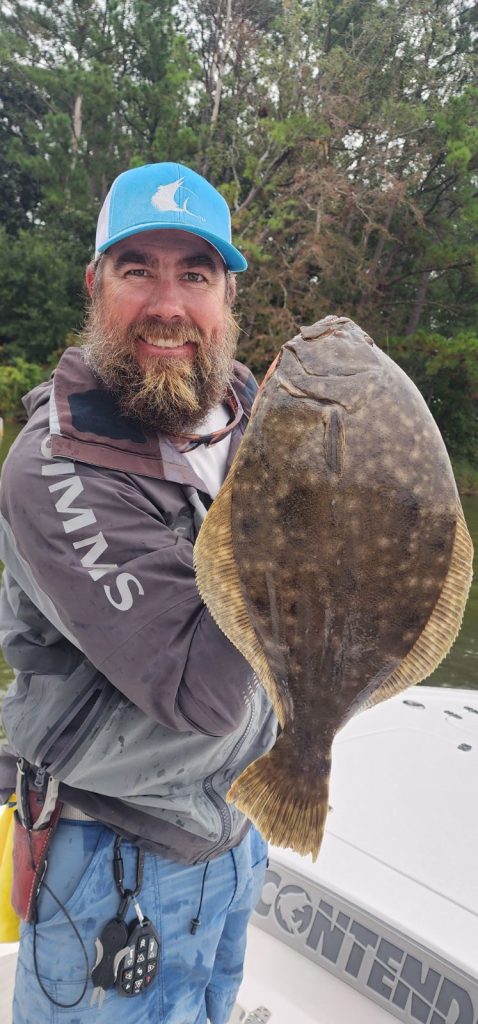
That is how a random bite becomes a repeatable pattern. A flounder caught along a marsh bank should not just go in the box and be forgotten. It should make the angler slow down and study the spot. If one flounder was using that feature, another one may be sitting on the next similar feature down the bank.
Rutland compared this to a form of power fishing. Cover water first, find a fish, then slow down and dissect the area. That keeps an angler from spending too much time in dead water while still allowing them to fish carefully once they find the right ingredients.
Slow Down Around Rocks, Docks, And Pilings
Around docks, rocks, pilings, and other tight structure, Rutland does the opposite. Instead of covering water quickly, he slows down and becomes more methodical. This is close-quarters fishing, often with short casts only 20 or 25 feet from the boat. In those situations, he usually prefers a lighter jig head. For anglers learning how to fish for flounder around hard structure, the key is keeping the lure close enough to the bottom and cover to look natural without rushing it past fish that may only move a short distance to eat.
“I like that lighter jig head because I feel like your lure stays up a little bit more,” Rutland said. “It’s kind of gliding over the surface a little bit more. Looks a little more natural to the flounder.”
Depending on the depth, he may use an eighth-ounce or three-sixteenths-ounce jig head around rocks and tight structure. The lighter jig does more than improve the presentation. It also helps with one of the most unavoidable parts of flounder fishing: getting hung up.
“If you’re not hanging up, you’re not doing it right,” Rutland said.
That is because flounder like the same places that steal tackle. They hold near rocks, shell, pilings, ledges, and other hard edges. A lure that never touches anything is probably not spending enough time where the fish are. But a lighter jig head is often easier to pop loose than a heavier one. Rutland mentioned using the “bow and arrow trick,” a common method where an angler pulls the line tight, plucks it, and uses the snap to free a lure from structure.
“With an eighth-ounce or three-sixteenths-ounce jig head, I can really do that bow and arrow trick and pop those off of there,” he said. “Those heavier ones, you can’t get those to slingshot off of there.”
Match The Tide To The Spot
Water level is another major piece of the flounder puzzle. Rutland said that when he is fishing shallow marsh areas, he generally likes higher water. Flounder seem more comfortable when there is enough water for them to move, hide, and feed without being too exposed.
“When you’re shallow-water flounder fishing, you definitely want that higher water,” Rutland said. “I feel like they are more comfortable with higher water than lower water a lot of times.”
But he was careful to explain that this is not just about tide stage in a simple way. It is really about finding the right depth for the particular place you are fishing. In some marsh areas, low tide may leave the water too skinny. The boat may spook fish, the trolling motor may kick up mud, and the flounder may not feel comfortable. In other places, low tide may be perfect because it pulls fish toward deeper edges, ditches, or bayous.
Rutland said a good safe depth for shallow flounder fishing is often around two to three feet of water. He is less confident when the water gets down around a foot or a foot and a half.
“I always think about wanting to have between two and three foot of water,” he said. “You don’t want to be fishing like a foot, foot and a half depth water a lot of times for those flatties.”
Fish Deeper Edges When The Marsh Gets Too Skinny
That does not mean an angler should quit on low water. It means they should change the type of place they are fishing. If the marsh flats get too shallow, Rutland looks for bigger systems, such as ditches or bayous with eight or ten feet of water and steep banks on either side. On lower water, those steeper edges can concentrate fish without making them feel trapped in skinny water.
“Just say you have a ditch or a bayou where, if you’re on low water up in the marsh, you got low tide too low to operate very well without spooking all the fish,” Rutland said. “You go to a bigger system, where you have eight or ten foot of water, but you have a real steep bank on either side of the bayou. That’s the places you want to be on lower water.”
Stay Quiet In Skinny Water
That leads to another point Rutland emphasized: stealth. In shallow water, especially in the marsh, flounder can feel and hear more than many anglers realize. A boat pushing through a foot and a half of water displaces water. A trolling motor can kick up bottom. The hull slap/noise can pressure fish before a lure ever reaches them.
“They can hear and feel all of that,” Rutland said. “You got to be sneaky.”
Use The Wind To Make Longer Casts
The same idea applies to wind. Many anglers complain about windy spring days, and Rutledge admitted he does too, especially when trying to run from one area to another. But once he is fishing, he tries to use wind instead of just fighting it. A little wind can help anglers make longer casts, and longer casts are often a big advantage in shallow water. For anyone learning how to fish for flounder in skinny water, that extra casting distance can be just as important as lure choice, because it helps keep the bait away from boat noise and closer to fish that have not already been pressured.
Rutland said he likes to set up so he can cast downwind when possible. Even five to ten knots of wind can add serious distance to a cast. More distance means the lure lands farther from the boat and spends more time away from the “halo” of pressure around the angler.
“I always feel like there’s a halo around the boat, or where you’re at, where you can get a bite,” Rutland said. “Getting it way out of that halo is key, and you’re covering a lot more water casting long.”
That may be especially important for flounder in clear, shallow, or calm water. If a fish feels the boat before it sees the lure, the opportunity may already be gone. A long cast gives the bait a more natural approach and lets the angler work more water without moving the boat as much.
Adjust To The Scenario In Front Of You
The larger lesson from Rutland’s report is that good flounder fishing is not one single pattern. Learning how to fish for flounder means adjusting to several patterns that depend on the place in front of you. On the beach, find steep ledges where ankle-deep water drops into four to six feet, then cast along the break or bring the lure from shallow to deep. Around rocks, docks, wrecks, and jetties, slow down with lighter jig heads and expect to get hung up. Along big marsh banks, start in search mode with a slightly heavier jig, cover water, then slow down once the first bite tells you what the fish are using. On high water, look for flounder to get more comfortable across shallow flats and marsh edges. On low water, shift toward deeper ditches, bayous, and steep banks.
Through all of it, keep changing angles. Work with the current, then against it. Cast parallel to the ledge, then across it. Speed up to find fish, then slow down to catch more of them. If the place looks right but does not produce right away, do not assume the fish are absent. Sometimes, as Rutland found, all it takes is walking to the other side and dragging the lure through the same spot from a different direction.
Flounder are ambush predators, but catching them consistently is not passive. It takes reading water, adjusting depth, changing jig weight, and paying attention to every bite. The reward is one of the Gulf Coast’s best-eating fish and one of the most satisfying inshore patterns of the spring.