When the bite gets tough in skinny water, inshore fishing success rarely comes down to the lure in your hand. The way you position your boat and hold it there can make or break the day. From gin-clear flats in Florida to rock-studded shorelines in Alabama, experienced inshore anglers know that staying quiet, stable, and in the right spot is often the difference between a spooked fish and a full cooler.
Inshore Redfish Fishing on Clear Flats
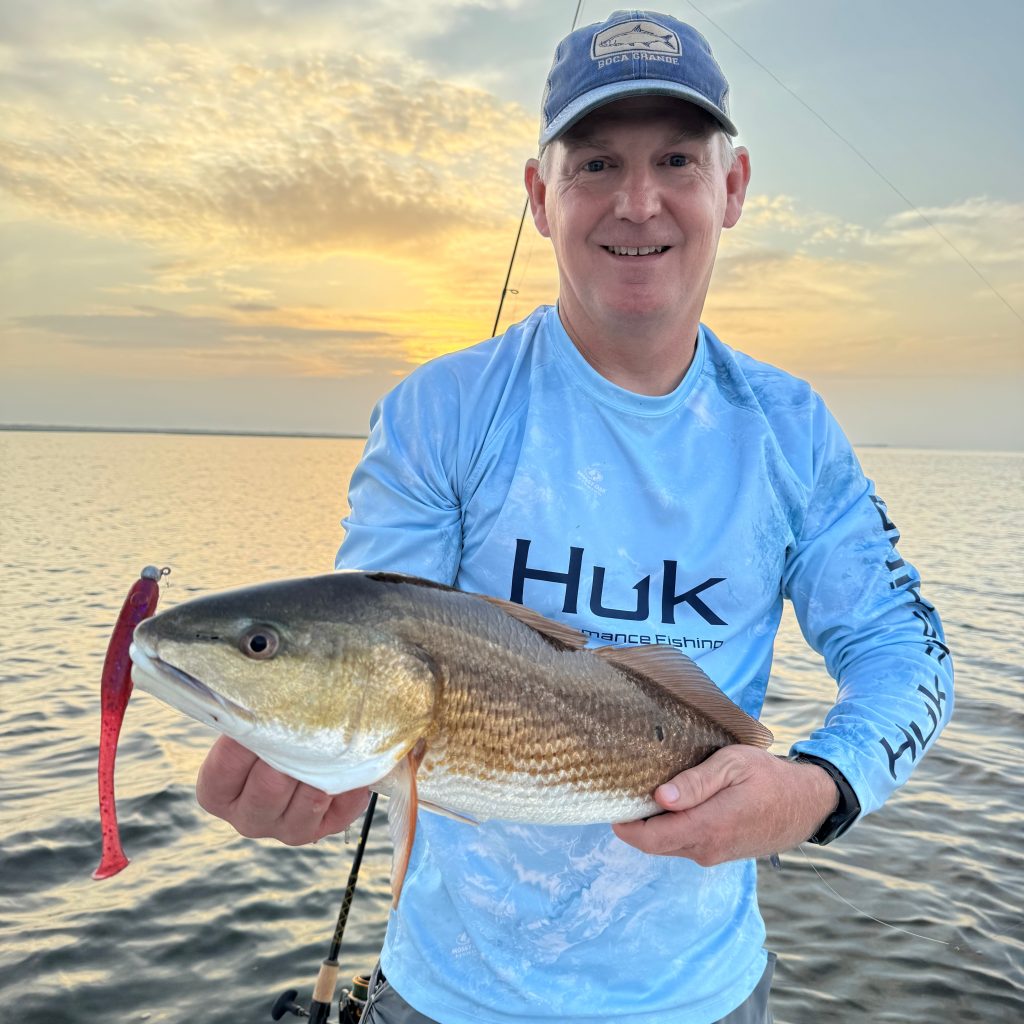
Sight fishing for redfish in gin-clear water can be one of the most rewarding experiences on the Gulf Coast, but it’s also one of the most frustrating. Blake Nelson, who guides out of Choctawhatchee Bay, has learned that boat positioning in this environment starts long before the first cast. Scouting, he says, is everything. “I scouted for four hours yesterday in completely new areas I’d never fished before, just to see the layout,” he explained. “I knew I was probably going to spook them, but I needed to learn where the sandbars were, what lines they liked to follow, and where they tended to feed. Once you see them in the same places time and again, you start to figure out their patterns.”
Even with that preparation, redfish on the flats can be maddeningly spooky. Nelson says they often pick up on your presence from as far as 100 feet away. That’s why he goes to great lengths to quiet the boat before sliding in. He cuts off electronics, trims his motor ahead of time, empties the bilge so pumps don’t kick on, and even slows down his casting motion. “Motion makes a big difference,” he said. “I’ve noticed fish spook just from raising my rod tip too fast. So I try to make smooth, low casts, pitching from underneath instead of overhead.”
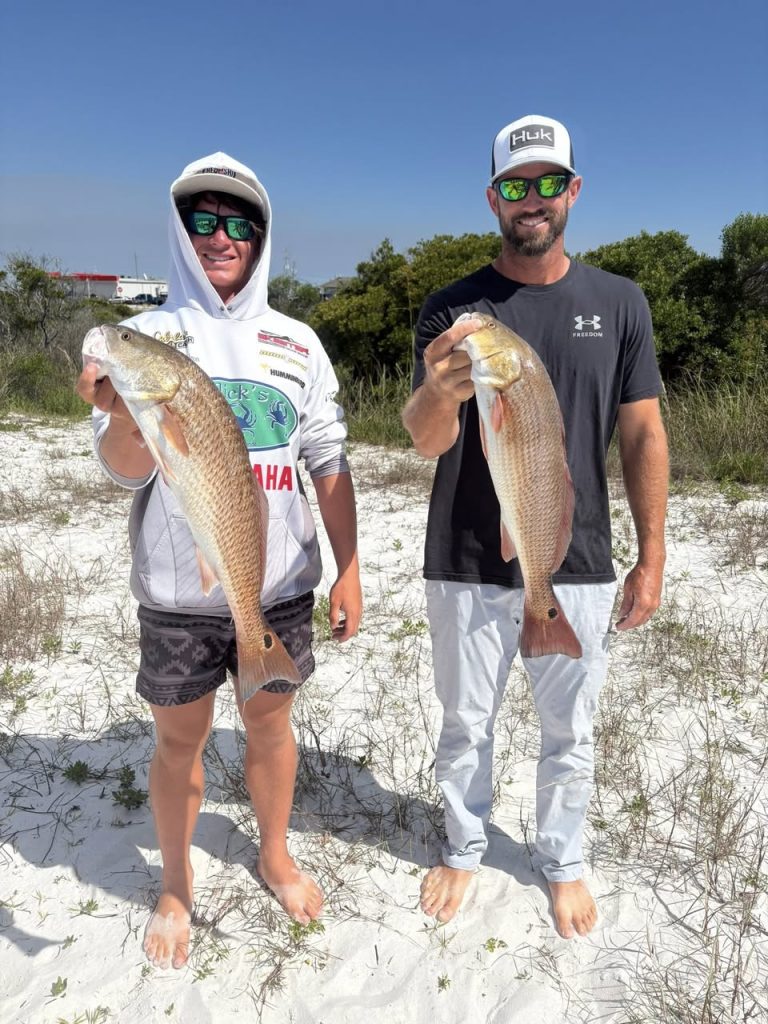
Anchoring adds another layer of decision-making. Nelson runs shallow-water anchors, but he admits they aren’t always the best tool for sight fishing. “Sometimes it’s better to power-pole down and risk spooking them, other times it’s better to just drift and get one quick chance before you make any noise,” he explained. In other words, the safest play can be to avoid anchoring altogether and simply take the shot the conditions give you.
Still, there are situations where some form of anchoring makes sense. In the winter, when north winds dominate, Nelson will use a stern-mounted stakeout pole rigged to his front cleat to keep the boat steady while pointing in the right direction. By staking out and letting the wind pull him straight, he can present baits naturally without the boat rocking or swinging on power poles. It’s a quieter, more controlled setup that sometimes beats drifting or traditional anchoring when fish are especially wary.
For newcomers, that level of delicacy can feel intimidating, but Nelson stresses that messing up is part of the process. He compares it to bowhunting—sometimes you get too close, sometimes you blow the shot, but every encounter teaches you something. “Even just seeing fish and spooking them tells you a lot about their nature,” he said. “You learn how they feed, how they react, and what sets them off. Over time, you start dialing in what works.”
His advice for beginners is to embrace trial and error. Don’t be afraid to push into shallow sandbars where you might get stuck. Don’t be discouraged if the first dozen fish bolt before you get a cast off. Each mistake builds intuition about angles, lure choice, and approach. “It’s beneficial even when you don’t catch them,” Nelson said. “The more time you spend scouting, staying quiet, and watching how they act, the better you’ll get at positioning the boat where the fish will actually be comfortable enough to eat.”
Flounder Fishing Inshore Around Structure
If redfish test your patience on the flats, flounder test your precision around structure. For Captain Branden Collier, who has spent years dialing in the Mobile Bay fishery, success with these flat-bodied ambush predators comes down to knowing where to stop the boat and how thoroughly to work each spot.
“When I think of flounder, I’m thinking of structure—whether it’s a point, a drain, a creek mouth, rocks, piers, pilings, or even a wreck in deeper water. All of these things will hold flounder at certain times,” Collier explained. “The structure attracts the bait, and then the bait attracts the bigger fish. Two, it acts as camouflage. They’ll nose right up to pilings, especially on the down-current side, just waiting for something to come past”.
Bait is the second part of the equation. A bank that looks pretty but is devoid of mullet or shrimp isn’t worth lingering on. “If I’m fishing a marsh bank and I’m not seeing any life—no mullet, no points or drains—I’m not going to fish that long. Maybe fifteen minutes. If I don’t get a bite, I’m moving on,” he said.
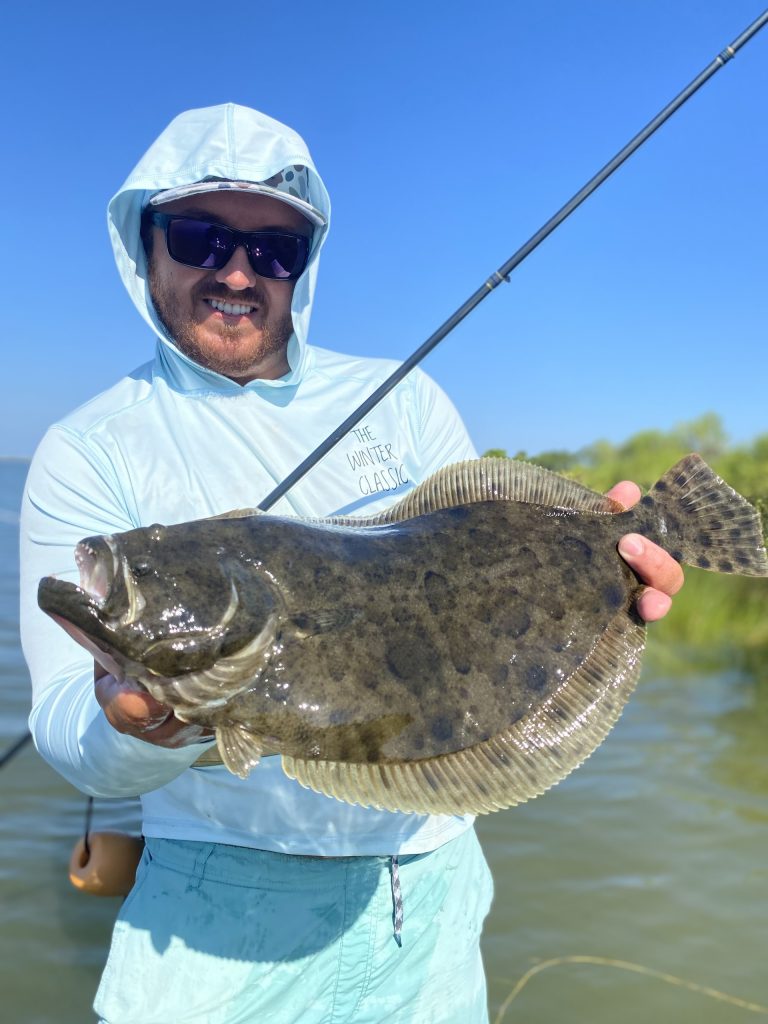
When he does find a promising area, boat positioning becomes the secret weapon. Collier relies heavily on his shallow-water anchors to stop his boat and pick apart key ambush points. “If I come upon a point or a creek mouth, I’m going to put my shallow-water anchor down and hit that area very, very hard,” he explained. “Nine times out of ten, if you’re not behind somebody who already fished it, you’re going to catch one there. That’s just where flounder are going to be lying”.
He doesn’t just blind cast either—he’s methodical. “I’ll fan my casts about three to four feet apart across a twenty-foot cut,” Collier said. “If I don’t get a single bite by the time I’ve covered it edge to edge, I’ll move on, because if the flounder’s there, he’s going to eat”.
Different types of structure call for different approaches. On marsh banks, Collier works parallel, with one angler throwing tight into the grass and another slightly off the edge. On docks, he gets as close as possible and fishes each piling individually. “I want to be right up in the juice,” he said. “I’ll drop my poles down and fish parallel first, then go back and cast in between each piling, boom, boom, boom. They’re nose-up on those pilings most of the time”.
Rocks and jetties are another favorite. Collier often fishes them parallel, keeping his bait right where rock meets sand. But he’s learned not to overlook the little sand pockets between the rocks. “Recently, my buddy Tanner showed me that throwing perpendicular gets bites you wouldn’t get otherwise,” he said. “If you fan cast into those gaps, you’ll sometimes pull one out that would never move for a bait going parallel”.
For Collier, the tide is the final piece of the puzzle. He says a falling tide is his favorite for flounder. “All the bait that was in that creek or drain is getting dumped out, and the flounder are just sitting there waiting for an easy meal,” he said. “If you hit your favorite spot on a falling tide, you’re going to get what you came for—numbers, quality, or both”.
The takeaway from Collier’s approach is clear: find the structure, find the bait, and then hold the boat steady long enough to really work the ambush points. Flounder are opportunistic predators, but they’re not going to chase a lure down like a trout or redfish. They rely on you to put it right in front of their nose. With careful positioning and patience, they almost always will.
Speckled Trout Inshore Fishing Tactics
If redfish demand stealth and flounder demand precision, speckled trout ask for a blend of both, with a heavy dose of timing. Few people know that better than Captain Bobby Abruscato, who’s built a career guiding along Dauphin Island and the Mississippi Sound. For him, boat positioning often means leaving the boat behind entirely.
Sometimes the smartest way to position your boat is to put it somewhere you aren’t fishing. “I had a real good Wade trip down to the west end of the island,” Abruscato recalled. “Man, that’s just my favorite place in the world. I’ve fished a lot of places, and to this day, that’s still my favorite. You get in the water down there, it’s just so quiet and pretty. Catching fish on topwater is a bonus”.
When conditions line up—calm mornings, a little tide movement—Abruscato is quick to slip overboard and work parallel stretches of beach or around CCA reefs. “We pulled up and jumped in the water, and this was probably about eight o’clock or 8:30 in the morning. The sun was up pretty good, and we immediately started catching fish on topwater with the sun high. If I’d started there, it would have been really good,” he said.
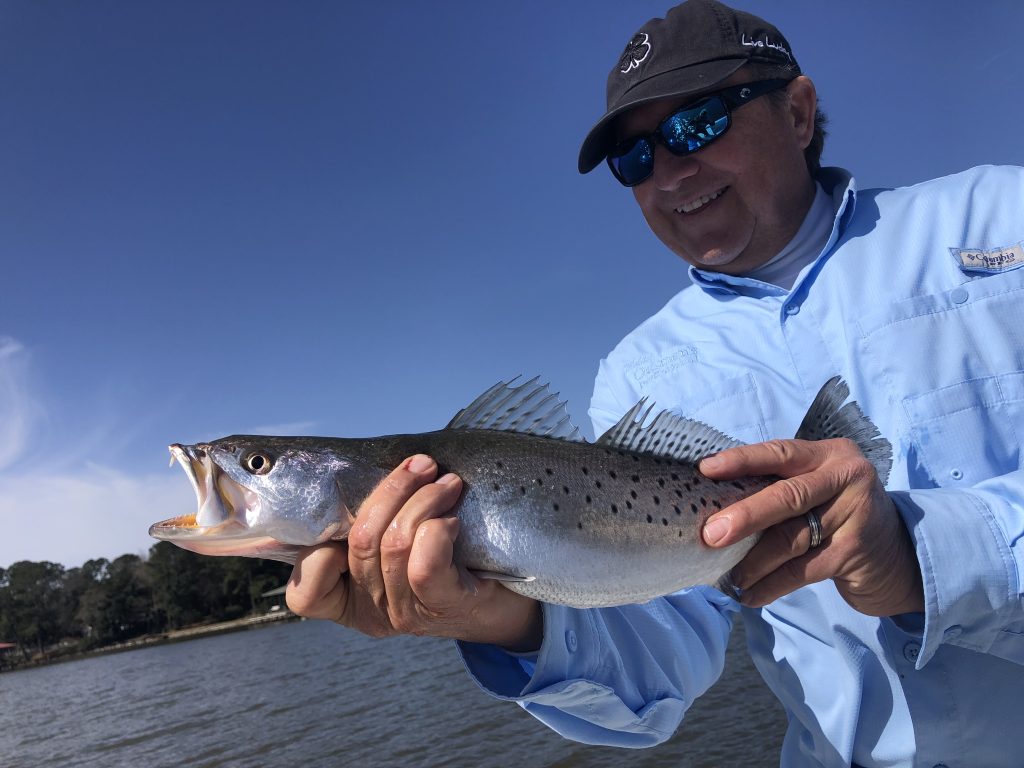
That experience reshaped how he thinks about topwater fishing. For years he saw it as a spring-and-fall tactic, but now he throws it almost every morning of the year. “Over the last number of years, I’m doing it every morning, even in these hot months, with the right crew,” he explained. “I used to think it was just seasonal, but the trout will eat a topwater if you give it the right presentation”.
Abruscato likes to match the size of his plug to conditions. “That J-Walker in the 100-millimeter size is what I use if it’s a normal chop on the water,” he said. “If it’s real calm, I’ll downsize to the 90 millimeter. If it’s choppy, I’ll go up. It’s all about putting the bait where they’re comfortable striking it”.
Boat control still plays a role, especially when he isn’t wading. Setting up current around bridges, reefs, or seawalls is key. “If the tide’s moving, I’ll get up-current and set the boat so the baits drift naturally into the fish,” Abruscato said. “There’s a point where it’s moving too much and it’s unfishable, but a couple hours after high or low tide, when it’s just right, that’s when you want to be there”.
Above all, Abruscato emphasizes mobility. He’s constantly moving between reefs, beaches, and structure, looking for signs of bait. Mullet showering on the surface or slicks on the water are his green light to stop and fish. And when the fish are there, he’s quick to adapt—starting with topwater, then shifting to subsurface lures like the Slick when trout quit chasing on top.
For Abruscato, positioning isn’t just about where the boat sits—it’s about reading tide, bait, and water movement, then putting yourself, whether on deck or waist-deep in the surf, in the place where trout are most likely to feed. It’s a constant dance, but when it comes together, the results are unforgettable.
The Anchor Advantage for Inshore Anglers
Across every corner of inshore fishing, one theme stands out—quietly getting into position and holding it is just as critical as the lure you throw. Whether it’s Nelson staking out in a north wind, Collier locking down along a marsh drain, or Abruscato setting up current on a reef, these anglers all agree that boat control is the backbone of catching fish in skinny water.
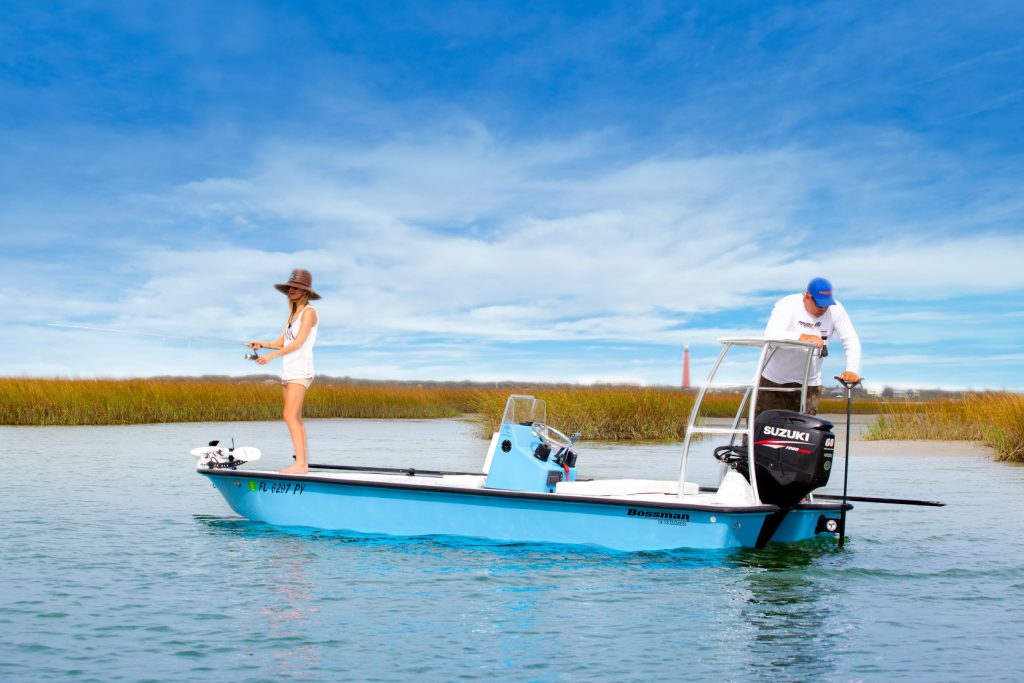
For many weekend anglers, the cost and complexity of powered shallow water anchors is hard to stomach, not to mention the added maintenance and repairs. For those who look for function without the price, manual systems like Stayput Anchors offer affordable, near-silent control that hydraulic poles can’t always match. Inshore fishing often requires about a $500 investment to position your boat exactly where you want it without spooking fish. In shallow water, where fish are wary and conditions change quickly, positioning isn’t just part of the game, it is the game.