
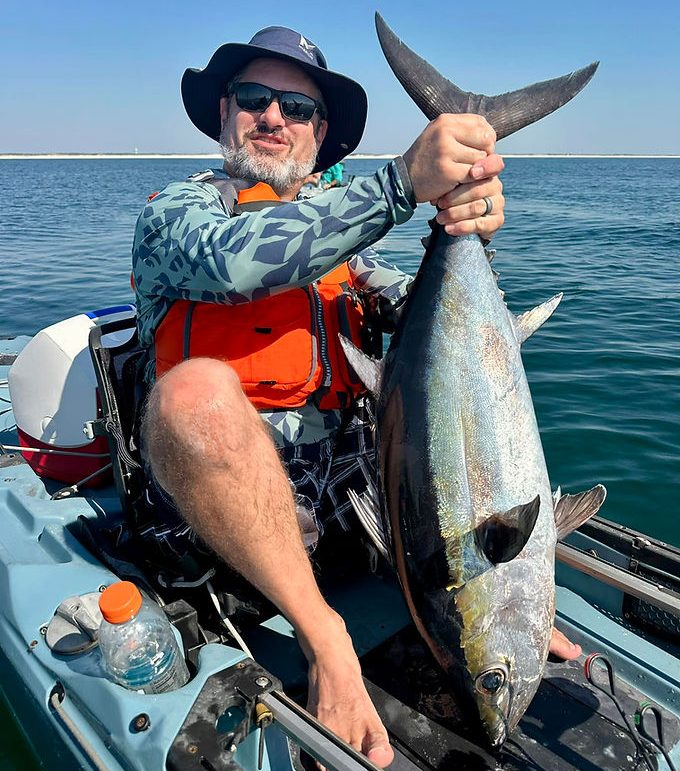
For kayak angler Brandon Barton, fall on Florida’s Gulf Coast marks more than just cooling temperatures. It’s also the start of one of the most exciting and overlooked offshore opportunities in the region: targeting Blackfin tuna within paddling distance of the beach. Kayak fishing for tuna may sound extreme, but for Barton, it’s a high-adrenaline challenge that’s well within reach. We caught up with him just in time for the start of what he considers one of the most thrilling fisheries of the year.
A Close-to-Shore Tuna Opportunity
Blackfin tuna aren’t typically the first fish you’d associate with kayaks. But every fall and winter, cold fronts push bait and predators close to the beach. Barton explains that during these windows, large Blackfin can be caught less than half a mile from shore, sometimes in just 35 to 50 feet of water.
“The fish don’t always stick to one depth,” he says. “But once you find them—whether it’s 35, 40, or 50 feet, that’s the depth you stick with.”

While the action is close to shore, these aren’t small fish. Barton reports Blackfin in the 20- to 30-pound range showing up consistently, which is above average even offshore. On one morning, Barton landed four solid Blackfin and even caught one on a topwater popper; an adrenaline-charged experience, especially from a kayak.
Gearing Up for Kayak Tuna Fishing
That size demands thoughtful gear choices. Barton prefers spinning setups with 4000 to 5000-size reels spooled with 30-pound braid. He stresses the importance of using proper drag settings, not just to protect the angler and gear, but also to reduce fight times and minimize the risk of shark predation.
“Dusky sharks show up when tuna are around,” he warns. “So you want to get those fish in quickly.”
One critical piece of hardware Barton never goes without is a gaff, especially as the tuna begin their signature death spirals below the kayak. “That last 10 to 15 feet is where most people lose fish,” he says. “They start circling, and it can be tricky around pedal drives and other gear.”
Tools, Technique, and Preservation
Catching tuna from a kayak is exhilarating, but proper handling afterward is just as essential, especially for table quality. Barton swears by bleeding his tuna immediately and has recently started using the Japanese ike jime process—spiking the brain, then running a wire down the spine to shut off the central nervous system.
“If you do it right, the difference in the quality of the meat is night and day,” Barton says.

Chilling is the final, vital step. While a true saltwater slurry (ice and saltwater) is tough to achieve in a kayak setup, Barton emphasizes getting the fish on ice as quickly as possible, even if that means using insulated fish bags. He warns against letting tuna flop on deck and build up heat and lactic acid, which degrades meat quality. If you’re looking for more information on the Ike/Shinkei Jime process and the right tools to get the job done, check out the AFTCO blog and resources.
Locating Tuna: Birds, Slicks, and a Bit of Luck
While traditional cues like diving birds and baitfish are helpful, Barton often finds success by trolling until he gets a strike, then zeroing in on that depth. When the surface action is quiet, he’ll look for oil slicks, a familiar tactic for people familiar with inshore speckled trout fishing.
“Those slicks are made by something,” he explains. “Whether it’s a school of bait or fish, it’s worth casting around them.”
While trolling deep-diving plugs is standard, Barton also keeps a popper rigged. He’s had success blind-casting topwater around slicks, hooking fish even when nothing was visible on the surface.
A Fish Made for Kayak Anglers
Despite their “trash tuna” reputation among some offshore anglers, Barton believes Blackfin are one of the most thrilling fish you can target from a kayak.
“Guys offshore are using 50-wides to catch 20-pounders. It’s a different story when you’re in a kayak with a 30-pound braid and a 4000-size reel. These fish fight like crazy.”
Their availability so close to shore makes them even more attractive. “You can literally launch from the beach with two rods—a trolling plug and a popper—and be into big fish within minutes.”
Safety First
With powerful fish like Blackfin, safety isn’t an afterthought. Barton recommends always fighting the fish off the bow for better stability, especially when drags are tight. Inexperienced kayakers should take extra precautions or even fish with a partner who can assist.
“The first tuna I ever caught nearly pulled the rod out of my hands,” says Barton. “If you’re not ready, you could end up in the water.”
Timing the Run
Blackfin show up with the fronts, often in bursts, and while they can be around from November through February, the bite can be hot for a few days and then disappear. Barton’s advice? When they’re biting, don’t wait.
“You hear about a good bite, you get out there tomorrow, not next week. Otherwise, you’re gonna miss it.”
Want to Give It a Try?
For those interested in getting in on the action, Barton runs trips through his company, Emerald Waters Kayak Charters. Visit emeraldwaterskayakcharters.com to learn more.
Key Tips for Kayak Tuna Fishing:
- Best Time: November–February, especially after cold fronts.
- Depth to Target: 35–50 feet—once you find the bite zone, stay there.
- Gear: 4000–5000 spinning reels with 30 lb braid; trolling plugs and poppers.
- Fight Strategy: Keep the fish off the bow to stay balanced; land with a gaff.
- Handling: Bleed immediately; chill on ice; consider the ike jime process.
- Signs to Watch: Diving birds, surface busts, and oil slicks.
- Safety Note: Manage drag for both control and to beat sharks to your catch.
Whether you’re in it for the fight, the thrill, or the sashimi, chasing Blackfin tuna from a kayak might be one of the Gulf Coast’s most underrated adventures. Just be ready. When these fish come in, they come in hot!