

As I write this article, it’s early November. All around the country, my hunting buddies are sending pics of big deer they’re killing. Most deer hunting magazines, which focus predominantly on midwestern whitetails, are already publishing their rut hunting pieces for the year. One buddy up in New Jersey, whom I talk with nearly every day of the season, has already put two P&Y class bucks down on public land. His local rut is just finishing up. Soon, he’ll be turning his thoughts towards hanging out with family, scouting for next season, and maybe polishing off a few extra freezer deer. People look at me like I’ve grown a second head when I tell them that my season really doesn’t get going good until after New Year, but it’s a fact! Down where I’m at on the Gulf Coast, the best days afield occur between January 15th and February 10th. I’ve killed more than one buck chasing or bedded with does during that magical 10 days of season DCNR gave our zone several years ago. Having a rut so late in the season, well after the familial obligation the holidays bring, is a blessing to Alabama hunters. It offers a unique opportunity for “one more go” at rutting bucks before it’s time to start thinking about turkeys and crappie. In this article, I’m going to discuss what I’ve learned after twelve years of late season deer hunting on the Gulf Coast.
Pace Yourself
Our bow season opened on October 14th this year. It will run until February 10th. That gives Alabamians almost 4 months of season. Alabama also still has a very generous doe-a-day bag limit, as well as allowing for 3 antlered bucks (4 if you make a bonus buck day at a qualifying WMA). I’m not aware of another state that allows you the opportunity to shoot more deer than Alabama.
I love our generous seasons and bag limits. But they can trip hunters up. For starters, it’s easy to get a little “trigger happy” and wind up without a buck tag by the time our late rut rolls around. I did this one season, and ever since have kept to a strict rule. I will punch no more than one buck tag before January. It’s much less frustrating to “miss out” on punching your third tag than it is to be watching a buck pant behind a doe on the last weekend of season and not have a tag. Three tags seems like a lot, but when you consider that we have four months of season, they go faster than you think!
Another problem that’s harder to quantify but no less important is husbanding your supply of sick days, vacation leave, and “kitchen passes.” It is very, very easy to burn up goodwill early in the season and find yourself with family members and coworkers unsympathetic to how great the hunting is in late January. I try my hardest not to hunt between Thanksgiving and New Year. In my experience, this time frame is usually the least productive. It’s relatively easy to get on deer during archery season, but once gun season comes in the weekend before Thanksgiving, hunter pressure generally moves deer into areas that are difficult to access and keeps them there during daylight hours.

Another resource to conserve is your own mental and physical energy. As somebody who both deer and duck hunts, I often find myself hitting peak rut looking and feeling like I was drug behind a Jeep for several miles down a dirt road! I’m running a sleep deficit from 3 months of early alarms and midnight oil work hours, and I’m worn out from packing stands, setting decoys, and dragging deer. Some years, there just hasn’t been enough in the reserve tank for me to bring my A-game by the time rut shows up.
The final issue hunters can run into before rut even arrives is that they’ve put pressure on their best spots. This is perhaps the biggest mistake I’ve made in the past. You can’t control what other hunters do, but you can control the pressure you put on areas. The less pressure you put on food plots, natural browse areas, transition zones, and bedding areas, the better shape you will be in by the time rut kicks in. Bucks will follow the does, and the does will be anywhere that they can find food and a place to lay up without getting harassed by hunters.
Finding Bedding Areas
Assuming you’ve made it to January with tags in your pocket and the free time and energy to fill them, there’s just one little issue that remains. Where do you sit? The easy answer is “where the deer are.” But where are the deer when late season deer hunting in Alabama?
There are a few things that have happened to change deer behavior come January. The biggest factor influencing their movement pattern is hunter pressure. Deer have had October, November, and December to get thoroughly sick of the orange hat crowd. The leaves are long since off of the trees, the woods are open, and as a result, deer will retreat to Streamside Management Zones, grown over clearcuts, young “Christmas Tree” pine stands, palmetto flats, yaupon thickets, and other areas where most hunters won’t intrude.
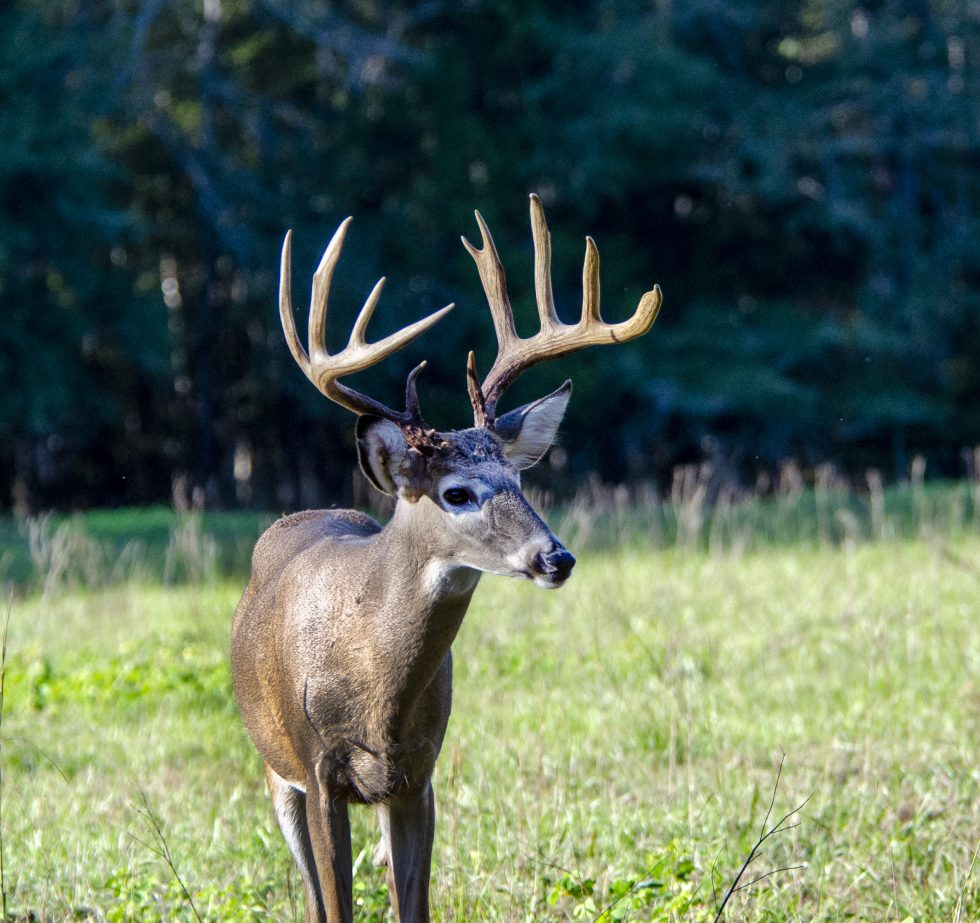
If you’re looking for a rut stand location, start by asking yourself, “Where haven’t I hunted or walked through this year?” I make what I refer to as “spaghetti maps” on my hunting mapping apps. These are easily made by turning on your apps tracking feature and leaving a breadcrumb trail every time you walk the woods, whether it’s to scout, hang stands, or hunt. After a season (or several, for me) you’ll have a nasty tangle of lines on top of your imagery. Areas clean from lines are areas where you haven’t walked through. It could be because that area is swampy or overgrown, or it could just be because it’s a “forgotten” corner of property. Whatever the reason, if you haven’t disturbed that area, there’s a reasonable chance that whitetails will be bedded there during daylight hours.
Another way to ascertain where deer spend their daylight hours is to simply walk until you bump them. Deer, in my experience, can handle a bit of bumping without abandoning a bedding area. If I suspect an area may be a bedding area, I’ll quietly walk that area during lunchtime, listening and looking intently for signs of deer scurrying away. Sometimes a fleeing deer is obvious, bounding off loudly while waving its characteristic white flag. Other times, it’s much more discreet. Many deer will slink away like a dog who got caught in a trash can, tail tucked and head hung. Once you’ve located a deer this way, either hang a stand and hunt that area immediately or drop a pin, back out and return as soon as conditions permit. You’ve found proof positive that deer hang out in that area during legal shooting light.
Find The Food
Another thing that changes in Alabama’s winter woods is food availability. By January, all of the browse and soft mast is a distant memory, and our acorn crop is largely played out. Deer are as hard-up for food as they’ve been since late summer when they were stuck after the browse went woody and before the acorns dropped. If you pay attention, you’ll start to see deer browsing on the side of the road or in fields during daylight hours in the late winter. You’ll also see a spike in activity on plots and bait sites, even if it’s taking place under the cover of nightfall. You’ll also notice a spike in roadkill well before it can be attributed to rut activity. Our deer never starve like they do up north in areas that suffer from heavy snowfall, but the cold weather does increase their caloric need and reduce the availability of food.
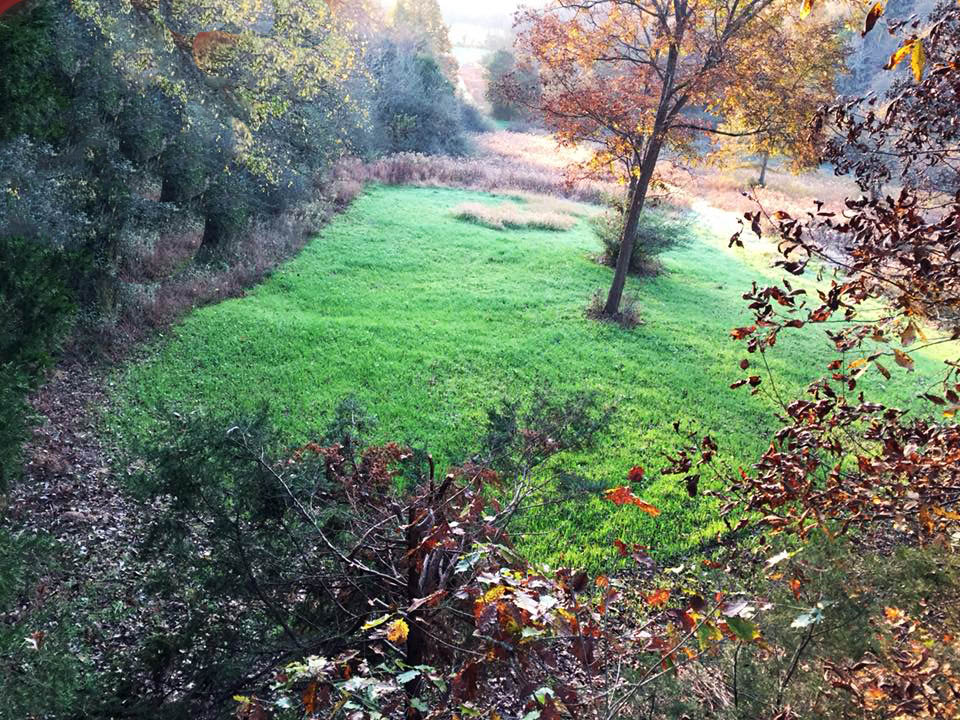
So what does this mean for a hunter? Basically, man-made food options become much more appealing as natural food sources dry up. Food plots and bait sites become primary feeding areas later in the year. Once you’ve identified bedding by way of “spaghetti maps” and bumping deer, locate food plots and bait sites. A picture should be slowly beginning to emerge.
Deer Highways
The final step in understanding a property is identifying travel corridors, and a final unique quirk to Alabama’s season can help with that. You see, Alabama’s wet season is during our winter. Every year, our river systems flood. Particularly in the lower part of the state along the Alabama and Tombigbee Rivers, and especially in the areas where they converge (Clarke, Monroe, Washington, Baldwin, and Mobile counties), the floodplains will fill with water. These floodplains are usually filled with mast trees that draw deer into them during the fall, and provide both food and relief from hunter pressure. But the floods will push these deer onto the nearest high ground come January, if not sooner. Sometimes, deer become “trapped” between the floodplain and the nearby developed areas that were built on higher ground. But what usually happens is that this floodline becomes a travel corridor of sorts, with deer frequently moving up and down river systems on the edges of the floodline.
Another good corridor can be SMZs through cutovers. Rifle hunters love wide, open clear cuts, and don’t particularly care for the wet, cramped confines of these creek bottoms. But a buck en route from one area to another can use this narrow ribbon of undisturbed habitat to slip through a very large cutover that is very well covered by riflemen. I have personally had very good late-season hunts on the renowned Barbour County WMA, where I watched dozens of deer move along an SMZ on the way to and from a large field on private property.
Putting Together The Late Season Deer Hunting Pieces
By now, you should have enough information to look at your property and make a guess at three things. Where deer are potentially bedding, where deer are potentially feeding, and how they are moving from one place to another. Before you start hanging stands, it’s important to actually walk these areas and make sure that they’re actively being used. Not every thicket holds deer, and not every food plot gets browsed. I generally start walking likely spots around Christmas, looking primarily for the early rut sign. If you have any of the areas I’ve described on your property, and if you walk them and notice scrapes and rubs, you are 80% of the way towards killing a deer. All that’s left now is to hunt.
Waiting For The Cold Front
There isn’t a bad time to be in the woods during the rut, but some days are better than others. Years ago, I read Dr. Robert Sheppard’s “Whitetails.” I think of my career as a hunter as consisting of two eras, pre-Sheppard and post-Sheppard. While his book is full of useful information for an Alabama hunter, the biggest takeaway I left with was that nothing increases your odds of seeing a deer during daylight hours like a good cold front. Recent collar studies on whitetail have begun to confirm what Sheppard found out decades ago. Deer in the deep south leave their bedding areas and travel more widely during the day when the temperature drops. Time and time again, I’ve proven this to myself. Cold weather gets deer moving in lower Alabama.
With that in mind, I save my “best bet” rut stands for a cold day. If you have an unmolested bedding area, feeding area, or a corridor between two bedding areas or a bedding and a feeding area, and it has fresh rut sign from this year, and you hunt it on a cold day…keep your rifle in your hands while you’re on stand, because that will be the best day you will have all year to shoot a big buck!
Preparing For All Day Sits
If I am blessed with a late season deer hunting day and a stand location like I’ve described, I will plan on sitting in that stand all day. In order to do that, you must take care of several problems.
For starters, many Alabama hunters are not used to hunting cold weather. We typically get our coldest weather in January. Alabama is a humid state, and high humidity, low temperatures, and a stiff Nor’easter tends to put most hunters’ clothing system to the test and find it lacking. Most of my hunting gear is inexpensive, but over the years I’ve learned that good clothing is worth the money if you’re serious about rut hunting. I’m not brand loyal to anybody in particular, but I am fabric-loyal. I like wool for my baselayers (top and bottom) and Primaloft Gold or Silver for my insulating layers. I also never hit a rut stand without a good windbreaker layer. I put scent-free antiperspirant on my feet to keep them from getting cold and sweaty, and pack spare socks, foot warmers, and adhesive body warmers in my daypack. I also pack a high-calorie snack food, as well as a thick knit cap and something to cover my neck. For a deeper dive on layering for cold weather hunts, checkout our article on proper layering for cold weather hunts.
Something I’ve also started carrying in recent years is a pair of bone conduction headphones. These nifty little things allow you to listen quietly to a podcast or ebook without compromising your hearing. They don’t plug or cover your ears, and they’re a much better alternative to spending time with your nose buried in your phone.
“Rutcation”
While a well-timed cold front drastically increases your odds of encountering a buck during daylight, there’s really not a bad time to be in the woods during the rut. If I have confidence in my spot, I will sit it as hard as I can while the action is good, and I will do so for multiple days. Sometimes it’s all about “paying your dues,” and this time of the year the currency is hours on stand.

Spending several days on a stand can be rough on your body and your mind. It’s important to take care of yourself if you’re going to stick it out. Resist the temptation to eat junk food. Make an effort to eat your fruits and vegetables, drink enough water, and keep some protein in your system. Take it easy on the coffee, and take it very easy on the evening beers. It doesn’t take much alcohol at all to make the snooze button and a late breakfast look more enticing than getting dressed and braving the cold.
Final Thoughts On Late Season Deer Hunting
In short, successful late season deer hunting during Alabama’s rut hinges on several factors. Understanding how herd location is impacted by the pressure our long season brings and wintertime food scarcity is the first step of the puzzle. The second step is identifying the travel corridors bucks use as they cruise from doe group to doe group. The third is being on stand as much as possible when the rut is underway, especially if cold fronts force deer on their feet during daylight hours.
Hunting Alabama’s late-season rut effectively can be hard but assuming that you’ve paced yourself, done your homework, and are mentally and physically prepared, the last few weeks of the season can bring success that will leave you looking forward to next year.
Full Disclosure: This post may include affiliate links. There’s no extra charge to our readers for using these.