
For dedicated duck hunters, the thrill of the hunt comes with its share of challenges, particularly on crowded public lands and during late season duck hunting, when birds have seen it all and the margin for error is razor thin. Robby Jones of Biskit Built 3D LLC, an experienced hunter and innovator, has learned how to tackle these obstacles. By combining creative decoy tactics, preparation, and adaptability, Jones has developed a bulletproof strategy for hunting pressured, late season ducks.
Meet Robby Jones and Biskit Built 3D
Robby Jones, founder of Biskit Built 3D LLC, is both a seasoned duck hunter and an inventor. His passion for the sport, along with the need for better hunting tools, led him to experiment with 3D printing as a solution to common duck hunting challenges. His flagship product, the Decoy Doctor, is a 3D-printed motion decoy kit designed to bring lifelike movement to decoys in a hunting spread. Built to handle the harsh conditions of tidal and brackish waters, these motion kits offer hunters a durable, affordable way to add realism to their setups.
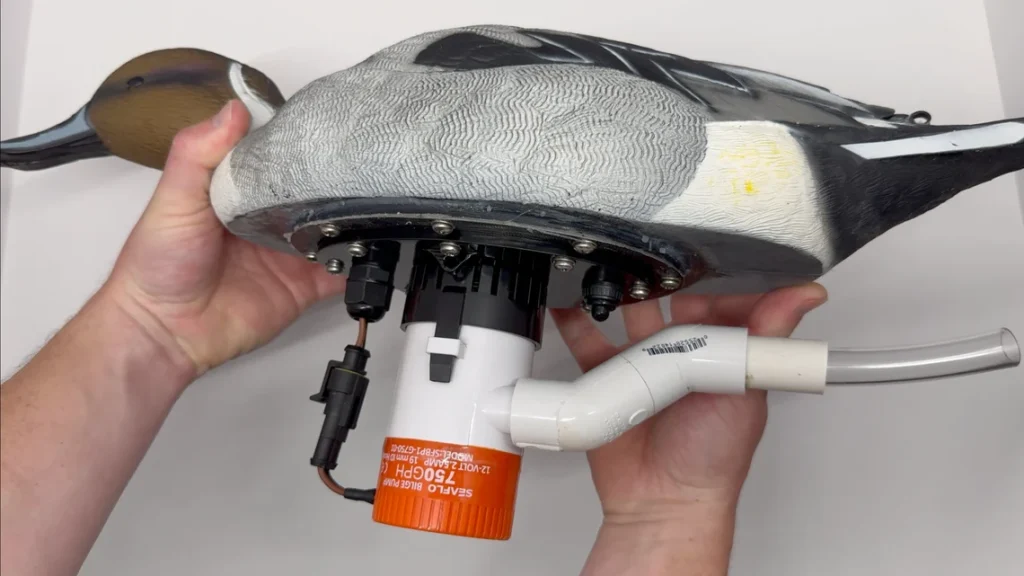
The Decoy Doctor was created out of necessity. Tired of replacing commercial decoys damaged by saltwater and frustrated by the high costs, Jones set out to design a reliable, customizable product any hunter could use. “I wanted something that would stand up to saltwater and move naturally,” he explains. “Most commercial decoys just didn’t hold up.” With his product, hunters can create realistic, subtle movements that attract wary, late-season ducks.
The Realities of Hunting on Public Land
Hunting on public land requires more than just skill; it calls for flexibility and contingency planning. Jones points out that hunters often spend time scouting a prime spot, only to arrive and find it taken or disturbed. “You have to be prepared for that. You need a backup plan,” he says, emphasizing the importance of having alternative locations to deal with the unpredictability of public lands. Crowded areas can disrupt even the best-laid plans, and being able to adjust can make or break a hunt.
Mastering Decoy Placement and Motion
Success in duck hunting often depends on setting up where ducks naturally want to land, or “being on the X.” Jones explains that even with a prime location, the decoy spread is crucial for attracting birds. “The motion decoy goes in the kill hole—the area where we want ducks to land,” Jones says, describing his technique of creating a natural blockade around a focal point, which adds depth and realism to the setup.
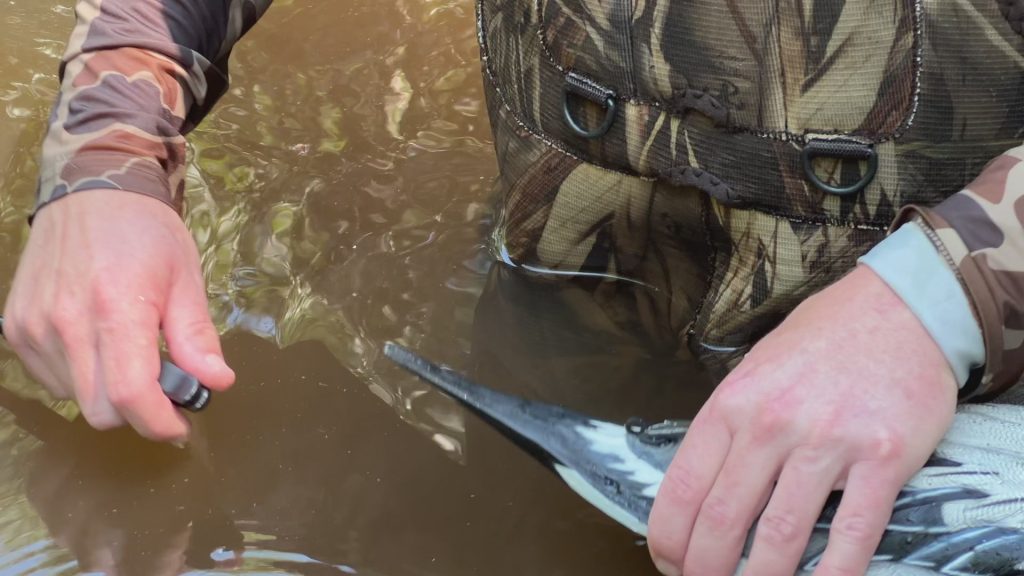
Jones’s approach uses subtle motion to mimic natural behaviors. “When you look at a flock of real ducks, there’s always movement,” he observes. By positioning motion decoys in the kill hole and arranging others to simulate a lively flock, Jones believes he creates a convincing scene that boosts his chances. His 3D-printed motion decoys, crafted to mimic a duck’s smooth swimming motion, are especially effective in tidal areas where currents enhance the effect.
Rethinking Species and Decoy Spread Variety
For hunters on heavily pressured public lands, Jones recommends moving away from standard setups. For instance, mallard decoys are often overused, even in areas where mallards are not the dominant species. “Everybody’s got a mallard spread,” he notes, adding that ducks learn to recognize these setups after repeated exposure. Instead, Jones suggests experimenting with decoys for other species or arranging smaller, more natural spreads. This approach, he believes, helps hunters stand out.
Jones also chooses his motion decoys with care. While spinning-wing decoys work well early in the season, he avoids them later on. “They have their place, especially for teal, but by late season, ducks have seen it all. I stick to subtle, natural movement to avoid spooking them,” he explains.
As somebody who hunts in areas where gadwall and wood ducks outnumber mallard 100-to-1, Robby’ advice on not throwing out a dozen mallard decoys really resonates with me. Something that has frustrated me for years is the fact that it’s almost impossible to find motion decoys built around gadwall and wood duck decoys. Being able to add motion to any decoy you have is a big advantage, especially if you’re hunting in an area where mallards are uncommon, or if you have a preference for flocked decoys. Robby’s design also lets you swap the “guts” of a motorized decoy kit between decoys, which is an awesome feature for hunters who bounce between, say, puddle and diver ducks.
Calling and Concealment for Late-Season Success
As the season goes on, Jones adapts his calling and concealment techniques. “As the season progresses, I back off on calling,” Jones shares, noting that ducks tend to become wary of aggressive calls after a few months. “I let my decoys do the talking.” In his experience, pressured ducks respond better to subtle, realistic sounds, like a low-volume drake whistle, rather than loud hen calls.
Jones also takes concealment seriously, ensuring his setup blends seamlessly into the environment. He often uses marsh grass to disguise his blind and matches his clothing and camo pattern to his surroundings. “There’s no sense wearing camo if you’re in a dark blind,” he adds. “For sure, if you’re not in a blind, then it’s important for your camouflage to match the environment. But I feel like a blind really helps with concealment, and in a blind, black or dark solids make more sense.”
For Jones, keeping the decoys as the focal point while his blind fades into the background is essential for a successful setup.
Scouting for Ducks
Another crucial element to success in late season duck hunting is scouting. As the season progresses, birds learn from and adapt to hunter pressure. In-season scouting is crucial to staying on top of shifting patterns and keeping abreast of much-anticipated waves of “fresh birds.”
In my home swamp, I spend a lot of time in-season walking, poling, or slowly trolling through the swamp with a pair of binoculars around my neck. I check water levels daily, and when the water’s on the rise, I prioritize investigating areas that I suspect will be freshly flooded. Freshly flooded ground provides food to hungry ducks, and there’s no better place to be than food that other hunters don’t even know exists yet.
Something else that I’ve been experimenting with in flooded timber is the use of cellular trail cameras to keep tabs on known honey-holes. Instead of using the camera’s motion-sensing feature, I set mine to take time-lapse photos the first few hours after legal shooting light. This gives me a feel for how many birds are in an area, and for how long they continue to trickle into a hole. I can also use the on-demand capture feature on my cameras to check water levels in the swamp, which is a big help when planning tomorrow’s shoot.
Final Tips for Public Land Hunters
For hunters navigating crowded, pressured public land, Jones’s primary advice is to stay adaptable. He encourages hunters to move beyond conventional setups and experiment. “You have to hunt your own hunt,” he says. Whether that means trying new decoy types, adjusting calling techniques, or improving concealment, Jones believes success often lies in the willingness to innovate. By keeping detailed notes on variables like tide, wind, and weather, hunters can gain insights that guide future hunts.
Ultimately, Jones’s late season duck hunting approach combines creativity, preparation, and adaptability—traits he sees as essential for any duck hunter. “Control what you can control,” he advises, “and don’t be afraid to try something different.” For hunters seeking success on public lands, Jones’s strategy offers a thoughtful approach to navigating the unique challenges of hunting pressured ducks.