
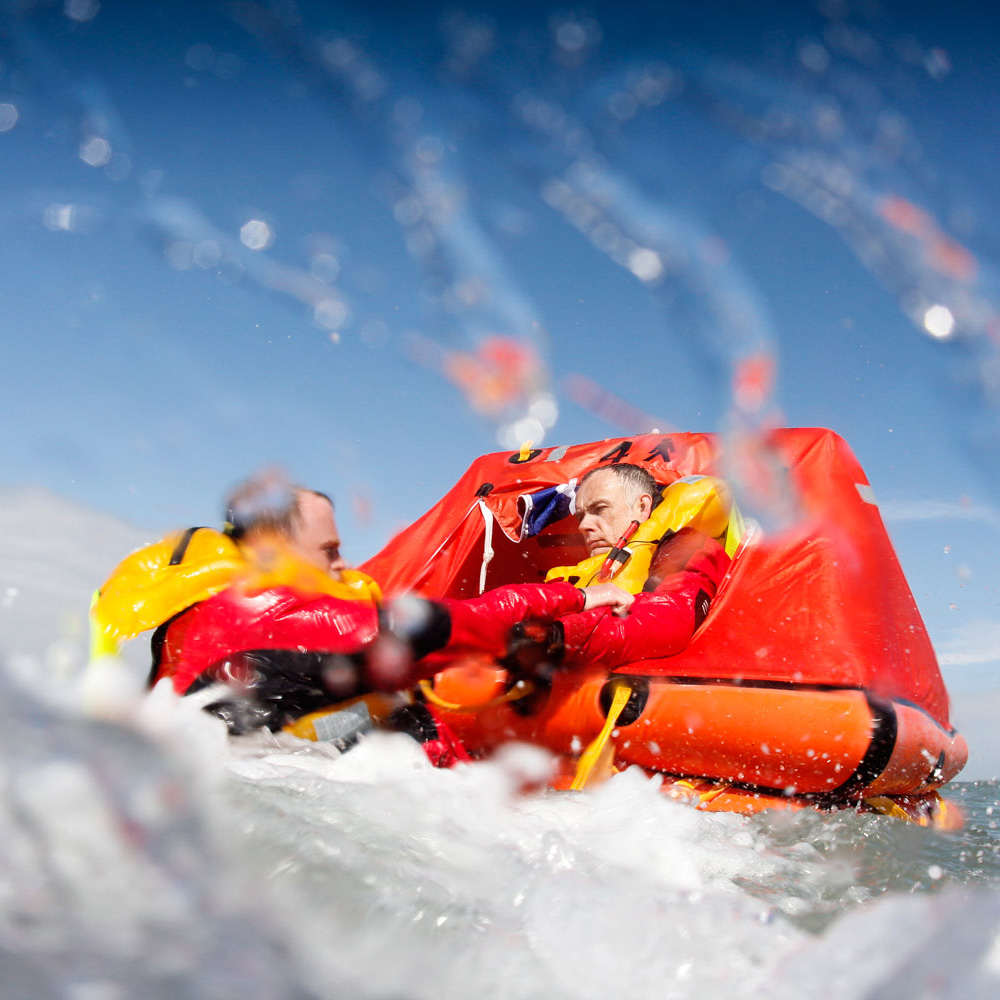
Getting out on the boat and chasing big game, offshore or nearshore is about adventure, relaxation, and making memories with loved ones, whether that be family, great friends, or both. That feeling of freedom you get when opening up the throttle coming out of the no-wake zone and gliding into big open water is a feeling like no other—but it also comes with risks and lots of responsibility. When you have family and friends on board, and others waiting on you at home to return safely, it adds a layer of thought and planning to make sure your ducks are in a row when and if something goes unplanned out on the water. That being said, the unexpected can happen whether you are prepared or not. Whether it be a fire onboard, unexpected rough seas, or a sudden collision, many important things can mean the difference between just an inconvenience and an extended day on the water, and some can be a matter of life and death. A life raft can mean the difference between survival and tragedy. Despite this, many boaters put off buying one, believing warm waters or an EPIRB (Emergency Position Indicating Radio Beacon) will be enough to keep them safe.
Dan Greer, co-founder of Survival at Sea, has spent years helping boaters make smart safety decisions. He emphasizes just how quickly things can go wrong. “We see it all the time,” Dan says. “One minute everything’s fine, and the next, the boat is on fire or taking on water. You don’t have time to think—you just have to react. That’s when having a life raft can make all the difference.”
To help boaters navigate the buying process, Dan breaks down the different types of life rafts, key features to consider, and how to manage long-term costs.
Why You Need a Life Raft
Emergencies on the water happen fast, often giving boaters little time to react. Without a life raft, the chances of survival drop dramatically. Dan shared a real-life example of a commercial fishing crew that found themselves in immediate danger.
“They were about 100 miles offshore when one of the crew noticed smoke coming from the engine room,” Dan recalls. “By the time the captain checked it out, the fire was out of control. They didn’t even try to fight it—they just grabbed their life raft and survival suits, got off the boat, and set off their EPIRB.”
Because they had the right gear and a solid plan, all six crew members were rescued within two hours. Unfortunately, not every story ends as well.
“Just last month, a father and son were moving their boat to a different harbor when they hit bad weather,” Dan says. “They managed to send a text to a friend saying they were rerouting, and that was the last anyone heard from them. They didn’t have a life raft, and tragically, they didn’t make it.”
For recreational boaters, the Coast Guard’s 2023 data paints a grim picture—564 deaths, 75% of them drownings. And of those drownings, 87% of victims weren’t wearing life jackets.
“The sad part is, most of these accidents are preventable,” Dan says. “Having the right safety gear, knowing how to use it, and making safety a priority can save lives.”
Who Needs a Life Raft?
Unlike commercial vessels, most recreational boats aren’t legally required to carry a life raft. But does that mean you don’t need one? Not according to Dan.
“If you’re going farther from shore than you can swim back, you need a life raft,” he says. “Even if you think you’re close, a mile is a long way in rough seas. You’re not meant to be in that environment, and exhaustion sets in fast.”
For offshore anglers, hybrid bay boats, and even coastal cruisers, a life raft is an essential piece of equipment—just like a fire extinguisher or first aid kit.
Types of Life Rafts
Not all life rafts are created equal. The right choice depends on where and how you boat. Dan breaks them down into three main categories.
1. Near-Shore Life Rafts
- Best for: Short offshore trips, quick rescues
- Features: Single inflation tube, minimal gear, no canopy
- Pros: Lightweight, compact, affordable
- Cons: Less durable, limited flotation if punctured
“This is really just a step up from a life jacket,” Dan explains. “It gets you out of the water while you wait for rescue.”
2. Coastal Life Rafts
- Best for: Moderate offshore distances, longer rescue wait times
- Features: Dual inflation tubes, canopy, slightly more survival gear
- Pros: More stability, better protection from the elements
- Cons: Heavier, slightly higher cost
“These rafts give you a lot more security,” Dan says. “They’re built for rougher conditions and have more redundancy.”
3. Offshore Life Rafts
- Best for: Deep-sea fishing, long-range cruising, cold waters
- Features: Insulated floor, emergency survival kit, automatic lights
- Pros: Built for extended survival, better protection against hypothermia
- Cons: More expensive, requires more storage space
“If you’re way offshore, this is what you want,” Dan says. “It has everything you need to survive for a longer period.”
Choosing the Right Size Life Raft
Sizing is another crucial factor. Life rafts typically allocate four square feet per person—but that’s tight for adults.
“If you’ve got four guys on board, don’t get a four-person raft,” Dan advises. “It’s cramped, and if you need to bring extra gear, you’ll wish you had more space.”

His recommendation? “Always size up if you can. If your max capacity is six, get a six-person raft.”
What to Look for in a Life Raft
When comparing rafts, look for:
- Approval Ratings:
- US Coast Guard Approved – Required for commercial vessels, expensive, annual servicing.
- ISO Approved – Meets international safety standards, best for recreational boaters.
- Manufacturer-Certified – Often high quality but lacks official certification.
- Storage Options:
- Duffle bag/valise storage – Compact and storable in hatches.
- Hard case with hydrostatic release – Mountable, auto-releases if the boat sinks.
“People buy the cheapest option, then realize later it’s missing key features,” Dan warns. “Buy once, cry once. Get what you actually need.”
Cost and Maintenance
Many boaters hesitate due to cost, but when broken down, a life raft is an affordable long-term investment and it may just save your life.
- Starting Purchase Prices:
- Near-Shore: ~$1,000
- Coastal: ~ $1,400
- Offshore: ~$1,600
- Repacking & Servicing: (Every 3-5 years)
- Near-Shore /Offshore: ~$500 – $1,000
- Total Cost Over 12 Years:
- $216 – $466 per year (depending on size and configuration)
“It’s less than a boat towing membership,” Dan points out. “When you break it down, it’s a no-brainer.”
Where to Store Your Life Raft
Proper storage is key. The best location depends on your boat layout. “You don’t want to bury it under gear in a V-berth,” Dan says. “In an emergency, you need to grab it fast.” For larger boats, mounting it on a hardtop with a hydrostatic release is ideal. “If the boat sinks, it’ll float free and be accessible,” he explains.
Final Thoughts
For me, it is all about peace of mind. When I take my vessel offshore it adds an extra level of enjoyment knowing that if the worst-case scenario were to happen, my crew and I will be safe. Safety should always come first on the water. “People spend thousands on fishing gear but hesitate on a life raft,” Dan says. “It’s something you hope to never use, but if you need it, you’ll be glad you have it.” If you’re ready to invest in a life raft, Dan recommends starting with local service options. “Make sure you can get it serviced nearby,” he advises.
For expert guidance, visit Survival at Sea or call their team. Because when the unexpected happens, being prepared can save lives.