

Powered by RedCircle
This week’s Lower Chesapeake Bay Fishing Report shifts from a standard bite rundown to a timely preseason conversation about safety, preparation, and decision-making on the water. Host Luke Barton talks with Capt. Michael Hosang of Fishing4mortgages about a recent spearfishing trip to Costa Rica, hard lessons from a tragic solo-diving incident in Florida, and the safety checks, gear habits, and weather interpretation that can help Chesapeake anglers and boaters make smarter calls this spring. The episode also includes practical insight for newer boaters trying to understand wind, tide, swell period, and when conditions are good enough to go — or bad enough to stay home.
Conditions Recap
The overall theme this week is early-season preparation. Water temperatures are warming, fish are beginning to move, and many anglers around the Lower Chesapeake are still in planning mode rather than fully dialed-in fishing mode. Instead of focusing on a hot bite, this report centers on the things that matter before the season really opens up: checking equipment, reviewing safety procedures, interpreting marine forecasts correctly, and understanding how quickly spring conditions can change on the bay and near the mouth of the Chesapeake.
Spearfishing Safety, Dive Prep, and Why Redundancy Matters with Capt. Michael Hosang
Capt. Michael Hosang joined the show to talk through the kind of checklist-driven thinking that applies not only to spearfishing, but to any serious day on the water. Michael explains that before every dive he works through a top-to-bottom safety process that includes a dive flag, mask, snorkel, weight belt setup, multiple knives, and backup line management. One of his key points is that the dive vest is a useful safety feature, but it never replaces a real dive buddy. That was the central lesson from a fatal incident he described from Florida, where a solo diver was later found underwater after apparently becoming tangled in his own line. Michael makes it clear that no fish, no gun, and no piece of gear is worth a life, and that buddy awareness, limits, and training have to come first every time.
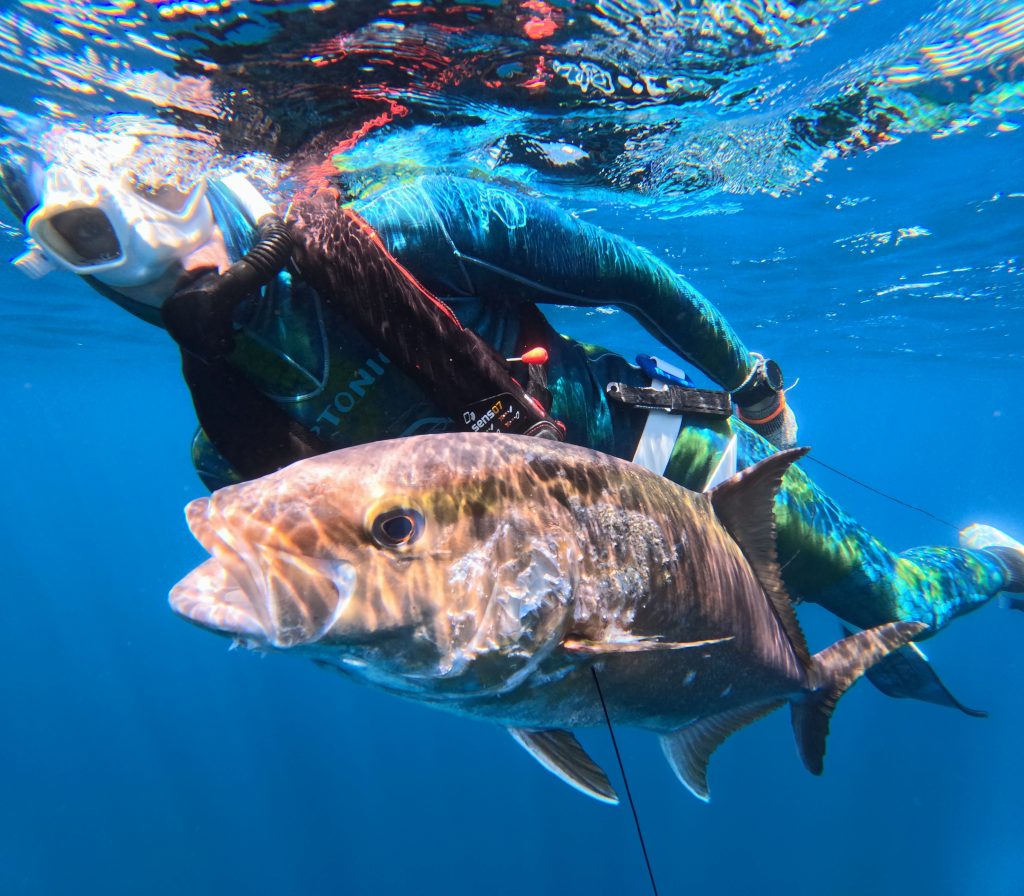
He also walks through the details that often get overlooked until something goes wrong. Michael keeps a knife on his belt and another on the inside of his calf so either hand can reach a blade quickly if line gets wrapped. He stresses that line management is critical, especially when fighting strong fish underwater, and describes how even a solid shot can turn dangerous when a diver is overmatched or disorganized. His advice throughout this section is practical and experience-based: stay within your actual dive limits, never push bottom time just because fish are present, and practice emergency procedures before you ever need them.
Gear recommendations mentioned in this section included a dive vest, a properly rigged reverse-latch weight belt, redundant dive knives, and disciplined line management for spearguns and float systems.
Costa Rica Dive Report: Tuna Action, Big Fish, and Equipment Failure
Michael also shared a recap from a February trip to Jaco, Costa Rica, where he and his crew spent the first two days hunting yellowfin tuna around spinner dolphins. He described high-adrenaline diving with tuna running deep, fast drops on short opportunities, and the sight of truly giant Pacific yellowfin mixed in with smaller fish. He estimated seeing one fish well over 300 pounds, with long sickles trailing past the tail. The trip produced fish, but it also reinforced the importance of checking gear constantly. On one shot, a bent line release apparently caused a cable failure and cost him both the tuna and his spear setup. That story turned into another broader reminder for listeners: equipment issues that seem minor on land can become expensive or dangerous when everything happens fast offshore.

Products and gear mentioned during this section included a speargun line release, 300-pound stainless shooting cable, a float line, and a CO2-equipped dive vest.
Weather, Wind Direction, and How Chesapeake Boaters Should Read the Forecast
The second half of the conversation turns toward boating decisions in the Lower Chesapeake, especially for anglers running 25-foot-class center consoles who want to fish the bay, nearshore wrecks, or areas closer to the mouth. Michael says he leans most heavily on Buoyweather, FishWeather, Fish Currents, and Windy, but he does not trust any single app blindly. His habit is to compare multiple forecasts and usually assume the rougher version is closer to reality. He notes that in the bay, a southwest wind is often more manageable because land blocks some of the fetch, while a northeast wind is typically a strong signal to stay in, do maintenance, or pick a land-based plan instead.
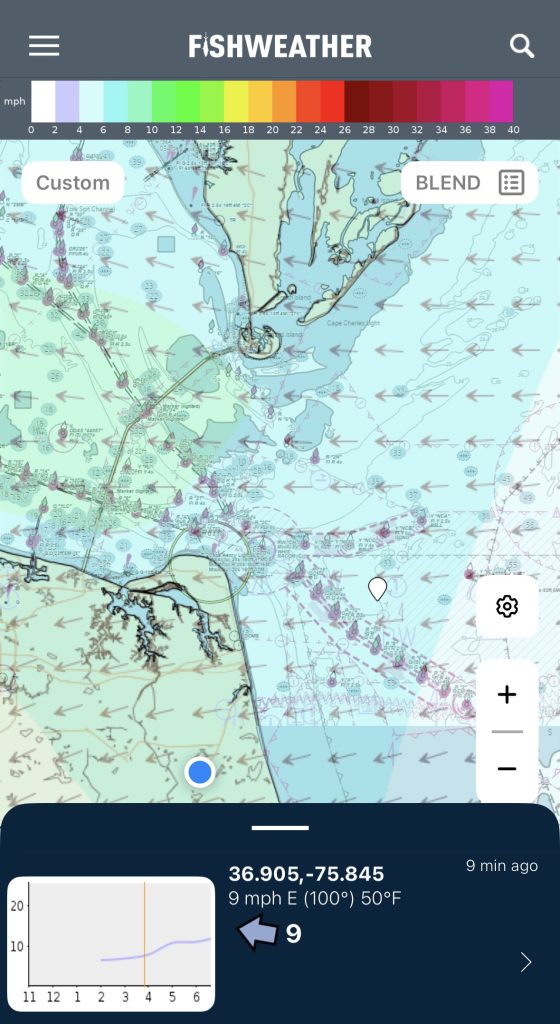
One of the most helpful parts of the episode is the way Michael explains swell period in simple terms. A larger swell with a long interval can still be comfortable, while a smaller swell with a short interval can turn a ride miserable in a hurry. He also explains how tide direction can dramatically change sea state when it begins to oppose the wind, especially in and around the bay where current can accelerate quickly after slack tide. The practical takeaway is that anglers should not just look at wind speed. They should watch the trend through the day, consider when the tide switches, use live beach and inlet cameras when available, and call friends who are already on the water before making the run.
Gear and product notes from this section included Buoyweather, FishWeather, Fish Currents, Windy, trim tabs, and SeaKeeper Ride.
Outlook for the Season
Even though this episode is more about preparation than fish counts, there is still optimism in the background. Michael and Luke both point to the coming cobia season and the continuing development of structure and marine life around the offshore windmill bases as something worth watching closely as the weather settles and water temperatures keep rising. Michael says the windmill bases were already holding growth, sea bass, triggerfish, bait, tautog, and flounder by the end of last summer, and both agreed that another full winter in the water could make those areas even more interesting this year.