

Powered by RedCircle
In this week’s Mobile-Tensaw Delta Fishing Report, host Nick Williams checks in with Justin Dunnam of Eight Mile Drifter, Matthew Frazier, and Dip McMillian of Dippi Outdoors for a wide-ranging look at bass, public access, and crappie fishing across the Delta.
The big theme this week is that spring fishing is opening up in a lot of different ways. Bass are using rising water and shallow backwater cover, Big Creek Lake has taken a step toward reopening to the public, and crappie are feeding well around structure now that the spawn is behind them.
Conditions Recap
This week’s conditions are still unusual for the Mobile-Tensaw Delta in a good way. Instead of dealing with a hard spring flood, anglers are getting fishable water, clearer access, and more predictable patterns in several parts of the system. There was also a small cool snap and some badly needed rain, but not enough to really knock the bite backward.
On Bay Minette Creek, Justin Dunnam dealt with a rising tide and a south wind that pushed extra water into the backwaters. That helped early, but as the tide got higher, some of his fish started moving into newly flooded areas and became harder to pin down.
On the crappie side, Dip McMillian said the fish are still in a strong post-spawn pattern. His best bite came in six to ten feet of water, with fish tight to structure instead of suspended. He also noted a heavy shad spawn in some areas, but said he actually had better success once he got away from the biggest concentrations of shad.
Bass Report with Justin Dunnam
Justin Dunnam of Eight Mile Drifter joined the show after a strong third-place finish in a kayak bass tournament out of Bay Minette Creek. The tournament was decided by inches, and Justin said only about four to four and a half inches separated first from third.

His plan was to get up the creek, get out of some of the wind, and work backwater lakes with grass and pads while the tide was still coming in. That early window turned out to be important. Justin said the rising water and south wind made him think he needed to catch his fish early, and that is mostly how the day played out.
He started with a Snag Proof Zoo Pop frog around the edges of lily pads. The bites were there, but landing them was the hard part. Bass were smoking the frog when it came through holes in the pads, but if they had too much time to turn, they could bury up and get off. Justin landed several on the frog and lost several more, which is just part of that style of fishing.
When he moved into a lake with less pad cover and more grass, the pattern shifted. Bass were holding in small holes in the grass and using those openings as ambush points. A spinnerbait produced well there, and Justin also caught a keeper on a swim jig by buzzing it and then letting it fall into a hole.

The tougher part came as the water kept rising. Once the tide pushed high enough, fish began exploring the newly flooded woods, and the bite in his original areas slowed. Justin later tried to find higher banks and caught one more small fish on a jig, but the main story of the day was adjusting to rising water and understanding how quickly fish can change position when the Delta starts spreading out.
Bay Minette Creek and Backwater Kayak Strategy
One reason Bay Minette Creek continues to produce is that it can stay fishable even when other parts of the Delta are too high. Justin said wind and tide can push water into the woods, but the creek generally does not flood the way the upper Delta can. That makes it a valuable option when other areas are blown out or hard to pattern.
For kayak anglers, Justin’s approach starts before he ever launches. He studies maps looking for oxbows, small ponds, and little tidal cuts that connect to the creek. If he can fit the kayak into those areas without getting out and dragging, they are fair game in tournament settings and often hold fish that bigger boats cannot reach.
He also noted that the bream are starting to show up strong. While bass fishing, he saw several beds along the creek, and he has started carrying a bream buster in the kayak so he can pitch a small jig into visible beds when he finds them.
For the next few weeks, Justin is still thinking about bass, but he is also planning to spend more time chasing bream in Alabama, Mississippi, and Florida. With bluegill activity picking up and good shallow-water access available, May should offer plenty of opportunities for anglers who like small water, light tackle, and kayak-friendly fishing.
Big Creek Lake Update with Matthew Frazier
Matthew Frazier joined the show to give an update on Big Creek Lake, which has been one of the biggest public access stories in the Mobile area. After MAWSS announced in 2025 that the lake was permanently closed to all recreational use, local anglers and residents pushed back through a grassroots effort focused on restoring access to a lake that generations of people have fished.
The good news is that Big Creek Lake is no longer permanently closed. Matthew said the lake is reopening under a limited-access setup that allows rental boats, rental kayaks, personal kayaks, bank fishing, and pier fishing. That is a step in the right direction, but he also made it clear that many anglers are not satisfied with the current restrictions because privately owned motorboats are still not allowed.

Matthew said the current system allows anglers to rent a motorboat, rent a jon boat with a trolling motor, rent a kayak, or bring a personal kayak after paying online and going through the required inspection and wash process. Bank fishing and pier fishing are available for free, and new piers and a handicap-accessible bathroom have been added.
The main concern for MAWSS has been the threat of invasive species such as zebra mussels. Matthew said he and others are willing to comply with boat washing and inspections, but they believe private boat access should be restored if boats pass inspection. His argument is that outdoorsmen are usually good stewards of the resource and that legal public use can coexist with reasonable protection of the water supply.
From a fishing standpoint, Matthew said Big Creek has been producing on plastics, spinnerbaits, and crankbaits. Because he has been accessing the lake by kayak, he has mostly focused on flats, grass, and lily pads rather than the deeper creek channel. With the lake opening again, even in a limited way, anglers should have another spring option when the Delta is flooded or when they simply want to fish a productive reservoir close to Mobile.
Crappie Report with Dip McMillian
Dip McMillian of Dippi Outdoors had a strong report from the Tensaw side of the Delta. He said he fished south and worked his way north, spending a lot of time scanning before dialing in the bite. The crappie were still following a post-spawn pattern, and his best fish came in six to ten feet of water.

The key detail this week was that the fish were not suspended. Dip said every fish he caught was tight to structure. That made side scan especially important. He likes to scan 50 to 80 feet out when he is looking at new water, zigzagging through the right depth range until he finds structure holding fish.
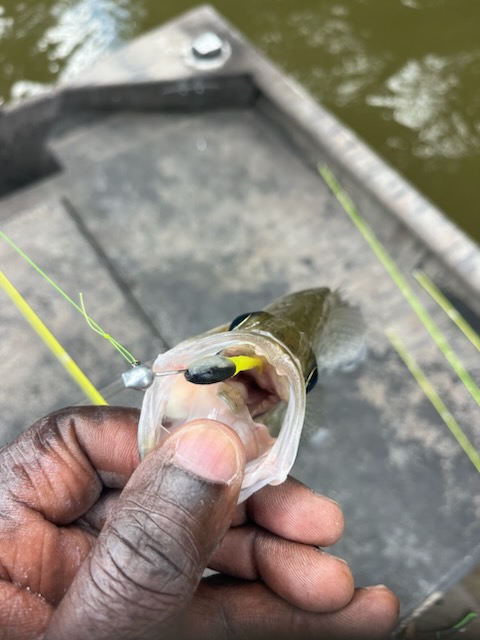
His standout bait was an ATX Dipping Tensaw Special jig. Dip described it as a black and silver belly jig with a chartreuse split tail, and said the fish were attacking it hard. He also noted that the jig was durable enough to catch several fish before needing to be changed.
For anglers trying to duplicate the pattern, Dip’s biggest advice is boat control. In shallow water, especially in six to eight feet, crappie can spook quickly if the boat bumps cover or gets too close. Dip does not rely on Spot-Lock for this style of fishing. Instead, he stays active on the trolling motor, keeps the boat positioned correctly, and stays far enough off the structure to cast to the fish.
His preferred presentation is to cast past the fish, let the jig get slightly beyond them, and then bring it right over their heads. When they are in the right mood, they will rise up and eat it. For anglers without forward-facing sonar, the same basic idea still applies: ease in quietly, avoid banging into cover, and fish the structure carefully.
Shad Spawn, Electronics, and What Dip Is Watching
Dip also talked about the shad spawn, which was heavy enough in some areas that entire banks looked black with bait. While that kind of activity can be exciting to see, he said he actually had to get away from the biggest shad spawn to find the crappie he wanted. In his view, the fish in that area may have already been full or simply not aggressive enough to target.
He said he usually has more success catching crappie around shad during the fall and winter, when bait schools are easier to pattern and fish are more likely to suspend under them. This week, the better approach was finding fish locked onto structure instead of chasing bait clouds.
Looking ahead, Dip plans to change things up and explore new creeks instead of simply repeating the same successful pattern. He said he wants to cover water, use a few different jigs, mix in some hair jigs, and build better notes for future trips. That willingness to leave a good bite and learn new water is one reason his crappie reports are so useful week after week.
What to Expect This Week
Bass anglers should find good shallow-water opportunities around Bay Minette Creek, especially where grass, pads, and small backwater openings give fish ambush cover. Frog fishing, spinnerbaits, swim jigs, and jigs are all worth keeping on the deck, but water movement will matter. If the tide rises hard and pushes fish into flooded woods, expect the bite to shift quickly.
Bream anglers should start paying close attention. Beds are beginning to show in parts of the system, and carrying a small jig, bream buster, or light spinning setup could turn a bass trip into an easy mixed-bag day.
Crappie anglers should focus on post-spawn fish around structure in six to ten feet of water. Side scan can help eliminate dead water quickly, but stealth and boat control are just as important. If the fish are tight to cover, stay off them, cast past them, and bring the jig over the top instead of crowding the structure.
Big Creek Lake is also back in the conversation. Access is still limited, but anglers with kayaks or those willing to rent boats now have a way to fish it again. That could be especially valuable when the Delta gets high or when spring conditions make the reservoir bite more predictable.