

As boating season approaches, ensuring your outboard motor is in top condition can save you time, money, and a lot of frustration at the boat ramp. To break down the essentials of pre-season outboard motor service, we spoke with Boyd Siegel, General Manager at Saunders Yachtworks, and Daniel Porter, Outboard Service Manager. Together, they shared their expertise on common issues, key maintenance steps, and whether boat owners should tackle maintenance themselves or leave it to the professionals when it’s time for outboard motor service.
About Saunders Yachtworks
Saunders Yachtworks has been a trusted name in the boating industry for decades. Originally focused on diesel engines since 1959, the company expanded into sportfishing and recreational yacht services in the late 1980s. Recognizing the growing demand for outboard motor service, they launched their outboard division in 2017. Today, their services cover everything from minor maintenance to full-scale repairs and repowers, catering to boats ranging from small tenders to luxury motor yachts.
Boyd Siegel, General Manager of Saunders Yachtworks, has been instrumental in overseeing the company’s expansion and ensuring its reputation for high-quality service. His extensive knowledge of the marine industry allows him to lead operations efficiently, ensuring that customers receive top-tier care, whether they need routine maintenance or complex repairs.
Daniel Porter, Outboard Service Manager, brings over 15 years of experience in the outboard industry. He manages the outboard service team, oversees warranty services for Mercury and Suzuki engines, and works closely with customers to ensure their engines remain in peak condition. His hands-on experience with both small and large boats makes him a valuable resource for boaters seeking expert advice.
Why Outboard Motor Service Matters
Neglecting pre-season maintenance can quickly turn a relaxing day on the water into a frustrating experience. As Boyd Siegel put it, “Everybody wants their boat to crank when they turn the key.” Routine maintenance allows you to address potential issues before they lead to costly repairs or, worse, engine failure.
Outboard engines are significant investments, and their price tags aren’t getting any cheaper. Regular servicing extends their lifespan, prevents unexpected breakdowns, and ensures you’re not left stranded at the dock—or in the middle of the water—with a dead motor.
Common Issues at the Start of the Season
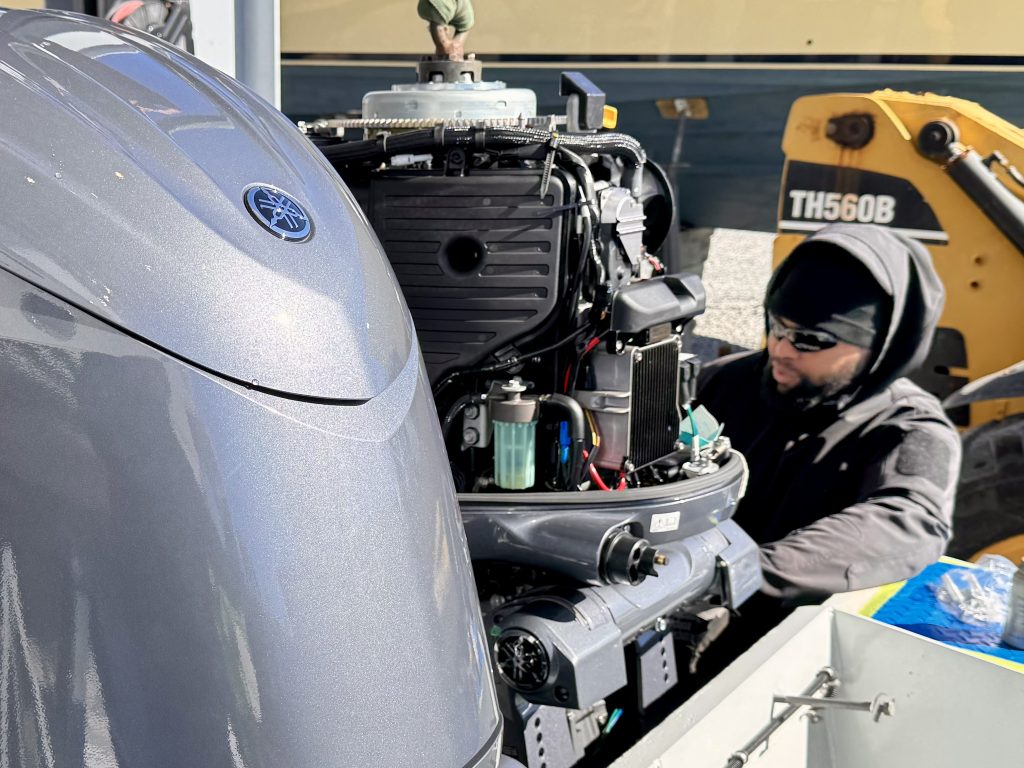
According to Daniel Porter, some of the most frequent outboard motor service problems boat owners face at the beginning of the season include:
- Old Fuel – Many boaters let fuel sit over the winter, leading to poor engine performance. Ethanol-blended fuel, in particular, attracts moisture and degrades over time, causing issues in the fuel system.
- Dead Batteries – Many outboards fail to start simply due to an old or uncharged battery.
- Water Pump Wear – While water pump replacements are often recommended at 300-hour intervals, lack of use can also cause impeller blades to stiffen or crack, leading to cooling system failures.
- Oil and Lubrication Neglect – Dark, dirty oil or signs of contamination (such as a milky appearance) can indicate water intrusion or engine wear, which could lead to major mechanical issues if ignored.
Key Components to Inspect Before the Season Starts
A thorough pre-season outboard service check should include:
- Fuel System: Ensure fresh, stabilized fuel is in the tank, and inspect fuel lines for cracks or soft spots, which may indicate ethanol damage.
- Battery Check: Test voltage and ensure terminals are clean and corrosion-free.
- Water Pump and Cooling System: Consider replacing the impeller annually to prevent overheating.
- Oil and Lubricants: Change engine and lower unit oil, following manufacturer specifications.
- Spark Plugs: If your engine is running rough or struggling to start, fresh spark plugs may resolve the issue.
- Corrosion and Salt Deposits: Inspect under the cowling for salt buildup, which could indicate leaks or potential long-term damage.
Step-by-Step Pre-Season Maintenance Process
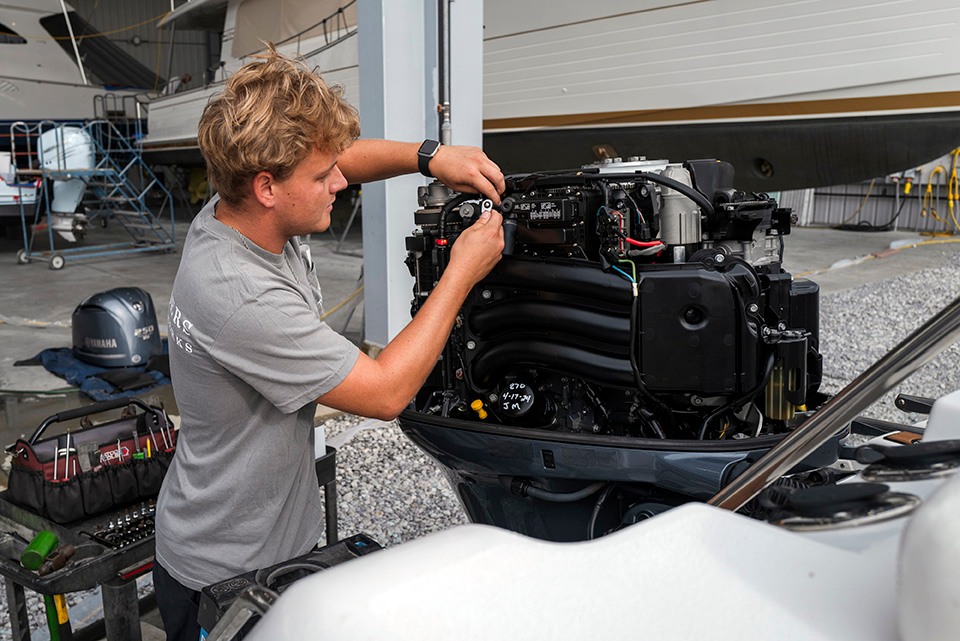
For those comfortable handling basic outboard repower service, here’s a step-by-step guide to a thorough pre-season service:
- Inspect and Replace Fluids: Change engine and lower unit oil, replacing oil filters and drain plug seals. Use the exact amount of oil specified by the manufacturer.
- Check the Cooling System: Inspect and possibly replace the water pump impeller to ensure proper cooling.
- Inspect Fuel System Components: Look for soft or cracked fuel lines, replace the fuel filter, and use non-ethanol fuel when possible.
- Test the Battery: Charge and test for proper voltage, ensuring reliable starting power.
- Check for Leaks and Corrosion: Remove the cowling and inspect for salt deposits or oil leaks.
- Run the Engine Before Heading to the Water: Start the motor on a hose to check for smooth operation, allowing time to address any issues before launching.
For more advanced maintenance, such as compression tests or fuel injection cleaning, professional servicing may be the best option.
Fuel and Oil Considerations
When it comes to fuel, Siegel and Porter strongly recommend using non-ethanol gasoline whenever possible. Ethanol attracts moisture, which can lead to water contamination and degraded fuel quality. If ethanol fuel must be used, stabilizers should be added, and tanks should be kept full to minimize condensation buildup.
As for oil, sticking with the manufacturer’s recommended type is crucial. Outboard engines operate at higher RPMs than car engines, so their oil must handle extreme conditions. Avoid using aftermarket additives unless recommended by a professional.
DIY vs. Professional Outboard Motor Service: What Can You Safely Handle?
Many boaters prefer the DIY route, and basic tasks like oil changes, spark plug replacements, and battery checks are manageable with the right tools and instructions. However, more complex outboard repower procedures, such as compression tests or diagnosing fuel system issues, often require specialized equipment and expertise.
A common mistake among DIYers is using the wrong tools—such as stripping the lower unit drain plug by using an improper screwdriver. According to Siegel, one customer even attempted to drill out a stripped plug, only to break a tap inside the lower unit, ultimately requiring professional repair.
For those who want to tackle maintenance themselves, Porter suggests having an oil filter wrench, proper-sized screwdrivers, fresh oil and filters, a drain pan, and plenty of rags on hand. However, he cautions that warranties often require the use of manufacturer-specific parts and fluids, which should always be followed to avoid voiding coverage.
Final Tips for a Smooth Boating Season
- Start the engine at home before heading to the boat ramp. Avoid the frustration of discovering an issue after arriving.
- Double-check the kill switch lanyard and gear position. Many no-start situations are due to the motor being in gear or the kill switch being disengaged.
- Look for bird nests or debris in air intakes. Small animals sometimes make homes in idle engines.
- Monitor engine RPMs and fuel consumption. Keeping track of performance can help identify developing problems early.
- Spray the engine with a corrosion inhibitor. Preventing corrosion prolongs the life of critical components.
Scheduling Professional Service
For those who prefer to let experts handle their pre-season maintenance, Saunders Yachtworks offers efficient, professional, outboard motor service. They can often complete routine maintenance within a day, ensuring minimal downtime. However, as the season ramps up, availability fills quickly.
By taking a proactive approach to maintenance, boaters can enjoy a worry-free season on the water, knowing their outboard is in peak condition. Whether you’re a seasoned DIYer or prefer the expertise of professionals, pre-season preparation is the key to a smooth and successful boating experience.