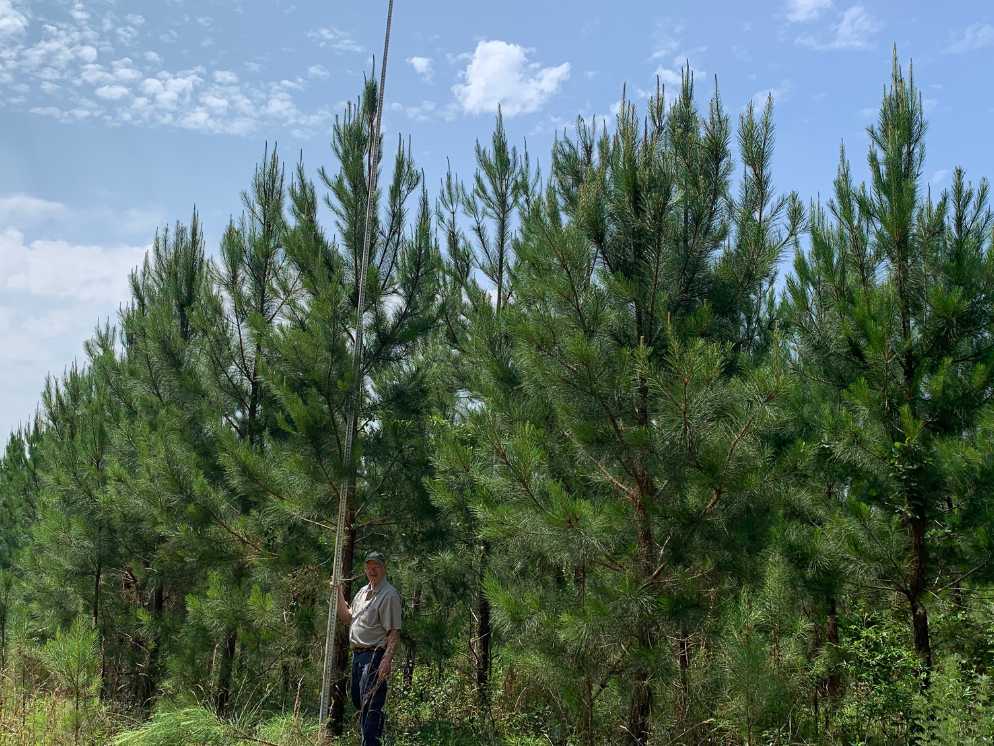
Many landowners dream of improving their property, whether restoring wildlife habitats, planting new forests, or managing timber sustainably. However, the high costs of these projects can often deter even the most dedicated individuals. Replanting trees, installing fire breaks, and managing invasive species requires not only time and labor but also significant financial investment. Fortunately, financial aid exists for those who know where to look. Various government, nonprofit, and private programs offer funding to help landowners achieve their environmental and land management goals without bearing the full burden of the cost themselves. One such success story is Joe Baya, who turned to financial assistance programs to transform his land in East Central Alabama.
Joe manages about 200 acres, primarily covered in pine and hardwood forests. “I have about 60% pine forest, 40% hardwoods, and 13 acres of open fields,” he explains. Joe aimed to restore his land to a more natural state, which historically included longleaf pine ecosystems. However, like many landowners, he encountered financial challenges along the way. Replanting large sections of land with pine seedlings can be costly, making it difficult for many to undertake such projects without assistance. Fortunately, Joe discovered a solution through financial assistance programs that eased the burden of reforestation.
Joe’s property was dominated by loblolly pine, a fast-growing species favored for timber. However, after consulting with his forester, Joe decided it was time for a change. “The property was being managed in an even-aged timber management style, and I wanted to convert it to an uneven-aged stand of longleaf pines,” he says. The uneven-aged management would allow for more regular timber harvest, allowing Joe to have more flexibility in timing the ups and downs of timber markets and would also allow his forest to re-seed itself, making managing his stand easier and more profitable for future generations.

Longleaf pine, native to the area, provides an ideal habitat for the gopher tortoise and other wildlife, making them a perfect fit for Joe’s conservation goals. Transitioning to longleaf was desirable because it would allow Joe to maintain prescribed fires on the landscape, which helps regenerate the understory so important to wildlife and decrease competition from hardwoods like Sweetgum. The transition meant a long-term commitment, with plans to replant in stages over 15 years. “We’re harvesting pines off the property every five years or so and planting longleaf, slowly converting the entire area. Site prep for longleaf meant installing firebreaks, and a one-time herbicide application to remove encroaching hardwood trees and shrubs” However, Joe knew that replanting the pine tree seedlings and managing the land would require significant financial investment. “It’s not cheap to do it the right way,” he admits.
Discovering the Funding Opportunity
Fortunately, Joe learned about the Natural Capital Exchange (NCX), a platform that connects landowners with funding opportunities for conservation projects. “Through NCX, I was able to find several public and private programs that cover the cost of longleaf pines,” Joe recalls. He was surprised to learn how many programs existed, offering funding for not just longleaf, but loblolly, hardwoods, and even wildlife habitat restoration, depending on location.

Although Joe knew financial assistance existed, he hadn’t anticipated how accessible it would be. “It was surprisingly easy,” he says. “All I had to do was submit a map of my property and verification of ownership. It took me less than half an hour on my computer.” This streamlined process through NCX helped him identify the programs he was eligible for without the usual bureaucracy.
The Application Process
Though the application process was straightforward, Joe did face one challenge: “I didn’t get funded my first year. There were more applications than funding available,” he explains. But patience paid off. The following year, Joe reapplied and received the funding necessary to begin his project.
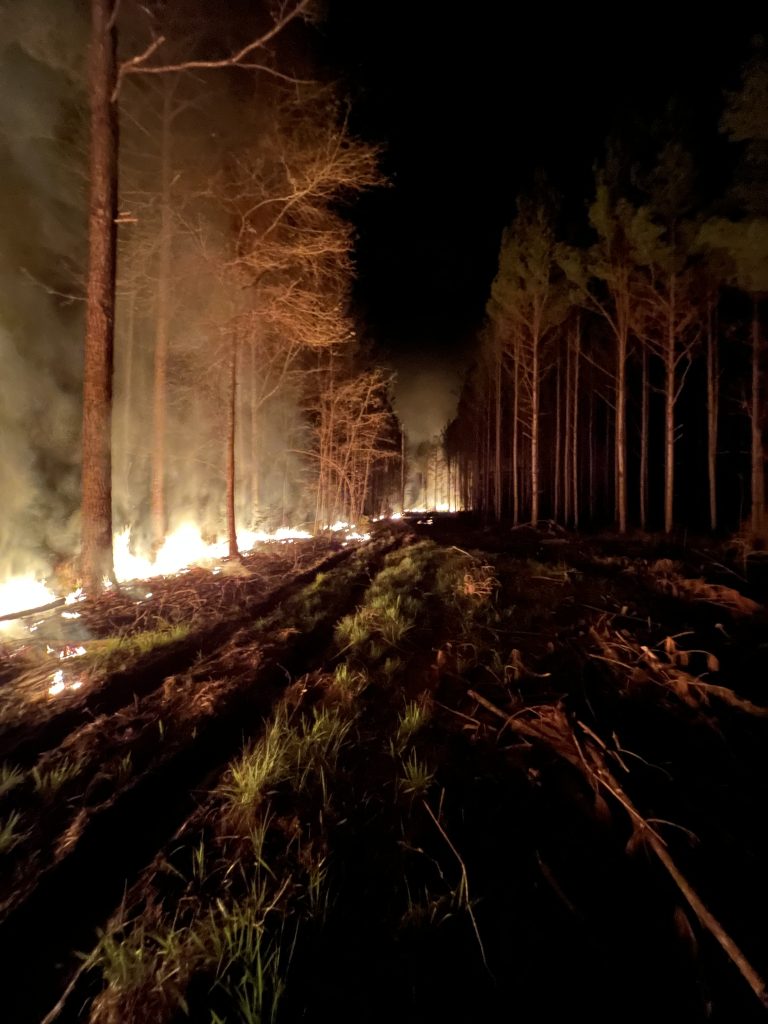
Joe also enlisted the help of a consultant forester, Mark Bass, to manage the technical aspects of timber harvest and site preparation. “Mark has been invaluable. He helped coordinate everything—timber harvests, fire break installation, herbicide applications, and prescribed fires,” Joe says. “Without a forester, it would have been overwhelming for someone like me, who doesn’t live on the property full time.” Mark’s expertise ensured that Joe’s project met all the requirements for funding and environmental management.
Results of the Project
The impact of Joe’s reforestation efforts has been striking. “Since we started managing the land with prescribed burns, we’ve seen a lot of positive changes,” he notes. Wildlife populations have flourished. “When we first got the property, we heard one wild turkey gobble the first season. On one morning this past spring, we had eight birds gobbling on 200 acres.”
Joe will continue to burn his property even while the longleaf pine seedlings are young, and Joe is already seeing the benefits of a healthier ecosystem. “We’ve reduced a lot of the competing vegetation, and now the habitat is better for deer, turkeys, bobwhite quail, and other species. It’s rewarding to see the transformation.”
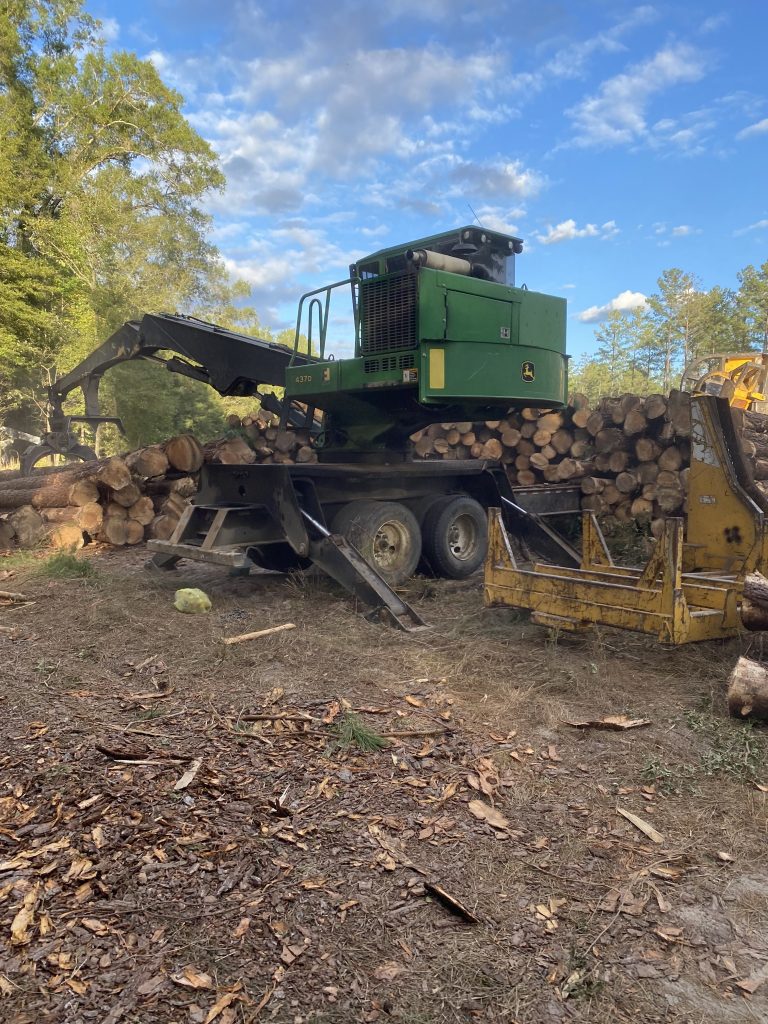
For Joe, the project is about more than just timber management. “I want this property to be a legacy that I can pass down to my kids,” he says. “I want it to be better when they get it than it was when I did, and easier to manage to boot”
Advice for Other Landowners
Joe’s experience with funding programs has taught him valuable lessons. “The biggest hurdle for landowners is that these programs are fragmented. There’s funding from the USDA – NRCS, private organizations, and more, but they’re scattered, and you have to apply to each one separately,” he explains. That’s where NCX made a difference for him. “They were like a one-stop shop. I could see everything that was available to me without having to spend hours searching.”

He also stresses the importance of working with a consultant forester. “If you’re managing timber, you need a forester in your corner. They work off commissions from timber sales, so it’s in their best interest to help you make the most of your property,” Joe advises. “They also have the knowledge to help navigate these programs and help you with all the technical aspects of land management, such as finding trusted bulldozer operators and herbicide applicators.”
Looking Towards the Future
Joe Baya’s story demonstrates that reforestation and sustainable land management are achievable for landowners, even on a tight budget. By leveraging funding programs and working closely with expert foresters, Joe has not only planted longleaf pine tree seedlings but also improved the overall health of his land. “It’s been a lot of work, rewarding work, but seeing the results—more wildlife, healthier forests—makes it all worth it, and it invigorates me to keep going,” he says.
For other landowners, Joe’s journey is a reminder that there are resources available to help fund similar projects. “There’s so much funding out there—you just need to know where to look,” he says. Through platforms like NCX and with the right guidance and persistence, every landowner can create a lasting, sustainable legacy on their property.