
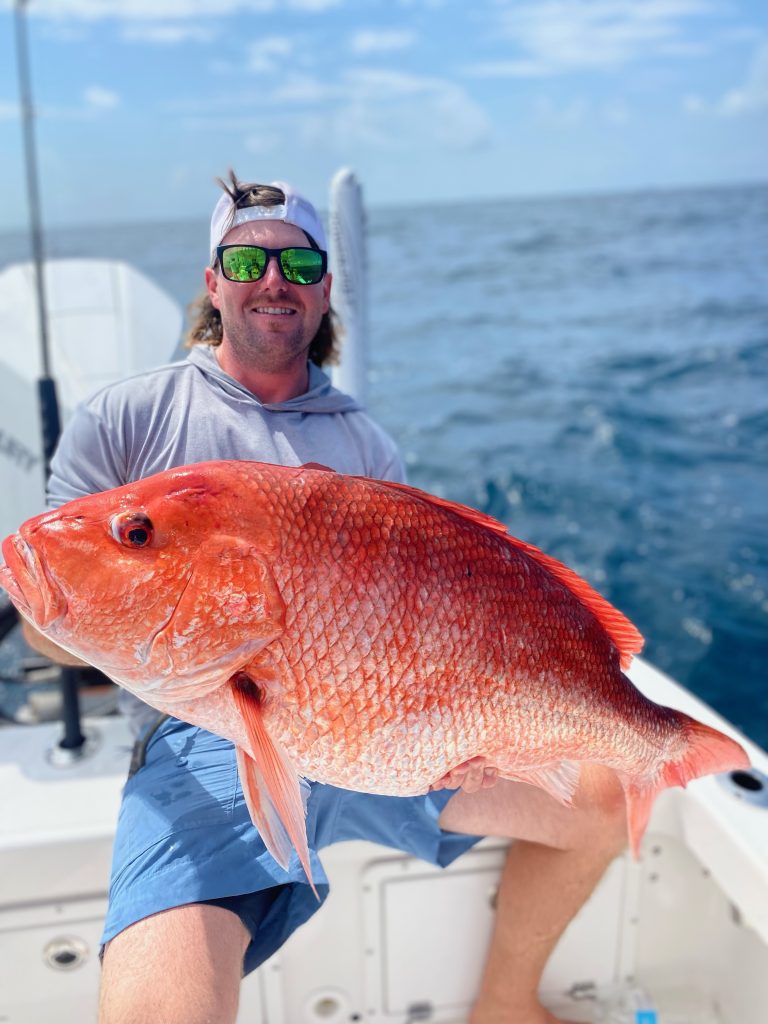
The countdown to Gulf red snapper season is on, and for Alabama anglers, 2025 brings familiar regulations, a stable quota, and ongoing efforts to ensure sustainability. To break down the details, we spoke with Kevin Anson, Chief of Fisheries at the Alabama Department of Conservation and Natural Resources (ADCNR), who offered key insights into how the season is set, what changes anglers should be aware of, and what they can do to support the fishery’s future.
The Season at a Glance
Alabama’s 2025 red snapper season for private and state charter boats will begin Friday, May 23, just before Memorial Day, and run daily through June 30. After that, it will reopen for weekend-only fishing (Fridays–Mondays) starting July 4, continuing until either the quota is met or the year ends.
The bag limit remains two fish per person, and the minimum size stays at 16 inches total length. “The size and bag limits will remain the same,” Kevin confirmed. “No changes there from 2024.”
Understanding the Quota
While the overall recreational quota for red snapper across the Gulf is shared between private anglers, charter boats, and headboats, Alabama’s slice of the pie will stay the same as it was in 2024. “We’re going to have the same quota this year,” Kevin explained. “It’s about 660,000 pounds or 75,000 more than we had in 2023.”
That increase is the result of changes in how Alabama’s Snapper Check data is calibrated with federal harvest estimates. “Because the difference between the state and federal surveys shifted, we were able to convert that into more allowable pounds under the federal system,” Kevin said.

Who Decides the Season?
Red snapper season doesn’t just happen—it’s the product of a multi-layered decision-making process involving both state and federal agencies. At the center is the Gulf of Mexico Fishery Management Council, which includes representatives from each Gulf state, commercial and recreational stakeholders, and NOAA.
“We work through the Council to determine the allocations,” Kevin said. “Each state receives a percentage of the recreational quota based on a variety of factors, including biological data and fishing effort.”
That process isn’t always simple. According to Kevin, Alabama has historically faced challenges getting its data incorporated into federal models, especially data collected from its artificial reef zone and long-running annual surveys with researchers like Dr. Sean Powers from the University of South Alabama.
“It’s been a struggle getting our data accepted. They often say our coastline is too small to make a difference,” Kevin noted. “But we know we have a lot of fishing effort here, and our numbers show consistent trends.”
How Alabama Compares to Other Gulf States
Each Gulf state sets its own season dates under federal guidelines, and Alabama’s structure stacks up well. “We’re a little longer than Florida, shorter than Mississippi,” Kevin said.
“Louisiana went to a four-fish limit last year, which shortened their season. And Texas—well, they’re open in state waters most of the year, but limited in days during their federal waters’ open season.”
Despite its relatively small coastline, Alabama sees intense fishing activity, which can make managing its share of the quota challenging. “We have a lot of folks using Alabama as their access point into the fishery,” Kevin said. “That can drive up the harvest rate, and we have to keep a close eye on that as the season progresses.”
Snapper Check: Why It Matters
One of Alabama’s most important management tools is Snapper Check, a state-run harvest reporting program that allows for faster and more credible monitoring than the federal system. But not everyone uses it as they should. “We’ve had lower participation than we’d like,” Kevin admitted. “But it’s still enough to give us a good estimate—and it matches up with what we’re seeing on the water.”
Timely data is crucial because if the state exceeds its quota, the next year’s allocation is reduced. “That was tricky when we started state management in 2018,” Kevin said. “But with Snapper Check, we’re in a much better place to monitor the fishery in real time.”
The Barotrauma Factor
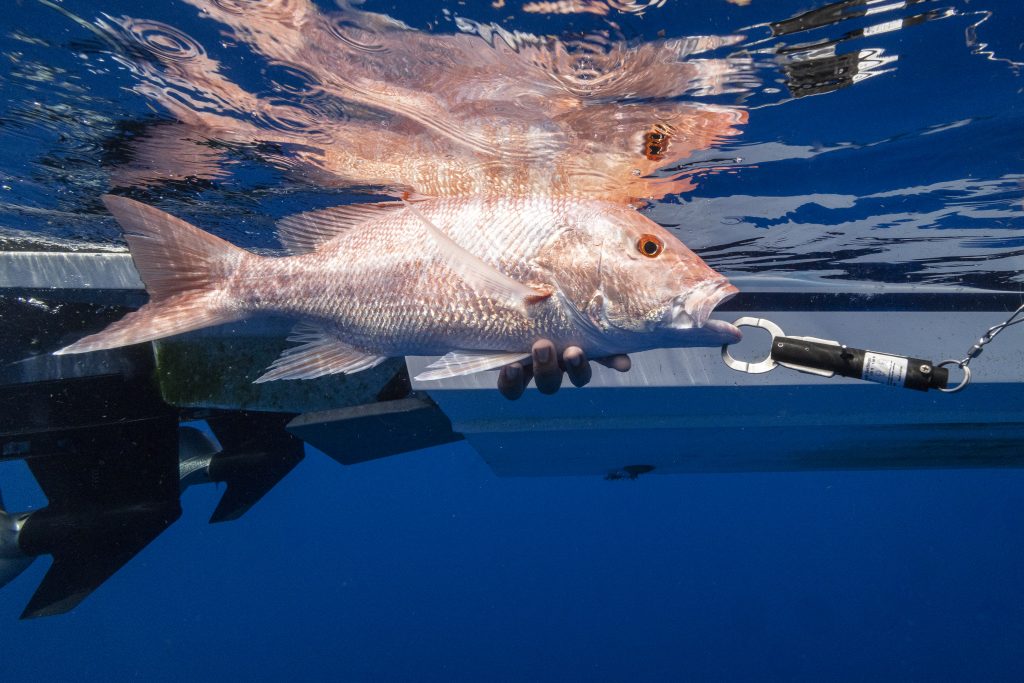
As anglers fish farther offshore in search of larger snapper, the issue of barotrauma—a pressure-related condition that can harm fish when quickly brought to the surface—has become more prominent. “We’re seeing more mortality from barotrauma now than we did seven or eight years ago,” Kevin said. “The deeper you fish, the more severe the impact.”
To reduce that risk, anglers are required to have a venting tool or descending devices rigged and ready to use when in federal waters. While not mandated in state waters, the state encourages barotrauma mitigation best practices and supports education programs like Return ‘Em Right.
“There was concern that descending devices were just delivering fish to predators like sharks,” Kevin explained. “But recent studies with underwater cameras showed that out of 500 or 600 events recorded, there were only a handful of predation cases. So, they’re effective—and they don’t appear to cause an increase in predation.”
Anglers are increasingly recognizing that these tools, along with careful fish-handling methods, can make a major difference in survival rates. Programs that focus on these best practices are more important than ever in helping anglers learn and apply proper release techniques.
Return ‘Em Right: Helping Protect Gulf Reef Fish
Return ‘Em Right is a collaborative program supported by NOAA Fisheries, funded by the Deepwater Horizon settlement, and designed to teach anglers how to reduce reef fish mortality when releasing fish. Through hands-on workshops, outreach events, and partnerships with state agencies, Return ‘Em Right promotes proper catch-and-release practices including the correct use of descending devices and venting tools. By emphasizing gentle handling, quick release, and recognition of barotrauma symptoms, they help ensure that more reef fish, such as red snapper, survive to help sustain vibrant populations. The program frequently provides educational materials, and in some cases gear giveaways, aiming to build a community of anglers committed to preserving the Gulf’s fisheries for generations to come.
Looking Ahead: 2027 and Beyond
While the 2025 red snapper season is locked in, any major changes to quota or season structure likely won’t come until 2027, following the completion and review of a new stock assessment and updates to the federal recreational harvest data system.
“If the assessment says there are more fish, that could mean more harvest is allowed,” Kevin said. “But we’d have to ask—do anglers want that? More fish might mean smaller fish or having to go farther to catch them.”
That’s where the concept of optimum yield comes in. “It’s not just about how many fish we can take sustainably,” Kevin explained. “It’s about what kind of fishing experience people want. That might mean fewer, but bigger, fish—or a longer season with smaller fish. It’s a tradeoff.”
What Anglers Can Do
According to Kevin, there are three big ways anglers can help keep the red snapper fishery healthy and accessible:
Report your catch
“More reporting doesn’t mean higher harvest estimates—it means better data. That helps us manage the fishery more effectively.”
Handle fish responsibly
“Educate yourself on barotrauma. Learn to identify it, and use a descending device or venting tool when needed. It improves survival and reduces waste.”
Minimize discards
“Once you’ve got your bag limit, consider switching to other species. The more snapper you throw back, the higher the risk that some won’t survive.”
Kevin added that while Alabama is in a good place for now, it’s up to everyone on the water to keep it that way. “We have more opportunity than we did a decade ago,” he said. “But that comes with the responsibility to fish smart—and to do our part to protect the future of the fishery.”