

Bottom fishermen across the Gulf Coast are blessed to have an abundance of artificial reefs that are well within range of most boats these days. Few things are more frustrating than putting a ton of effort into planning a trip, only to be chased off your spot by predators—especially sharks in the Gulf and clever dolphins. Watching a fish you’ve fought all the way to the surface get eaten off your line or have caught, dehooked and carefully released become an easy snack for a shark or dolphin is extremely frustrating. With growing interest in responsible release practices like descending fish to treat barotrauma, many anglers are asking: Does using a descending device just send fish into the jaws of predators?
According to Nick Haddad of Return ‘Em Right, a Gulf-wide educational and gear distribution program, that concern is widespread—but largely unfounded.
“People always say it’s like sending fish down a buffet line,” Haddad says. “But when we ask if they’ve actually used a descending device, 99% of the time, the answer is no.”
Understanding Barotrauma and the Role of Descending Devices
Barotrauma occurs when bottom-dwelling fish are reeled up quickly from deep water, causing gases in their body to expand. The result: fish float on the surface, unable to swim back down. Without intervention, they typically die or fall prey to predators.
Descending devices allow anglers to send fish back to depth safely, giving them a much higher chance of survival. In fact, Haddad points to research showing 88–90% survival rates for red snapper released with descending devices at average depths of around 140 feet.
“Some fish look terrible on the surface—bulging eyes, inflated bodies,” Haddad says. “But we’ve seen on video and through acoustic studies that their bodies actually recompress over time, and many go on to survive long-term.”
However, the debate continues among anglers: if predators like sharks and dolphins are around, doesn’t descending just give them an easier target?
Understanding Sharks in the Gulf and Their Behavior
The short answer is no—at least not for sharks.
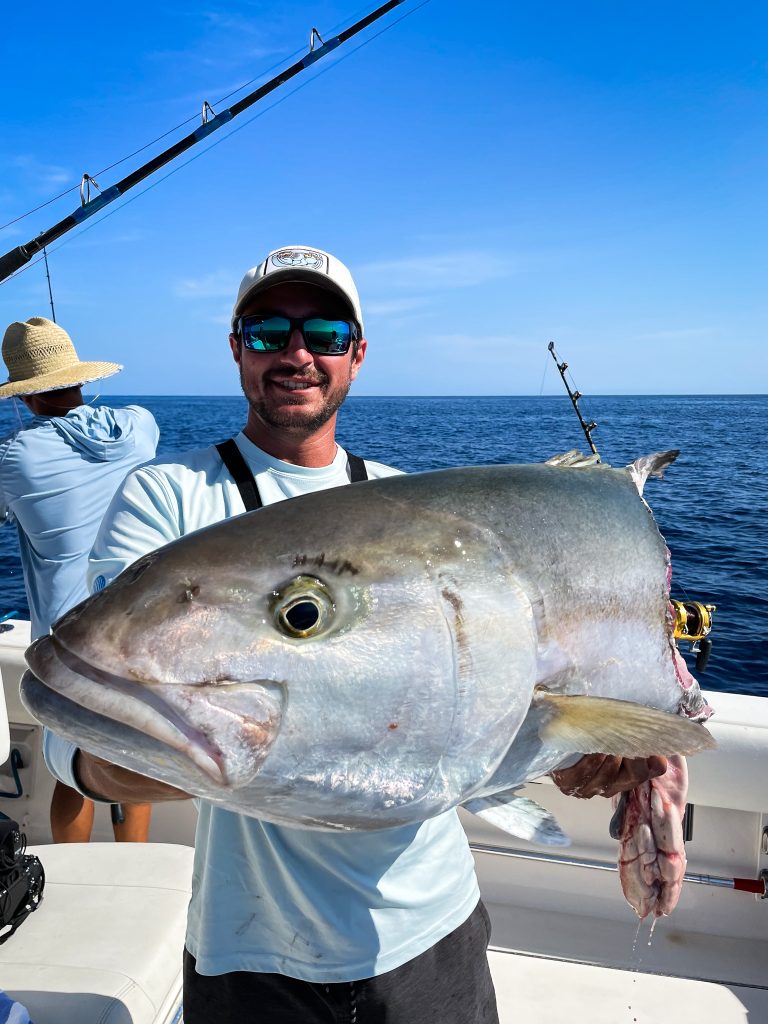
Sharks in the Gulf key in on struggling prey, Haddad explains. “That’s why they often hit fish during the fight. The vibrations, the erratic movements—that’s what attracts them.”
When fish are descended in areas with sharks in the Gulf, they’re often ignored because they aren’t thrashing and don’t attract attention. They’re limp, calm, and often sent down quickly and directly to structures or schools where they originally came from—far safer than drifting on the surface.
Return ‘Em Right backed this up with a large-scale study conducted by Dr. Marcus Drymon’s lab, in which charter captains released 1,000 fish using descending devices across the Gulf.
“Out of those thousand, only three were documented as being eaten by sharks on the way down,” Haddad says. “We’ve personally descended hundreds on camera and seen fish go right past sharks without incident.”
Dolphins: Smarter, Sneakier, But Still Beatable
Sharks may not be the problem—but dolphins are a tougher challenge.
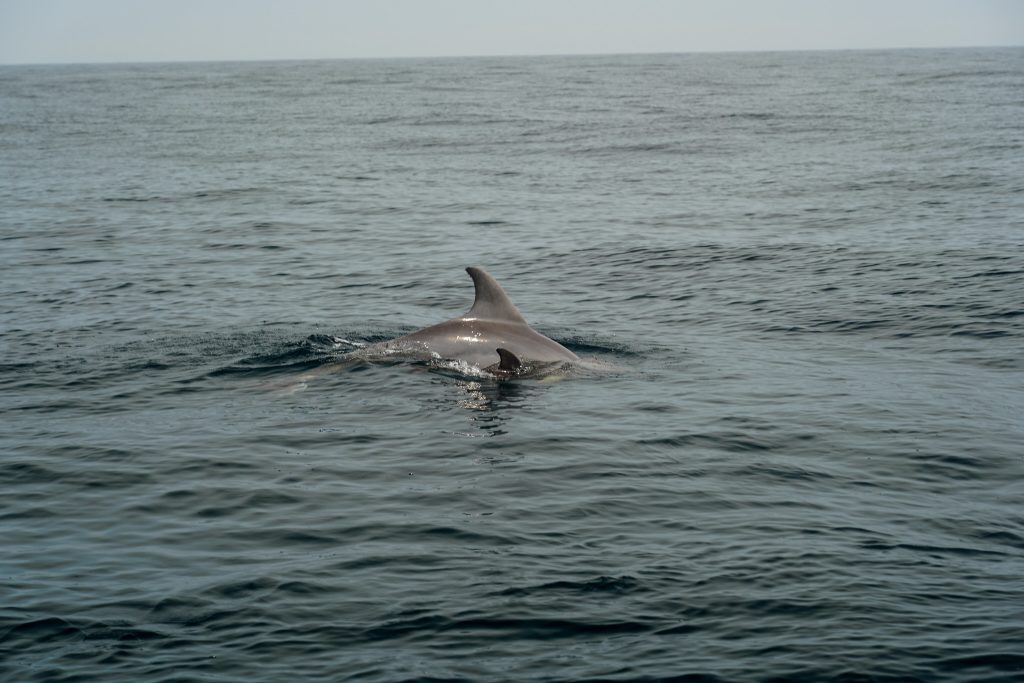
“They’re smart, persistent, and they learn fast,” Haddad says. “We’ve had dolphins follow us for miles, taking every surface-released fish. In some cases, they weren’t even eating them—just tossing them in the air.”
That intelligence makes dolphins more difficult to avoid, but descending still helps. In one scenario, Haddad descended five or six red snapper on camera with dolphins nearby. Only one was taken.
“It’s not perfect,” he admits. “But it’s better odds than surface release, especially when dolphins are sitting under your boat like they often are.”
The Bigger Picture: Survival, Sustainability, and Shared Responsibility
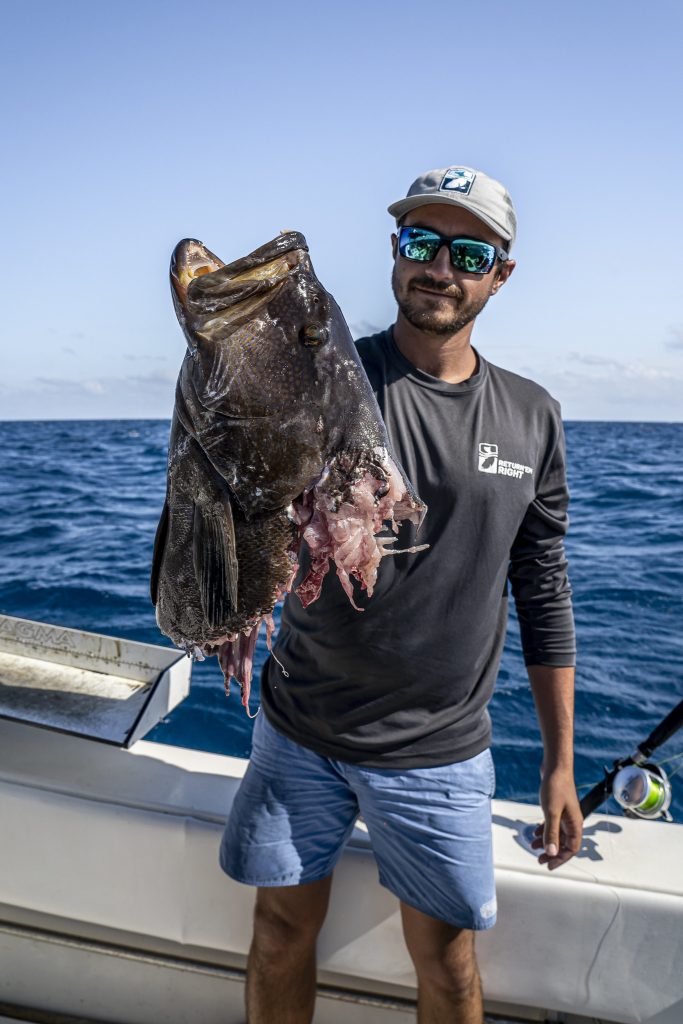
Even with occasional predator losses, descending is still the best bet. Haddad emphasizes that barotrauma and predator depredation are separate issues, and anglers need to address both.
“If a fish is floating, it has zero chance,” he says. “You’ve got to first overcome barotrauma. Then you can worry about predators.”
Long-term acoustic tracking studies already factor in natural predator presence, which strengthens the case for descending devices. It’s also a numbers game. Saving even half the fish that would have otherwise died can have massive implications for the fishery.
“Think about all the fish each of us has seen float away over the years,” Haddad says. “If we could’ve saved 25 or 50% of those, and every angler did the same—that’s huge.”
And these survival numbers matter more than most realize. Post-release mortality is factored into federal quotas. If more fish survive, recreational anglers could earn more fishing days and a longer season.
“You want more snapper days? Help reduce mortality. That’s the trade-off,” Haddad says.
Best Practices: What Anglers Can Do
So what can fishermen do to reduce predator depredation when releasing fish?
Haddad recommends a few simple tactics:
- Use steel leader when rigging your descending device. It’s cheap insurance against a curious shark.
- Move spots if predators are actively intercepting your fish.
- Match the method to the moment. If you’re seeing dolphins, try descending. If not, vent or surface release might suffice. Use situational awareness.
“It’s not about having a perfect system,” Haddad says. “It’s about giving the fish the best shot possible. And descending, most of the time, is the best option.”
Getting Started with Return ‘Em Right
New to descending? Haddad says it’s never been easier to get involved. Return ‘Em Right offers a free 15-minute training module, covering everything from barotrauma to best practices for release.
“If you fish in the Gulf, you can take the course and get free gear shipped to you,” Haddad explains. “And if not, you can still build or buy your own device for $10 to $50.”
The program also shares underwater videos on social media showing real fish being descended—helping anglers see for themselves how effective the practice can be.
Changing Minds, One Fish at a Time
Three years ago, Haddad says descending skeptics were everywhere.
At boat shows, Haddad says he has heard anglers complain that descending devices just feed sharks in the Gulf. But now, that mindset is shifting as results speak for themselves. “People are trying it and realizing it works,” he said.
That’s good news for the fish—and the fishery. As Haddad puts it, anglers don’t need to be perfect. But if everyone does a little better, the results add up.
“We know some fish will still die,” he says. “But if we can save more than we lose, and keep fewer floating off behind the boat, we’re doing something right.”