
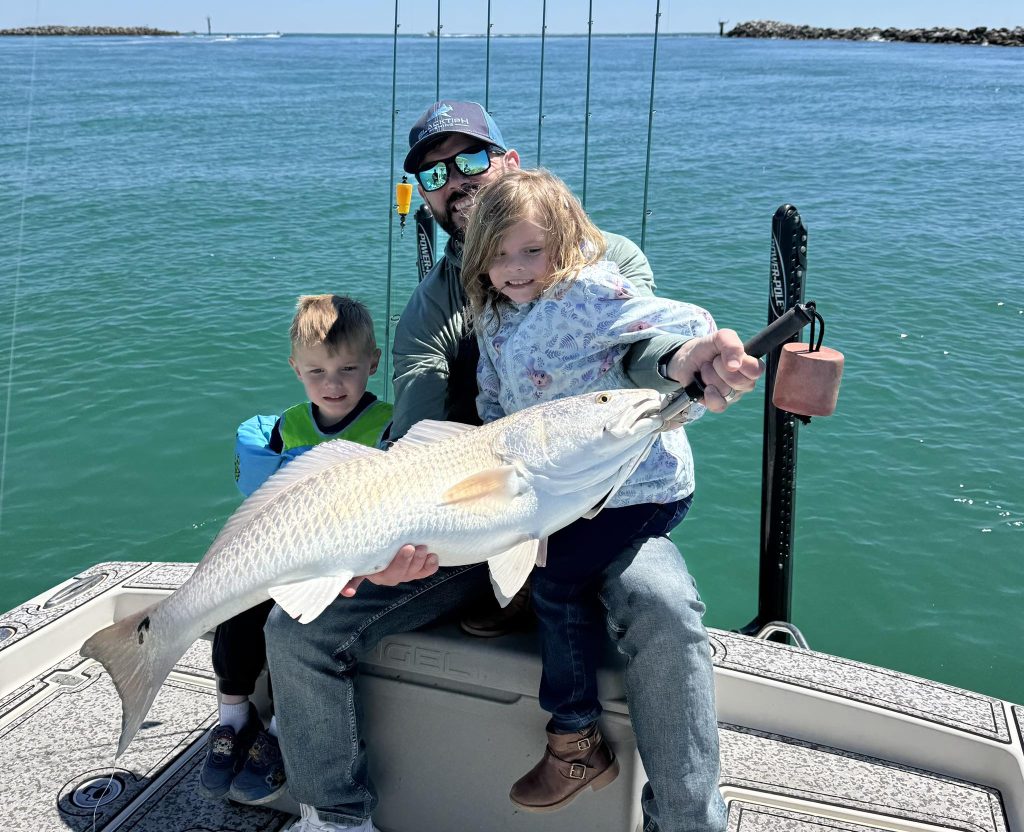
If you’ve never done it, sight fishing winter redfish on the Emerald Coast feels less like “going fishing” and more like slipping into bow range on a wary whitetail. Winter gives us ultra-low tides, crystal-clear water, and that bright, high sun that turns shallow flats into an aquarium. It’s also the time of year when you can do everything right and still walk away with just a couple bites and somehow feel more fired up than if you’d caught a limit.
When I talked with Capt. Blake Nelson of Destin, he’d just wrapped up a four-hour afternoon of pure sight casting, the kind that keeps you locked in the entire time. “I probably cast on twenty fish and only caught two,” he told me. “But one was a bull red and the other was a four-pound trout, so I was pumped.” That’s winter sight fishing in a nutshell: the numbers might be low, but every opportunity is earned, and the quality makes every shot count.
The Winter Conditions That Make It Possible
Winter gives us the best visibility of the year, and Blake said it has been especially strong with water running a foot and a half lower than normal. On calm, sunny days he can spot fish from a long way off, with visibility stretching “thirty, forty, even fifty yards.” That clarity is the reason sight fishing gets so good this time of year, but it is also the reason these fish get difficult, because they can see you just as clearly as you can see them.
“You literally have to stay a full cast away from them,” Blake said. “Sometimes just the lure landing spooks the whole school.” That is why winter flats fishing punishes noisy approaches and short casts. If you crowd them, you usually do not get a second chance.
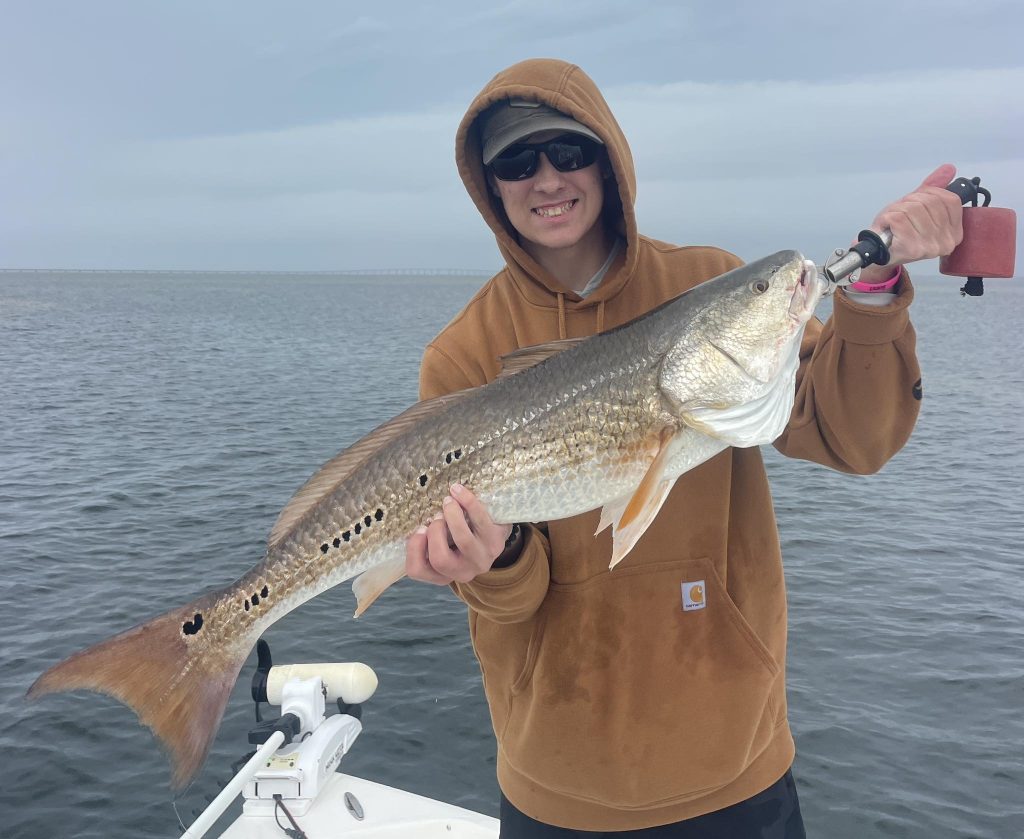
It also changes the schedule. Blake is not trying to beat daylight. He is waiting on the sun. “It’s worthless to be out there at seven,” he laughed. “I don’t even go until ten. You need the sun high.” When you are sight fishing, the sun is not just comfort, it is the entire game.
Where Winter Redfish Hold and Why Feeding Behavior Matters
One of the best takeaways from Blake was how much fish location is tied to fish attitude in winter. Trout and redfish will push way back into bayous when it gets cold, and it is common to find huge schools tucked into that protected water. The problem is that a lot of those fish are not there because they are feeding hard.
Blake has seen it plenty of times, including schools of “fifty or sixty trout with bull reds mixed in,” but he also said those fish can be frustrating because they just do not want to eat. “They’re back there to warm up, not feed,” he said. If you want to sight fish winter redfish and actually get bit, the shallow grass flats are usually the better play. Those fish are up there looking for food, and Blake especially likes the thickest grass he can find because it holds the kind of forage reds stay glued to this time of year.
Stealth, Sun Angle, and Getting Into Position
In shallow winter water, stealth is not a suggestion. It is the price of admission. With the tide pulled out and the water slick, any unnatural sound gets magnified. A trolling motor bump, a heavy footstep, an anchor splash, all of it can push fish off the flat and turn a good stretch into dead water.
Blake often uses a simple approach that keeps everything quiet. He will drift until the boat eases into a sandbar and lets the hull settle like a natural brake. Once he spots fish, he makes small adjustments and stays well outside their comfort range so he can keep casting without blowing the whole school out.
Sun angle is another detail that matters more than most people think. “If I can fish with the sun at my back, I do it every time,” he said. “They see worse looking into the sun, and I see better with it behind me.” When you are making long casts, reading movement, and trying to place a bait in the right lane, the advantage of better visibility adds up fast.
The Most Productive Lure for Winter Sight Fishing Redfish
We talked through a bunch of options, but Blake kept coming back to one bait that consistently got attention when other lures were ignored. His confidence bait for winter sight fishing is a Ned rig, specifically a jet black Z Man TRD on a tungsten Ned head, usually a quarter to five sixteenths ounce.
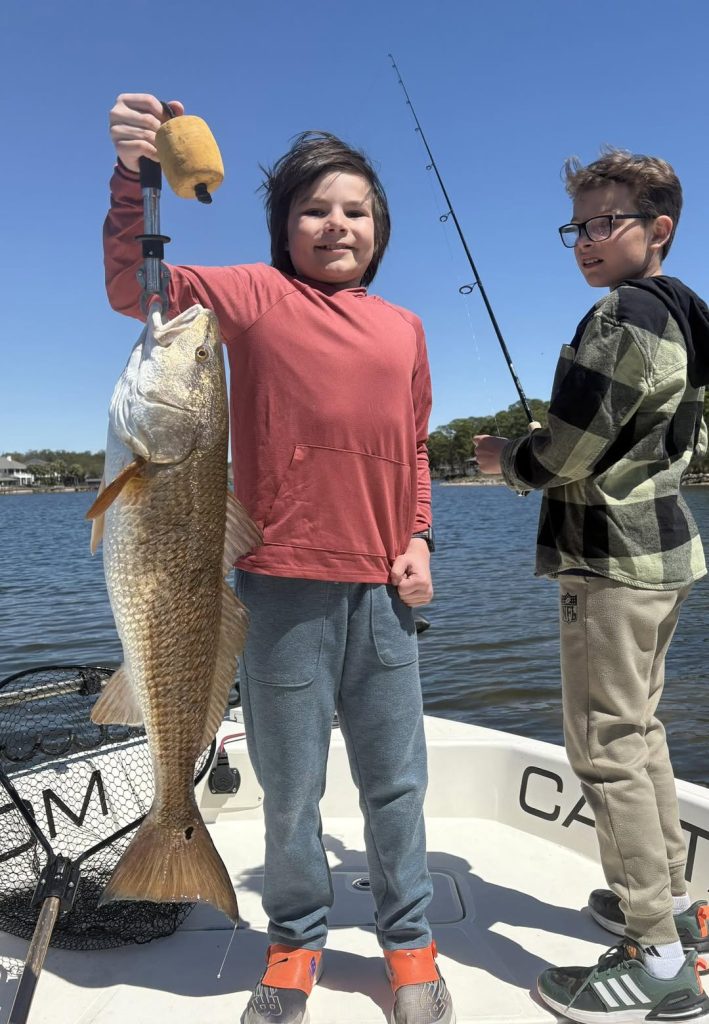
“It’s the only thing they consistently paid attention to,” Blake said. “Everything else they just ignored.” He pairs that with a fifteen pound fluorocarbon leader. He tried twelve pound early on, but after snapping off two bull reds on the hookset, he was done with that experiment.
How to Work the Ned Rig for Winter Redfish
In winter, it is not just what you throw, it is how you present it. Blake is not trying to land the bait right on top of fish. He is leading them. Most of the time he is putting the bait ten to fifteen feet in front of a fish, and if they are moving, he will lead them even more so the bait is sitting still when they arrive.
“I give it a couple quick pops to get their attention,” he said, “and then I don’t move it at all. If I jig it after they see it, they spook.” That dead stick approach is critical in clear water, because winter reds are already on edge and they do not want anything that looks frantic or unnatural.
Blake thinks this setup works because it matches what these fish are eating. When he cleans a winter red, he finds thick reddish worms in their stomach, “like a big night crawler,” and a Ned rig standing straight up on the bottom looks like the same thing sticking out of the sand. In a season where subtlety wins, that little detail can be the difference between a follow and a bite.
Leave the Live Bait at Home
A lot of anglers lean on live bait when it is cold, but Blake believes it can work against you on shallow winter flats. The problem is the noise, especially with a popping cork. “One cast with a popping cork can spook a school two hundred yards down the flat,” he said. “Every time I try live bait in winter, I regret it.”
Artificial lures let you stay quiet, make long casts, and adjust quickly when fish change direction or slide off into deeper lanes. Those are the tools you need when every opportunity is a high pressure moment.
Final Thoughts
Sight fishing winter redfish is technical, humbling, and completely addictive. You may only hook a couple fish in an afternoon, but you earn every one of them. When you finally watch a copper back ease toward your bait in water so clear it looks like glass, the payoff sticks with you, and it is the kind of fishing that makes you slow down, pay attention, and do things the right way.