
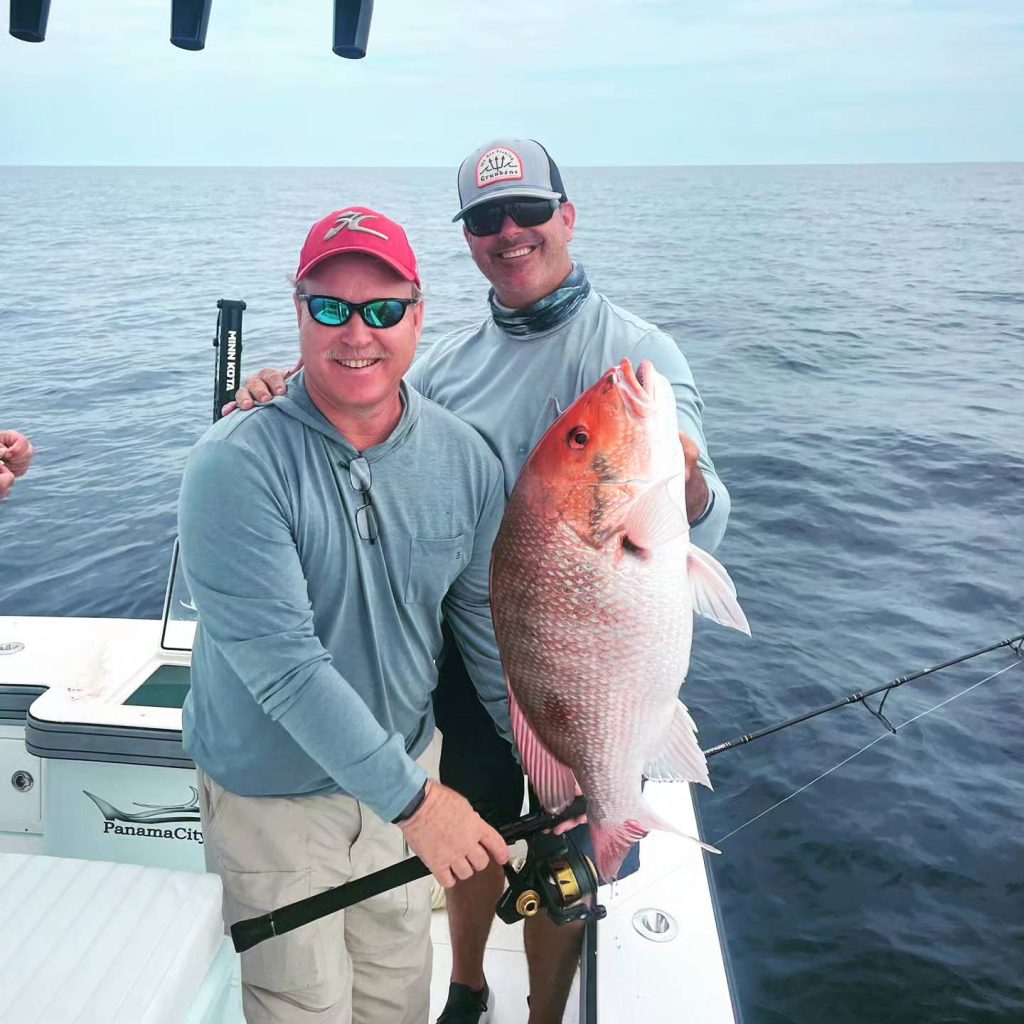
“Springtime fishing, I love it, because we start adding new options back in. You get every weather, every different side of it. You can have all four seasons in one day sometimes.” That was the way Capt. Justin Leake broke it down when we talked about how he plans trips this time of year, and it is a useful way to think about Spring if you are trying to decide what to target on any given day, especially if you need to get on the water no matter what. Rather than forcing one plan no matter what the weather is doing, Justin treats spring like a repeating three-part cycle. A front moves in, passes over, then settles down on the backside. At each stage, your best fishing option changes with it. That is exactly why rigid plans tend to fall apart this time of year. Justin’s approach is to let the weather tell him where to fish.
First Season: Tuck In and Hide
The first spring season is the day of the front. This is the day when it is blowing hard, conditions are uncomfortable, and trying to force an open-water trip usually does not make much sense. Justin described those days as “the extreme,” when the wind is beyond 20 knots and the best call is often either staying home or getting way out of the weather. “The day of the front is the easy call,” he said. “It’s either we’re getting out of the wind or we’re staying at home.”
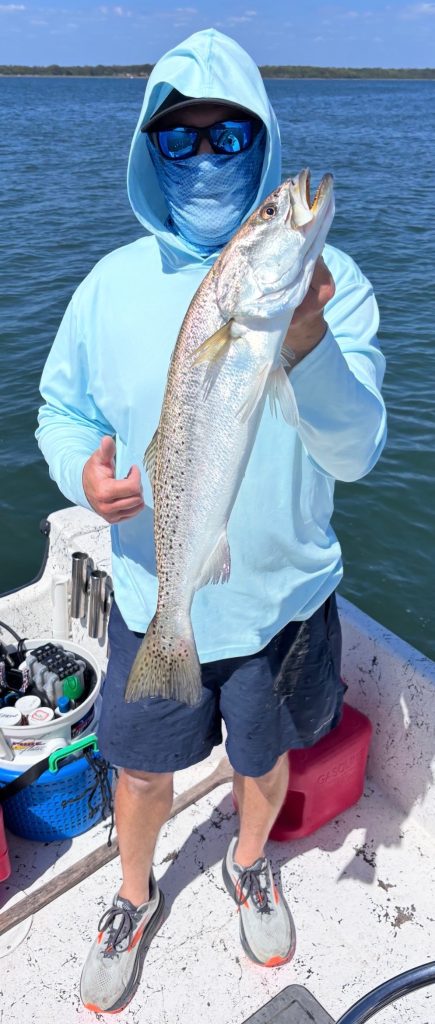
The target on those tucked-away trips is mostly trout, but it is rarely just trout. Justin said when he gets up in those creeks, they “always catch a few redfish mixed in there,” and sometimes even a few largemouth bass. That is part of what makes springtime fishing on front days interesting. You are not out there looking for one giant fish or trying to force some glamorous offshore plan. You are just leaning into the conditions and making the most of what that kind of day gives you.
Justin’s lure choice in those creeks reflects that same mindset. He likes hard jerkbaits and works them with a pretty erratic action, but with long pauses. “A trout almost gets intrigued by it and aggravated when it sits still,” he said. He also likes a popping cork with a shrimp under it, especially when he can throw quartering upstream and let the current transport that shrimp naturally down the bank. “We want it to drift down that bank,” he said, letting the cork become less of a noisy attractor and more of a natural delivery system and strike indicator.
Second Season: Fish the Bay
The second spring season comes right after the front, and it is one of the most common springtime fishing windows. The worst of the blow is over, but the Gulf is still ugly and the weather still has that cool feel behind it. Justin described this as the period when you usually have a north, northeast, or hard east wind and it is still too rough to want any part of the Gulf. That is when he shifts to bay fishing. “Those days I’m going to be fishing in the bay, fishing around the jetties, fishing around the bridge,” he said.
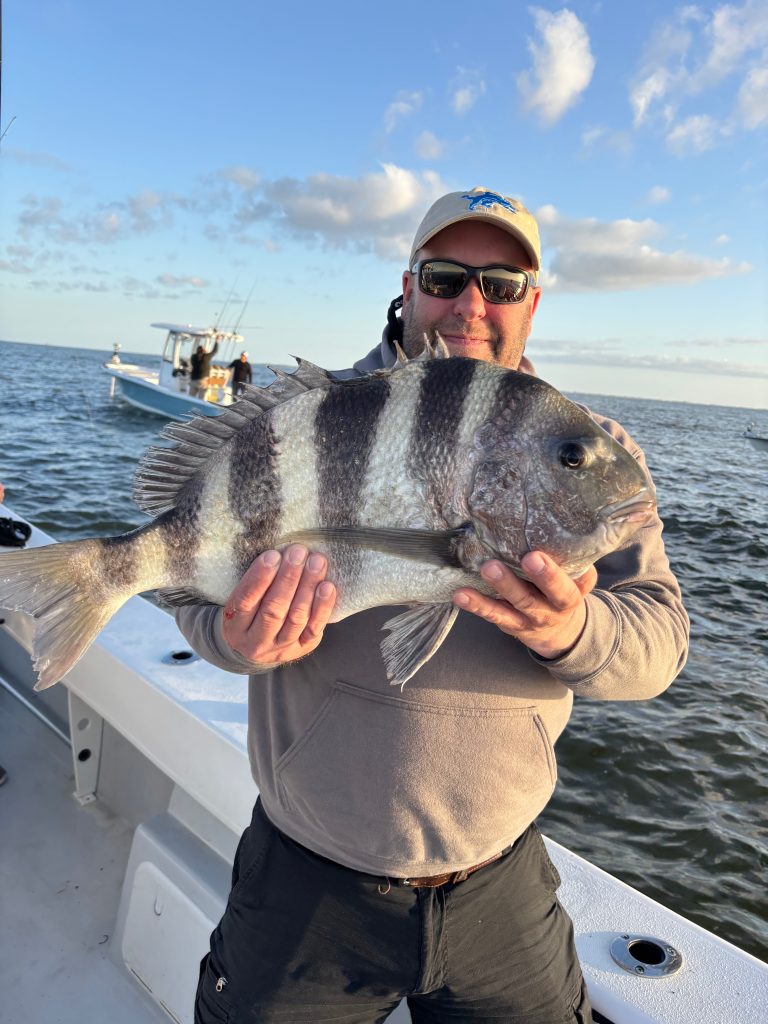
This is the time for the classic spring mix around the passes and bay structure. Justin mentioned Spanish mackerel, redfish, sheepshead, and mangrove snapper as the kind of fish that make sense on those days. If he is targeting Spanish, he starts with birds and visible activity. If he has young kids or less experienced anglers, he is happy to troll Clark spoons behind a trolling lead at about five to six miles per hour. If he has anglers who want to cast, he likes a seven-foot medium spinning setup with 10-pound braid, a little piece of 40-pound fluorocarbon, and something small, flashy, and fast. “Anything that’s small and flashy and moves fast, a Spanish mackerel is going to bite it,” he said.
Around the jetties, Justin likes to fish shrimp on a Carolina rig or drop-shot rig and get the bait down near the bottom. But he made an important point there too: a lot of people throw too far into the rocks. “You really want to fish right at the base of the rocks, where the rocks meet the sand,” he said. That edge is where those fish are cruising. The whole point is not just to fish the jetty. It is to fish the right part of the jetty.
Third Season: Jump to the Gulf
Then comes the third spring season, which may be the one everybody waits for. This is the calm window after the front has passed and the weather finally lays down enough to get outside. Justin said these are the days when “from about daylight till three, it’s pretty much calm, and it is gorgeous.” Those are the days when the reefs have not been touched much and it is time to go to the Gulf. “Now we’re going to jump out in the Gulf,” he said.
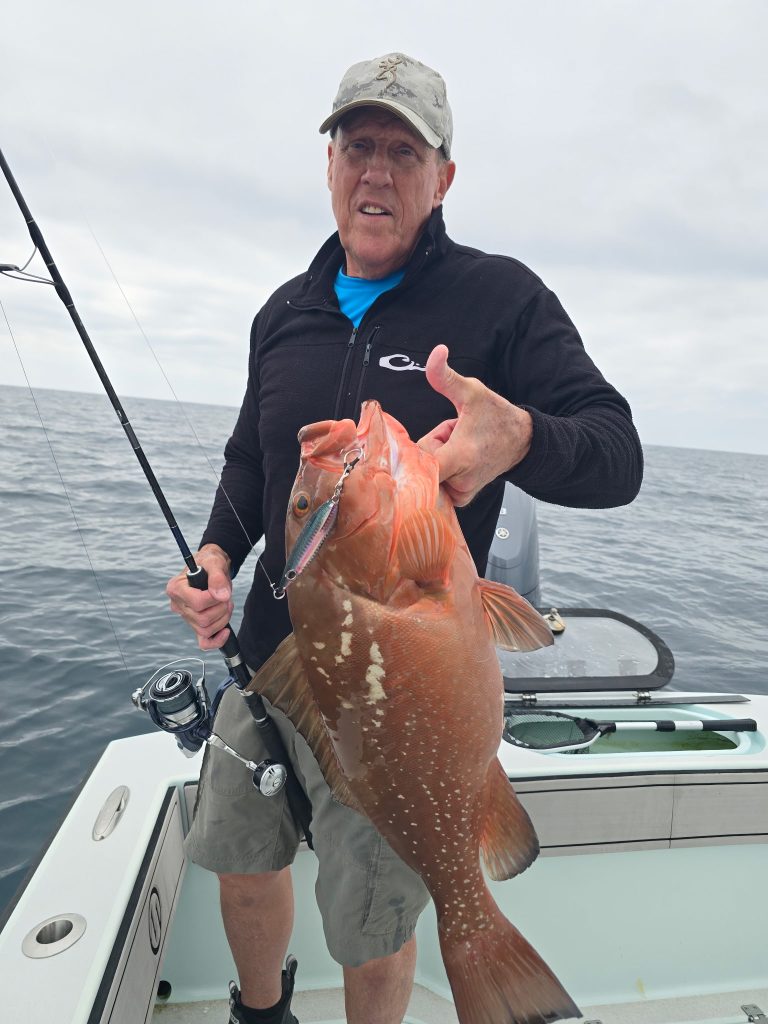
Justin described those outside trips as full of options during springtime fishing. Red grouper, vermilion snapper, triggerfish, mangrove snapper, and all the usual red snapper encounters can come with fishing those reefs. What stood out most was that he usually likes to fish multiple techniques at once so everybody on the boat has something to do and a chance to catch fish. For kids, he likes small cut baits on two-hook rigs for triggerfish and vermilion snapper. In the middle, he likes live pinfish on long, light leaders for mangrove snapper and other reef fish. Then for the biggest bites, he likes big dead baits fished near the bottom.
And when Justin says big dead baits, he means it. “I don’t think you can fish a dead bait too big” for red grouper, he said. He likes to butterfly those baits so the fillets move in the current and draw attention. That bigger presentation is what produced his biggest red grouper that day.
Let the Forecast Set the Plan
The most helpful part of Justin’s spring breakdown may be how simple he makes the decision tree. He even put numbers to it. For him, a sustained wind of 0 to 10 knots is a Gulf day. A sustained 10 to 20 knots means staying in the bay. And once that sustained wind gets beyond 20 knots, it is time to tuck into the protected water or stay home. “Zero to 10, go play in the Gulf and have fun,” he said. “From a sustained 10 to 20 knots, we are staying in the bay. And when it’s 20 and beyond, that’s when we do the tuck and hide.”
That is a practical way to approach springtime fishing. It keeps you from making bad decisions. It gives you a target list that matches the conditions in front of you instead of the conditions you wish you had. And it lets you appreciate what spring really is along this part of the coast: not one season, but three.
As Justin put it, that cycle keeps repeating “from February through the end of April, and then maybe even into early May.” You either tuck in and hide, fish the bay, or head to the Gulf. If you think about spring that way, the weather stops looking like a problem and starts looking like a plan.