
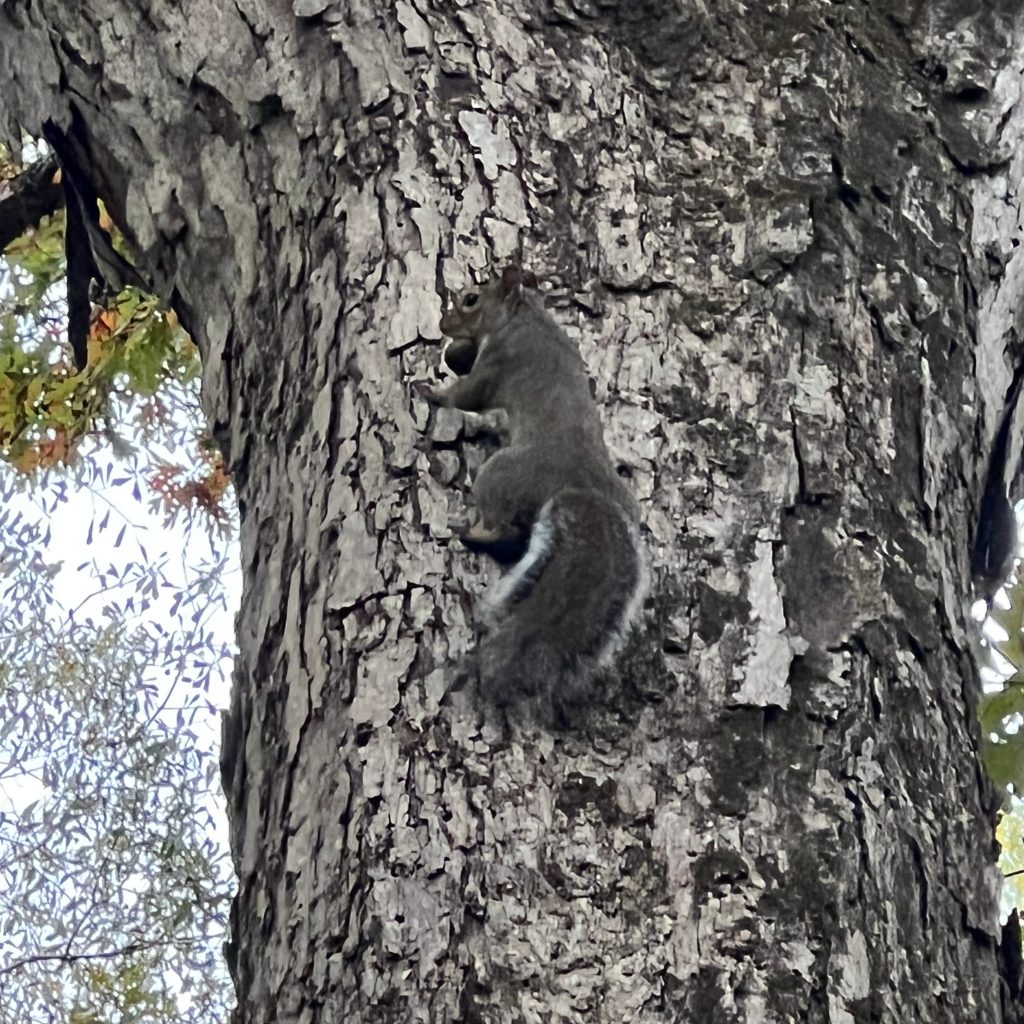
The best deer hunting spot I have ever found is a remote hilltop hidden deep in public land. It is surrounded on three sides by a swamp so nasty most folks would not bother trying to cross it. I have dragged several nice bucks out of there over the years, but I never would have known it existed if it were not for a squirrel hunting trip that turned into one of the best lessons in squirrel hunting for deer hunters.
It was early February, just after deer season had wrapped up. The day was warm for winter, in the mid-50s and overcast, and I had skipped college classes to go squirrel hunting with my single-shot 20 gauge. Dressed in blue jeans, a T-shirt, and an old flannel, I wandered the edge of a tupelo and palmetto swamp, moving slowly and scanning for shaking limbs or squirrel cuttings on the ground.
A squirrel barked deep in the swamp, in a spot I had always avoided. Even in rubber boots, you could end up waist-deep in muck out there, and the place was full of briars and cottonmouths. But that squirrel was enough incentive to try. I picked my way from root ball to root ball, grabbing tree trunks for balance, until I got within range and dropped it from a tupelo. The shot kicked up another squirrel barking farther in, so I kept going.
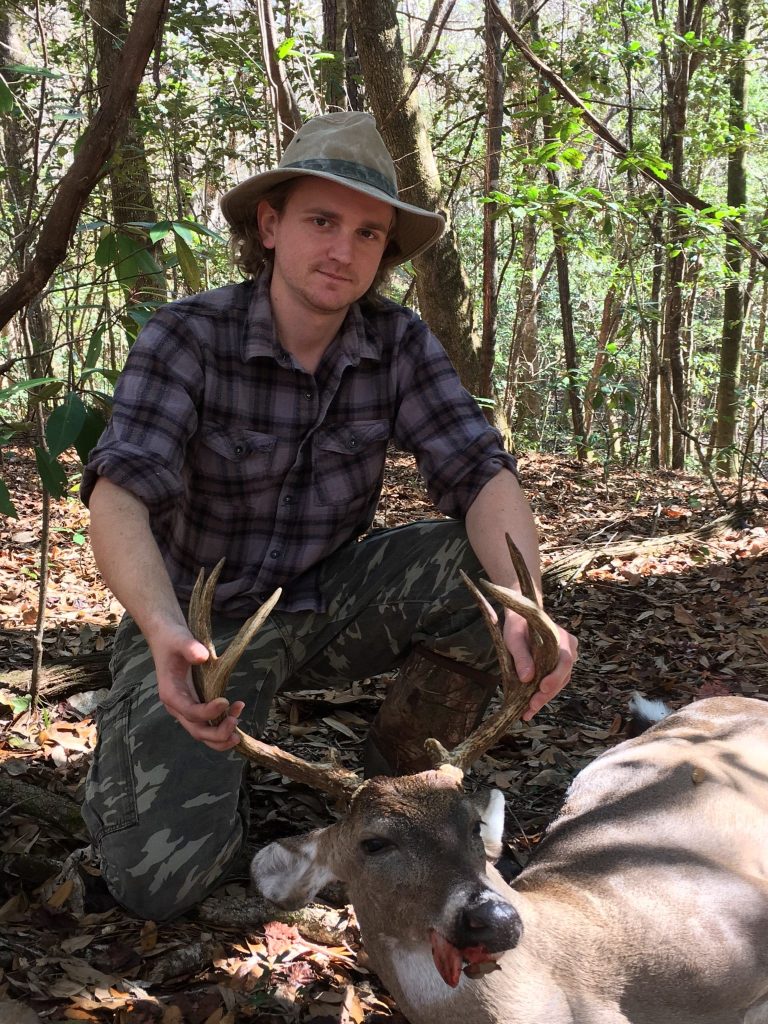
Eventually, I emerged onto a small oak-covered hilltop in the middle of the swamp. Squirrels were everywhere, but so was deer sign, with rubs and scrapes littering the place, some of them the kind of shredded, deep-gouged trees only a big buck makes. I marked every bit of sign in my mapping app and knew I would have to find a way to hunt it. That hilltop has since produced multiple public-land bucks for me.
Why Squirrel Hunting Finds Spots Scouting Misses
When I go “deer scouting,” I tend to have a mental checklist: scrapes, rub lines, food sources, and maybe a specific terrain feature I saw on the map. Once I find something that looks good, the temptation is to stop and hang a stand. Squirrel hunting for deer hunters is different. My mind is not locked on deer sign, so I am more likely to keep wandering past that “good enough” spot.
It also takes me into overlooked areas. On public land, I will often choose squirrel hunting spots where I do not see other trucks parked. I am not worried about disturbing anyone’s deer hunting, and I think deer behave the same way, avoiding the high-traffic areas where hunters pile in.
Some of the best terrain discoveries I have made, such as bedding cover hidden in an otherwise open pine stand or palmetto thickets invisible from the map, happened because I was meandering with a squirrel gun. You cannot see those details from aerials, topo maps, or even LiDAR. You have to put boots on the ground.
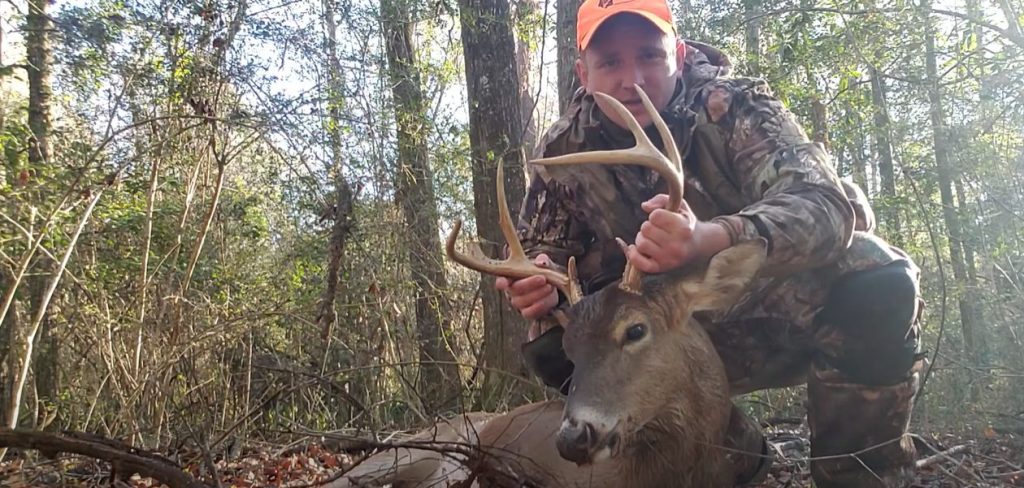
In fact, about half of my best deer spots came from squirrel hunts. This year, I have a new WMA I am interested in, and my plan is to squirrel hunt it for a couple of seasons before deer hunting it. That way I can learn the land, the access points, when gates get locked, how bad the roads get, and even meet the game warden or the biologist. Squirrel hunting is low stakes, and there is a camaraderie among small-game hunters that you do not always find in the deer woods.
How It Sharpens Woodsmanship
For me, squirrel hunting is all about slipping quietly through the woods, moving from tree to tree, controlling my breathing, and avoiding noise. It forces me into a broad level of awareness, listening for leaves rustling, claws scraping bark, or a limb moving without wind. Squirrels can be anywhere, from the ground to the treetops, so I am constantly scanning 360 degrees.
That mindset is invaluable for deer hunters, because it sharpens the same woodsmanship skills that make you successful in both pursuits. It hones my eyes and ears after months of staring at a computer for work and keeps my shooting skills sharp. Squirrels are small, fast-moving targets, and learning to time a shot when the animal is calm and still carries over to deer season.
And then there is navigation. Most of my comfort with a compass and off-trail travel comes from years of squirrel hunting. I can walk 8, 10, even 12 miles through big woods without hugging a road or trail, something a lot of hunters never learn to do.
Seasonal Advantages of Squirrel Hunting for Deer Hunters
Pre/Early Season – Finding the Food and Sharpening Skills
For me, squirrel season’s opening weeks are as much about preparation as they are about chasing bushytails. In Alabama, that means September into early October, just ahead of or overlapping the first days of archery season. This is the perfect time to scout without “scouting.”
Squirrels and deer have a lot in common when it comes to preferred foods in the fall. If the squirrels are hammering a certain mast tree, odds are good the deer are feeding there too. More than once, I have heard squirrels cutting acorns in the distance, eased over to investigate, and jumped deer or hogs feeding on the exact same tree.
Last year’s overcup oak crop is a good example. I figured out the trees were hot in late September while squirrel hunting in a swamp, and within weeks I was killing both pigs and deer in that same zone. It is not just about finding “a tree,” it is about learning which species of acorn or nut the animals are keyed in on. Some years it is overcup oaks, sometimes “cow” oaks, sometimes live oaks. Watching squirrels tells you what is hitting right now.
Early squirrel hunts also give me a jump on my hunting rhythm. I am dusting off my boots, breaking out my early-season gear such as a Thermacell, insect repellent, and light breathable clothes, and getting used to walking quietly in buggy, hot conditions. I am practicing woodsmanship: spotting subtle movement, keeping track of wind, and easing into shooting positions without being seen. By the time deer season opens, I have already been hunting for a month while many folks are still trying to shake off summer.
Mid/Late Season – Beating the Pressure and Learning the Patterns
When rifle season starts and deer hunting pressure peaks, a lot of hunters see deer movement drop. Here in Alabama, that lull often hits in December, before the rut fires things back up. There is still food in the woods, but deer have been bumped and pressured for weeks, so they tighten their patterns and stick to safe zones.
This is where squirrel hunting shines as an intel-gathering mission. I can sleep in, hit the woods mid-morning, and see where the deer hunters are parked. Over time, patterns emerge, such as gates that always have trucks or corners of the WMA that never do. Those low-traffic areas often turn into the very places deer hole up.
Because I am small-game hunting, I am free to poke around without the pressure of messing up a deer spot. If I bump a deer, I have lost nothing, since I am not in a treestand banking on that specific morning. Several times, I have stumbled on fresh tracks, trails, or bedding cover in spots I would not have thought to hunt, then come back the next day or weekend with a gun or bow and killed a buck.
Squirrel hunting also teaches me how deer are avoiding hunters. Sometimes I will notice faint trails skirting the back edge of an access road or swinging wide around an obvious ladder stand. I have even spotted hunters in the distance, waved to them, backtracked out of their spot, and used that information to piece together how deer might be slipping between pressure points.
It is scouting with a gun in hand. You are learning about the people just as much as you are learning about the deer. And, of course, you’re hopefully shooting a few squirrels as a bonus!
Post Season – Rut Sign and Survivor Intel
Once the deer season closes, most hunters hang it up. But in Alabama, squirrel season keeps running, and I use it as my postseason recon time. By late February, the woods are bare and quiet. Trails, rubs, and scrapes stand out against the leaf litter. Hunter sign is obvious too, such as stand locations, worn entry trails, and even the occasional forgotten trail camera.
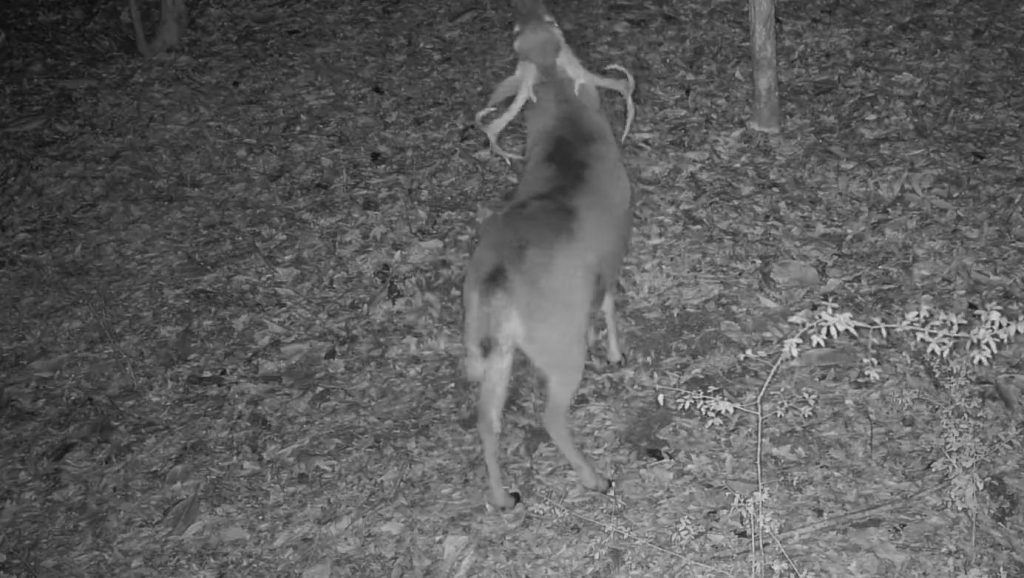
This is the time to identify which bucks made it through the season. If I find a smoking-fresh rub or scrape a week or two after deer season ends, I know that buck is alive, comfortable, and using that spot in daylight despite months of pressure. Those are the spots I will prioritize for the next year.
Postseason squirrel hunts are also when I fine-tune stand sites. With visibility high, I can walk the edges of bedding areas, find fresh crossings, and mark trees for future setups. I am not worried about bumping deer in February, since their patterns will reset before fall.
It is also a good way to keep the fire going after deer season. The rut may be over, but I am still in the woods, still hunting, and still learning. Many of my best stand locations for the following fall came from a cold, quiet squirrel hunt in February.
The Slug in My Pocket
By the time you have squirrel hunted through the seasons, you start stacking little bits of knowledge that add up. But every now and then, it is not just intel you bring home from a squirrel hunt. Sometimes, you bring home venison.
One of the best examples came during the final week of deer season a few years back. I was having a rough go of it. The week before, I had hit a nice buck and could not recover him, a gut-wrenching loss that left me sour on deer hunting. The weather was not helping either. It was warm for January, windy enough to make treetops sway, and the idea of sitting in a stand for hours hoping for a miracle did not appeal.
Still, I wanted to be in the woods. So I left the deer rifle at home, grabbed my single-shot 20 gauge, and decided to chase squirrels. Just in case I ran across a hog, I slipped a single slug into my breast pocket.
I launched my canoe across a short stretch of river and pulled up on the far bank. The squirrel hunting was slow, since wind like that keeps them tight to the trees, and I drifted through the timber without much of a plan. Eventually I hit a wall of thick palmetto and had to make a choice: push through, skirt around, or head back. Instead, I just sat down on a stump, took a long pull from my water bottle, and let the woods settle around me.
That wind, as it turned out, was my ally. After ten or fifteen minutes of stillness, movement flickered in front of me. Thirty yards away, an eight-point buck stood up from his bed in the palmettos. He stretched, then started licking his flank like a dog, completely unaware I was there.

At first, all I could do was watch. Then I remembered the slug in my pocket. I eased the gun open, swapped out the birdshot, and closed it again, slow as I have ever moved a muscle. The wind masked the soft metallic click of the gun going into battery.
When I shouldered the gun, the front bead settled on his shoulder, and the little 20 barked. It was not a perfect shot (all I had to aim with was a front bead) but I recovered the buck without much difficulty
Walking up to where he was standing when I shot to start blood-trailing, I realized he had been bedded with a doe in that palmetto thicket. Obviously, I had stumbled upon some prime bedding. In the years since, I have taken other deer from that same edge, all because I once wandered into it chasing squirrels on a day I did not even plan to deer hunt.
The Takeaway
Squirrel hunting is fun on its own, but it is also one of the best ways I know to get better at killing deer. For anyone serious about improving as a deer hunter, squirrel hunting for deer hunters is the perfect off-season strategy. It keeps me in the woods, sharpens my skills, and leads me to places I would never think to scout for deer. The intel, the woodsmanship, the miles under your boots, it all adds up.
If you are serious about improving as a deer hunter, grab a .22 or a 20 gauge this season and chase some squirrels. You might just find your next honey hole.