

Recreational fishing surged after World War II, driven by an increased emphasis on leisure time for the working class. Throughout the 20th century, surf fishing was primarily centered on the striped bass fishery along the mid- and upper-Atlantic states and the red drum fishery farther south, including the Gulf Coast. This era saw extensive experimentation with surf fishing rods and refinement of conventional fishing tackle, much of which stemmed from commercial fishing gear.
By the 1960s, spinning tackle—first introduced from Europe—became widely available in the United States, with Penn reels quickly dominating the domestic saltwater fishing market. Surf rods evolved alongside these reels, featuring improved materials such as stainless steel and ceramic guides. Over time, heavier fiberglass rods gave way to lighter, more sensitive carbon fiber models. Today, surf rods continue to advance, catering to an ever-expanding community of anglers.
With the explosion of online information, surf fishing has become more accessible than ever. As more people take up the sport, the demand for high-quality, specialized rods has grown, leading to a vast market of products designed to meet every angler’s needs.
The Role of a Surf Fishing Rod
A surf rod’s primary function is to cast a lure or rig to a strategic location. Often, distance is the key factor, as when casting bait far offshore. In other cases, accuracy is more critical, such as when targeting a specific school of fish or casting near a sandbar drop-off.
For long-distance casting, rod length and action play a major role. Surf rods built for this purpose typically range from 10 to 12 feet or longer. These rods must have enough backbone to cast weights of 3 to 6 ounces—or more—requiring a medium-heavy to extra-heavy action. Manufacturers provide specifications on rod length, action, line, and lure weight, which should be followed for optimal performance. Ignoring these recommendations can lead to decreased casting distance, poor sensitivity, or even rod failure. In extreme cases, overloading a rod may result in lost tackle or injury.
Choosing the Right Rod for Your Target Species
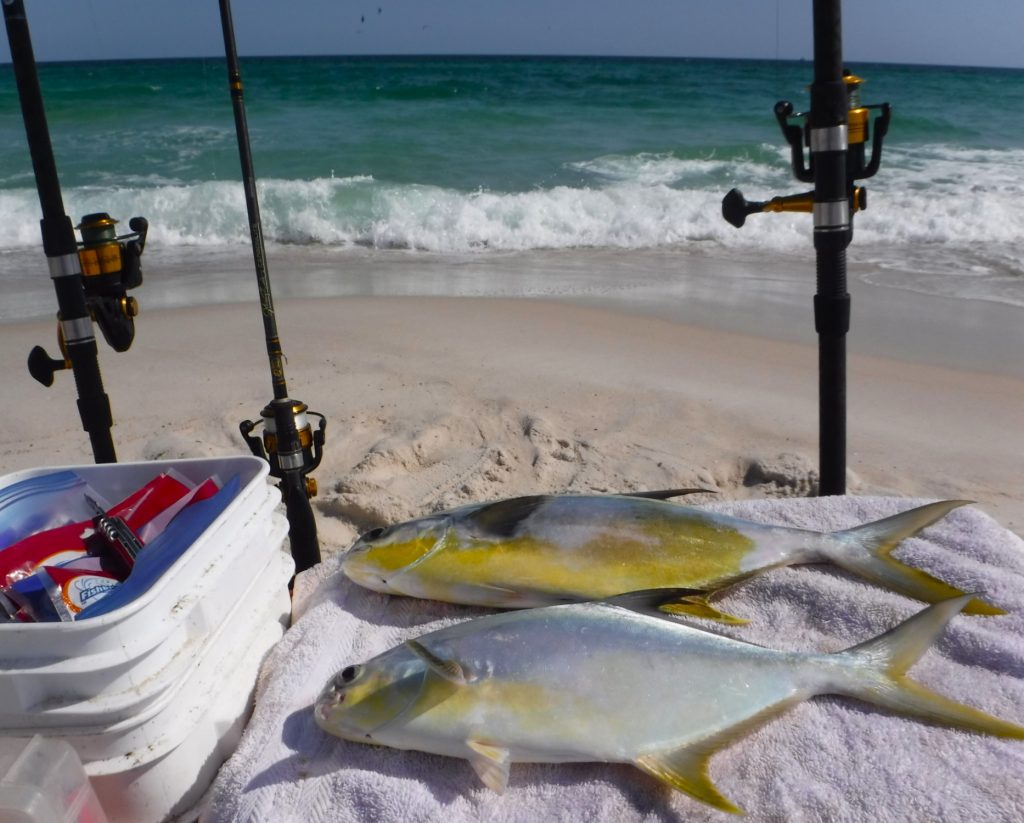
No single surf rod is perfect for every fishing scenario. Smaller fish vastly outnumber larger ones in the surf zone, and different species require different tackle. Heavy-power rods are best suited for targeting large species such as sharks, striped bass, or bull redfish. These rods are typically 9 to 12 feet long and rated for heavy lines and lures. Medium-power rods work well for targeting fast-moving species such as mackerel, jack crevalle, and tarpon using lures or live bait. On the lighter end, many surf anglers repurpose freshwater rods, typically 8 to 9 feet long, to catch species like pompano, whiting, and bluefish in nearshore waters.
Some anglers prefer customized rods tailored to their specific needs. For example, John Atchison of Foley, Ala., uses a custom-made 10-foot Lamiglas SS 1201 rod, rated for 40-pound line. This rod allows him to launch topwater lures or 3-ounce spoons up to 100 yards, where bull reds and jack crevalle are feeding. On the other hand, many anglers use off-the-shelf rods for targeting species like pompano. These rods, often 12 to 14 feet long, allow for casting weighted rigs over the sandbar while maintaining enough sensitivity to detect light bites. Shorter versions, ranging from 9 to 10 feet, are also effective when targeting fish closer to shore.
Rod Brands and Features
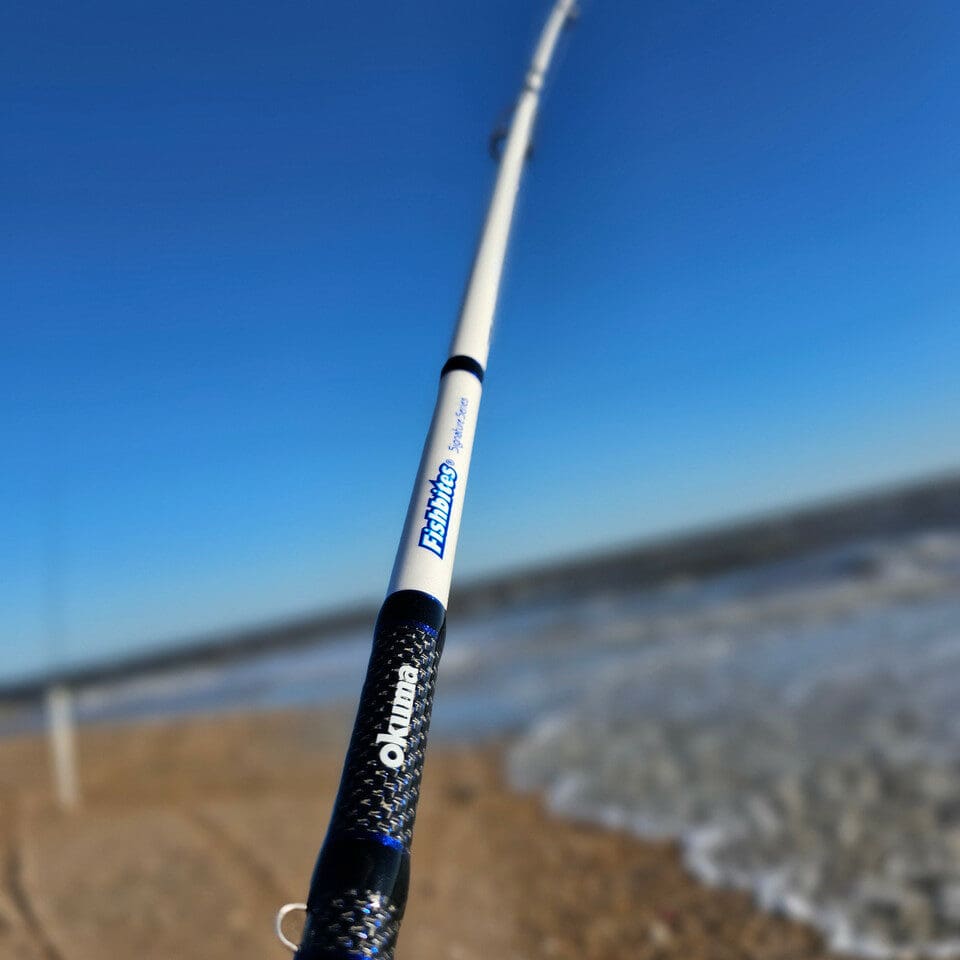
Every angler has personal preferences when it comes to rod brands, and opinions vary widely based on budget and experience. However, some well-known manufacturers consistently appear in discussions. Penn remains a popular and cost-effective choice, with models like Wrath, Pursuit, Fierce, and Battle widely used, though the Spinfisher series is particularly well-suited for surf fishing. Daiwa has built a strong following with its BG and Eliminator series, while high-end brands such as St. Croix produce respected models like the Avid, Legend, and Seage series. Meanwhile, companies like Okuma and Fishbites have introduced innovative products, such as the Fishbites Signature Series Surf Rod—a fast-tapered, powerful 12-foot, two-piece rod rated for 12- to 25-pound line and 1- to 4-ounce lures, offering remarkable versatility.
Rod length is another critical factor. While one-piece rods are often preferred for their durability and casting performance, multi-piece rods are more convenient for travel. Many anglers who fish locally opt for one-piece rods, while those traveling to fish rely on collapsible or multi-piece options. Some modern travel rods, like the Toadfish Travel Surf Rod, offer excellent portability without sacrificing performance.
Selecting the Right Components
Rod components greatly impact performance and price. The quality of the guides is particularly important, with premium options such as Fuji stainless steel or ceramic models offering improved casting performance and durability. The guide material should match the preferred line type—stainless steel guides tend to work best with monofilament, while ceramic guides are ideal for braided lines. The reel seat and handle material also influence comfort and durability. While foam grips are common, cork handles provide a more sensitive feel, though they are becoming harder to find.
Another crucial consideration is whether to prioritize power or sensitivity. Heavier rods provide the strength needed for long casts and fighting big fish, while lighter rods enhance sensitivity for detecting subtle bites. Anglers must balance these factors based on their target species and fishing conditions.
Pairing a Reel with Your Rod
Choosing the right reel depends on your rod’s specifications and your fishing style. Spinning reels are the most popular choice for surf fishing due to their ease of use, while conventional reels offer greater control for experienced anglers. The type of line also plays a role in reel selection. Braided line provides superior casting distance and strength, while monofilament offers better shock absorption.
To find the right balance between cost and performance, visiting a well-stocked tackle shop allows anglers to test different rod-and-reel combinations before making a purchase.
Caring for Your Investment
To extend the life of your surf fishing rod, proper maintenance is essential. After each use, a light rinse removes salt buildup without forcing moisture deeper into the rod’s crevices. Regularly inspecting the guides and wrappings for damage can prevent frayed line and lost fish. A simple way to check for nicks or cracks is to run a piece of nylon or silk thread through the guides. If the thread catches, the guide may need replacement.
Proper storage is also key to longevity. Leaving a rod in a hot vehicle for extended periods can weaken the material, so storing it in a cool, dry place is advisable. Before long-term storage, rods should be thoroughly cleaned and treated with an anti-corrosion spray to protect metal components. Taking these simple steps ensures that your rod remains in excellent condition for years to come.
Final Thoughts
Choosing the right surf fishing rod requires balancing budget, target species, and fishing conditions. While no rod is perfect for every situation, understanding your needs and fine-tuning your setup will help you make the best decision. Once you hit the beach, experiment with different techniques to get the most out of your rod and enjoy the excitement of surf fishing.