

Want to grow bigger, healthier fish in your pond and increase your fishing enjoyment? An automatic fish feeder is the answer. It provides a consistent, balanced food source, ensuring that your fish receive the nutrients they need to grow and thrive. Regular feeding helps attract and maintain a stable fish population while reducing competition for food. With a Texas Hunter fish feeder, you can enjoy your pond without the hassle of manual feeding.
Why Use a Pond Fish Feeder?
Cody Borgfeld, Vice President and General Manager of Texas Hunter Products, explains that most people use fish feeders to supplement feed for forage fish, such as bluegill, which in turn feed the target fish, such as bass.
“It’s the food-chain effect. You feed the forage fish, so they reproduce and grow faster, giving the target fish more to eat. For example, you feed the bluegill to increase their size and numbers so the bass can eat them. The feeder also creates a fishing hotspot, making the bluegill and bass easier to catch,” Borgfeld said.
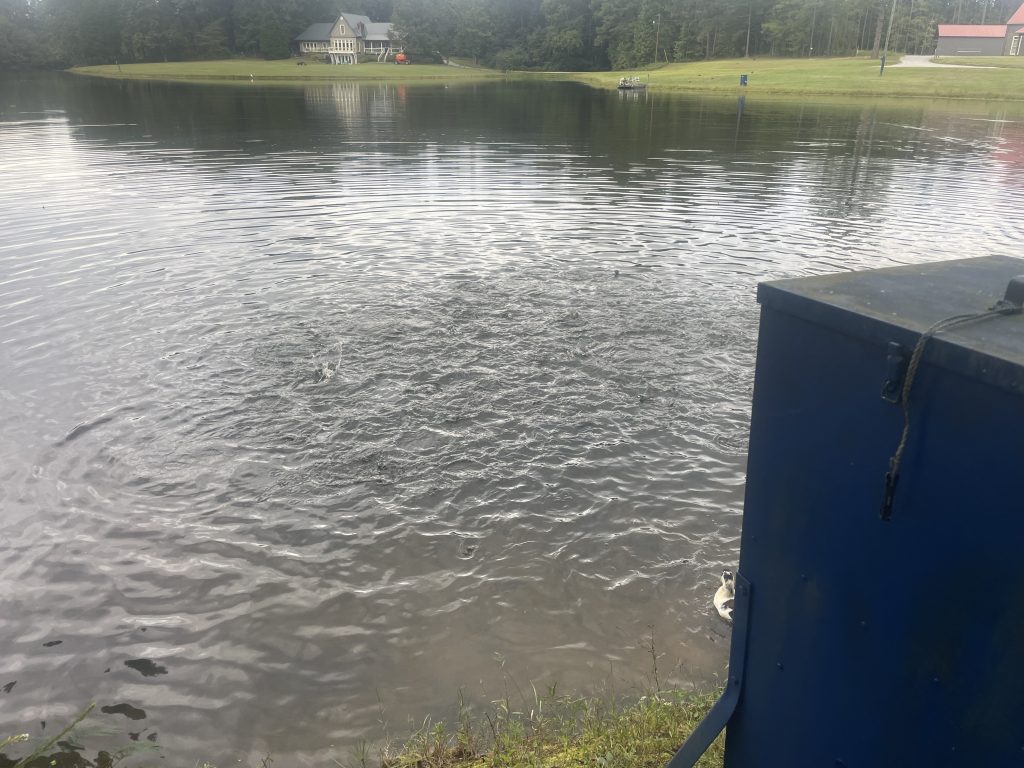
Scott Cherones, Vice President of Southeastern Pond Management, a leader in pond and lake management services, highlights the visible results of using a fish feeder.
“When the feeder goes off and the bluegill attack the feed, you can see it working. It keeps people engaged with their pond. Some of the best ponds and lakes I manage have fish feeders, which play a big role in a healthy pond ecosystem. The bluegill eat the food, gain energy, and produce more eggs. These eggs turn into more bluegill for the bass to eat. The bass sneak up and eat the bluegill when they’re distracted by the feeder. So, you’re feeding both the bluegill and the bass,” Cherones said.
An automatic feeder also provides instant fishing gratification, as the bluegill gather at the feeder, making them easy to catch.
“They get into such a frenzy when the feeder goes off that you can catch them right in front of it. It’s especially fun for kids to see the aggressive fish and catch them so easily. And there’s always a big bass or two waiting to eat the bluegill,” Cherones added.
Fish feeders benefit the pond ecosystem by providing additional nutrients. In smaller lakes, the food can supply enough nutrients to replace the need for fertilization. As long as high-quality food is used, fish feeders enhance the health of both the fish and the pond. The food helps the fish grow larger, increases their reproduction rates, and strengthens the overall food chain. The larger, healthier bluegill feed the bass, helping them grow and reproduce as well.
Pond Owner’s Experience
When selecting a fish feeder, quality is crucial. Cherones advises looking for durable, weatherproof construction and robust electronics.
“Inexpensive feeders don’t hold up. We used to sell various brands, but we narrowed them down to Texas Hunter feeders because they are high quality and reliable. They are easy to set up and maintain, which is important. You can easily replace the motor after years of use. Many other feeders are difficult to work on and break easily,” Cherones said.
Borgfeld explains that Texas Hunter feeders are made from galvanized steel and powder-coated for extra protection. Their durable construction allows them to withstand various weather conditions. Many pond owners operate feeders only during spring, summer, and early fall, as fish typically don’t feed well in the colder months.

“The hopper lasts a long time, and the only maintenance needed is changing the battery every two to three years. We have replacement parts, but our feeders are usually maintenance-free. I recommend leaving the feeder running through winter, just to keep things cycling. If you bring the feeder indoors, remove the battery and store it on a battery tender for next year,” Borgfeld advised.
Cherones offers another tip: never leave the lid open on the feeder.
“Ninety percent of problems with feeders happen when the lid is left open. Rain can ruin the food, making it foul and causing a cascade of issues. I suggest using small combination locks on the lids and doors to keep out raccoons, which are clever enough to damage the feeder if they get in,” Cherones said.
Another issue to watch for is dirt daubers, which can build nests inside unused feeders, locking up the spinner plate and burning out the motor.
Texas Hunter fish feeders are simple to assemble. The only steps are attaching the legs, battery, and solar panel. Adjustable legs are available for sloping banks or uneven surfaces, while dock legs take up less room on the dock. Assembly requires lining up the holes, securing them with bolts and lock washers, plugging in the battery and timer, and attaching the solar panel to the pre-drilled holes.
Tips for Using a Texas Hunter Fish Feeder
Any decent-quality catfish fingerling floating food will work in a fish feeder, but Cherones recommends Purina brand feed because it’s clean and fish prefer pellets made from animal protein over plant protein.
“Look for food with at least 32 percent protein. Purina Game Fish Chow offers a variety of pellet sizes and doesn’t have a lot of fine powder at the bottom, which can cake up in the feeder. Purina AquaMax has 41 percent protein and is great if you want to grow giant bluegill or if you’re feeding hybrid striped bass, feed-trained largemouth bass, or trout,” Cherones said.
For feeding schedules, Cherones suggests feeding twice a day—morning and evening—when the fish are most inclined to eat. The feeding duration should depend on the fish population and their appetite. If it takes the fish more than five minutes to finish the food, reduce the feeding time.

March through October is the best time for supplemental feeding, though some people keep their feeders running year-round, lowering the feed amount during winter.
Borgfeld adds that the best location for a feeder depends on the lake’s size and the number of feeders used. One feeder per three surface acres is recommended, and it’s important to consider wind direction. Place the feeder so the wind blows the food across the lake rather than onto the shore.
An automatic fish feeder is an invaluable tool for pond owners, simplifying the feeding routine while promoting a healthy pond. Timely, precise feedings minimize the risk of overfeeding and water pollution, encourage regular feeding habits, and enhance fish growth and vitality. With a fish feeder, pond owners can enjoy their ponds without constantly worrying about feeding schedules.