

Nearing the Sand Island Lighthouse, I eased the Skeeter bay boat off plane, ready to execute my morning game plan. I had expected slack water and the beginning of the incoming tide, according to the tide charts that showed low tide occurring right around daybreak. But the minute I idled down, it was clear something wasn’t lining up. This was a textbook example of how tides vs currents can throw a wrench in your plan—the tide had technically turned, but the current was still ripping hard in the opposite direction. Instead of slack water, we were looking at a strong outgoing flow—too strong to effectively work our GULP swimming mullet jigs down the drop-offs around the lighthouse.
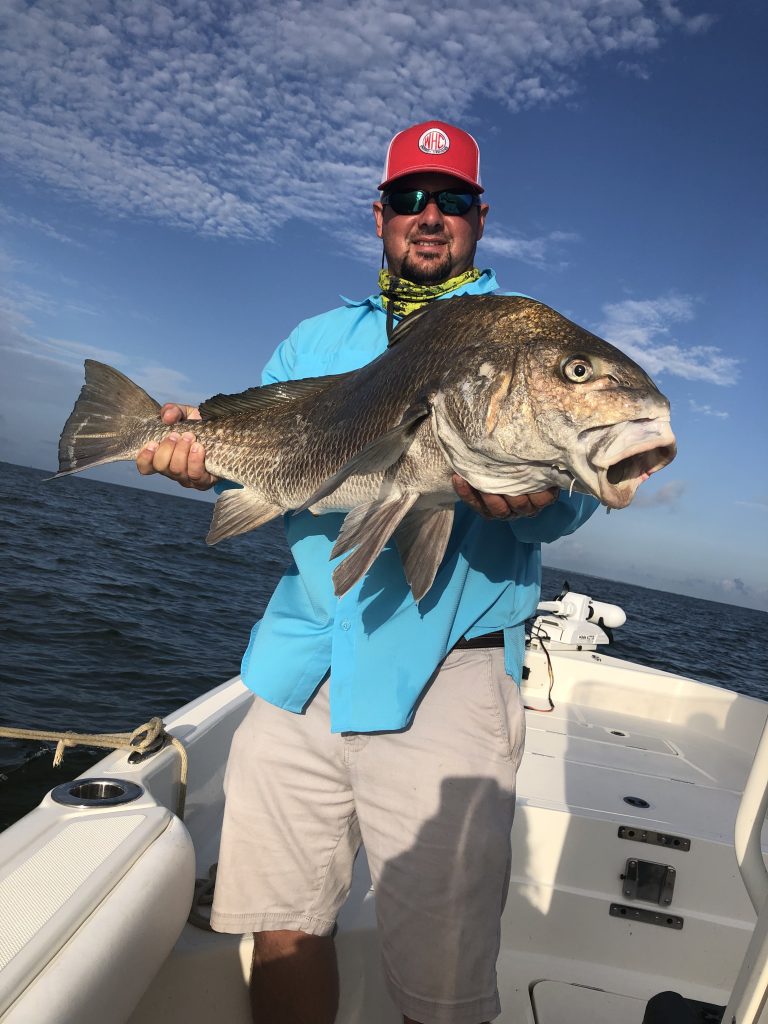
We pivoted. The wind was calm, so we made a short run to nearby Dixey Bar, where a ripping current can actually work in your favor. Drifting and casting the same GULP baits, we found success quickly, landing several big bull reds in short order. A couple hours later, we returned to the lighthouse as the tide began to turn, and sure enough, the reds were waiting.
This is a prime example of the difference between tides vs currents, and why it’s crucial to understand both when planning an inshore fishing trip. If you’ve ever shown up at a spot expecting one thing, only to find the water behaving completely differently, you’re not alone. It happens all the time.
Tides vs. Currents: What’s the Difference?
Let’s clear up tides vs currents.
- Tide refers to the vertical movement of water—the rise and fall due to gravitational forces. You’ll hear it described as “incoming” or “falling.”
- Current is the horizontal movement of that water, which can either be incoming (flowing), outgoing (ebbing), or slack (still).
They often go hand in hand, but not always. The tide might be turning, but the current could still be flowing hard. This discrepancy is what throws off a lot of anglers and separates a good day from a frustrating one.
Why Tides Matter for Inshore Fishing
In shallow water, tide plays a huge role. A six-inch rise or fall can mean the difference between fish being present or not. If you’re fishing flats, grass beds, or skinny backwater creeks, that vertical movement is your best friend (or worst enemy).
For example, when I launch at the Bayou La Batre city ramp, I check the spot where the cement meets the rocks. If the water’s touching the cement, that tells me certain shallow areas are likely fishable. If the rocks are dry, I change my plan.
👉 Tip: Check the latest Alabama Saltwater Fishing Report for updated insight on tides, water levels, and hot bite windows.
When Current Changes the Game
Current is a different animal. It influences where bait moves and how predators set up to feed. Certain areas become nearly unfishable on big current days—like the Sand Island Lighthouse or Pass aux Herons. But other areas, like Dixey Bar or the open Gulf beaches on Dauphin Island, absolutely light up when the water is moving fast.
Big current sweeps shrimp, finfish, and crabs out of deeper water and concentrates them over structure or drop-offs. That makes it easy for fish like bull reds to feed. So, rather than fight the flow, let the current work for you.
Fish Behavior and Current Direction
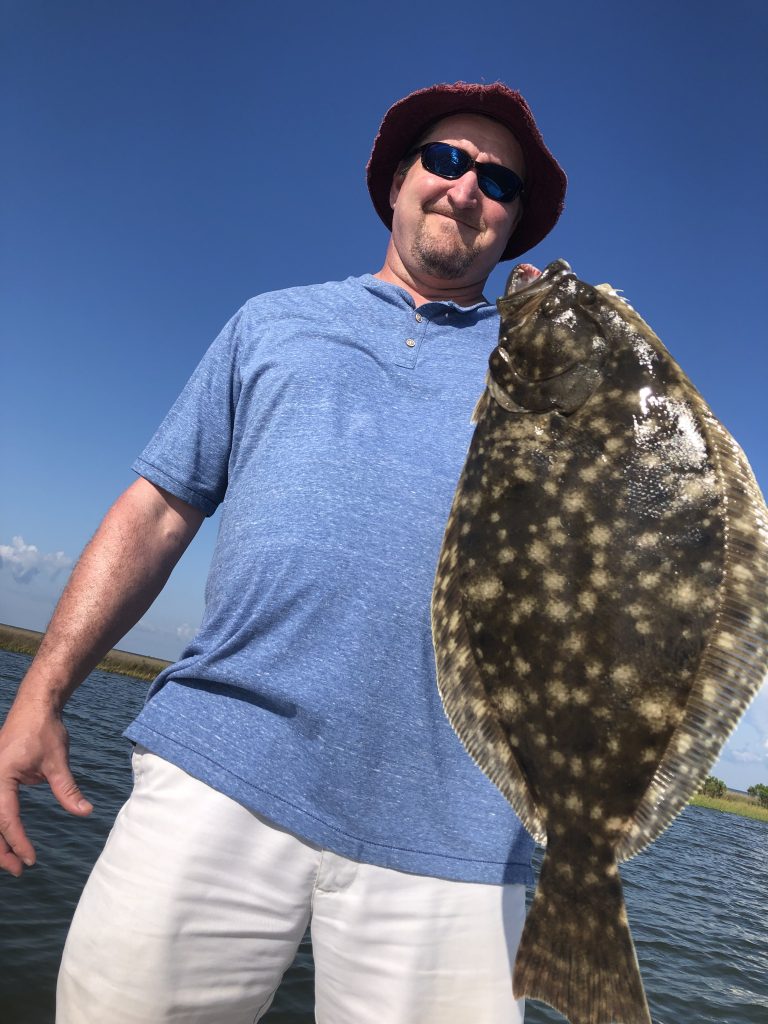
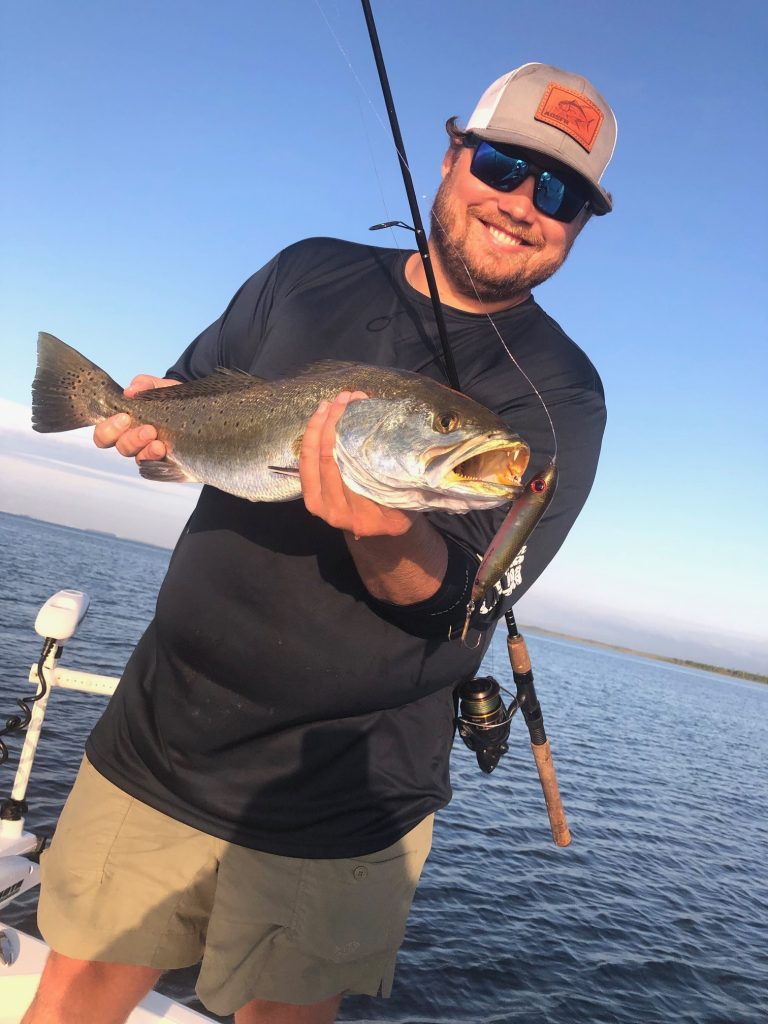
Species like speckled trout and flounder are ambush predators. They rely on current to bring the food to them. That means bait presentation matters. You want to cast with the current—not against it—so your bait flows naturally.
A quick trick when you can’t visually detect current: watch the mullet. Unless they’re being chased, they jump into the current. That little detail can tell you everything about where and how to cast.
Wind, Pressure, and Their Hidden Influence
Tide and current don’t always act alone. Wind and barometric pressure can dramatically alter both.
- West winds can literally reverse current flow on the shoals.
- North winds and high pressure can drop water levels well below predicted tides.
- South winds, on the other hand, can raise water levels—great for pre-front conditions on shallow flats.
The takeaway? Don’t rely solely on tide charts. Factor in weather patterns to fine-tune your game plan.
Tools and Resources for Reading the Water
You don’t need to be a meteorologist or marine scientist to stay on top of tide and current conditions. Here are some of the best tools and apps available in 2025:
Printed Guides
- Alabama Marine Information Calendar
This free annual publication from the Alabama Department of Conservation and Natural Resources includes daily tide charts, moon phases, sunrise/sunset times, fishing regulations, and more.
Download the 2025 Calendar (PDF)
Mobile Apps for Tides, Currents & Forecasts
- Fishing Points
Offers tide and solunar forecasts, marine weather, GPS waypoint tracking, and offline nautical charts.
Android |
iOS - Navionics Boating App
Provides detailed marine charts, tide and current overlays, and route planning tools.
Learn more - Garmin ActiveCaptain
Syncs Garmin devices with smartphones to access charts, tide data, and community fishing info.
Explore ActiveCaptain - FishWeather
Provides real-time wind conditions, tide/current data, and detailed forecasts.
Visit FishWeather - My Tide Times
Offers tide tables and forecasts for over 9,000 locations, plus moon phase and current info.
Android |
iOS - Tides Near Me
Simple app offering accurate tide and current data for global locations.
Get Tides Near Me
Other Helpful Tools
- NOAA Tides & Currents
Official source for tide predictions and current measurements across the U.S.
Visit NOAA Tides & Currents
Know Before You Go
Success on the water often comes down to understanding the details—and tide vs. current is a big one. The more you observe and adapt to what the water is actually doing (not just what the chart says), the better off you’ll be.
If you’re just starting to factor current into your fishing plan, take your time. Watch what the bait is doing. Feel how the boat drifts. Pay attention to small cues and build your knowledge one trip at a time.
Stay in the Loop with Local Conditions
Want up-to-date, real-world fishing insight each week? Check out the Alabama Saltwater Fishing Report podcast, where guides like myself break down water movement, hot bite windows, and gear tips based on the latest conditions.
The difference between an empty cooler and a banner day often comes down to how well you understand what the water is doing. Start paying attention to both tides vs currents, and you’ll put more fish in the boat.