

I wake from my dream with the bed sheets damp from sweat. I’m still shaken, panicked by the feeling of weightlessness, the sensation of perpetually falling, waiting for impact. It’s a dream I’ve had before and will likely have again. You never forget accidents like mine, but I’m thankful for it. Thankful that I won’t put my family and myself through that experience again. I’m reminded daily how precious life is to you and the ones who love you. A tree stand accident is a harsh reality, but with some preparation and common sense, it doesn’t have to happen. Don’t lull yourself into thinking a tree stand fall won’t happen to you.
My Day to Learn
It was a beautiful Sunday, October 31, 2004. The morning was crisp, with a light steady breeze. I knew exactly where I wanted to be—an oak flat between two fall food plots where the whitetails often browsed their way from the fields to their bedding area in the pine plantation. It was a good hike in by southern standards, meaning I had to wake up earlier than usual, but I didn’t mind.
Slipping through the thicket as quietly as possible, I took careful steps, never more than three or four at a time, stopping just like a deer. After painstakingly making my way through the dark autumn timber, I arrived at my post: a red oak, likely over 100 years old, where I would stand guard for the next four hours.
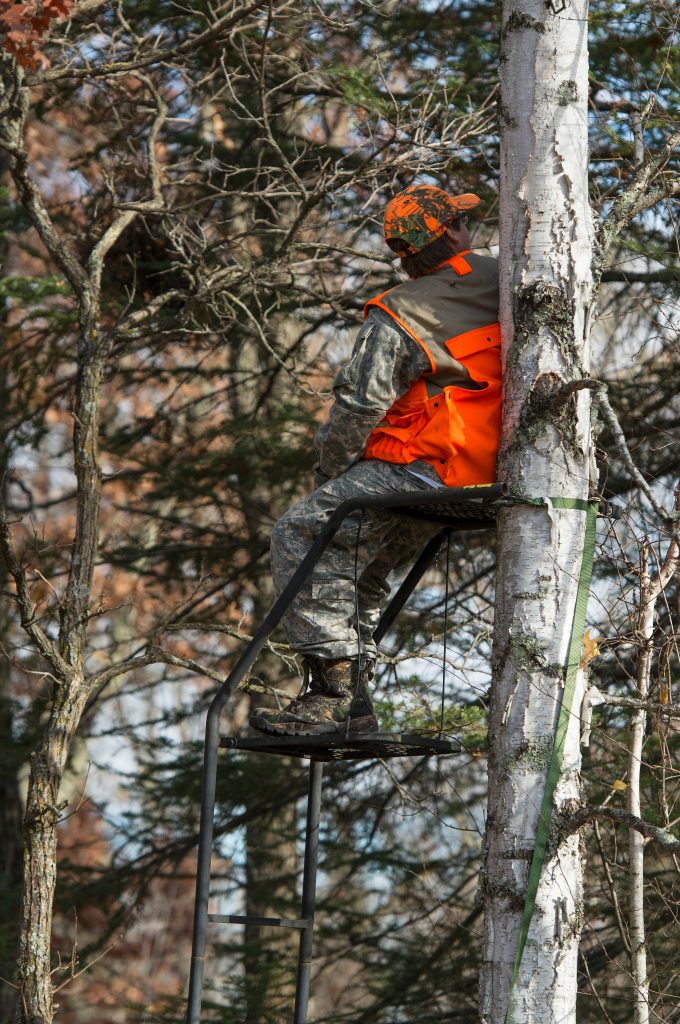
Years ago, I found an old stand here. Knowing how much effort it had taken to set it up deep in the woods, I confidently replaced it with one of my own. As I took my first step onto the steps leading up to my stand, my stomach dropped—I had left camp without my safety harness. Returning would take at least an hour, meaning I would miss the prime hours when the deer would be heading back, hopefully right under my tree.
I reasoned that I would be fine. I’d climbed this tree dozens of times without an issue. I’d never had a tree stand fall before, so I didn’t want to ruin a good hunt over one forgotten harness.
The Fall
The rest of the morning was beautiful but uneventful in terms of hunting. It was almost 10 a.m., and time to head back to camp. I gathered my gear, lowered it to the ground, and stood to stretch after the long sit. As I took one last look around, my world flipped upside down.
Back then, I used metal bolts as steps to climb trees. On this particular tree, I had a bolt well above my stand that I used, along with a sturdy limb, to help hoist myself onto the platform, and when leaving, back onto the steps. But that morning, as I grabbed the limb to descend, it gave way.
1.43 seconds
That’s the time it takes for a 220-pound object to fall 30 feet. In those seconds, I managed only to shout, “Oh s%$&!” before hitting the ground. Somehow, I had the presence of mind to tuck my shoulder and brace for impact, landing flush on my right side.
At 31 miles per hour, the fall knocked the wind out of me. My right lung collapsed, my liver and spleen were lacerated, and I broke my pelvis in two places. My L4 and L5 vertebrae were fractured, along with the 5th Metatarsal on my left foot. Pain shot through my body as I gasped for air, but I was alive.
A Long Day in the Woods
Lying there on the forest floor, I realized no one would look for me until after dark. I would be in the woods all day and into the night, with rescue coming only in the early hours of the next day. Mosquitoes buzzed around me, but I knew I couldn’t wait. I had to get back to camp for help.

Using my bow as a crutch, I struggled to my feet. The pain was excruciating, and as soon as I took my first step, I passed out. When I woke, I tried again, but the same thing happened. For five hours, I lay there, helpless. Every 20 minutes, I called out for help. I surmised that my family would notice I wasn’t available for a phone call, this was in the days when cell phone reception was non-existent on my hunting land, and by sometime later than night they would likely send someone looking for me. I accepted my fate. I would be spending the night in the woods with rescue likely coming in the early morning hours. Finally, around 2:30 p.m., I thought I heard a truck door close. I called out again, and this time, someone answered. Two hunters had noticed my truck still parked at camp and, and fearing the worst, came to find me.
Rescue
Once they found me, the men quickly set about figuring out how to get me out. With no cell service, there was no way to call an ambulance, so they improvised. Using a ladder, roofing tin, and an ATV, they fashioned a makeshift stretcher. With one man driving the ATV and the other holding the ladder, we slowly made the bumpy trek ¼ mile out of the woods to the logging road. Every bump sent waves of pain through my body. There were a lot of bumps.
At camp, they were finally able to summon an ambulance. After an hour-long ride to the first of three hospitals I would visit, I began undergoing a battery of tests. X-rays, MRIs, and CAT scans revealed the extent of my injuries, and IVs were administered for dehydration and pain. Worst of all, a catheter was inserted because I couldn’t relieve myself.
Another Fall
On the morning of the 11th day since my accident, I took another fall. I was having breakfast when a sharp pain shot through my left shoulder. I thought it was heartburn, so I stood on my crutches to relieve it. Instantly, I became dizzy and passed out. After regaining consciousness, I called my mother, who had just left to run errands. By the time she returned, I was in shock.
An ambulance rushed me to the hospital, where doctors discovered my spleen had ruptured—a delayed reaction to the fall. I required emergency surgery to remove it. The doctor told me that if my spleen had ruptured the day of my tree stand accident, I wouldn’t have survived.
A Full Recovery
My tree stand accident forced me to withdraw from college for the semester. I spent over 30 days bedridden and another 50 on crutches. Despite the pain and long recovery, I was lucky. Many tree stand accidents can result in paralysis or death.
I now live with constant pain in my pelvis and lower back, and my immune system is weaker without my spleen. However, the worst part of the tree stand accident was watching my family suffer. The stress and fear they experienced were harder to endure than my own injuries.
Looking back, I’m grateful for the fall. It taught me the value of life, family, and the importance of safety. I urge every hunter to wear a safety harness and use a climbing rope system. Most accidents happen when climbing up or down, and that’s when most hunters disconnect from the tree.
DO NOT DISCONNECT YOURSELF FROM THE TREE UNTIL YOUR FEET ARE BACK ON THE GROUND. There’s no excuse not to. My medical bills exceeded $250,000. Don’t tell me you can’t afford a safety harness. Stay connected, or stay on the ground. It’s that simple.
My fall made me safety-conscious in other ways. It’s sobering to think how my story plays out if that truck hadn’t stopped to check on me. The odds are high I wouldn’t be writing this today. Ever since, I’ve been much more diligent about letting people know where I was going and when I’d be back. I also avoid hunting alone as much as possible. Having somebody nearby can be a literal lifesaver, and while I appreciate solitude I’ve also learned to enjoy camaraderie. As simple as it sounds, leaving a “hunt plan” (or hiking plan, or fishing plan, etc.) with a trusted individual drastically reduces risk when adventuring outdoors.
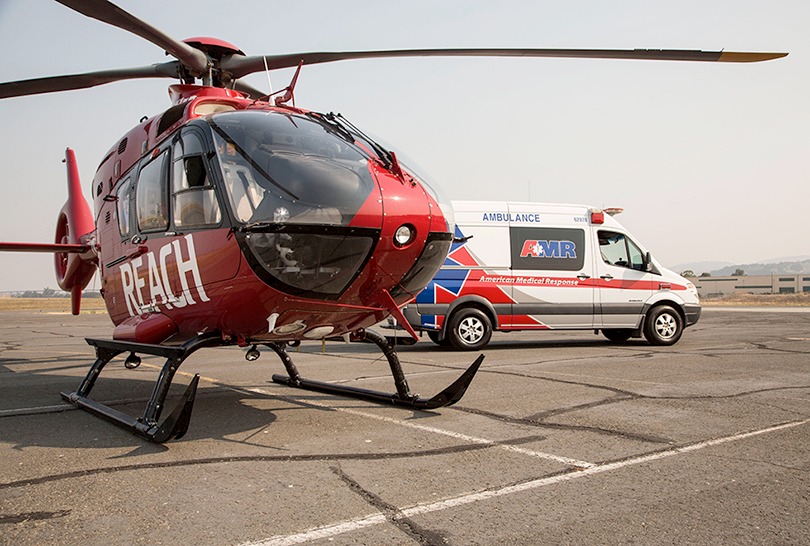
I was “lucky” with both of my falls, insofar as there was somebody nearby to provide assistance, and medical care was accessible in a timely manner. When you’re injured as badly as I was, minutes matter. As sportsmen we appreciate remote areas for the solitude, scenery, and game animal populations, but medical care in rural areas is often subpar or completely lacking. A medical air evacuation is often necessary to transport an individual to a hospital equipped to deal with extensive trauma.
I strongly recommend good insurance if you’re a hunter, especially if you have a family that depends on you. But you might be surprised to learn that air ambulance trips aren’t covered under your insurance plan. If you spend a lot of time in remote areas, and especially if you recreate out-of-state, it can be worth joining an air ambulance membership network. Lastly, joining a reliable air ambulance membership program can give peace of mind to those venturing far afield.
AirMedCare Network membership providers deploy lifesaving pre-hospital care to those people who become sick or injured in the great outdoors, far from appropriate medical care. AirMedCare Network (AMCN), the country’s largest air ambulance membership provider, ensures that when you are treated and transported by their network’s highly qualified emergency medical crews, you pay nothing out of pocket for this life-saving service. Learn more on their website.
The Future
As I slip off to sleep tonight, I wonder if I’ll have the dream again. You know, the one where I’m falling, perpetually, waiting for impact. I hope I’ll sleep soundly. I can find comfort in knowing that since you’ve heard tree stand accident my story, maybe you won’t have a story of your own. With a few simple precautionary measures in place, your hunting season can be dramatically safer. Take some time this year to protect yourself and your family, no matter where your outdoor adventures take you.