

Planting trees for wildlife sounds simple enough on paper. Dig a hole, set a seedling or sapling, give it a quick soak, and wait. But in reality, establishing a thriving wildlife orchard requires navigating dozens of nuanced decisions between bringing a sapling home and watching the first wave of chestnuts, persimmons, or crabapples hit the ground. None of these choices are particularly complicated on their own, but making a few missteps along the way can cost you far more than the initial purchase price: it costs you irreplaceable years of growth and production, which might just be the hardest lesson any landowner learns.
During a recent conversation with Ian Wallace of Chestnut Hill Outdoors, we talked through many of the common pitfalls landowners encounter when establishing habitat trees, including plenty of mistakes we have made in our own dirt. Wallace has spent decades working with fruit- and mast-bearing species, but even with all his experience, he remains the first to point out that tree planting isn’t an exact science. Droughts roll in unexpectedly, severe freezes hit at the wrong time, deer browse mercilessly, and every now and then a tractor strays somewhere it shouldn’t. The reassuring reality, however, is that trees are surprisingly resilient organisms. You don’t need a formal degree in silviculture to succeed; most of the critical practices boil down to straightforward, common-sense care.
I Wish I Had Started Earlier
The single easiest mistake to make is also the only one you can never fix: waiting too long to get started. Wildlife tree projects are easy to shuffle down the weekend task list when you are busy preparing food plots, maintaining access roads, hanging tree stands, clearing shooting lanes, or tackling any of the hundred other chores competing for your time on the farm. Before you know it, another fall or Spring planting window has slipped right past, and the problem with kicking that can down the road is that lost growing seasons can never be recovered.
Wallace notes that procrastination is easily the most widespread hurdle among folks considering their initial planting. Someone will mull over the idea of putting fruit or nut trees in the ground for two or three seasons, finally get around to digging holes, and immediately realize those trees could already be reaching mature production if they had just acted on day one. As Wallace puts it, “The best planting day was yesterday.”
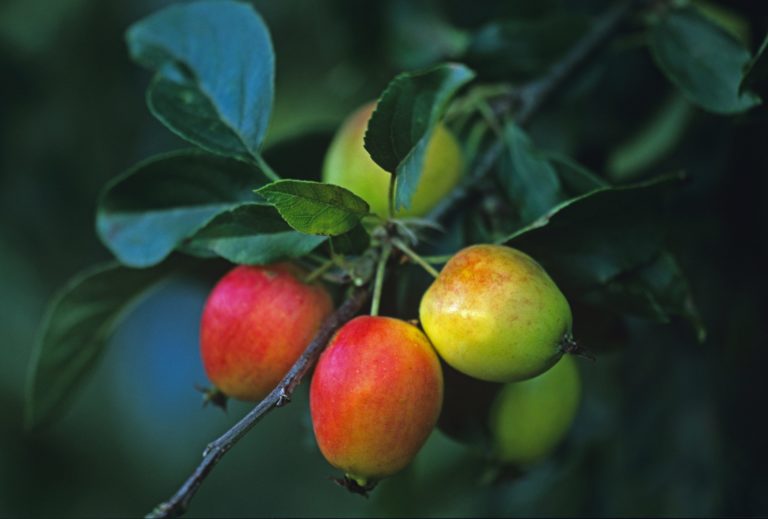
That reality hits home with force once a planting finally begins to bear fruit. Landowners often start conservatively with just a handful of saplings to test the waters, only to discover a few years down the line that wildlife is flocking to those specific spots, converting a once-ignored corner of the property into a high-traffic destination. Deciding to expand at that point is great, but it means restarting another multi-year timeline from scratch. Unlike annual food plots that can be resized or completely redesigned season by season, a tree planted today builds long-term momentum, eventually forming a self-sustaining micro-ecosystem that attracts wildlife for decades without requiring complete re-establishment every single spring.
I Wish I Had Thought More About Where The Trees Went
Finding a spot with fertile soil and adequate sunlight is only half of the site selection equation when planting trees for wildlife; you also have to carefully project how you will interact with that exact patch of land over the coming decade. That lesson usually becomes painfully clear from the driver’s seat of a tractor. If you drop young trees smack in the middle of a zone you routinely bush hog, spray, or disk, routine maintenance quickly turns into a tedious obstacle course. Young stems blend shockingly well into summer vegetation, and a grow tube that was glaringly obvious against bare dirt in February can be swallowed whole by waist-high dog fennel in late August, a mistake you usually discover only when the bush hog blades make a sickening, distinctive crunching sound.
Through trial and error on our own properties, we have learned that grouping trees into consolidated clusters or small orchards tucked into field corners works infinitely better than planting long, isolated rows straight through active food plots. Creating a distinct block establishes a clear, undeniable no-equipment zone where you can trim around trunks using hand tools or string trimmers without constantly jockeying heavy machinery through tight spaces. That is not to say linear rows are inherently wrong, but your layout must align with the tractors, implements, and maintenance habits you actually use day-to-day.
Before setting a single root ball, walk the ground and think through the long-term logistics. Figure out where tractors will turn, where wide implements will swing on turns, whether chemical overspray or herbicide drift from nearby plots might threaten delicate leaves, and whether expanding crowns will eventually shade out crops you still intend to farm below. Considering that a healthy tree will occupy that space for thirty years or more, taking an extra hour to evaluate equipment access now saves endless frustration down the line.
I Wish I Had Paid More Attention to the Variety
Buying a vigorous, good-looking tree at a store means very little if that specific variety isn’t suited to your regional environment. This factor is especially critical when dealing with fruit trees. Wallace emphasizes that landowners must know their local USDA hardiness zone and closely evaluate cumulative winter chill-hour requirements before buying. A variety selected strictly on a whim can grow lush and healthy foliage year after year yet completely fail to produce fruit simply because your winter weather pattern doesn’t trigger proper bloom cycles, a mistake made worse by large big-box retailers that routinely stock varieties ill-suited for the local climates where they operate.
Few outcomes are as demoralizing as planting a tree, shielding it from pests, hauling water in a summer drought, and fertilizing it faithfully for years, only to realize the tree was genetically incapable of producing in your region from the start. Fortunately, wildlife plantings offer more leeway than commercial orchards because deer and birds aren’t picky about perfect appearance or table-grade flavor. Hardy selections such as American persimmon, native crabapple, mulberry, chickasaw plum, and Dunstan chestnut excel across a broad range of conditions while tolerating the rough, unrefined environments of remote hunting land far better than delicate home orchard cultivars.
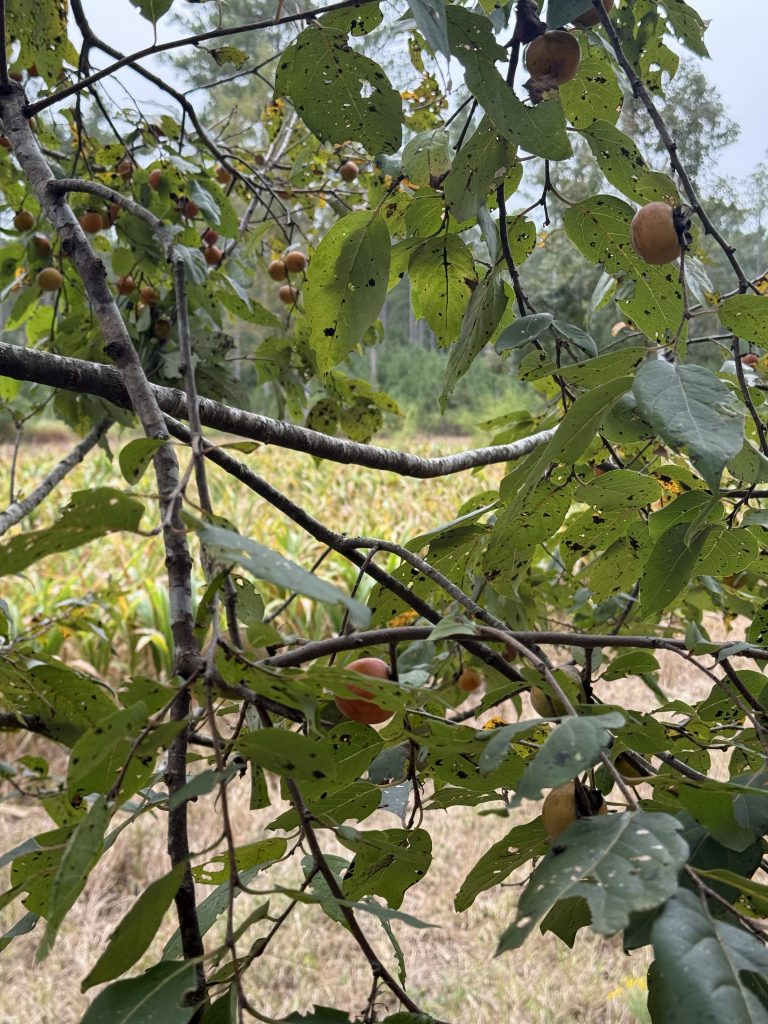
The key is staying focused on your primary objective right from the start. A tree chosen to drop fresh table fruit outside your kitchen window requires a totally different selection process than one planted on a backwoods ridge to attract wildlife during hunting season.
I Wish I Had Taken Water More Seriously
When asked to point to the number one killer of newly planted saplings, Wallace puts water issues straight at the top of the list. The issue usually isn’t that landowners ignore their trees entirely, but rather that young root systems demand steady consistency during their first few seasons. As Wallace points out, “The number one thing in tree planting that gets done wrong is inconsistent water.” Without an established network of feeder roots reaching deep into the subsoil, a young tree can easily succumb to a single week of blistering summer heat if soil moisture runs out.
That reality can sound intimidating if your land is a significant distance from your main residence, as few people want a weekend property to turn into a high-maintenance chore requiring constant road trips. Fortunately, regular rainfall handles much of the workload during typical weather patterns, meaning your primary job is stepping in during extended dry spells. A very helpful tool for this task is the “Raindrop” app. It uses NOAA’s radar and more than 10,000 ground rain gauges to keep a total for every square kilometer of the lower 48. Pick any spot and you get the rain that fell there, not at the nearest airport.
When you see a period without adequate rainfall, it’s time to make a trip to the farm and give your trees some love. For smaller stock, applying one to three gallons per watering right over the root zone is often sufficient if the water penetrates deeply rather than running off the surface, while larger container stock naturally demands higher volume.
Soil composition also dictates how aggressively you need to monitor moisture. Sandy soils drain fast and dry out rapidly during hot weather, whereas heavy clay holds moisture for extended periods, although poor drainage in heavy clay can create the opposite issue by drowning roots, which is why Wallace warns against planting mast trees in locations prone to standing water. This is where fall planting offers a major structural edge: as cold weather induces dormancy, top growth stalls while roots quietly expand through cool moist soil all winter, giving the tree a powerful head start before summer heat hits.
Finally, never skip the critical step of drenching the root zone immediately upon planting. Soaking the hole thoroughly and settling dirt around the roots eliminates large air pockets that can dry out delicate root hairs, making that initial watering a core structural step in setting up the tree for long-term survival.
I Wish I Had Protected the Ground Around the Tree
When people picture tree protection, they almost always envision keeping hungry deer from chewing on leaves or rubbing velvet off antlers. Wallace argues that effective protection actually begins right at ground level. Thick grass and opportunistic weeds surrounding a fresh planting aggressively rob the young tree of vital water and soil nutrients, and scattering fertilizer over unchecked turf often ends up feeding the surrounding weeds far more than the sapling itself.
Installing a heavy-duty weed mat around the base creates a dramatic difference in growth rates. Wallace suggests maintaining a clear zone roughly three to four feet in diameter free from vegetative competition. Even on distant plantings where weeds eventually sprawl across the top of the fabric and make the spot look overgrown from a distance, pulling back the surface growth reveals clean, competition-free soil underneath. Weed mats are a simple, low-maintenance shield that keeps roots thriving without requiring non-stop spraying or trimming.
Just remember one practical golden rule from hard-earned experience: keep track of where those weed mats are located so you don’t shred them with a tractor mower when mowing near your orchard site.
I Wish I Had Protected the Tree From Wildlife
There is a classic irony in spending time and money to attract wildlife only to realize you must immediately shield your young trees from those exact same animals. Tender spring shoots are an irresistible magnet for local deer, and foliage damage is only half the threat; a single buck marking territory can completely destroy years of trunk growth in a matter of minutes, while mice and voles girdle bark near soil level and feral hogs uproot fresh plantings entirely.
Wallace is a firm believer in sturdy physical barriers for young stock. A vented grow tube safeguards young tender saplings through early establishment, while sturdy outer wire cages protect expanding crowns as they lift above browsing height. For serious, long-term protection against heavy herd pressure, he recommends driving sturdy T-posts and wrapping them with five- to six-foot welded wire fencing, reserving lighter netting for lower-pressure areas.
Beyond animal protection, grow tubes create a warm, protected micro-climate that retains soil moisture and shields trunks from late spring freezes. Wallace warns against improvising with solid, dark plastic pipe, however, noting that legitimate tubes must breathe to vent excess heat. Once the tree expands beyond the tube’s diameter, the inner plastic sleeve can be removed while leaving the rigid outer wire cage in place until the trunk is thick enough to withstand rubs.
I Wish I Had Known a Brown Tree Wasn’t Necessarily a Dead Tree
One of the most encouraging lessons for any landowner who has walked up to a drought-stressed sapling in July and seen crispy brown leaves is not to write off the tree too quickly. Young trees undergoing extreme drought, frost damage, or transplant shock frequently drop their foliage or die back above ground while keeping a perfectly healthy, living root system intact down below. Species like chestnuts and oaks are notoriously tough in this regard, often pushing up a fast-growing, vigorous new central leader from established roots that can easily outperform the original stem because of the energy stored underground.
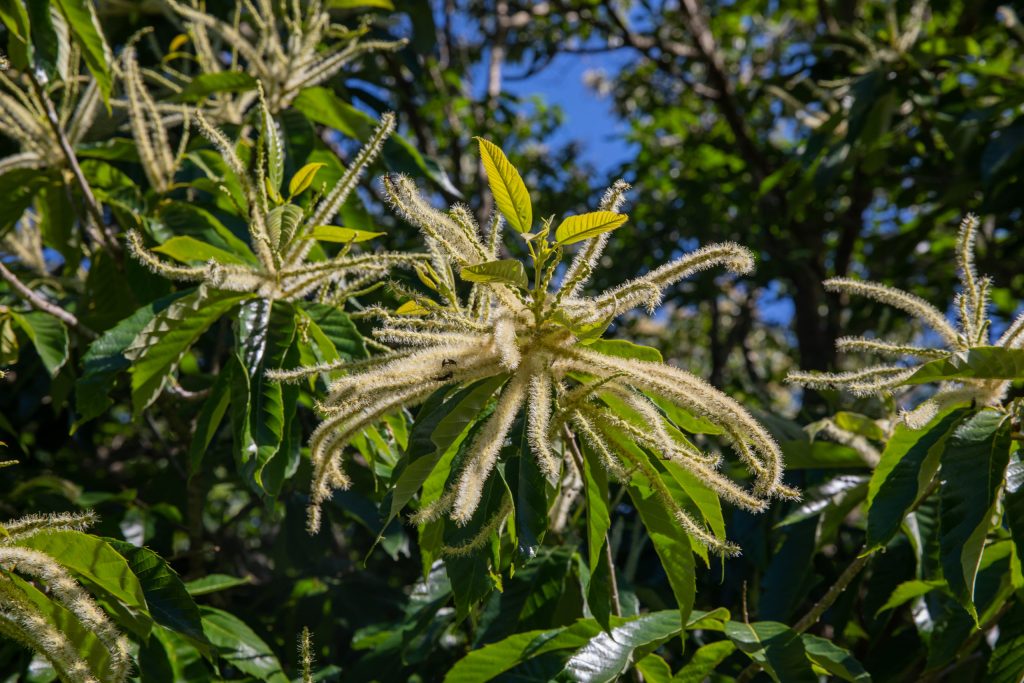
Before pulling a sad-looking stem, Wallace advises performing a quick scratch test by lightly scraping away outer bark at various heights on the stem with a thumbnail or pocket knife. If you uncover moist green cambium tissue beneath the surface, the tree is still alive and fighting. As Wallace says, “Trees are resilient and they want to keep growing.”
The single key caveat involves grafted fruit trees: if dieback extends below the graft union near the base, whatever sprouts from the roots will be wild rootstock rather than the named fruit variety you originally purchased. For seedling-grown stock like chestnuts, oaks, and wild persimmons, simply pruning back dead wood and selecting the strongest new shoot to train upward will save your investment without losing valuable root development time.
I Wish I Had Understood That Some Trees Are Going to Die
Losing saplings always feels disheartening when you are new to habitat management. You remember buying the stock, clearing the ground, digging the holes, and hauling heavy water under the summer sun, so when a sapling fails, it feels like personal failure. But as Wallace points out, even professional nurseries lose a percentage of their crop to weather anomalies, pests, soil pathogens, and unpredictable stress. Taking reasonable care, selecting good sites, watering through droughts, suppressing weeds, and protecting stems, will yield high success rates, but expecting a hundred percent survival is unrealistic. Accepting that reality changes your mindset entirely; losing one sapling out of ten isn’t a sign to quit, but simply a prompt to drop a replacement in the hole and keep moving forward.
Bigger Trees Aren’t Always Better
It is always tempting to buy the largest container stock your budget allows, and larger stock certainly offers distinct advantages. Mature potted trees are closer to dropping crops and stand up better to harsh field conditions, which is why nurseries like Chestnut Hill grow stock ranging from small seedlings to heavy multi-gallon trees that are already flowering or bearing fruit. However, large trees consume habitat budgets quickly, and when planting trees for wildlife, buying a larger quantity of smaller, younger trees can sometimes make more sense if your property is close enough to home for regular watering and weed care. That strategy spreads your budget across more total stems and creates greater variety across the landscape.
Conversely, if your land sits hours away and maintenance trips are few and far between, investing more money per stem in larger, robust trees with well-developed root systems makes complete practical sense. Ultimately, the right choice comes down to balancing your available funds, time, property access, and how quickly you want to see mast hitting the forest floor.
The Biggest Lesson Is That Tree Planting Isn’t That Complicated
The more you research soil amendments, chill hours, rootstock genetics, irrigation timers, grow tube designs, weed mats, pruning angles, and wildlife preference charts, the easier it is to convince yourself that you aren’t qualified to start. It is easy to turn a simple weekend habitat project into something that feels like it requires an advanced forestry degree. Wallace’s overarching message is the exact opposite. As he stresses, “At baseline tree planting is a pretty simple thing.”
Select healthy varieties suited to your region, pick well-drained locations, keep roots watered through early establishment, suppress weed competition, shield stems from hungry animals, supply basic fertilizer, and give them time. While you can fine-tune every one of those steps over time, waiting for perfect knowledge carries a huge hidden cost: lost time. Long after temporary food plots have come and gone, a chestnut, persimmon, crabapple, or oak planted today will still be dropping valuable food for decades to come. Get your first trees in the ground, learn from the experience, and enjoy watching your property transform.