

Whether you call it wahoo, zebra mackerel, ono, or just “hoo,” this fish is among the most sought-after pelagic species in the world. Found in tropical and subtropical waters worldwide, wahoo is a staple of the Gulf of Mexico sportfishing scene and can be targeted in various areas and conditions. From near-shore wrecks a few miles from land to open-water weed lines far beyond the horizon, wahoo are known for their range. Sensitive to sea surface temperature (SST), they typically avoid water below 68°F, with 70°F and above being ideal. Understanding where wahoo are likely to be, why they favor these locations, and when they’re likely to appear can make all the difference for anglers in the Gulf. Wahoo are well-known to aggregate around certain oil rigs in the western Gulf during winter, but what about the rest of the year?
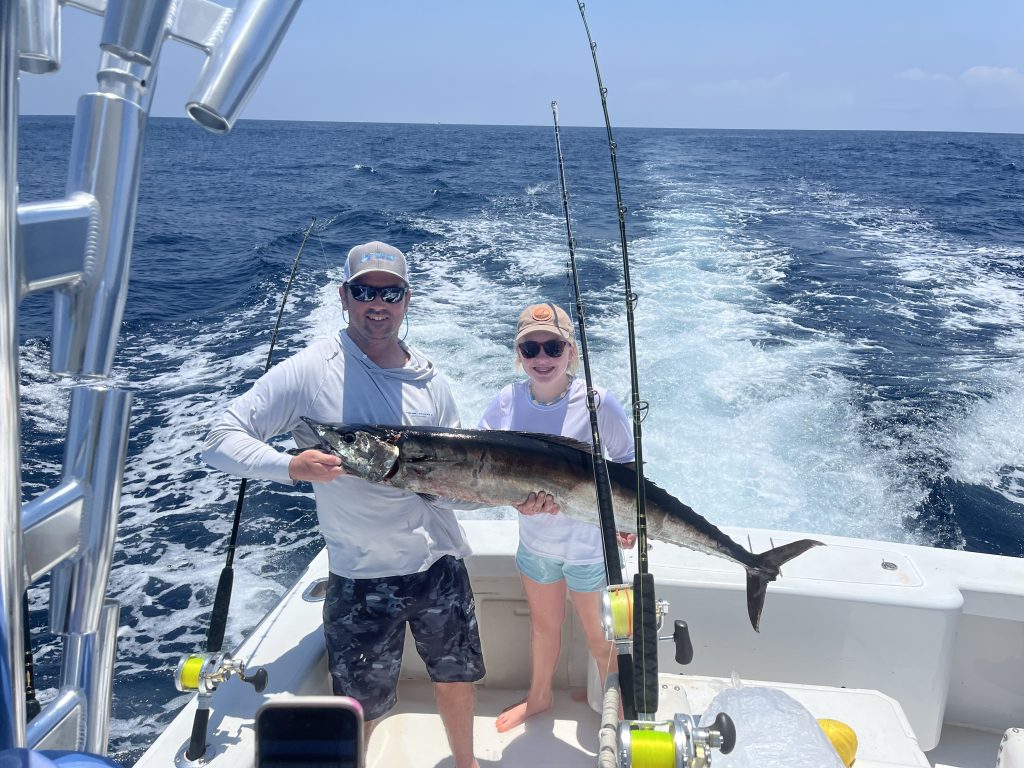
Migrational Patterns: The Science Behind Wahoo Movement
Alex Fogg, Natural Resources Chief for Okaloosa County, is renowned for his work in the placement of eight Fish Aggregating Devices (FADs) off Destin, Fla., in the Gulf of Mexico. As a fisheries biologist and avid angler, Fogg explains, “There isn’t much scientific data on wahoo migrations in the Gulf of Mexico, but studies from other regions show that wahoo can migrate long distances, usually in response to seasonal changes and temperature.”
Wahoo are somewhat nomadic, often appearing seemingly at random on weed lines, temperature breaks, and other bait-rich areas. With limited knowledge of their migration patterns in the Gulf, how does one decide when and where to target them? Water temperature is key. SST charts are essential for planning; during spring and fall, as temperatures shift, wahoo begin to follow these changes. In spring, warmer offshore water pushes inshore, meeting cooler coastal waters. In fall, as temperatures drop and cold fronts arrive, coastal waters cool faster than offshore currents. These conditions create “rips” or current breaks, attracting bait like flying fish and squid—and wahoo follow suit. When these factors align near bottom structures, FADs, or oil platforms, the chances of finding wahoo increase significantly.
Summer Conditions
In summer, as water temperatures rise into the 80s, wahoo spread out, roaming the Gulf from live-bottom structure in depths around 100 feet to open waters around flotsam and weed lines. Finding specific aggregations can be more challenging during this time, but temperature breaks, salinity and chlorophyll boundaries, and live-bottom areas are good places to start. In winter, wahoo begin to school around offshore structures, likely for spawning. For winter wahoo, look for structures like oil platforms or large ledges in 200+ feet with water at least 70°F.
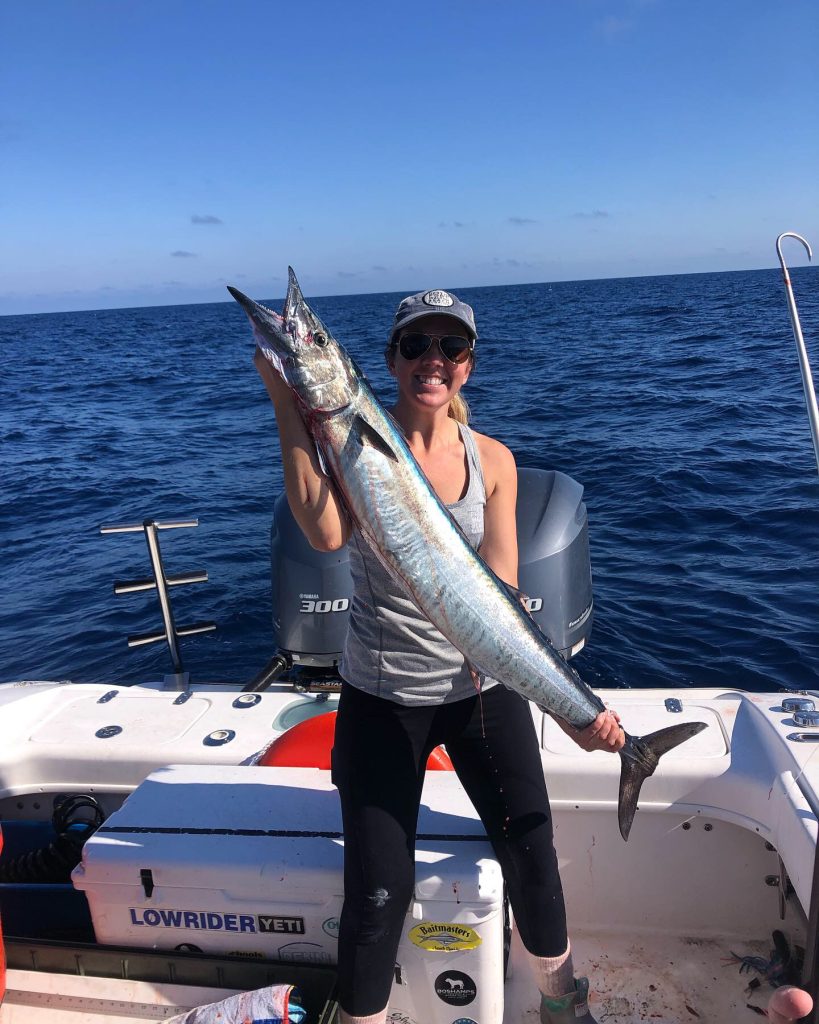
From a Fisherman’s Perspective
With wahoo migration patterns still mysterious, experienced anglers offer some of the best insights on where to find them. In the age of social media, following local charter captains can give valuable clues on when wahoo start biting. In the northern Gulf, summer wahoo presence is often indicated by the frequency of posts from local charter boats. Many crews troll while traveling between spots, and consistent catches indicate that wahoo have arrived in the 100-200 foot depths around live bottom and wrecks.
“Wahoo typically stay within 100 feet of the surface,” says Fogg. “They’re opportunistic feeders and don’t favor any particular prey; if they’re hungry and see an opportunity, they’ll take it.” For anglers, this means a wide range of tactics can work: high-speed trolling, slow-trolling live baits, jigging, topwater lures, and trolling a mix of artificial and dead bait. It’s also wise to have live bait ready on a light wire leader while bottom fishing—wahoo can show up unexpectedly.
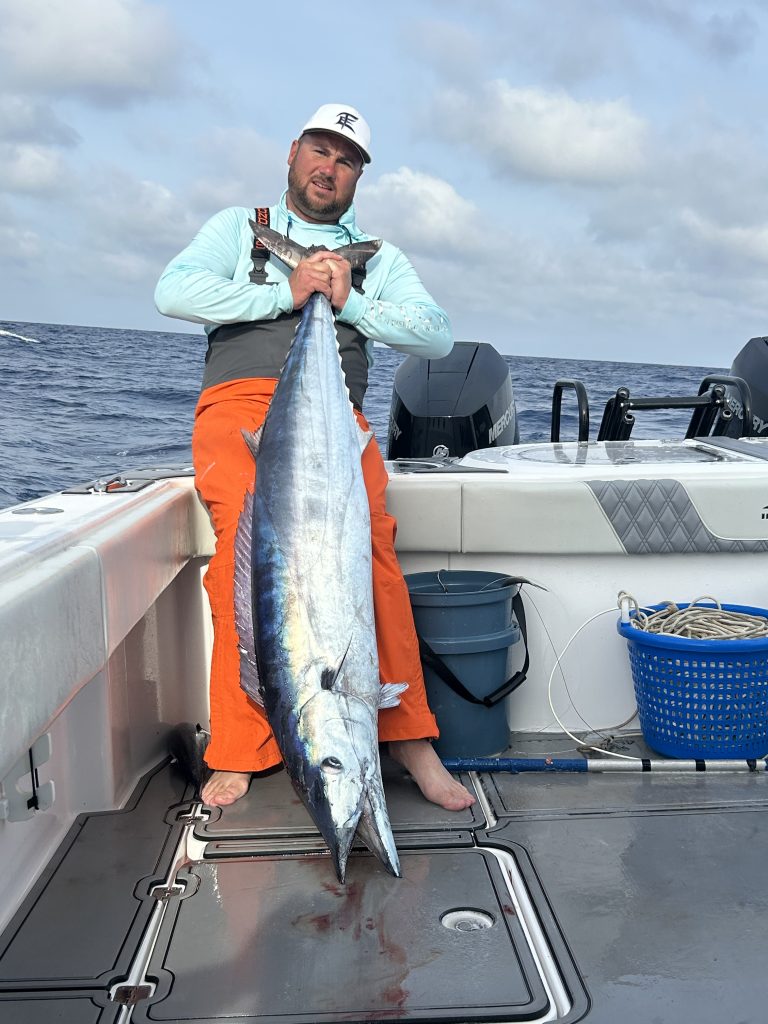
Trolling Tales
Capt. Harris Scruggs of Team Aquatic Charters in Panama City Beach, Fla., recalls an August morning targeting wahoo in 200-300 feet, trolling a mix of Ilander/Ballyhoo lures. “We’d been trolling for hours with no hits and were ready to switch to bottom fishing,” says Scruggs. “It was a calm day. We spotted something floating in the distance and headed over. It turned out to be a cluster of balloons, and as we passed, a massive 100-pound wahoo rocketed up to hit the blue and white Ilander on the long rigger. Our TLD 30 screamed like never before. Half an hour later, we landed the wahoo, which was still spitting up whole bonito. It was surreal.”
Scruggs’ experience illustrates the wahoo’s tendency to linger around floating debris. Even something small, like a crab pot buoy or bamboo, can conceal a big fish. In another instance, trolling near a small log in 900 feet of water, I had all five rods go down within minutes, catching four wahoo. While finding flotsam is mostly luck, the more consistent strategy is to work the 200-400 foot range along the continental shelf. From early spring, when 70°F water nears the coast, through late fall, when temperatures dip below 70°F, this area offers a reliable chance at wahoo. Trolling a mix of lures, with at least one below the surface on a planer or trolling lead, increases success; while wahoo readily hit surface lures, they often prefer those presented just below.
Locating wahoo can be challenging, but the best way to improve is to fuel up the boat and head offshore.