

Fly fishing has long been associated with trout streams and cold mountain waters, but warm water fly fishing targeting species like bass, panfish, and pike is growing in popularity. Whether you’re casting poppers for largemouth bass in a lily pad-filled pond or stripping streamers for smallmouth in a flowing river, having the warm water right fly line is crucial for success.
To better understand what makes a great warm water fly line, we spoke with Richard Nicoletti of Cortland Line Company. With years of experience in product development and sales, Nicoletti provided key insights into what anglers should look for when selecting a fly line for warm water conditions.
What Makes a Warm Water Fly Line Different?
A common mistake many anglers make is assuming that any fly line will work in any conditions. However, as Nicoletti explains, fly lines are specifically engineered for different environments and warm water fishing demands a different approach than traditional trout fishing.
One of the primary factors in a fly line’s performance is its core stiffness. Coldwater fly lines are designed to remain supple in lower temperatures, allowing for smooth casting and minimal memory (the tendency for a line to retain coils). However, in hot weather, a soft fly line can become sticky and limp, making it difficult to cast effectively.
“In warm water fishing, the air and water temperatures can soar past 85 or 90 degrees,” says Nicoletti. “If you use a traditional trout line in those conditions, it turns into wet spaghetti. It just won’t cast well.”
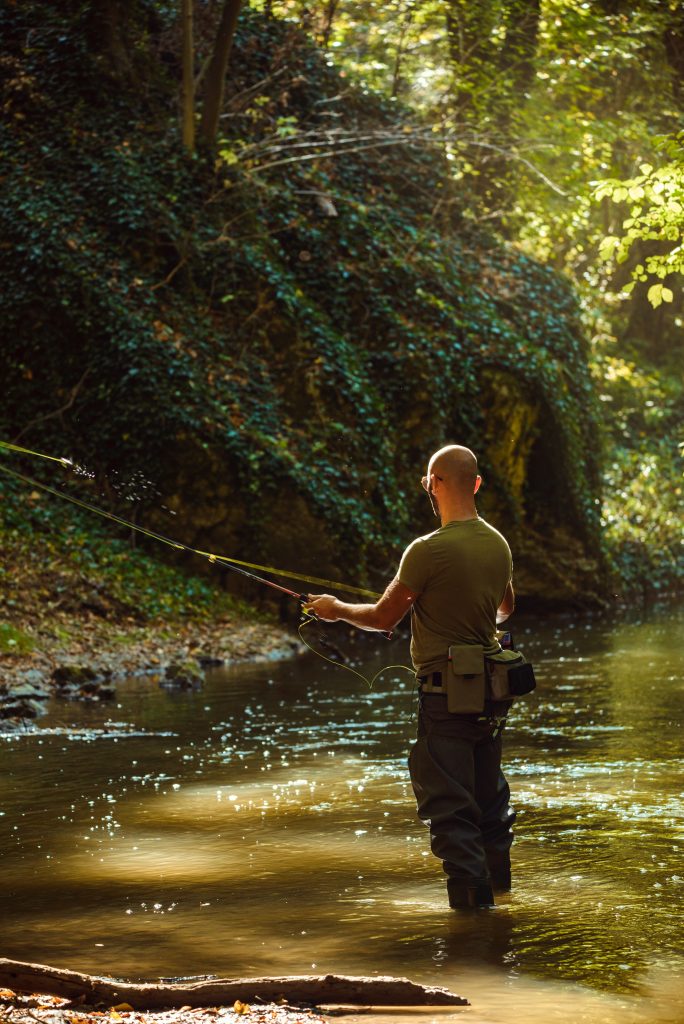
To combat this, warm water fly lines use a stiffer core and a more heat-resistant jacket. This ensures they hold their shape, resist tangling, and shoot through the guides efficiently, even in the heat of summer.
Choosing the Right Taper and Weight
In addition to heat resistance, warm water fly lines are often designed to cast larger flies and handle windier conditions than their cold water counterparts. This means their tapers, the way the weight is distributed along the length of the line, are often more aggressive.
Unlike delicate presentations required for wary trout, warm water species like bass and pike are often more opportunistic feeders, attacking big poppers, frogs, and streamers with force. A warm water line should have a shorter, more aggressive front taper to quickly load the rod and turn over heavy flies.
Nicoletti points to Cortland’s new bass-specific fly line as an example of a well-balanced warm water taper.
“The first 15 feet of the head carries a lot of the weight, which helps load the rod quickly,” he explains. “But the full head is around 36 feet, so you still have control for longer casts.”
For anglers fishing larger lakes, windy conditions, or big river systems, a longer head with a more moderate taper can be beneficial. This allows for better line control and longer casts without losing accuracy.
Floating vs. Sinking Lines for Warm Water Fishing
Most fly anglers think of floating lines when they imagine warm water fishing, especially when casting top water poppers or working shallow structure. However, sinking and intermediate lines also have their place.
For example, when targeting deep-holding bass or fishing in fast-moving rivers, a sinking or intermediate line helps get streamers down into the strike zone.
One misconception is that grain weight determines sink rate…it doesn’t.
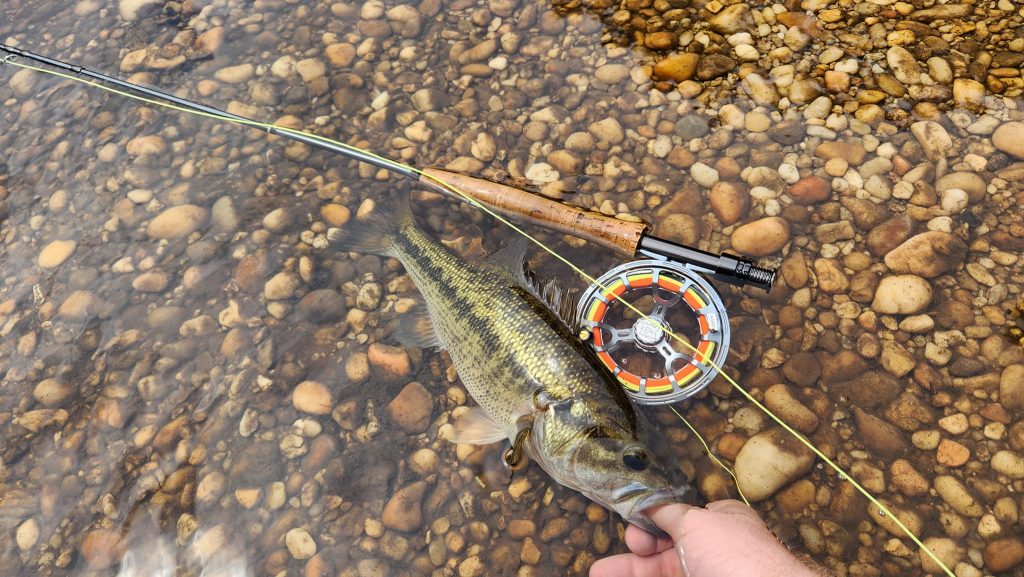
“Sink rate is all about density, not weight,” Nicoletti explains. “A 300-grain line and a 500-grain line can both sink at the same rate if they have the same density. The difference is that the heavier line is designed for bigger rods and flies.”
For those fishing in mixed conditions, where shallow and deep water are both in play, an intermediate sinking line (which sinks at about 1.5 to 2 inches per second) is a great option.
Selecting the Right Leader for Warm Water Fly Fishing
Fly line selection is only part of the equation; your leader also plays a huge role in casting performance. Because warm water flies are often large and wind-resistant, they require a stiffer leader material to turn over properly.
“If you use a soft trout leader designed for delicate dry flies, your cast will collapse,” Nicoletti warns. “For bass poppers and big streamers, you want a leader with a stiff butt section that will drive the fly forward.”
For topwater presentations, nylon leaders work well, as they tend to float. For sinking lines, fluorocarbon leaders are better, as they are denser and sink more easily.
New Innovations in Warm Water Fly Lines
The rise in warm water fly fishing has driven exciting innovations in fly line technology. One of the latest developments is Cortland’s dual-core technology, which blends a supple braid core with a rigid outer jacket. This offers the best of both worlds; minimal memory in cool morning temperatures but stiffness for hot afternoons.
“We wanted a line that performs well at sunrise, when it’s 60 degrees, but still holds up in the heat of the day when it’s 95,” says Nicoletti. “With a softer braid core and a tough outer jacket, we’ve been able to create a line that adjusts to both conditions.”
Additionally, this braid core offers near-zero stretch, making it easier to drive the hook home when setting on big bass, especially when fishing in heavy cover like lily pads or submerged timber.
Final Thoughts
Choosing the best warm water fly line depends on your fishing conditions, target species, and casting style. Here are some key takeaways:
- Pick a line designed for warm conditions, soft trout lines will become too limp in the heat.
- Look for an aggressive front taper to turn over big flies easily.
- Floating lines are great for topwater, but don’t overlook intermediate or sinking lines for deeper presentations.
- Stiffer leaders help with accurate fly turnover, especially for wind-resistant patterns.
- New dual-core technology provides the best balance between flexibility and heat resistance.
With more anglers embracing fly fishing for bass, panfish, and other warm water species, investing in the right fly line can make all the difference. By selecting a line that matches the conditions and your fishing style, you’ll be well-equipped to make the most of your time on the water.
For more information on the latest warm water fly lines, visit Cortland Line Company and explore their selection of specialized bass and warm water fly lines.