
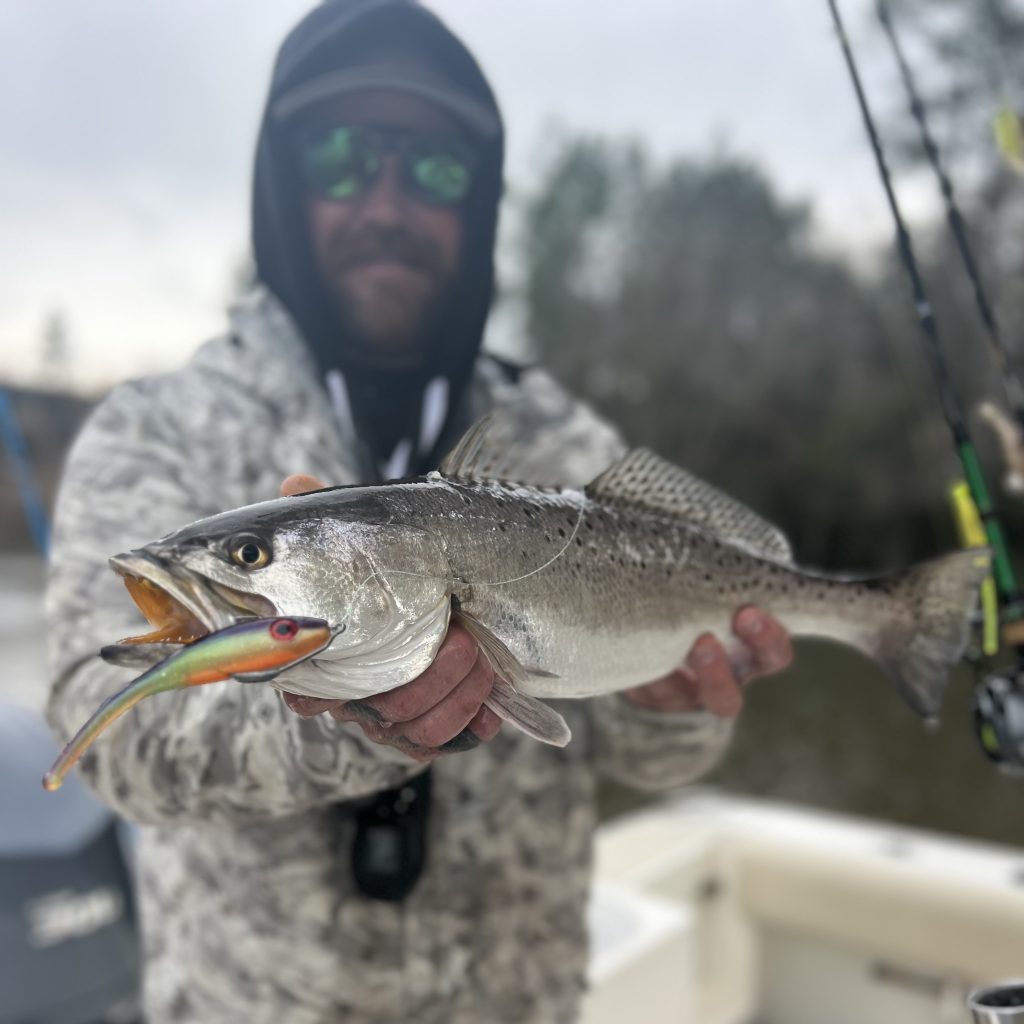
When the water temperature dips and the mornings start to sting, many anglers pack away their gear and wait for spring. But for Pensacola guide and wildlife biologist Captain Evan Wheeler, winter is when the real magic happens. His blend of scientific understanding and on-the-water experience paints a fascinating picture of how fish behave in cold water—and how anglers can stay one step ahead while winter inshore fishing.
How Cold Water Changes Fish Behavior
As Wheeler explains, cold water slows everything down. Fish metabolism drops, meaning they burn less energy and move less frequently. Instead of roaming large areas, they hunker down and wait for opportunity. “They slow down. Their metabolism slows down. So what they will do is minimize their daily movements, which increases opportunistic behaviors,” Wheeler says. Those tight feeding windows often align with specific tide and lunar patterns, creating brief but explosive bites for anglers who time them right. Outside those windows, he adds, “it’s in their best interest just to stay put.”

That behavior makes winter a season for precision. Wheeler notes that during frigid periods, baitfish school up tightly, and predator fish like redfish and trout do the same. The reward for anglers who locate those stacked schools is the chance to find multiple size classes feeding together. “You have a better chance of larger fish overlapping with mid-size fish and smaller fish all in one area,” he explains. “If you hit the tide and the moon and all the other subfactors correctly, you can get them to chew big time.”
Reading the Water and Choosing the Right Lures
Wheeler relies heavily on reading water movement and structure to locate fish. Without electronics, he studies current seams, wind direction, and surface clues. His favorite tool for prospecting is the Slick Jr—“you can bomb it, and I can fish it deep or shallow without having to wait forever for it to get down.” That versatility helps him cover water when fish are suspended or hugging the bottom. On bright, post-front days when conditions are tough and bait isn’t visible, he’ll throw the Slick Jr until he gets a reaction strike, then switch to a suspending twitch bait or soft plastic for a slower presentation.
Adjusting Strategy After a Cold Front
When cold fronts roll through and water temperatures plummet, Wheeler takes a methodical approach. He returns to his most recent productive spots and works progressively deeper. “They won’t go too far,” he says. “I’ll find the closest deep water with moving water and start there.” Though bites are rare on those brutal blue-sky days, he encourages anglers to get out anyway, calling it an invaluable learning experience. “If you can convince them to eat an artificial on that day, you’re dialed in,” he says. He even keeps a note in his calendar reminding himself to fish the day after a front, despite the high pressure that “compresses them and makes them chill.”
Fine-Tuning Tackle for Cold, Clear Water
Tackle adjustments are crucial during these cold, high-pressure days. Wheeler lightens up his gear to match the conditions, opting for smaller 2000–2500-size reels spooled with 8- to 12-pound mono and paired with light, moderate-action rods. “It’s one of the few times that I’ll go mono,” he explains, because it casts more cleanly and reduces memory issues with long fluorocarbon leaders in clear water. For lure choice, he prefers subtle baits that can dart and suspend naturally—Slick Jrs rigged weedless, MirrOlures, or Little Johns on small jig heads. “With a loop knot, I can really slow the descent and run light mono, and that helps a lot.”
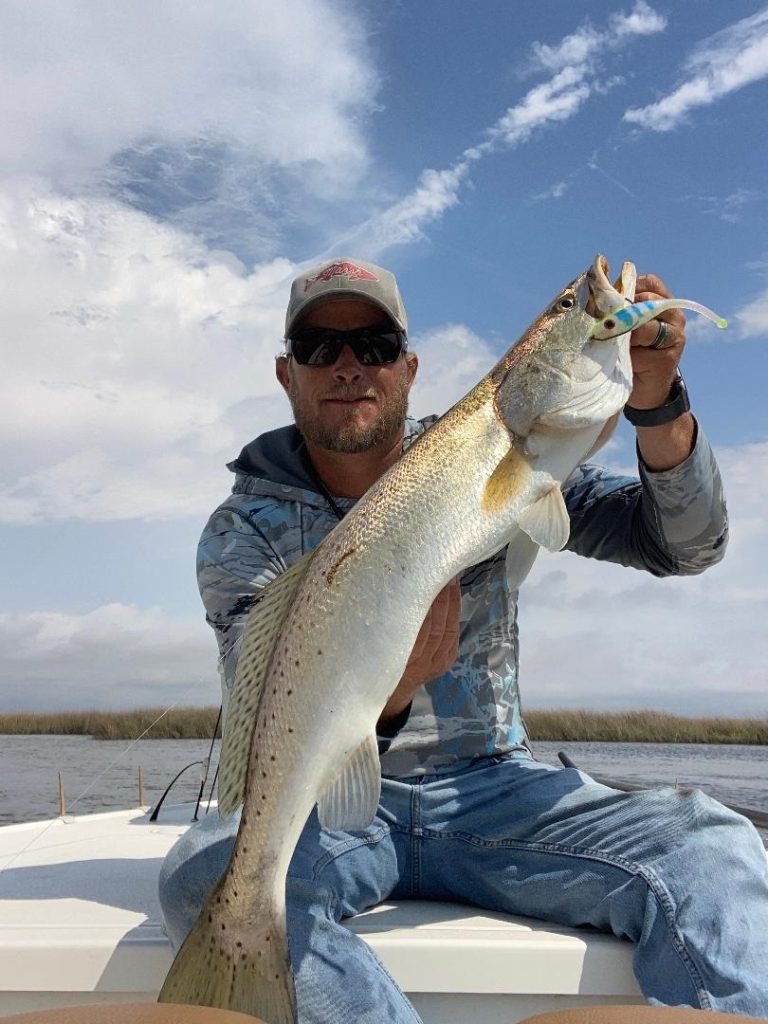
Live bait still has its place in winter inshore fishing, but Wheeler uses it sparingly and only in specific scenarios—like targeting a particular big fish holding deep in gnarly structure where artificials can’t be presented effectively. “If it’s that treacherous and you lose 90 percent of the stuff you throw in there, then live bait becomes the way to catch that fish,” he says. Croakers, mullet, or large menhaden are his top picks, chosen based on what’s naturally available.
A Focus on Conservation and Trophy Release
As the conversation shifts toward conservation, Wheeler emphasizes the growing movement toward catch and release, especially for large breeding fish. He highlights the “Release Over 20” initiative started by Florida angler Dave Fladd, which rewards anglers for releasing trout, redfish, and flounder over twenty inches. “Egg production increases almost exponentially with size,” Wheeler says. “Those are the important breeders for the population.” The program pairs education with incentives like prize drawings to encourage participation while promoting a culture of stewardship. “It’s a great way for us to share the message because we’re inherently a kill culture,” he says. “Before cell phones, you had to kill them to show them off. You don’t have to do that anymore.”
For Wheeler, conservation-minded fishing isn’t about rules—it’s about respect. He compares releasing trophy fish to passing on young bucks in deer hunting. “If you kill a twenty-six inch trout, you’re not going to catch it when it’s a thirty,” he says. “Catching them on purpose and letting them go is like passing a young buck and killing a mature buck with a bow—you’re hunting smarter.”
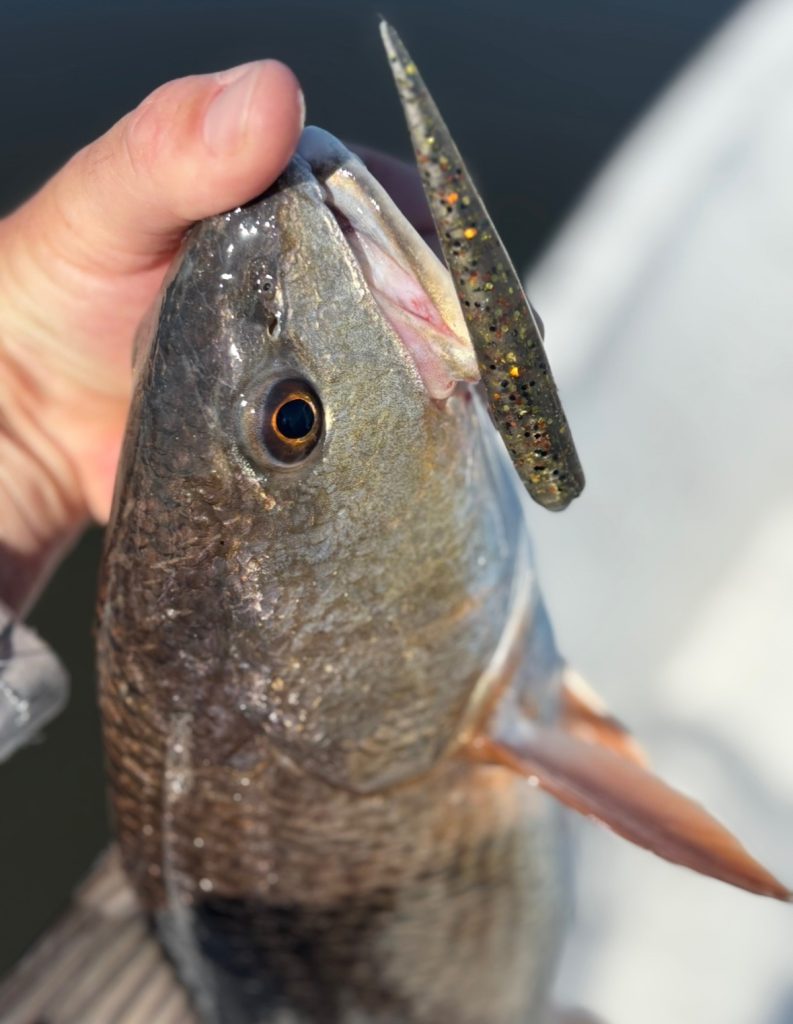
He also takes care to reduce stress and injury to fish he doesn’t plan to keep, swapping treble hooks for singles or barbless hooks and avoiding overhandling. “I’m not going to keep mangling their face,” he says, adding that lighter gear and proper tools help reduce mortality in catch-and-release fishing.
The Diverse Winter Inshore Fishing Around Pensacola
Even in winter, Wheeler’s home waters offer surprising diversity. He describes the unique setup around Pensacola, where anglers can fish grass flats, deep bay structure, and tidal rivers all in one day. “It’s pretty cool to have that opportunity,” he says, comparing the Escambia and East Bay systems to smaller versions of Mobile Bay. While the local redfish and trout scene stays strong through winter, he notes that Pensacola Bay’s bull redfish run—when massive schools chase menhaden like “a school of tuna feeding in the bay”—is one of the season’s highlights.
From understanding fish physiology to fine-tuning lure cadence, Captain Evan Wheeler’s winter inshore fishing playbook blends biology, intuition, and a deep respect for the fishery. For him, it’s not about surviving the cold—it’s about thriving in it. “If you can get them to eat when the water’s cold and the pressure’s high,” he says with a grin, “you can get them to eat anytime.”