
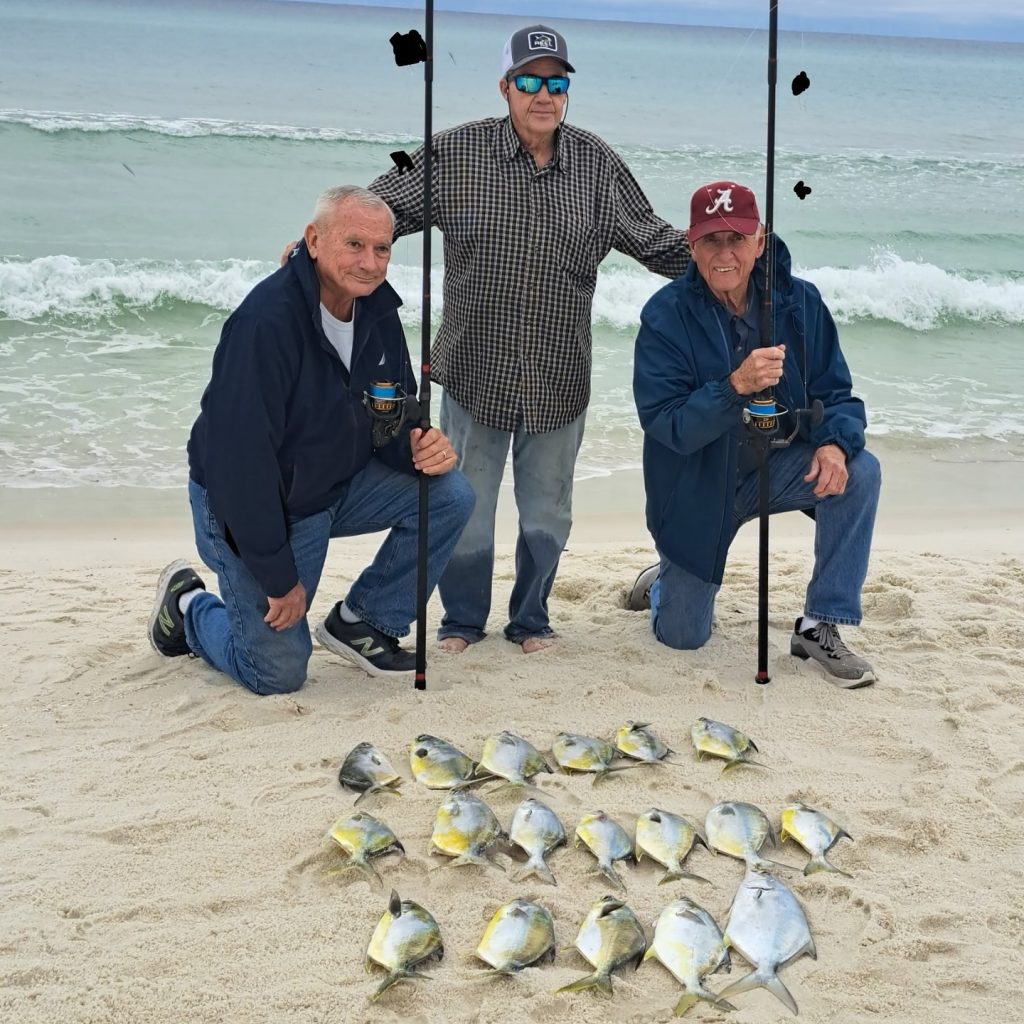
Winter may not be the first season that comes to mind when anglers think about pompano, but winter pompano fishing, according to Blake Hunter of Reel 30A, is one of the most overlooked opportunities on the Emerald Coast. With fewer crowds on the sand and a unique mix of conditions in play, savvy surf fishermen can enjoy some of the most memorable bites of the year. Success, however, isn’t random—it depends heavily on how you line up your fishing trips with the moon and the cold fronts that roll through every week or so.
The Lunar Connection
According to Blake, the moon is the single biggest factor in determining when pompano feed during the winter months. In the days leading up to the full moon and on the full moon itself, anglers can see afternoons where double-digit catches are possible. “It’s not a coincidence,” Blake says. “If you follow the bite reports on social media and compare them with the lunar calendar, the hot days almost always fall right before, during, and just after the full moon.”
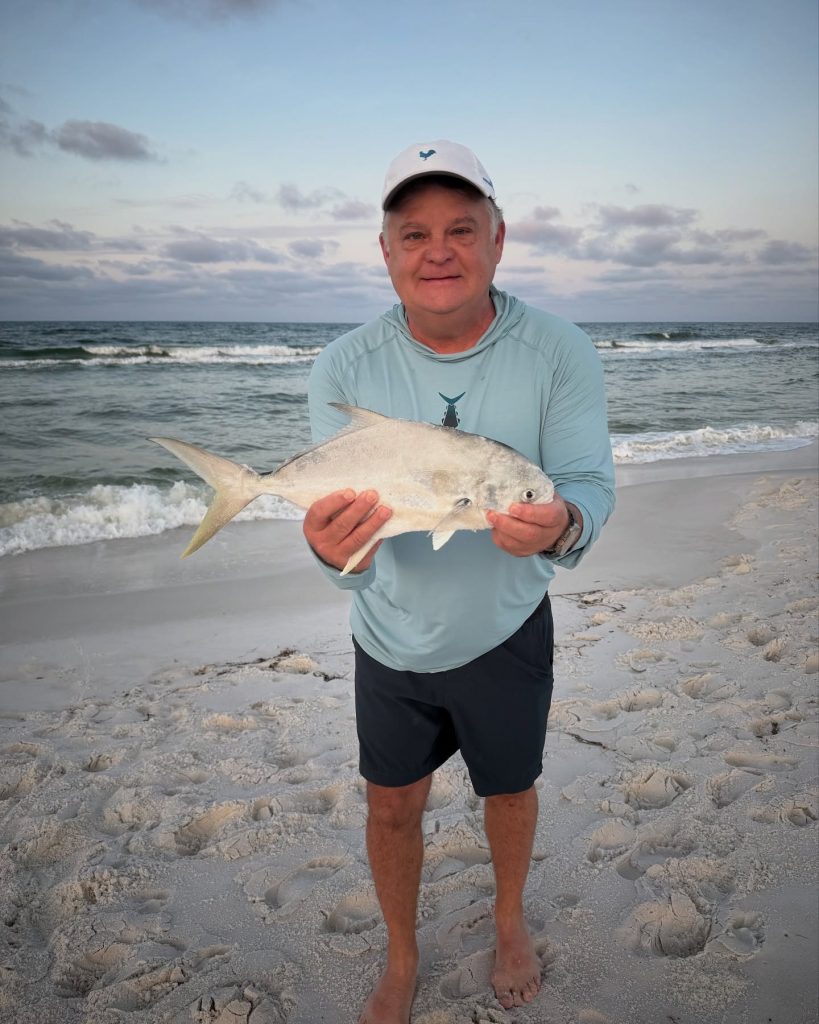
But as soon as the moon starts to wane, the bite fades quickly. Fishermen who were catching pompano one day find themselves wondering where the fish went the next. The lull usually lasts until three or four days before the next full moon, when the cycle begins again.
This influence is especially strong from December through February, when pompano are scattered and food sources are limited. By March, as water temperatures rise and fish begin moving out of the bays, the lunar pull matters less. But in the heart of winter, ignoring the moon can mean wasting a trip. Blake recalls some of his best days between Christmas and New Year’s—cold, blustery stretches when he still managed to catch fifteen to twenty pompano a day—only for the bite to shut down as soon as the moon shifted.
The Role of Cold Fronts
Just as important as the moon are the fronts that sweep across the Gulf every seven to ten days. Before a front arrives, southeast winds churn the surf and create exactly the kind of turbulent water pompano love. “That’s prime time,” Blake explains. “As long as I can get a weight to hold, I’ll fish right up until the front hits.”
When the front passes, winds flip to the northwest and flatten the surf quickly. That creates a short post-front window—sometimes less than a day—when fish are still feeding in the stirred-up water. After that, the bite dies. “Once it gets flat in the winter, you might as well hang it up,” Blake says. “By day two after a front, you’re toast”.
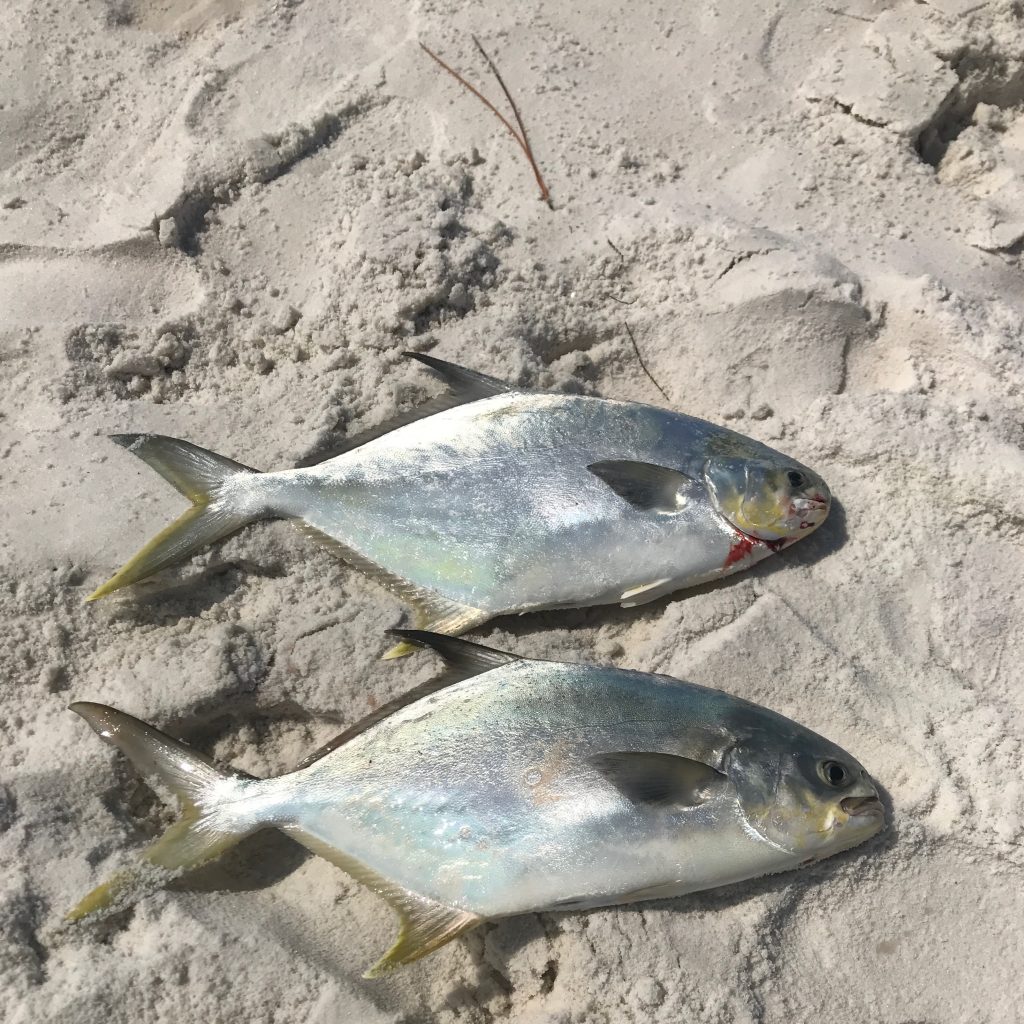
The rhythm becomes predictable. Fish hard ahead of a front, take advantage of the first hours after it passes, and then wait for the next system to breathe life back into the surf.
Residential Fish and Winter Movements
Unlike spring-run pompano that migrate in large schools, many of the winter fish are what Blake calls “residential.” They stay along the beaches until the water dips into the low sixties, then slide into bays, harbors, and marinas. Cold fronts often flush them back out to feed for a short time, but as soon as the surf calms, they retreat again.
That pattern explains why winter pompano fishing can feel hit or miss. One day they’re stacked in a trough, and the next they’ve disappeared. “They’re around,” Blake says, “but you’ve got to be willing to scout, test a hole, and come back when conditions line up”.
Reading the Beach
When conditions do line up, Blake spends as much time looking at the beach as he does actually fishing. He searches for deep front troughs carved out by wave action, especially narrow stretches of dark water where sandbars pinch close to the beach. These areas concentrate bait and create slack water where pompano feed. Rip currents are another sign he won’t ignore, particularly narrow ones that pull water quickly through a small cut. “Those narrow rips are like conveyor belts,” Blake explains. “They move water and food through faster, and I’ve caught more fish in those than in the big, wide ones.”
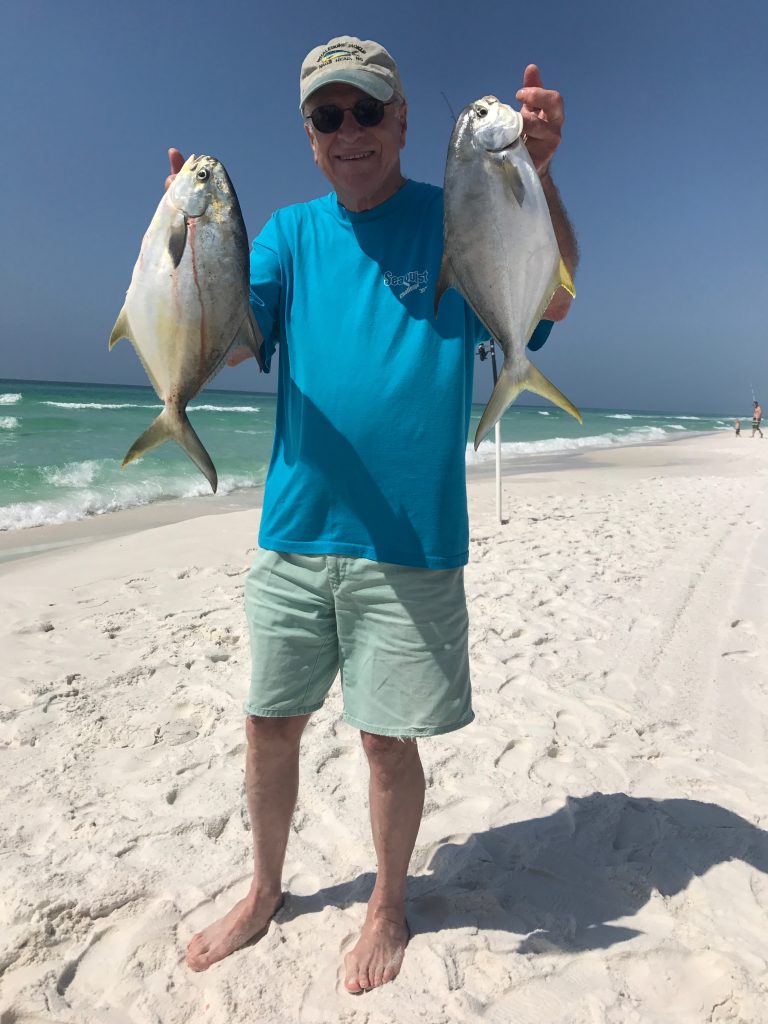
Confidence Baits
Winter bait selection is different too. With sand fleas scarce, Blake leans heavily on shrimp. “Whiting hit shrimp first, pompano hit shrimp, and redfish hit shrimp,” he says. He often breaks a few extra pieces and tosses them into the trough to add scent, essentially chumming the hole before setting lines. Fishbites run a close second, offering a durable option that holds up in rough water.
For redfish and drum, cut whiting or finger mullet are also staples during the colder months. These baits shine when pompano prove scarce and give anglers another target species to salvage a trip.
The Bigger Picture
When you step back, Blake’s approach to winter pompano fishing comes down to timing and observation. He watches the moon to know when fish will feed hardest, monitors the weather to know when surf conditions will be favorable, and then reads the beach to put his baits where pompano want to be.
“Winter may not seem like the time to target pompano, but it absolutely is,” Blake says. “If you plan around the moon and the fronts, some of your best days of the year can come when most people aren’t even thinking about surf fishing.”