
A fellow pulled up to me as I was gassing up my Skeeter one cold January afternoon and asked “Did you really go fishing in this weather? You must be crazy!” He was right on both accounts. Yes, I did go fishing and, well people who know me can attest to his other comment. I couldn’t help but manage a smile as the mid-winter saltwater river fishing trip had been a huge success; moreover, there were several other “crazy” people out there with me and we were all catching fish, thanks to best lures for speckled trout and redfish.
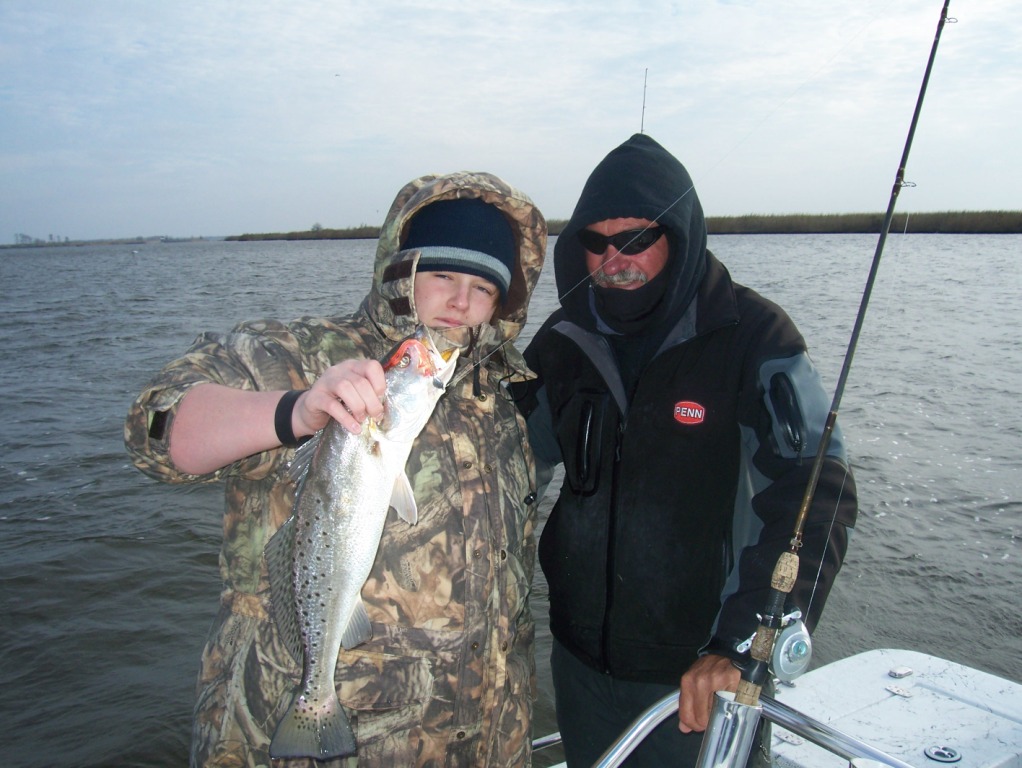
Cold weather inshore fishing is something that many savvy inshore anglers look forward to each year. We know that the estuaries get loaded with speckled trout and redfish that can be caught very effectively by applying a few tactics that specific to this time of the year.
When you are saltwater river fishing, tidal rivers and estuary systems are where you’ll want to target the inshore species of fish during the mid-winter season. The river systems have everything that the fish need in order to survive the cold weather. Because they are not spawning, they don’t need a high salinity environment. The salinity levels that they do need are available to them even during periods of both local and upstate rain. All of the rivers have deep areas that hold pockets of the denser salt water where the fish can get to during the heavy rain events that regularly occur during the winter months.
The same deep areas also provide stable water temperatures when the air temperatures reach the extreme cold ranges as the deeper water columns take longer to cool that a narrow water column. When the water temperatures drop below the 62 degree range, which occurs during the winter, you’ll find speckled trout relating to the deepest areas relative to the system you are fishing.
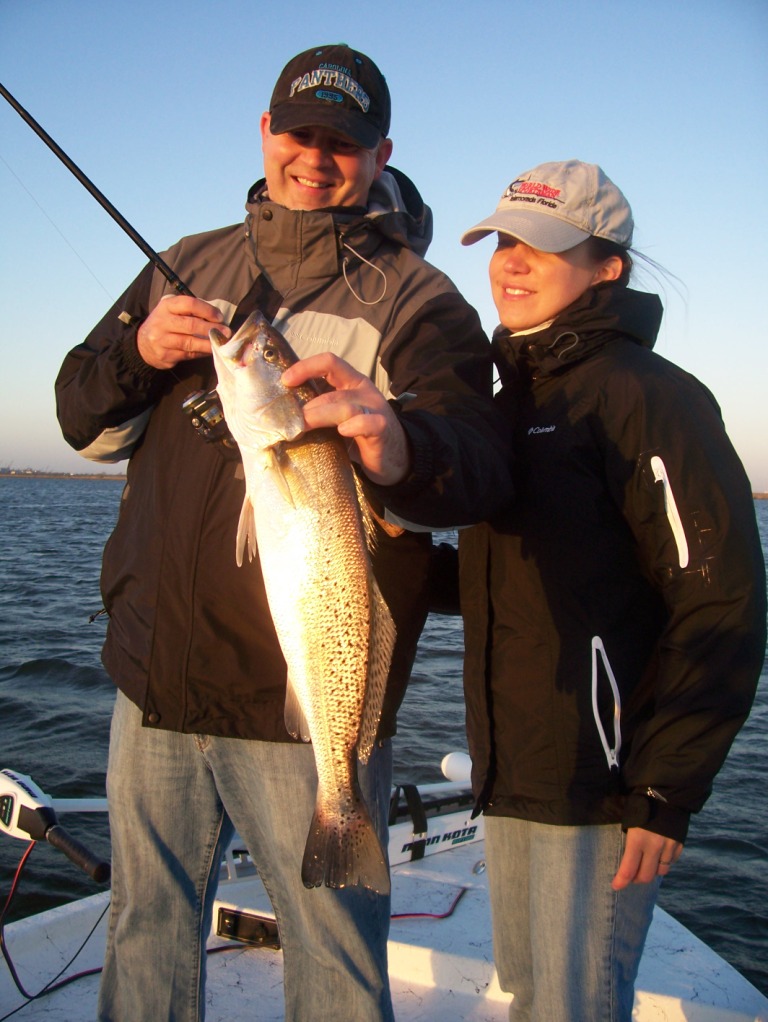
If you are just learning a river system, pay close attention to your bottom machine as you navigate through the system and take note of the location of the river channels, ledges and holes. Typically, the deepest areas are in the river bends and there is a gradual and a steep drop off on either side of the river. All are important to note as the fish will be in certain areas as weather systems move through. The day after a strong front, you’ll be best to focus on the deep holes and steeper sides of the river. A couple of days after a front is generally the best time to fish if you can schedule to go. By then the wind has usually laid and the fish have begun to move. You’ll find speckled trout on the more gradually inclining sides of the rivers and they will be there for a few days after the front. On pre-front days, you may even find that the trout have moved all the way out onto the flats adjacent to the main river channels.
Saltwater river fishing in all three of the winter time periods around the frontal systems requires different technique, along with the best lures for speckled trout and redfish, to put fish in the boat. A jig on a lead head is going to out-perform anything when fishing water depths greater than eight feet. This will most often be the day of or after a strong front, especially when the air temperature has really dropped and the skies are bluebird. I prefer GULP and Powerbait jigs from Berkley. They are scented which helps the fish hold on longer so I can get the hook set. ¼ or 3/8 oz. jig heads are usually heavy enough to fish any of the areas river systems. Concentrate on keeping the lure in contact with the bottom. The good jig fisherman can “feel” the bottom with the jig. Poor jig fishermen like myself, have to watch the line. In my case, I really have to keep an eye on the line waiting for it to go slack before I begin the retrieve. There is going to be the one occasion where a stupid color like “electric drunk monkey with a chicken on a chain” or something like that is needed, but 99% of the time chartreuse or root beer will one of the only colors that you’ll need.
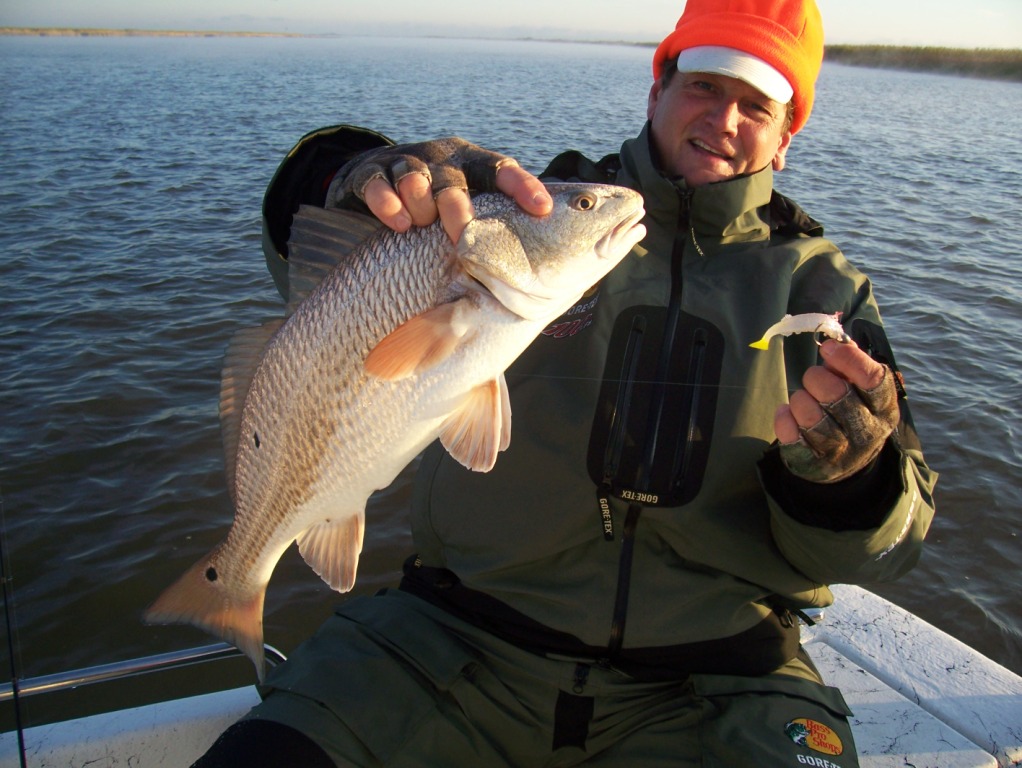
In water depths of eight feet or less, such as a couple of days after a front or in a system where that is the deepest water, the best lures for speckled trout and redfish has to be the Slick Lure from Pure Flats LLC. The lure mimics, in an uncanny fashion, a finfish like a mullet. They are available in an assortment of colors that will cover any water color. Most of the time I prefer the “Bcat” which is pearl/white with a chartreuse tail and switch to pink with a chartreuse tail in clear or clear/tannic water. Use the Owner 4/0 “Beast” hook with a 1/8 oz. weight and be sure to rig the lure so it lays flat, which will prevent it from spinning. You’ll want to drag the lure close to the boat right after rigging it. The action should be side-to-side and not spinning or coming to the surface. An adjustment to the way the hook goes through the lure is all need you’ll need to do in order to get it working properly. I present the lure by slowly reeling it in with occasional gentle “twitches and jerks” of the rod tip.
On warm, pre-front days, look for bait activity and fish slicks on the shallow flats adjacent to the river channels. The Slick Lure is the best lure for speckled trout and redfish in these situations, as well. Usually, you’ll have cloud cover, higher water levels and wind on those days. Top water plugs and even shrimp imitations under a popping cork work well when the fish are very shallow.
The proper gear is never more important anytime than for winter saltwater river fishing. For rod and reels, I use both spinning and casting.
My spinning reels are 2000 size Penn Conflict spooled with either 12# Nanofil or Fireline Ultra 8. Both have very little stretch, cast a long way and don’t get wind knots. On both lines I tie a 2-3 foot 20# fluorocarbon leader and attach the lure with a loop knot. My casting reels are REVO STX from Abu Garcia. On the casting reels I use 10# Professional Grade Fluorocarbon from Berkley. The flouro has features that make it dynamite for winter saltwater river fishing. It is very strong, has little stretch and sinks. The rods are 7’ or 7’3” medium or medium fast action. The softer action rods act like a shock absorber which compensates for the low stretch line when a big fish is on and shaking his head.
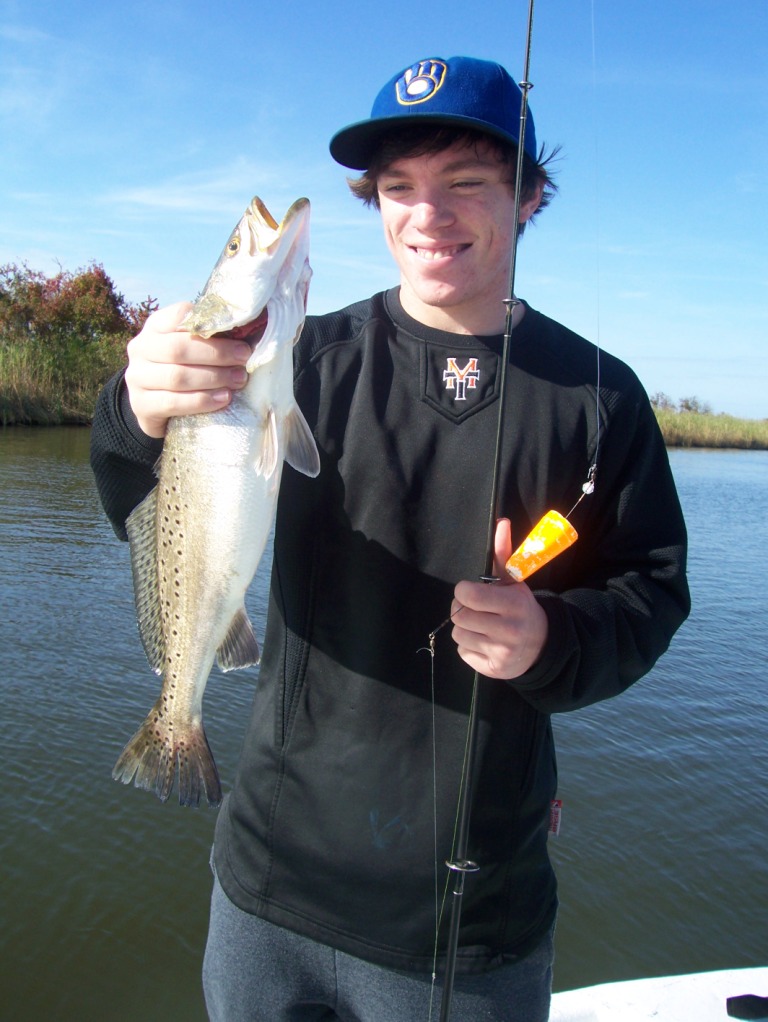
Rods, reels and lures are obviously necessary for any fishing trip, but even the best equipment may as well be left at home if you are miserable on the water. Dressing properly makes a cold day on the water much easier to enjoy. I tell my clients to add one more layer of clothes once they think they have enough on. The cold is magnified many times when running in a boat in the cold, pre-dawn darkness. You can always take it off, but you can’t put it on if you don’t have it. Dress in layers, be sure to have a cover for your head and don’t skimp on winter footwear. Quality insulated shoes or boots with wool socks are a must for a day on the water with air temps in the 30’s.
Lastly, even Olympic medalist Michael Phelps couldn’t swim for long with a bunch of clothes and boots on. We wear the fanny pack inflatable life vests on winter trips. They are unobtrusive and will save your life if you fall in during the winter. A good one is less than $80.00 at any retailer of outdoor products. I provide them for my winter charters and require that they wear them while we are on the boat.
Speckled Trout Consumption Advisory
As a devoted angler fond of speckled trout, a question lingers in my mind– are the specks safe to eat? In my line of work, steering the ship at Mobile Baykeeper, a defender of coastal Alabama’s water health, I find myself caught in the tides of knowledge about pollutants entering our waterways. The dilemma is real – should we enjoy the spoils of our fishing victories, or is it a catch-and-release game?
Flying mostly under the radar, the state of Alabama has conducted tests on our finned friends to provide anglers with a sense of assurance. Mr. Green Jeans uses the data from their tests to issue fish consumption advisories – a topic I’ll delve into in a future piece, unraveling the mysteries behind these guidelines.
But fear not, fellow anglers, for the news I bring is as sweet as king cake (is it sweet?) – speckled trout have been tested by the state and have emerged victorious, swimming beneath the recommended levels of harmful contaminants! A green light to indulge in speckled trout feasts, right?
Ah, the answer is more elusive than that, much like a trophy-sized trout in the bay. The reality is more intricate than a simple yes or no.
Sure, the tested fish were top-notch. However, throw your net on the other side of the boat to find the truth – only three speckled trout from the entirety of coastal Alabama waters made it to the testing table in the last year. Even I manage to reel in three specks occasionally, so can we truly cast our doubts away?
The ambiguity persists, but fear not, for there’s more data to weigh anchor on. Alabama took a closer look in 2011 and 2019, testing 31 specks from Heron Bay and Portersville Bay, 186 from Perdido Bay, and another 31 from Wolf Bay (the pandemic and resource reallocation trimmed the testing fleet to a mere two specks from Mobile Bay and Weeks Bay in 2020 making a total of five total seatrout tested since 2019). *INSERT REFERENCE*
Now, here’s where the plot thickens. Out of the substantial samples in 2011 and 2019, advisories waved their caution flags, recommending we have not only no speckled trout feasts but eat no fish at all from those water bodies.
So, why the concern over our beloved speckled trout? It’s all about biomagnification – a term that deserves a closer look for those of us looking to fill a cooler occasionally. The more predatory the fish, the more contaminants it may absorb through the food chain. And guess what? Speckled trout, with their voracious appetite, fit the bill.
In conclusion, are speckled trout safe to eat? Probably. Like finding the perfect spot for the day, the answer is found in an overwhelming algorithm beyond one person’s comprehension. Where were they caught, what time of year, and how do you plan on cleaning and cooking them? I, for one, savor the flavor of specks, relishing their deliciousness. But each of us must decide the risk we’re willing to shoulder.
A more definitive answer? Stay tuned, reader. We will spend time discovering the testing methods used, how advisories are issued, what happens when we eat contaminated fish, and how these contaminants end up in our fish, anyway? If we can understand these things, we can all cast our lines with a bit more certainty into the waters of culinary delight.
Final Thoughts
The smile was on my face even after I left the gas station. The poor fellow didn’t have a clue what he was missing by not doing some saltwater river fishing during the winter. It made me wonder- “which one of us was really the crazy one?”
Full Disclosure: This post may include affiliate links. There’s no extra charge to our readers for using these.