
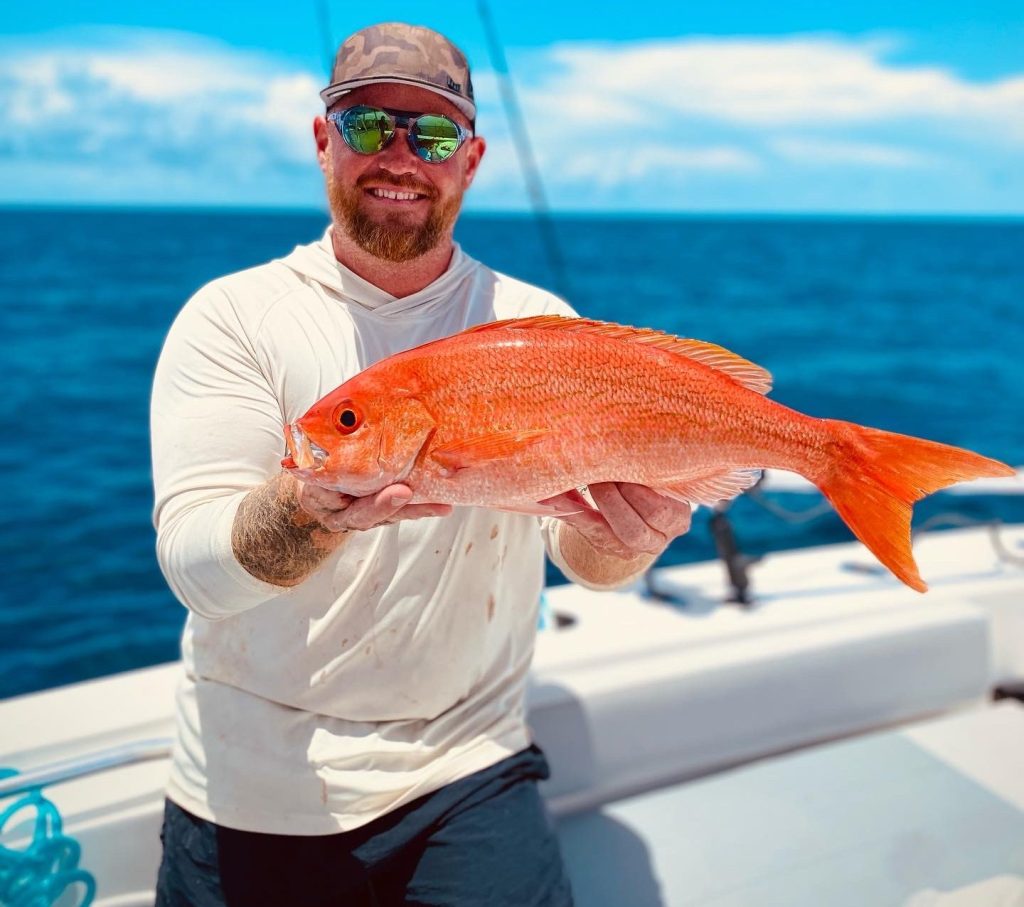
Offshore bottom fishing in the Gulf of Mexico holds potential for multitudes of species, many of which are delectable, tasty treats. With beautiful rosy-red features and streamlined bodies, vermilion snapper make a vibrant addition to the fish box. Known for their delicious mild and flaky white meat, the Vermilion Snapper is truly a gem for offshore fisherman along Alabama and Florida’s coast. Whether you’re an avid angler, seafood fanatic, or simply interested in the marine life of the Gulf Coast, the Vermilion is sure to capture your taste buds as well as your attention.
There may be some questions milling around as we discuss these amazing fish: How to identify Vermilion Snapper? How to target them specifically? What is the Vermilion Snapper state record? Do Vermilion Snapper have a season? How many Vermilion Snapper can I keep? How to clean a Vermilion Snapper? In this article we will interview local charter captains and glean secret information from them to learn how to hone in on these fish. Whether you’re an experienced offshore angler or just getting started, there’s always something to learn about targeting vermilion snapper. Here’s your complete guide to the Vermilion Snapper, one of the many amazing species in our mysterious Gulf’s endless depths.
What Is A Vermilion Snapper?
Vermilion Snapper (Rhomboplites aurorubens), also known as the Beeliner, or BB’s is a species of marine ray-finned fish with a sleek, elongated body and distinguishing reddish-pink colors. Sometimes, they will have orange and yellow sunset colored accents along their sides. Beeliner also have a distinctive red eye and pale underbelly. Cousin to the Red Snapper, Vermilion Snapper can live to be up to 15 years old and are capable of spawning by the age of one or two.
How Big Do Vermilion Snapper Get?
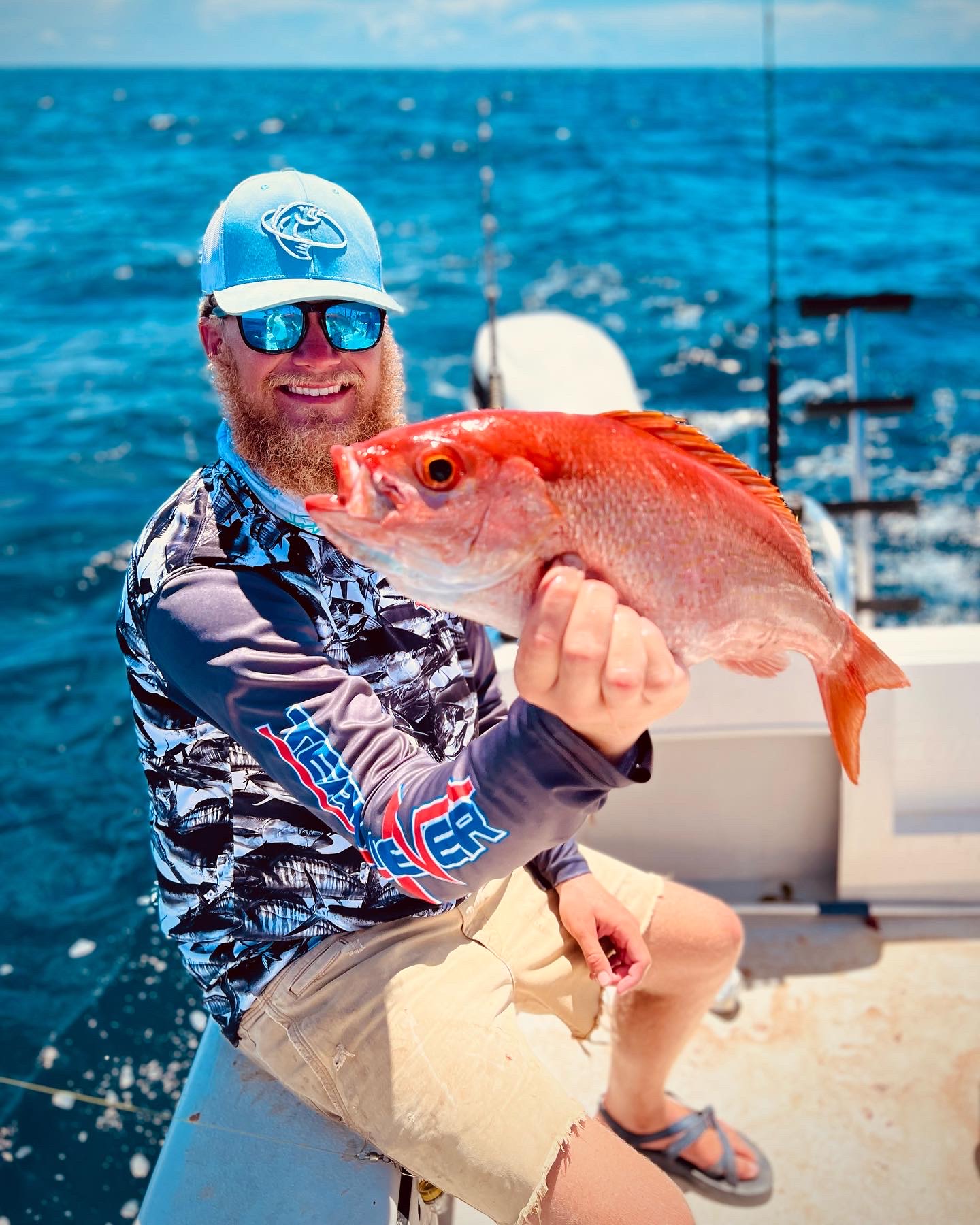
Vermilion Snapper are caught in a range of sizes but most frequently in the 10-18” range. Beeliners can grow over two feet long. Fish over five pounds are rare, but the largest specimens can reach the nine-pound range. According to the Florida Fishing and Wildlife Conservation Commission, the Florida State Record is 6.19lbs. caught in 2017, and the Alabama State Record is 7lbs. 3oz. in 1987 according to Outdoor Alabama. According to the IGFA All Tackle World Record, the world record Vermilion Snapper was caught October 7, 2022 and weighed in at a whopping 9lbs. 4oz.
What Are The Regulations For Vermilion Snapper?
Vermilion snapper regulations vary by state and by whether anglers are fishing in state or federal waters, so always check current rules before heading offshore. In Alabama, vermilion snapper are currently open year-round with a 10-inch minimum total length and a daily creel limit of 10 per person. In Florida Gulf waters, vermilion snapper are also open year-round with a 10-inch minimum total length, a state limit of 10 per person, and a federal limit of 10 per person within the 20 reef fish aggregate. Florida Atlantic waters have different vermilion snapper rules, including a 12-inch minimum total length and a 5-fish daily bag limit.
Anglers should also check current reef fish gear requirements. When fishing for reef fish with natural bait in Gulf waters, non-stainless steel circle hooks, a dehooking device, and a descending device or venting tool rigged and ready may be required depending on the waters being fished.
How To Identify Vermilion Snapper?
Telling the difference between beeliners and red snapper can be challenging because the two look similar. It’s important to know a few key characteristics of vermilion snapper so you don’t accidentally keep an out-of-season red snapper.
The third thing to pay attention to is the features of the eye. Vermilion Snapper eyes are generally larger in proportion to their body and a deep red color, while Red Snapper eyes have more of a pink tint and appear smaller proportionately to their body. The fourth and last thing to note is the mouth, Vermilion Snapper have a much smaller mouth with a sandpaper like tooth structure and can almost be lipped like a bass whereas Red snapper have a larger mouth and more pronounced teeth that you’ll want to avoid.
Where To Catch Vermilion Snapper?
According to NOAA, Vermilion Snapper can be found in a very wide range, in the Atlantic Ocean from Cape Hatteras, North Carolina, to Southeastern Brazil, including the West Indies, Gulf of Mexico and the Caribbean Sea. Beeliner are caught in a wide array of depths from 60 to even 400 ft. of water. They seem to be most abundant in depths less than 200ft. These fish live in the lower column of the water close to the seafloor and frequent live bottom areas like rock and gravel, or sand bottom near ditches, depth changes and continental shelves. Usually once you’ve dialed in the Beeliner there are more to be had, this fish typically swim in big schools and don’t travel very far.
What Do Vermilion Snapper Eat?
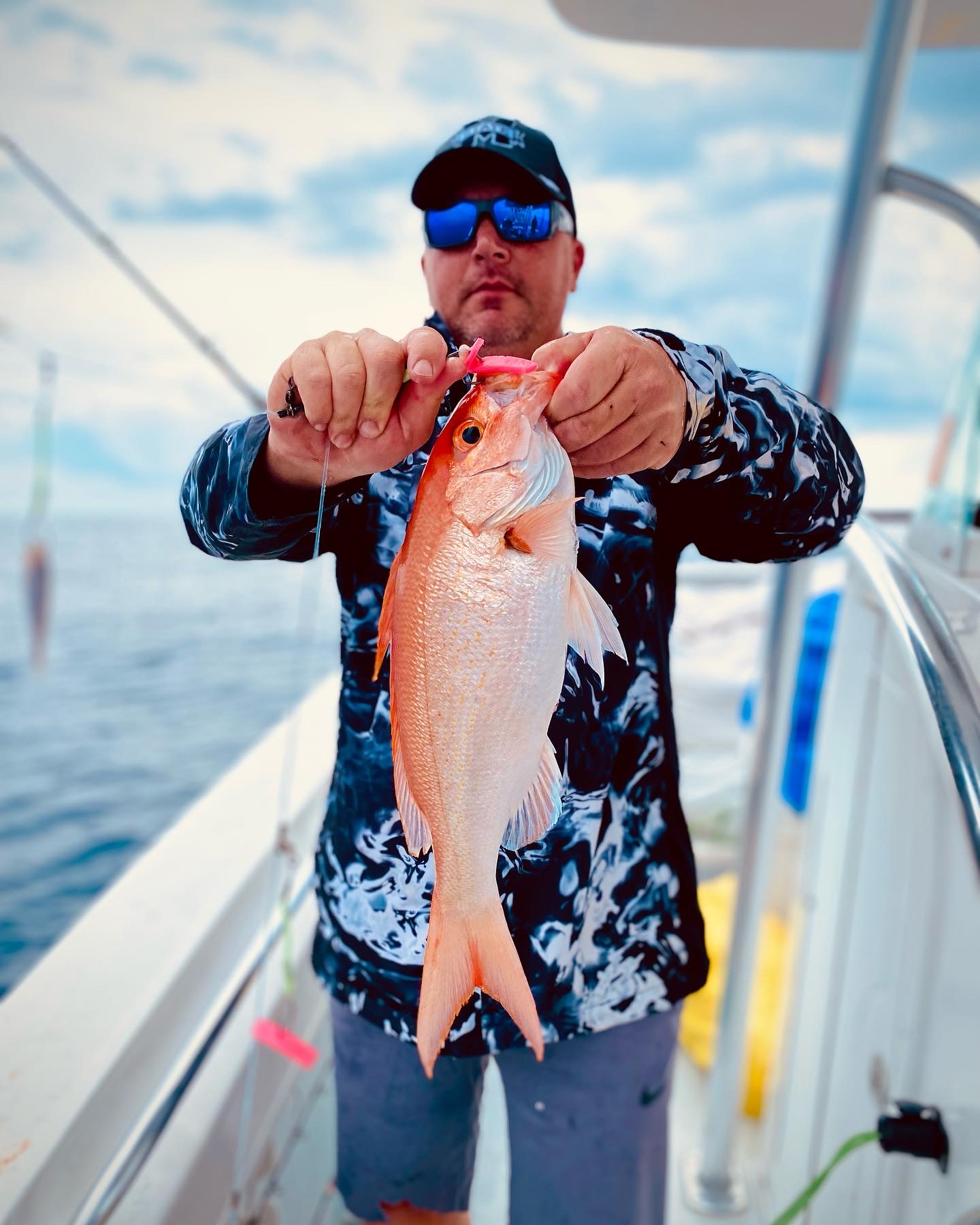
Vermilion Snapper are mostly a carnivorous species and consume a plethora of different smaller sized marine organisms as well as plankton. Here are some of the common components of a Vermilion Snapper’s diet: various species of baitfish, squid, shrimp, crabs, worms and other bottom dwelling invertebrates.
How To Catch Vermilion Snapper?
Catching Vermilion can be both exciting and rewarding for the angler. Beeliner can be particular at times and sometimes require lighter set ups and rigging than traditional offshore bottom fishing. Lightening up sometimes looks like dropping your leader from 80# to 60# or from 40# to 30# and downsizing the size of your hooks too. Capt. Spencer Kight from D.I. Reef Monster charters shares a few of his preferences and what his favorite bait, hooks and setups look like.
Because vermilion snapper are often caught from deeper water, anglers should be prepared to properly release undersized or unwanted fish with the required descending device or venting tool when barotrauma is present.
What do you think is the best bait to use?
Capt. Spencer Kight: “The cleanest and freshest white squid you can find, it’s hard to do wrong with squid, that’s their favorite, tipped with Fishbites E-Z Strips in squid, shrimp and clam scents. If they’re being weird and you know they’re down there, try dropping just tentacles on sabiki rigs.”
What setup and rigging do you like to use when fishing for Vermilion?
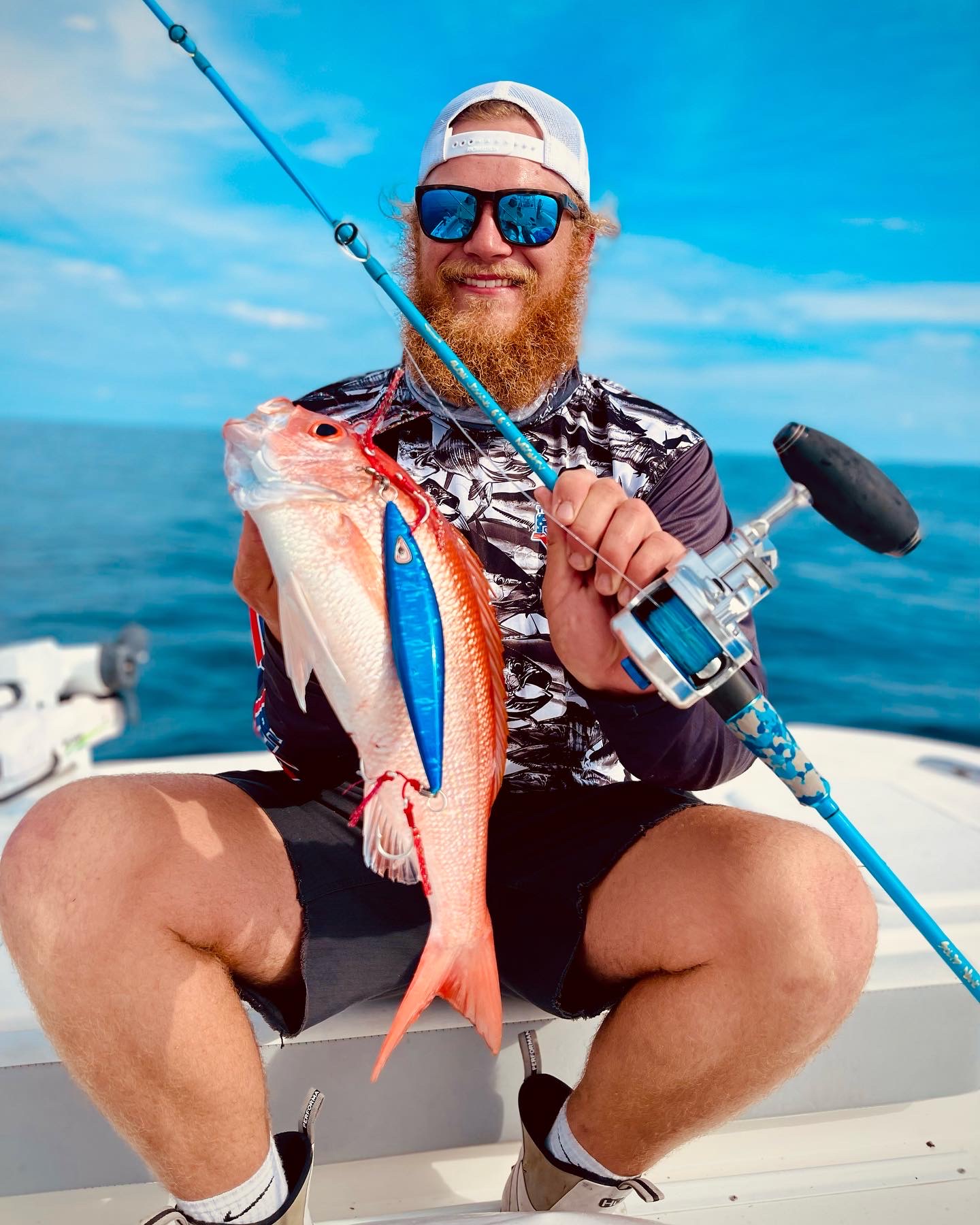
Capt. Spencer Kight: “Light tipped rods rated Medium Fast paired with a conventional or bigger sized spinning reel.” Spencer goes on to say, “4-8 oz. weights under a two hook chicken rig is the way to go with 40# fluorocarbon leader or even lighter down to 20# if needed.”
What hook do you prefer for Vermilion fishing?
Capt. Spencer Kight: “2/0 Mustad Demon circle hooks are preferred however, if the fish aren’t getting the hook on a 2/0 hook drop down to a #2 sized circle hook to see if it increases the hook up on that light bite.”
How To Clean Vermilion Snapper?
Cleaning fish with precision and accuracy is a key element when properly processing your harvested fish. Vermilion Snapper have a mild and flaky meat but have much softer tissues than the Red Snapper. Proper tools like a sharp knife (Dexter Russel Fillet Knife) and cleaning table (Killerdock Fish Cleaning Station) are just the beginning. Professional Fish Monger and Capt. Clay and Son’s Seafood’s very own Reed Brand breaks down cleaning the Vermilion Snapper in great detail as well as many other species on his informational social media pages. Reed the Fishmonger is one of the most talented with a filet knife around and describes cleaning Beeliner like this …
“Go around the head at an angle, twist your knife around, just the tip, small incision all the way down on top of the spine. Rest your knife right on top of the skeleton, pull back towards the head. Now that you’re at the center, tip of the knife facing the ribs angled slightly up, separate the connection the pin bones make to the ribs. One little incision to go to the top of the spine, so that way you can hit the second side without losing any of the meat going over that. Now we just roll down the ribs, separate, and there’s your beautiful Vermilion fillet. Knife at the base of the tail, get a good grip at the base of the tail with your fingers, hard angle and once you’re in there flatten out your knife.”
Reed also says he personally likes to do a little saw motion when taking the meat off the skin so that the meat doesn’t pull apart. Video link to Reed’s exact description can be found here.
Vermilion Snapper Recipe:
American chef and author, Hank Shaw has several snapper recipes. Whether you’re looking to eat your catch whole or have it fileted he’s got something for you featured on Hunter Angler Gardener Cook.