

Fishing is more than just a hobby—it’s an opportunity to connect with nature, build lifelong memories, and teach valuable skills to the next generation. For Andre Davis, founder of Skillz and Gills and a passionate advocate for youth fly fishing, introducing kids to the joys of fishing is a mission that combines education, conservation, and good old-fashioned fun. In a recent interview, Andre shared his experiences and tips for taking kids bluegill fishing, including how to catch bluegill using simple techniques and gear. He emphasized why this easy, accessible, and rewarding activity is one of the best ways to spark a love of fishing in young anglers. Whether you’re introducing your child, a niece or nephew, or a group of local kids to fishing, bluegill are the perfect species to start with—and spring is the perfect time to do it.
Why Bluegill Are Perfect for Kids
If there’s one fish that practically guarantees excitement for new anglers, it’s the bluegill. These small but spirited panfish are abundant, aggressive feeders, and found in almost every pond, lake, and creek. “Bluegill fishing is perfect for kids because it’s fast, fun, and rewarding,” Andre explained. “This time of year, you can throw just about anything near the bank, and a bluegill will come up and grab it. It’s a great way to teach kids the basics of fishing without the frustration of waiting too long for a bite.”

During spring, bluegill are especially active as they prepare for their spawning season. Andre noted that you can often spot their spawning beds—circular, pot-marked areas in shallow water—around the edges of ponds or creeks. “Find those beds, throw a small floating bug or fly nearby, and you’re almost guaranteed action,” he said.
Tips for Teaching Kids to Fish
Introducing kids to fishing requires more than just handing them a rod. According to Andre, it’s all about creating an experience that’s fun, engaging, and tailored to their interests. Here are some of his top tips:
1. Start with the Basics
When teaching kids how to catch bluegill, keep things simple. “I like to use a seven-foot leader with about 10 feet of fly line,” Andre said. “It’s not too much to manage, and it’s similar to Tenkara fishing—just enough to cast and bring in fish without overwhelming them.”
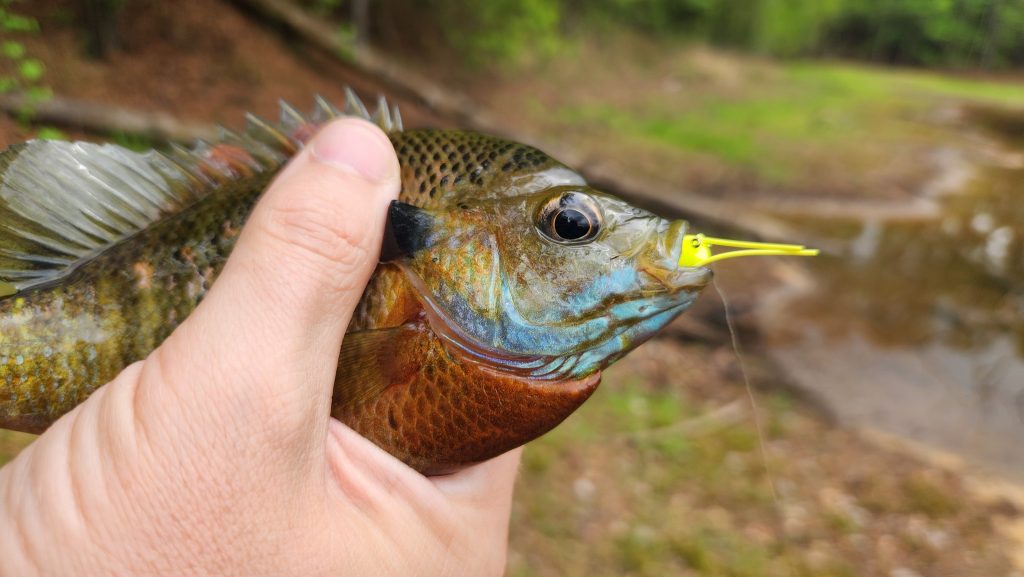
For tackle, small topwater flies or foam bugs work wonders. “You don’t need anything fancy,” Andre explained. “Even a simple foam bug with rubber legs will tear up the panfish and keep the kids entertained all day.”
2. Let Them Own the Process
One of Andre’s favorite approaches is to let kids take full ownership of their fishing experience, from rigging the rod to tying flies. “When we’re teaching kids through the Mayfly Project or Skillz and Gills, we start by breaking everything down,” he said. “I’ll take the fly rod apart, remove the spool, and make them put it all back together. They learn how to string the line, tie the knots, and rig the flies themselves. By the time they catch their first fish, they know it’s 100% their accomplishment.”
This hands-on approach not only teaches practical skills but also builds confidence. “When a kid catches a fish with a rod they rigged themselves, their eyes just light up,” Andre added.
3. Follow Their Lead
While it’s tempting to stick to your own fishing plans, Andre emphasized the importance of letting kids explore and follow their interests. “Kids have a natural curiosity, and sometimes that means they want to chase frogs or catch shiners instead of fishing for bluegill,” he said. “Go with them! If they’re excited about something, lean into it and make it part of the experience.”
As Andre put it, “You’re not fishing for the sake of fishing—you’re fishing for them. Let them fall in love with the outdoors on their own terms.”
4. Celebrate the Small Wins
Kids thrive on positive reinforcement, and fishing provides plenty of opportunities to celebrate their successes. Whether they catch their first fish, master a new skill, or simply spot something cool in nature, make a big deal out of it.
“Set them up for easy victories,” Andre advised. “Bluegill fishing is perfect for this because it’s so consistent. Even if the fish are small, kids will feel like champions when they reel one in.”
Spring: The Perfect Time for Bluegill Fishing
Spring is a magical time for fishing, and bluegill are no exception. As water temperatures rise, these panfish move into the shallows to spawn, making them highly accessible to anglers of all skill levels.
“This time of year, you can just walk the bank, flick a fly or lure into the water, and watch the bluegill come up and bubble on it,” Andre said. “It’s like throwing dog food to catfish—they can’t resist it.”
For those teaching kids to fly fish, Andre recommends keeping casts short and simple. “A seven-foot leader and a small foam bug are all you need. Teach them how to pinch the fly line against the cork handle for basic line control, and let them go to town. They’ll be catching fish in no time.”
The Joy of Sharing the Outdoors
For Andre, fishing is about more than just catching fish—it’s about creating memories and fostering a love for the outdoors. Through programs like the Mayfly Project and Skillz and Gills, he’s been able to share his passion with hundreds of kids, many of whom are experiencing fishing for the first time.

“One of the coolest things about teaching kids how to catch bluegill is seeing their sense of wonder,” Andre said. “Some kids get really into the process of tying flies or learning knots, while others just love being outside, chasing butterflies, or playing in the water. Whatever it is, I just try to meet them where they are and make it a positive experience.”
Final Thoughts
Fishing with kids doesn’t have to be complicated, and teaching them how to catch bluegill provides the perfect introduction to the sport. With their aggressive nature and willingness to bite, these panfish offer plenty of action to keep kids engaged. Combine that with the beauty of springtime and the simplicity of fly fishing, and you’ve got a recipe for unforgettable memories.
As Andre said, “The key is to let kids fall in love with fishing on their own terms. Give them space to explore, celebrate their wins, and just enjoy the experience together. That’s what it’s all about.”
So grab your gear, find a pond or creek, and take a kid bluegill fishing. You’ll not only teach them a new skill but also give them a connection to the outdoors that could last a lifetime.