When it comes to building the perfect flounder rig, knowing your target species is key. There are around 18 different species of flatfish found in Alabama waters; however, only two grow large and support popular commercial and recreational fisheries. Both species belong to the genus Paralichthys, which contains the “Large-toothed Sand Flounders.” The Southern Flounder (Paralichthys lethostigma) is a marine-estuarine dependent species that can tolerate a wide range of salinity, from completely fresh water to fully marine (0–36 ppt), while the Gulf Flounder (Paralichthys albigutta) prefers to occupy higher salinity waters. On average, the Southern Flounder grows larger than the Gulf Flounder; however, both species are fearsome ambush predators with large mouths and a ravenous appetite, capable of taking on big prey items with their large canine teeth.
If you’re looking to improve your flounder rig and catch bigger flatfish, understanding what these species eat is essential. In this article, we’ll discuss some of flounder’s favorite prey items and how you can transfer that knowledge to your artificial or live bait presentation to catch more quality flounder on your next fishing trip.
What Do Flounder Eat?
Flounder are opportunistic predators, and their diets change as they grow. When they’re young and small, flounder mainly feed on shrimp and tiny fish. As they mature, their menu shifts to larger finfish — although even the biggest “doormats” rarely pass up an easy shrimp snack.

Some of flounder’s favorite finfish include bull minnows, mullet, croaker, pinfish, and the lesser-known High-fin Goby. The High-fin Goby (Gobionellus oceanicus) isn’t often seen by anglers but thrives in Alabama’s rich benthic ecosystem. In spring, it’s common to find flounder bellies packed with gobies. These long, slender fish are an excellent model for artificial bait presentations and can help you choose the right lure for your flounder rig.
It’s also important to note that flounder’s preferred prey can change with the season and habitat. In marshes, flounder often zero in on bull minnows, shrimp, and finger mullet. On deeper structures or channels, they’re more likely to feed on croakers, pinfish, and gobies. Knowing which bait to use — live or artificial — can make your flounder rig far more effective.
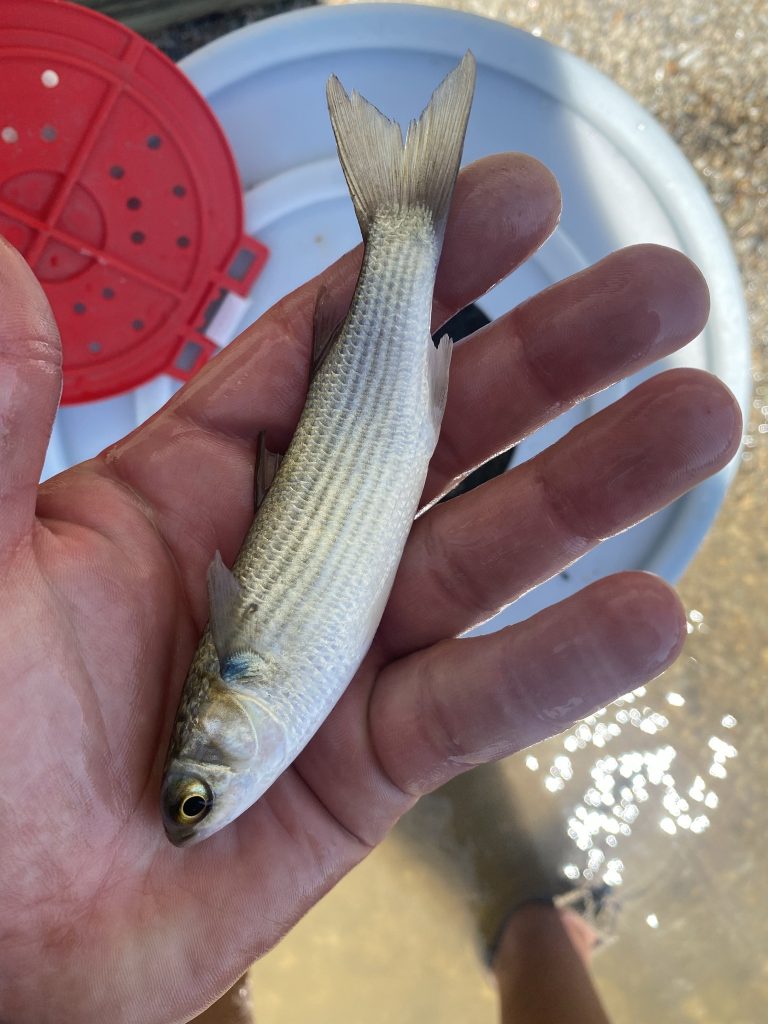
Over the years, I’ve seen just how big flounder will go. I’ve found white trout as large as 10–11 inches inside the belly of a 16-inch flounder. Their anatomy and behavior make them perfect ambush predators: camouflaged, patient, and ready to explode with a lightning-fast strike, using their large canine teeth to grab and even “fold” big prey for consumption. Very little is safe from a true doormat, and that’s why upsizing your flounder rig can often lead to bigger catches.
Why Big Flounder Bait is Better
Knowing that flounder can consume large prey at will naturally raises the question: should you be throwing bigger baits? The answer depends on your setup and conditions, but your flounder rig plays a major role. Using larger artificial or live baits with your rig can benefit you in two main ways. First, it cuts down on the amount of “trash” fish you catch. Second, it gives your bait a bigger “presence” in the water. A larger bait displaces more water, creating vibrations and movement that are harder for a flounder to ignore.

Every time a flounder strikes, it gives up its ambush point to attack. This creates a trade-off—leaving its hidden position alerts other potential prey and forces it to reposition before it can ambush again. Because a larger prey item provides more calories per effort, the risk of moving from its hiding spot becomes more worthwhile. This is why bigger baits often trigger strikes from larger, more aggressive flounder.
Still, there are times when smaller baits make more sense. During the hottest months or when dissolved oxygen is low, digesting a large prey item can be more taxing. While this doesn’t happen as often with flounder as it does with some other species, anglers often notice a shift toward smaller, easy-to-digest prey (2–3 inches) in peak summer conditions. Adjusting your flounder rig size and bait choice with the season can help you stay dialed in and maximize your catches.
How to Create A Flounder Rig for Big Baits
If you want to catch quality flatfish, setting up the right flounder rig for big baits is essential. Anglers looking to fish large live baits for flounder should carefully plan their approach and bait selection. A classic and highly effective setup is a Carolina rig with a 4–7-inch mullet, although croakers, pinfish, and pogies are also excellent choices. These larger baitfish often aren’t available in bait shops, so break out a cast net and target schools of mullet and pogies along marsh edges, flats, and beach drop-offs. Look for “nervous” water or fish flipping on the surface to find them.
To build your Carolina flounder rig, start with 20–30 lb braided main line and thread on a heavier egg sinker (3/8–3/4 oz). Tie the braid to one side of a swivel with a Palomar knot. On the other side, attach 10–14 inches of 20–40 lb monofilament or fluorocarbon leader (Berkley Big Game or AFTCO Saiko are good options). Finish with a loop knot tied to a 1/0 or 2/0 Owner SSW Cutting Point hook. When rigging mullet, insert the hook through the dorsal fin — this keeps the bait swimming toward the surface naturally while the weight pins it to the bottom. That erratic action stirs up commotion on the bottom and attracts hungry flounder.
Keep your line tight as you work the bait. Slowly drag it a few feet at a time, pausing frequently, to cover more ground. Often you’ll feel your bait act erratically before the telltale thump of a strike. When you feel weight, reel in the slack and move the fish gently. If the fish follows, load the rod smoothly and set the hook with a strong, steady pull. Keep constant pressure while reeling to avoid giving slack — flounder are experts at backing up and shaking free.
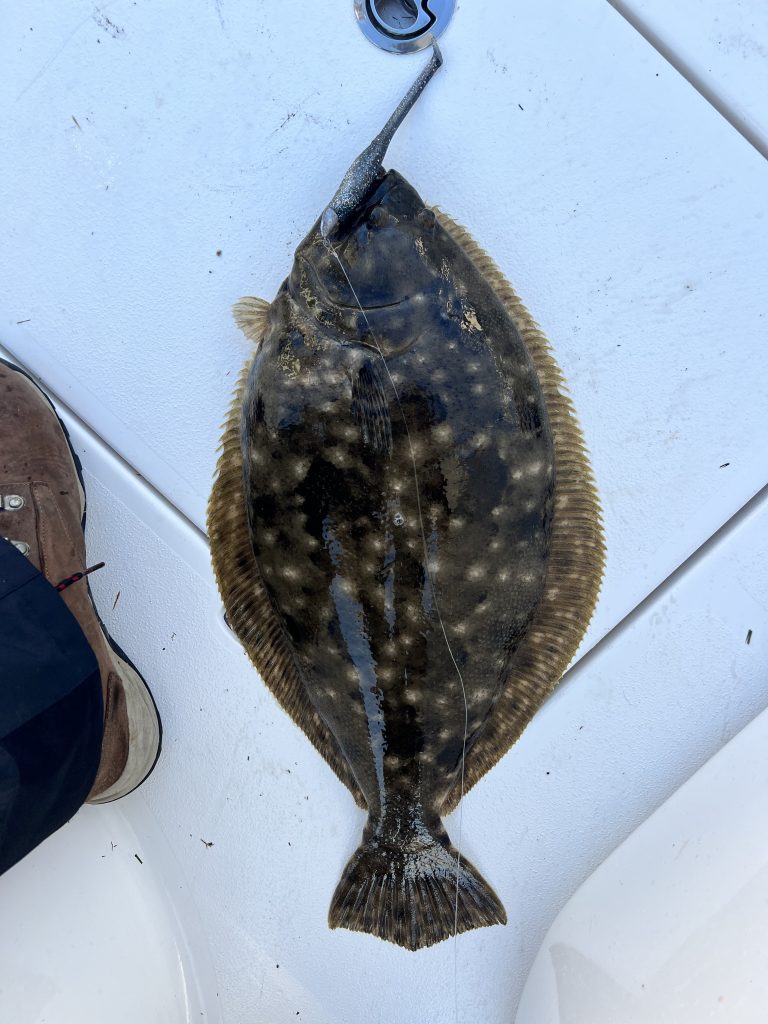
For an artificial flounder rig, look for soft plastics in the 5–7-inch range with lots of action. Some top picks include the Gambler Lures 6” Flapp’n Shad, Down South Lures “Big Smooth” and “Supermodel,” Coastal Brew 6” Dart, the OG Slick lure from Pure Flats, and Z-Man 5” Scented Jerk ShadZ or Scented PaddlerZ. Rig them on a 3/16–3/8 oz jig head, or switch to a weedless swimbait hook when fishing heavy structure to avoid snags. Favorite jig heads include Skyline Jigs and Hogie, while Eye Strike Fishing and Owner Hooks make excellent weedless options.
Spool your reel with 20–30 lb braided line connected to a 20–40 lb mono or fluorocarbon leader using a modified Albright or FG knot. Tie a loop knot to the jig head to maximize lure action. For added attraction, coat your lures with scent. Pro-Cure Scent’s Flounder Pounder, Mullet, and Menhaden blends are proven options that can make a big difference in getting a strike.
By fine-tuning your flounder rig for both live and artificial baits, you’ll dramatically improve your chances of landing bigger, more aggressive fish.
Final Thoughts on Big Baits and Flounder Rigs
Flounder aren’t shy about tackling big prey—and you shouldn’t be shy about throwing big baits for them. Whether you’re fishing with a live bait setup or an artificial flounder rig, upsizing can pay off in a big way. Many large-profile options are available at your local outdoor and tackle shops, and don’t overlook the freshwater section for the occasional hidden gem.
When choosing a big flounder bait, focus on water displacement, action, and vibration—these three elements make soft plastics stand out. Add a dose of Pro-Cure scent if your lure isn’t pre-scented to take advantage of flounder’s strong sense of smell.
Make sure your gear matches your ambition. Heavier line and leader help you land trophy fish without break-offs. I’ve lost big flounder on 20-lb test and wished I had been using 40-lb. In my experience, flounder don’t shy away from a heavier leader.
So on your next trip, consider stepping up the size of your bait and your rig. You might be surprised at both how small and how large a flounder will strike a 6-inch bait—and how much fun it is to bring a true “doormat” to the net.