

Most landowners don’t set out to become habitat managers. They start with something simpler. They want better deer hunting. They want more ducks cupping up in flooded timber in January. They want to hear gobbles echoing through open woods in April. They want the investment security that land appreciation provides or the income that agricultural commodities can bring. Or maybe they want it all.
For those landowners who stick with it long enough, they begin to question if they can do more, and if so, what they can do. They start to weigh the cost and benefit of management practices as it relates to their financial investment and the wildlife benefit it provides. That progression is exactly what shaped the careers of Jody Pagan of Ecosystems Protection Service and Brian Sheppard of Brush Clearing Services. Neither one came into this work from a purely academic standpoint. They came into it as hunters who wanted better land. Pagan says it plainly: “I’m passionate about restoration and management because I love to hunt. The best biologists and ecologists I know, they love to hunt the critters. They’re passionate because they know if they can get that habitat to suitable parameters that the critter likes, they’re going to be more successful hunting.” That mindset matters. It means the work isn’t theoretical. It’s rooted in real outcomes that landowners care about.
Over the past two decades, they’ve worked on federal conservation projects, state wildlife areas, private legacy tracts, wetland restorations, and large-scale timber properties across the South. And the lesson that keeps surfacing is this: when you restore a property to what it was designed to be, wildlife responds naturally, and so does timber value. The two are not in conflict. In fact, when done correctly, they reinforce one another. For landowners who view their property not just as recreation but as a long-term asset, that alignment between ecology and economics becomes incredibly important.
Restoration vs. Manipulation
One of the first conversations Pagan has with a landowner centers on a simple but powerful distinction: are you restoring your land, or are you manipulating it? Manipulation means forcing the ground to do something because you want it to be that way. Restoration means understanding what historically thrived there and working toward that natural condition.
“You can’t put a square peg in a round hole,” Pagan says. “I’ve seen people plant pines where they were never supposed to be planted. They never did very well, because that wasn’t what God meant to be there.”
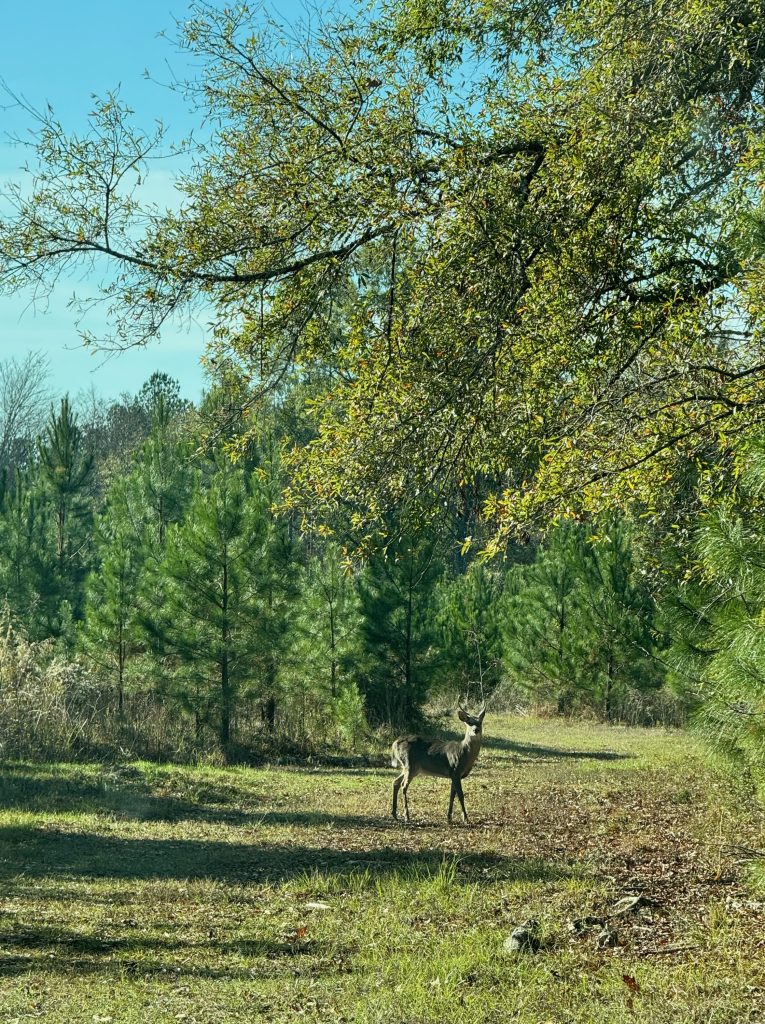
That statement isn’t philosophical. It’s practical. Soil type, rainfall patterns, historic fire frequency, and geomorphology dictate what species succeed over time. If a site historically supported tallgrass prairie, forcing it into dense pine production may mean years of suppressed growth and underperformance.
Everything begins with dirt. Pagan emphasizes that repeatedly. Understanding soils tells you what wants to grow there. And when you align your timber and wildlife plan with that ecological reality, you reduce risk. Trees grow stronger. Stands remain healthier. Wildlife habitat improves. And your long-term return potential increases. Conservation, in that sense, becomes disciplined management, not guesswork.
The Consequences of Fire Suppression
Across much of the Southeast, decades of fire suppression have fundamentally reshaped forest structure. What were once open understories with diverse grasses and forbs have become shaded midstory thickets. Sweetgum, river birch, and other low-value timber and wildlife species fill the gaps beneath mature canopies. The forest floor loses light. The herbaceous layer disappears. And once that ground fuel is gone, prescribed fire no longer carries effectively.
Pagan doesn’t shy away from reality. “The suppression of fire all across the Southeast is so widespread….that’s why Brian and I have been able to make a living for the last 20 years.”
Historically, lightning and indigenous land management kept many Southern ecosystems in a state of disturbance. That disturbance wasn’t destructive; it was regenerative. It maintained balance. Without it, stands become biologically stagnant. Timber quality suffers as midstory competition robs desirable trees of resources. Wildlife habitat declines as brood cover and bedding cover vanish.
Fire remains the long-term answer for many properties. But when decades of growth have accumulated, fire alone isn’t enough to fix the problem.
Mechanical Reset as a Tool
This is where Sheppard’s work enters the picture. Forestry mulching and understory reduction provide a way to reset the system when fire can no longer do the job alone. But Sheppard is careful not to oversell what machinery can accomplish in isolation.
“Mulching is really beneficial if you’re going to come back with a maintenance plan afterwards,” he says. “You just can’t walk away from it.”
Mechanical work is not the finish line. It’s the starting point. The goal is to reduce midstory competition so sunlight reaches the forest floor again. Once light returns, native grasses and forbs respond from the seed bank. That regrowth allows fire to re-enter the rotation. Over time, the system stabilizes into something healthier and easier to manage.
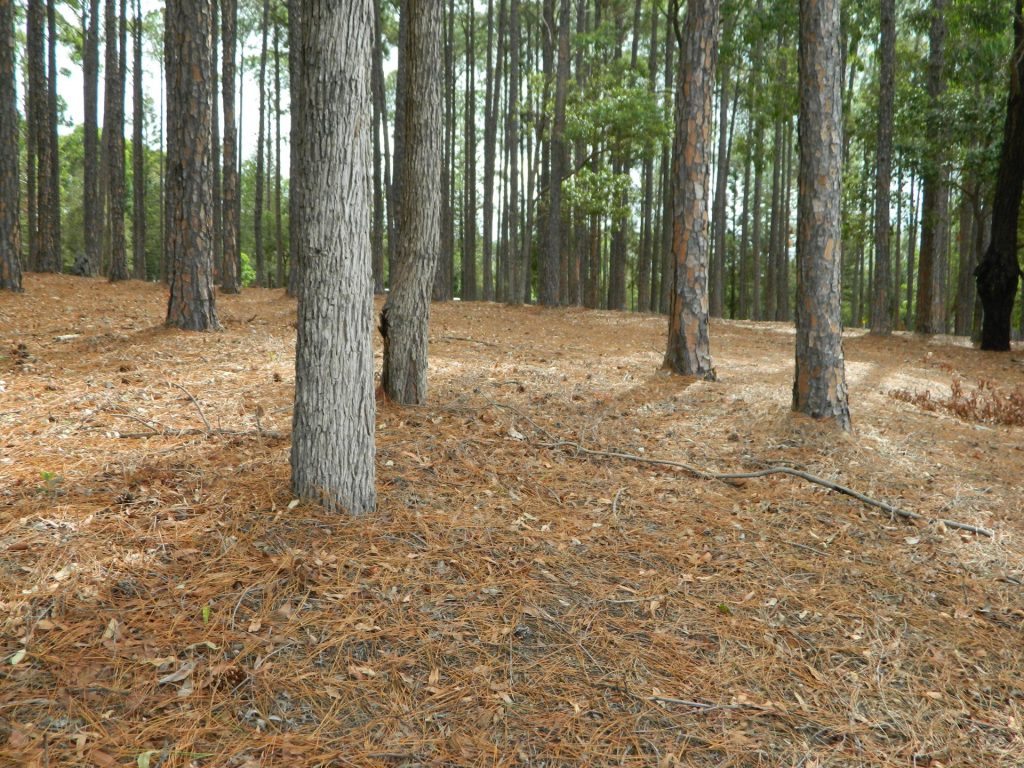
Sheppard is also quick to advise landowners when mulching is not the first step. “I’m a huge advocate of getting a timber crew in there first to get as much of that material out as possible,” he says. “I’m not a wasteful person.”
In many cases, removing merchantable timber before grinding improves both economics and outcomes. Excessive biomass left on the ground can create moisture barriers that prevent fire from carrying effectively. Strategic thinning, on the other hand, reduces competition, generates revenue, and prepares the site for restoration work. That combination improves stand quality and positions the property for stronger long-term value.
Light Management Is Asset Management
If there is a unifying concept behind their work, it is light. “If we get the light on the ground and we get the disturbance,” Pagan explains, “we’re going to get the forbs and grasses that are in that seed bank.”
Light management transforms both habitat and timber performance. Reduced competition allows your best trees to expand crowns and add diameter. Improved understory growth supports wildlife diversity. Healthy stands are more resilient to stress and disease. Over time, that resilience translates into better harvest quality and stronger market value.
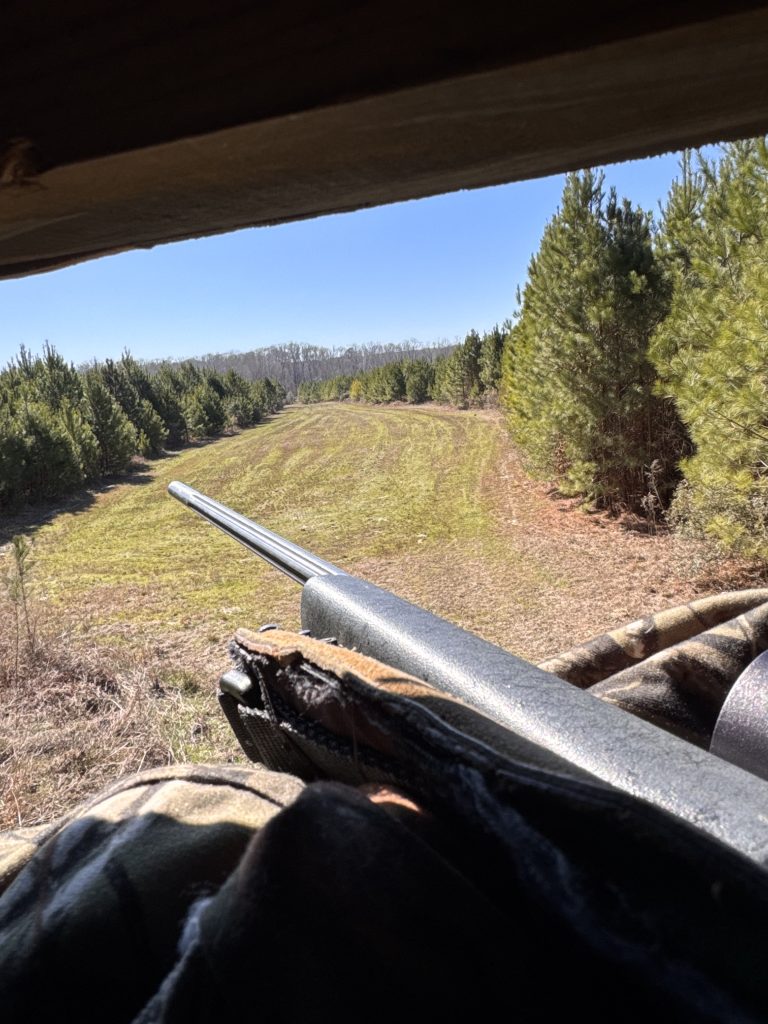
Light management transforms both habitat and timber performance. Reduced competition allows your best trees to expand crowns and add diameter. Improved understory growth supports wildlife diversity. Healthy stands are more resilient to stress and disease. Over time, that resilience translates into better harvest quality and stronger market value. For landowners who view their property as a generational asset, something financed, maintained, and eventually passed down, these improvements matter.
How to Enhance Your Property and Create Income
Many landowners assume that improving wildlife habitat or restoring timber stands is simply an expense they have to absorb if they want better hunting and healthier woods. In reality, there are several ways to offset those costs, and in some cases even create financial returns while improving the property.
One of the most overlooked opportunities comes through federal conservation programs administered by the USDA’s Natural Resources Conservation Service (NRCS). Programs like the Environmental Quality Incentives Program (EQIP) and the Conservation Stewardship Program (CSP) are designed specifically to help landowners implement practices that improve soil health, water quality, timber productivity, and wildlife habitat. Timber stand improvement, early successional habitat development, prescribed fire preparation, and other practices commonly used to improve hunting land often qualify under these programs.
“There’s money out there now,” Pagan explained. “EQIP talks about timber stand improvement, grassland development, early successional habitat development—everything that we’re trying to check off on our farms to get deer, turkey, ducks, and bobwhite.”
In many cases, these programs provide cost-share funding that helps offset the expense of habitat work. Depending on how a project ranks in the program’s scoring system, a landowner may receive partial reimbursement for a practice or, in some cases, have most of the work covered. The challenge, however, is that these programs operate on a competitive application process. Funding cycles can take time, and it may be months or even years before a project moves from application to approval.
In some cases, the wait to get into these programs can take years. For landowners who don’t want to wait on that timeline, financing can provide another path forward. Organizations like First South Farm Credit work closely with rural landowners across the region and offer land improvement loans that can help fund projects such as timber stand improvement, clearing overgrown understory, installing firebreaks, or preparing property for prescribed fire programs. For many landowners, this type of financing becomes a bridge that allows them to move forward with habitat improvements immediately while still pursuing conservation program funding that may reimburse certain practices later, or a bridge to the next timber harvest or lease income.
Viewed through a long-term ownership perspective, these improvements are more than just hunting expenses. Practices that increase sunlight to the forest floor, improve stand health, and restore native vegetation often boost timber productivity and strengthen the overall value of the land. When habitat restoration, timber management, and smart financing come together, conservation stops being just a cost of ownership and becomes part of a strategy that improves both the land and the balance sheet.
Planning Before Spending
Perhaps the most common mistake Pagan and Sheppard see is landowners copying what their neighbor did without understanding whether it fits their own soil and site history. “Not knowing what needed to be there, and looking at their buddies next door and wanting to be the same as they were,” Pagan says.
No two properties are identical. Stand history matters. Soil composition matters. Hydrology matters. What worked on one tract may fail on another just across a fence line. That’s why boots on the ground are essential. A sound plan evaluates what historically belonged there, what exists today, and what the long-term objective is, whether that’s timber revenue, wildlife habitat, or both.
That planning phase protects more than ecological integrity. It protects capital. Restoration without understanding can be expensive. Restoration guided by knowledge improves both the land and the balance sheet.
When It Works
One of the most dramatic examples they described involved a 600-acre reservoir choked with cattail and organic buildup. After mechanical reduction, a carefully timed burn reset the site all the way to mineral soil in places. “When it got done, there was nothing left,” Sheppard recalled. It looked catastrophic at first glance.
The following growing season told a different story. Native moist-soil vegetation flourished. Smartweed and other desirable species returned aggressively. That winter, tens of thousands of ducks used the area. Without the mechanical work and without the fire, the transformation would not have happened.
That’s the essence of conservation that pays. It requires disturbance. It requires planning. It requires investment. But when done correctly, it produces measurable returns, in wildlife density, in timber growth, in income, and in long-term land value.
As Pagan puts it simply, “Do you want to be successful, or do you want to fail?”
When you work with the land instead of against it, you aren’t just improving hunting seasons. You’re clearing the way for healthier forests, stronger timber, and a property that grows more valuable with time.
That’s conservation that truly pays.