

Spend enough time around hunting camps in the South and you start hearing a familiar refrain sometime around July: “I’d try no till if I just had the right equipment.” Usually, that means a larger tractor, a no-till drill, a roller crimper, a bigger sprayer, etc. Even throw and grow food plots, which sound simple on the surface, work best when there is a real plan behind them. Food plotting has quietly taken on the feel of small-scale farming, and that can intimidate landowners who don’t want to buy machinery for a few acres of wildlife forage.
The reality is that you can build productive food plots without a drill, without turning the soil every season, and without owning expensive equipment that spends eleven months of the year parked in a shed. What you cannot skip is planning. No-till without a drill is less about horsepower and more about timing, soil chemistry, species selection, and strategic weed control. If you treat it like a year-round system instead of a last-minute fall project, it becomes not only workable, but repeatable.
For this article, we spoke with soil scientist Nick Ward of Ward Laboratories, wildlife biologist Dr. Grant Woods of GrowningDeer, Auburn University’s Dr. Will Gulsby, seed specialist Caleb Weaver of Southern Seed and Feed, and North Alabama land manager Albert Trousdale. Each approaches food plots from a different angle, but together they outline a clear seasonal blueprint that begins in late winter and runs through fall planting.
February: Soil First, Always
No-till systems rise or fall on soil quality. That makes late winter the real starting point of the season.
Before you buy seed, before you spread fertilizer, before you spray anything, pull soil samples. February and early March are ideal because pressure is low and you have time to respond to what the test tells you. It is also the right time to think through your full list of inputs for the year, including herbicides. In a no-till system, waiting until weeds are already out of control to start looking for product can cost you a narrow weather window.
Nick Ward, who works with thousands of soil samples each year from farmers and wildlife managers across the country, is direct about it. “Mainly when people want to get a soil test, they’re wanting to grow something better,” he said, “or they’re seeing differences out there.” Either way, it starts with data.
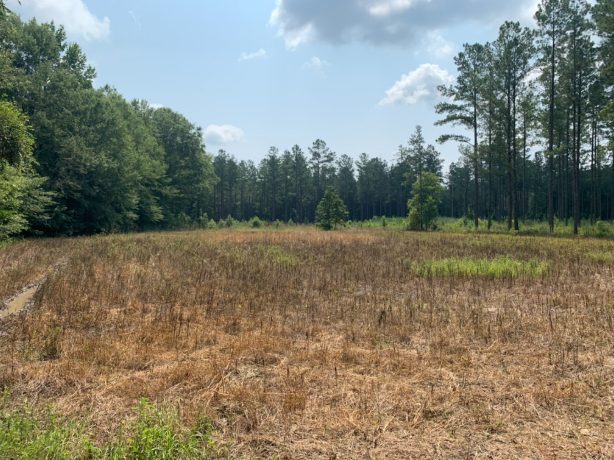
When asked about skipping soil testing altogether, Ward put it plainly: if ten dollars would dramatically increase your odds of success, why wouldn’t you spend it? That ten dollars is your soil test.
Ward emphasizes that in the Southeast, especially, pH is foundational. “pH is one of those big things we always want to focus on,” he explained. If your pH is off, the nutrients you apply may not be available to plants in the first place. You can spend money on fertilizer and still see poor growth because the chemistry is working against you.
Consistency matters as well. “Be consistent,” Ward said. “If you’re going to sample every two years, always try to go with that same period.” Testing at the same time of year allows you to track real changes rather than seasonal fluctuations.
In a no-till system, you are not flipping soil over to mix in amendments. You are building it gradually from the surface down. That makes early lime applications especially important. Agricultural lime can take months to significantly shift pH, so surface applications in late winter give it time to begin working before planting windows open.
Once the soil report is in hand, you know what you’re dealing with. From there, you can order lime, fertilizer, seed, and herbicides intentionally instead of guessing. Planning those purchases early, rather than scrambling in May, is part of making the system work.
March and April: Soil Health and the Role of Disturbance
Early spring is about preparation, but it is also about the philosophy behind making throw and grow food plots work.
Dr. Grant Woods has spent decades studying soil health on his Missouri property known as the Proving Grounds. His conclusions about tillage are firm. “Every time you disc, you have decreased the soil quality. Period. There are no exceptions.”
That statement reframes food plotting. Disking breaks down soil pores created by earthworms and roots, collapses natural channels that allow water infiltration, and accelerates nutrient loss. Woods explains that tillage “breaks down the pores that allow air and water in the soil… And you also break down all the root channels that the previous crop developed.” In short, it resets the biological system you are trying to improve.
Woods often refers to what he calls the “release system,” a model based on native prairie ecology. The principles are straightforward: minimize disturbance, keep living roots in the soil as many days of the year as possible, maintain diversity of plant species, and allow residue to decompose on the surface. Over time, those practices build organic matter and reduce the need for outside inputs.
That does not mean eliminating herbicides altogether. Woods is clear on that point. “I’m not against herbicide. I just want to use it responsibly. I just want to use the least amount I need to get the job done.” In a no-till system, selective herbicides replace steel. They allow you to manage plant communities without disturbing soil structure.
For most landowners, that means having glyphosate available for full vegetation termination when needed, clethodim for grass control in broadleaf plots, and 2,4-DB products such as Butyrac 200 for selective broadleaf weed control in established legumes. These products each play a specific role in the calendar, and they are not always sitting on the shelf at every local retailer, especially outside of peak agricultural season. Because termination windows are often tied to rain forecasts and soil temperature, dependable access matters.
Many landowners choose to source those products ahead of time through suppliers such as Chemical Warehouse, which carries clethodim, Butyrac 200, glyphosate, and other professional-grade inputs and ships directly to your door. Ordering early in the year alongside lime and seed keeps you from missing a narrow spraying window later.
Late April to Early May: Terminate and Choose Seed Species Carefully
As soil temperatures climb into the mid-50s and low-60s, warm-season planting becomes viable.
Termination typically involves a non-selective herbicide application roughly a week before broadcasting seed, especially in a throw and grow food plot system where you are relying on surface seeding instead of tillage. Spraying actively growing vegetation at labeled rates allows the product to translocate into the roots. Rainfall following application helps settle residue and prepare the seedbed. If glyphosate is part of your plan, having it on hand before weeds are mature allows you to act when conditions are right instead of waiting on supply.
Species selection at this stage matters more than many realize.
Dr. Will Gulsby of Auburn University has cautioned landowners about confusing cereal rye with annual ryegrass. “Cereal rye is a great food plot planting,” he explained, “but it is not to be confused with annual ryegrass.” The latter is a prolific reseeder that can quickly dominate plots if allowed to bolt and set seed.
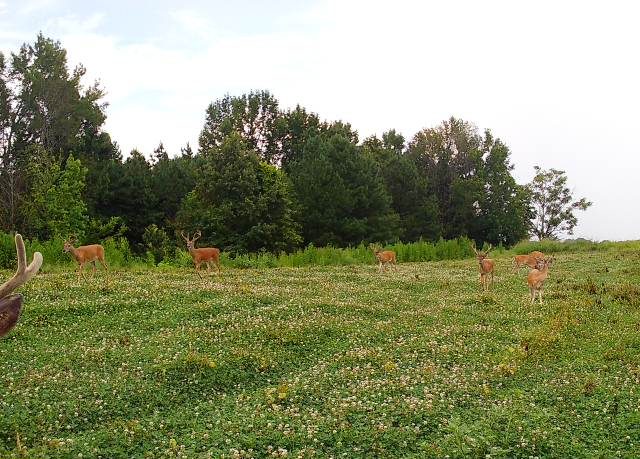
Annual ryegrass is easy to grow and often included in blends. It germinates readily and provides green forage. But because it produces abundant seed, it can return aggressively year after year. In no-till systems, where soil is not disturbed, the reseeding potential can create long-term competition issues.
If your goal is to establish warm-season legumes such as jointvetch and alyceclover, reducing grass pressure is critical. Clethodim becomes especially useful here because it targets grasses while leaving legumes like clover unharmed. Selective grass herbicides are one of the quiet workhorses of no-till systems, and sourcing them ahead of time ensures you can respond quickly if grass competition surges.
Jointvetch and alyceclover both establish well when broadcast ahead of a reliable rain. Firm seed-to-soil contact is important, but deep burial is not. In the absence of a drill, lightly rolling or driving over the field with an ATV can be sufficient.
June Through August: Clover, Nutrition, and Carrying Capacity
By early summer, the system shifts into management mode.
Albert Trousdale, who manages property in North Alabama’s red clay soils, approaches food plots through the lens of deer nutrition and carrying capacity. He often references the “three-legged stool” of age, genetics, and nutrition. Of those, nutrition is the leg landowners can influence most directly.
“If the deer is as healthy as he can be,” Trousdale said, “you’re going to get the best expression of his antler growth.” In his experience, protein availability and overall body condition directly affect antler development.
Clover plays a central role in his strategy. Initially intimidated by clover management, Trousdale now considers it one of the most reliable and manageable forages on his property. Clover is high in protein, attractive to both deer and turkeys, and capable of persisting with proper weed control and pH management.
Managing clover in a no-till system requires attention to competition. Warm-season grasses can surge in summer heat. Clethodim applications at labeled rates help suppress those grasses without harming the clover. Later, if unwanted broadleaf weeds begin to encroach, Butyrac 200 can be used selectively in legume plots. These are not one-size-fits-all products; they are targeted tools, and having access to the right formulation and size makes management more efficient for small acreage landowners.
This approach does more than protect a single crop. By maintaining productive legumes through summer, you support carrying capacity without repeatedly resetting the field.
July: Assess and Think Ahead
Caleb Weaver of Southern Seed and Feed encourages landowners to assess goals before buying seed. “The first thing to do is just get out there and look at it,” he said. Evaluate weed pressure, soil conditions, and equipment limitations. Your blend should match your property and your objectives.
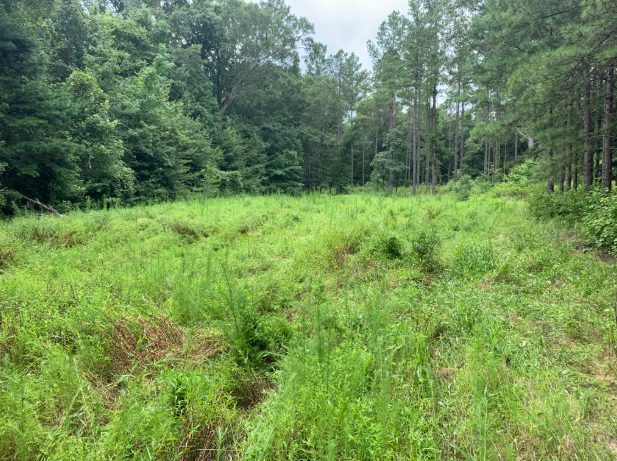
This is also the time to review your herbicide inventory. If fall termination or selective control is part of the plan, especially for throw and grow food plots, sourcing products before hunting season crowds and supply constraints tighten can prevent delays.
September and October: Plant by Conditions, Not Tradition
As summer gives way to fall, many landowners circle dates on a calendar. Both Woods and Weaver caution against that approach.
“Don’t plant by date on the calendar,” Woods has said. “Plant by weather and soil conditions.” Soil temperature and moisture drive germination, not tradition.
When soil temperatures fall into the 60-degree range and adequate rainfall is forecast, cool-season blends can be broadcast into terminated summer vegetation or standing thatch. That residue layer protects seed, conserves moisture, and feeds soil microbes as it decomposes.
Caleb Weaver emphasizes building blends with intention. Small grains such as cereal rye, wheat, and oats provide early forage. Clovers extend production into late spring and contribute nitrogen. Brassicas can add late-season attraction. The right mix depends on your soil test and your goals.
Fertilizer applications should follow soil test recommendations. This is especially important with throw and grow food plots, where seed is broadcast without tilling fertilizer or amendments deeply into the soil. Legumes require little additional nitrogen, while small grains benefit from it. Precision based on testing is far more effective than blanket applications.
Why the System Holds Together
No-till without a drill works because it aligns with natural processes rather than fighting them. Soil structure is preserved. Living roots feed microbial communities. Residue protects the surface. Selective herbicides manage competition without repeated disturbance.
It is not equipment that makes the system successful. It is the calendar. Soil testing in late winter. Input planning in early spring. Timely termination ahead of rain. Strategic grass and broadleaf control in summer. Fall planting based on soil temperature and moisture.