
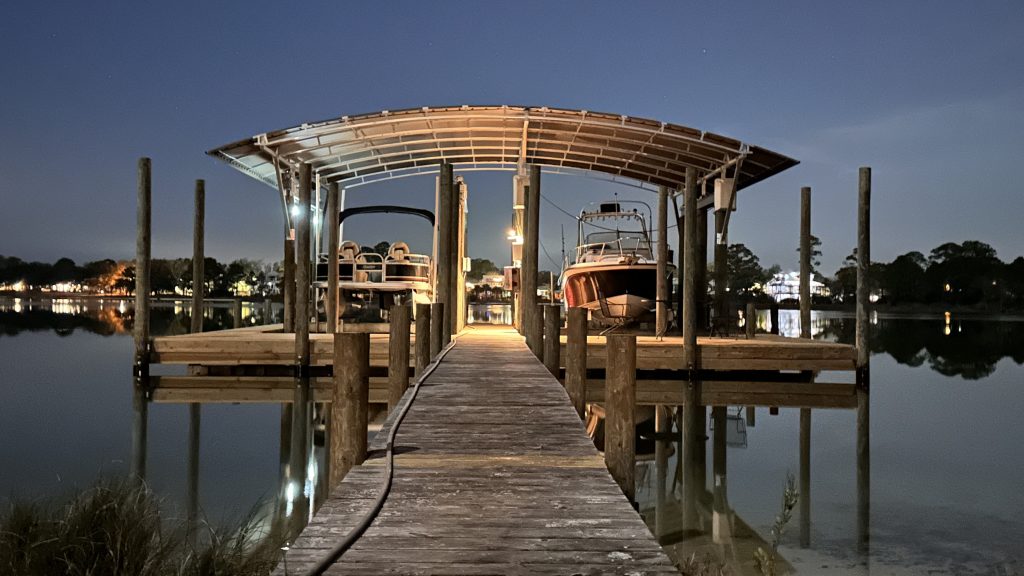
Every boat owner has the same dream: walk onto the dock, drop the lift, and go. No scrubbing bird droppings, no peeling back a humid cockpit cover, and no baking in the sun while you prep the engine. With the right boat lift cover, you just want it clean, dry, and ready for the water.
But when you actually start looking at covering a lift, things get complicated fast. Will the frame clear your pilings? Can you cover two slips without it looking like a giant, sagging eyesore? Does it look like a professional addition to your home, or just a glorified tarp tied down with hope?
Marcus Rimmer was wrestling with these exact questions at his place in Pensacola, FL. After adding a second lift for his pontoon, the last thing he wanted was to keep the boat on a trailer. Living on the water is all about convenience, after all.
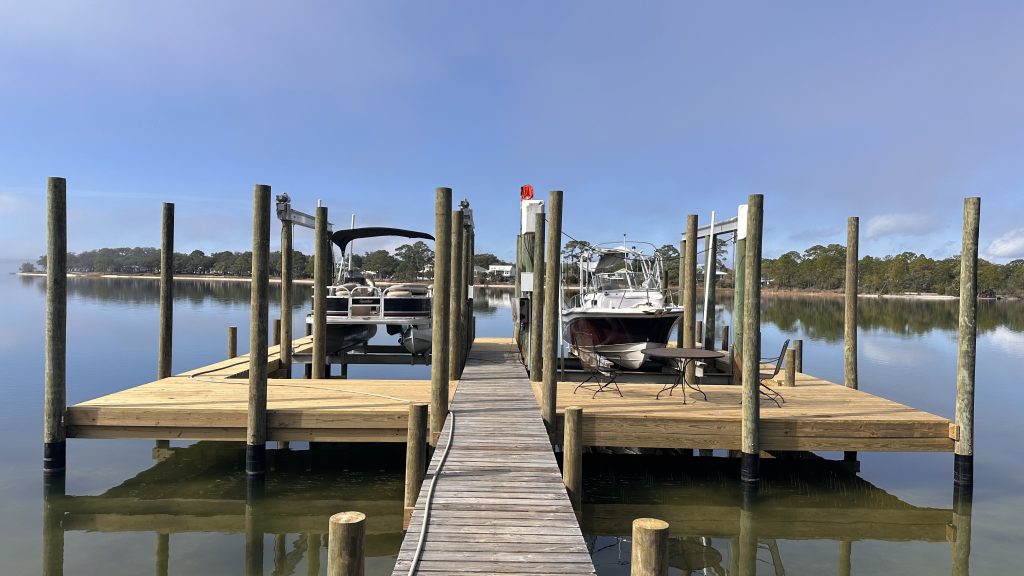
“We live on the water, so obviously I didn’t want to have to keep it on a trailer,” Marcus told me. “I wanted to get that second lift working for us.”
As he started digging into his options, Marcus took a hard look at the layout of his pilings and the overall vibe of his dock. He wasn’t just looking for shade; he wanted something that added value to his property.
Looking Beyond DIY Boat Lift Cover Kits
His first stop was the budget-friendly DIY kits. On paper, the price was great. But once he saw the finished product on other docks, he couldn’t pull the trigger.
“It honestly didn’t really look that good,” Marcus admitted. “It didn’t have any custom class to it. It was just a big, clunky frame with a huge tarp that started sagging almost immediately.”
He wanted a ‘finished’ look—something that felt like it was part of the original dock design. That search for quality eventually led him to SlipSki.
The first big hurdle? The size. Marcus had a dual-slip setup and really wanted a single, universal canopy to cover the whole thing. Most companies he called backed away from a project that large.
“I kept asking, ‘Do I need two separate covers or can I get one that goes over both?’ I knew the single cover would look better, but I couldn’t find anyone who would actually build it that big,” he said.
A Custom Boat Lift Cover Built for the Dock
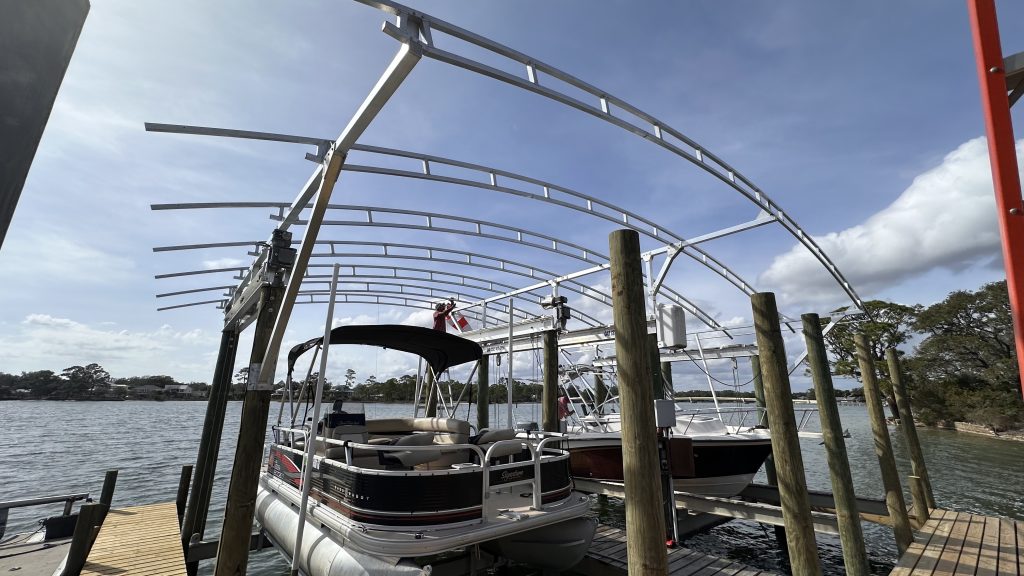
Enter the SlipSki Oasis. Not only did they say they could do it, but the process wasn’t just ‘add to cart.’ It was a collaborative design phase involving photos, Google Maps views, and plenty of measurements.
Marcus went all-in on the prep work. He hopped in a kayak to get 360-degree shots of the dock, measured the pilings from every angle, and sent it all over to the design team. He wanted to make sure the cover worked around his specific lift equipment and clearances.
When the drawings came back, they went back and forth until everything looked perfect. This wasn’t a ‘one size fits most’ situation; it was built for his Pensacola dock. The real test, of course, was whether all those measurements would actually translate to the real world.
On installation day, Marcus watched as the crew put the frame together. “Everything fit like a glove,” he told me. “I was really, really impressed with how it came together.”
Before landing on SlipSki, he’d even considered a traditional framed roof. While those look great, they come with a massive price tag and a nightmare of permitting. In his area, permanent roofs are often rejected because they shade the seagrass too much.

SlipSki offered the perfect middle ground. It wasn’t a cheap DIY kit, but it wasn’t a $30,000 construction project either. Plus, the team handled the permitting for him, which saved a lot of headaches.
Of course, there are trade-offs. Fabric isn’t forever. Marcus knows he’ll likely need to refresh the canopy in about seven years. And when the Gulf Coast winds start howling above 70 mph, that fabric needs to come down to stay safe.
“The canopies need to come down if a major storm rolls through,” Marcus noted. “It’s a compromise, but one I’m willing to make for the look and the protection.”
Now that the dust has settled, the value is obvious every time he heads out to the dock. The boat stays clean, the upholstery stays cool, and the ‘friction’ of getting on the water is gone.
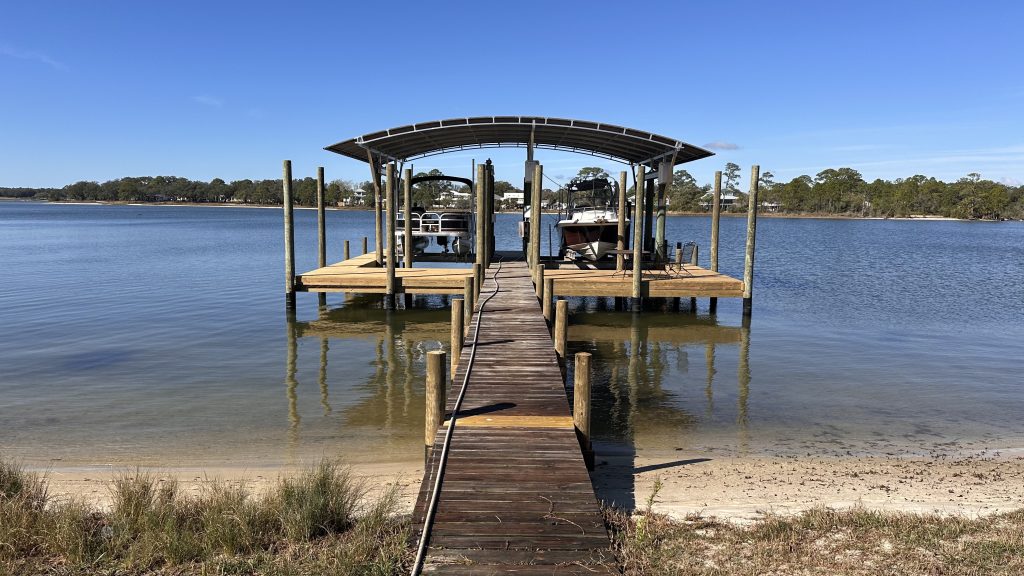
“Now I just walk out, lower it, hop in, and enjoy the day,” he said. “When I’m done, I raise it up, rinse the engine, and walk away. It stays dry and it stays clean. It’s that simple.”
Ultimately, Marcus’s experience proves that a good boat lift cover isn’t just something you buy—it’s something you plan. The success of the project came down to that early legwork: the kayak photos, the precise measurements, and a team that actually listened to his questions.