
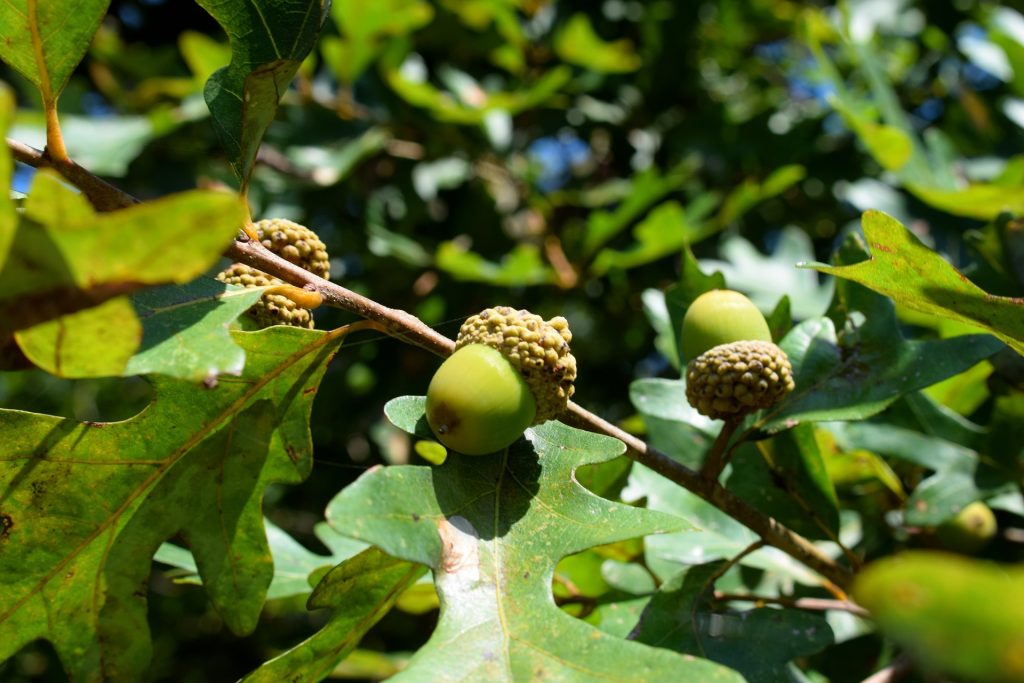
Every deer hunter knows the feeling of finding a good white oak in the fall. The ground is littered with fresh acorns, the leaves are opened up enough to see, and the trails around the tree look like cattle paths. For a few weeks, that one tree can feel like the center of the whole property. Deer know it. Turkeys know it. Squirrels know it. And if you hunt long enough, you start to know it too. That is why some hunters start wondering whether oak tree fertilizer could help make those good trees even better.
Many hunters think about acorns almost like a food plot they did not have to plant. When the mast crop is good, deer can shift their whole pattern around it. When the mast crop is poor, a stand that looked perfect in September may go dead by late October. It is also why some hunters have wondered if they can fertilize oak trees the same way they fertilize clover, corn, or soybeans. If a little fertilizer helps a food plot, surely it ought to help a white oak pump out more acorns, right?
Not exactly.
According to Dr. Richard Cristan, an associate professor and Extension specialist with Auburn University’s College of Forestry, Wildlife and Environment, most Southern landowners are better off thinking less about oak tree fertilizer and more about reducing competition around the best mast-producing trees they already have. The practice is called crop tree release, and for hunters trying to improve deer habitat in hardwood stands, it may be one of the most practical tools available.
The idea is simple. Instead of feeding an oak tree with fertilizer, you give it more sunlight, water, and growing space by killing or removing the lower-value trees that are crowding it. When done correctly, that oak can grow a larger crown, put more energy into growth, and potentially produce more acorns in the years ahead. At the same time, opening the canopy allows sunlight to reach the forest floor, which can wake up the understory and create more natural deer browse.
Pretty Woods Are Not Always Productive Woods
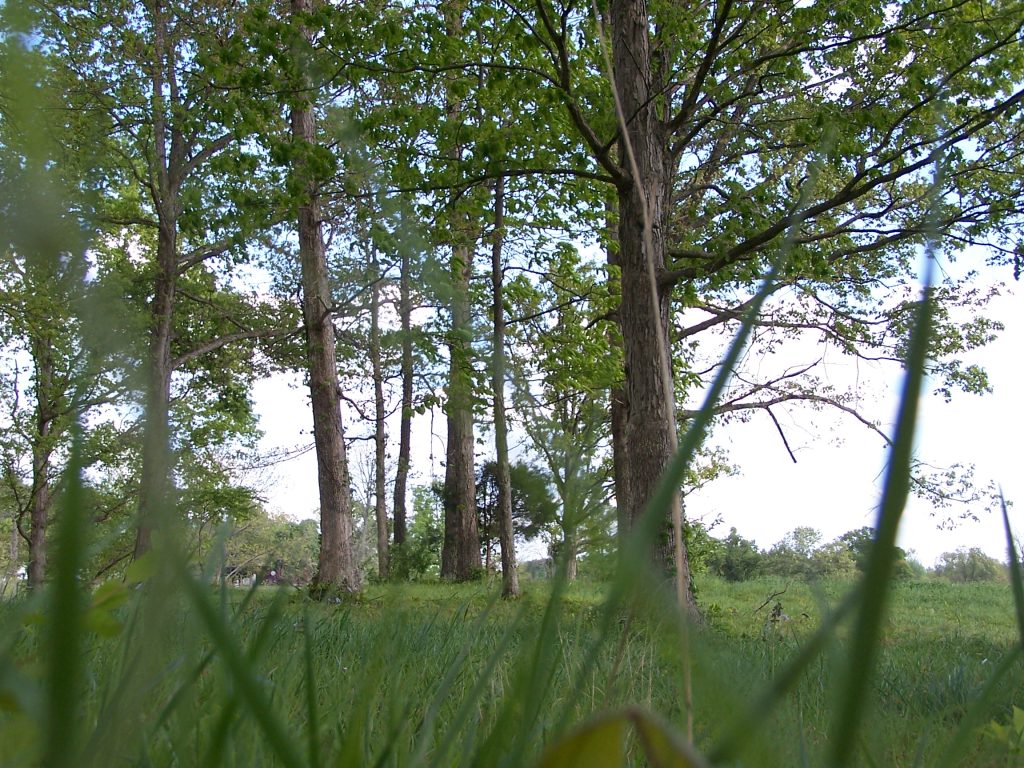
A lot of hunters love the look of an open hardwood stand. You can see a long way. The big trees make it feel mature and wild. There is not much brush to fight through, and it looks like the kind of place where a buck ought to slip through at any minute. Sometimes that happens, especially when acorns are falling. But once the acorns are gone, many of those pretty hardwood stands turn quiet.
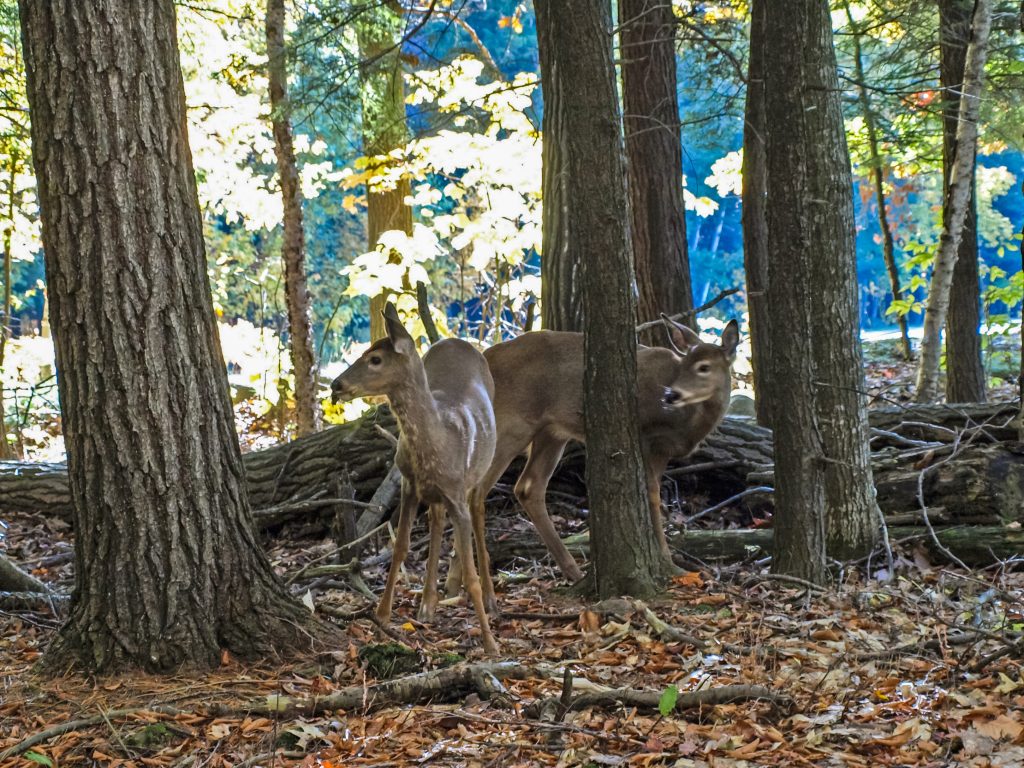
The reason is simple: there is not much there for deer to eat or hide in. A closed canopy blocks sunlight from reaching the ground, and without sunlight, the understory stays thin. Oak tree fertilizer will not fix that problem if the real issue is a lack of sunlight and growing space. That may make the woods easy to walk through, but it does not do much for deer, turkeys, or other wildlife that need low-growing food and cover.
Dr. Cristan explained that the same basic principle applies in both pine and hardwood stands. When there are too many trees competing for light, very little grows underneath. In a dense pine plantation, the forest floor may be little more than pine needles after the canopy closes. In a hardwood stand, the same thing can happen under oaks, hickories, sweet gums, maples, and other trees.
“When you don’t have the sunlight coming down, you’re going to have pretty much a bare understory,” Cristan said.
That bare understory may still produce a burst of deer activity when acorns are dropping, but it will not hold deer the same way a stand with food, cover, and mast can. That is where timber stand improvement, or forest stand improvement, starts to overlap with wildlife management.
What Crop Tree Release Actually Means
Crop tree release is a targeted timber stand improvement practice. Instead of treating the whole stand the same way, the landowner picks the best trees and reduces the competition around them.
For a deer hunter, the “crop tree” is often a white oak, red oak, swamp chestnut oak, water oak, hickory, or another hard-mast tree that provides wildlife value. The goal is not necessarily to clear-cut around that tree. The goal is to look up into the canopy, see which neighboring trees are crowding the crown of the oak, and remove just enough competition to let that oak expand.
Cristan said the landowner should look at the crown of the tree and think about where it needs room to grow. If the oak is crowded on all sides by sweet gum, red maple, lower-value hardwoods, or even other trees that are not part of the landowner’s goal, those competitors can be removed or killed so the oak has more room. The key is balance. Too little release will not do much. Too much release can create problems of its own.
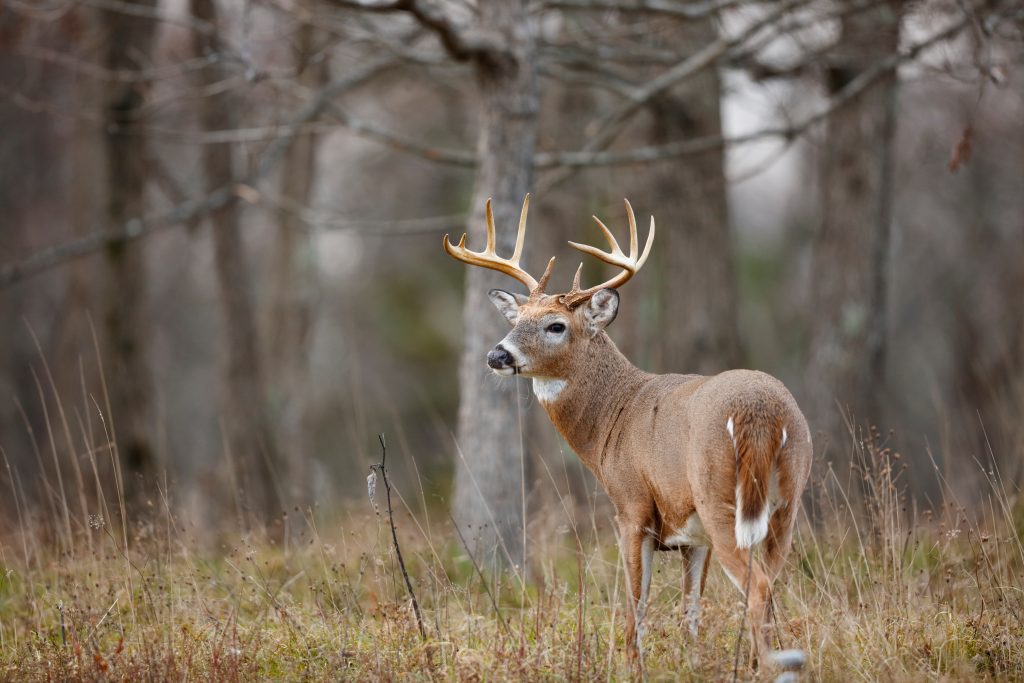
“You want to remove just enough to get enough sunlight around that tree,” Cristan said. “You want to do at least three sides of that tree, if not all four.” But he also warned against going too far. If an oak suddenly gets too much sunlight, it may start producing lower limbs along the trunk, known as epicormic branching. That can hurt future timber value because clean, straight wood is worth more than a trunk full of large limbs and knots. Too much sudden sunlight can also shift energy into unwanted branching instead of the kind of crown development a landowner is trying to encourage.
That is why crop tree release is not the same as simply cutting everything in a big circle around every oak. It is a thoughtful practice. You are giving the tree room to grow, but not turning it into a yard tree in the middle of the woods.
You Do Not Always Need Big Equipment
One of the reasons crop tree release is attractive for hunters is that it can be done on a small scale. A landowner does not always need a logging crew, skidder, mulcher, or dozer to start improving a hardwood stand.
Cristan said landowners can use hand methods like hack-and-squirt, girdle-and-squirt, cut-stump treatment, and basal bark treatment to kill selected trees. These methods are especially useful when the goal is not to harvest merchantable timber, but to release better trees and improve habitat.
Hack-and-squirt is one of the simplest methods. The landowner uses a hatchet to make a downward cut into the bark and cambium of the unwanted tree, then sprays a small amount of herbicide into the cut. It is usually done around chest height because that is easy and comfortable to reach. The herbicide moves into the tree and kills it while leaving the stem standing.
For larger trees, girdling may be a better option. With a chainsaw, the landowner cuts around the circumference tree to interrupt the flow of water and nutrients. Cristan said two girdle cuts are usually better than one, and herbicide can be added to make the treatment more effective.
Cut-stump treatment is another option. The tree is cut down, and herbicide is applied to the stump almost immediately. That last part matters. If you cut a sweet gum or other hardwood and do not treat it, you may get a flush of sprouts from the stump or root system. Instead of one unwanted tree, you may create a thicket of new stems.
That sprouting is not always bad for deer browse, but it can be bad if the goal is to reduce competition around a mast tree. If the stump simply resprouts and grows back into the same canopy space, the oak did not really get released for long.
Herbicide Is Often What Makes the Practice Work
A lot of landowners are comfortable with chainsaws but nervous about herbicide, especially around oak trees. That caution is healthy. Used correctly, herbicides are valuable tools. Used carelessly, they can damage the very trees a hunter is trying to improve.
Cristan said herbicide is often the best route because it can kill the unwanted tree all the way to the root. Mechanical removal alone is expensive, labor-heavy, and not always practical. Simply cutting a hardwood may lead to aggressive resprouting. Herbicide helps make the treatment stick, but product choice matters.
Imazapyr is widely used in forestry, especially in site preparation after clear-cuts, but Cristan warned that it is probably not the herbicide he would choose around oak trees. The reason is soil activity. Imazapyr can remain active in the soil and be taken up by the roots of nearby trees, including oaks. If you are trying to save and release an oak, that is a serious risk.
“If I’m doing a treatment around oak trees, I’m probably not going to select an imazapyr herbicide,” Cristan said.

Triclopyr is often a better fit for hardwood competition control around desirable trees because it is more selective toward broadleaf plants and is commonly used in hack-and-squirt, cut-stump, and basal bark applications. Cristan also mentioned glyphosate as another option in certain situations. Glyphosate is non-selective, meaning it can injure or kill many kinds of plants if applied to their leaves, but it is not soil active in the same way imazapyr is.
The takeaway is not that one product is always right. The takeaway is that landowners need to match the herbicide to the job, the target species, the application method, and the trees they want to keep.
Read the Label, Then Read It Again
Cristan was clear on one point: the label is the law. That may sound like standard herbicide advice, but it is especially important in the woods. Rates, timing, application method, target species, and safety requirements all matter. A product that works well for one forestry job may be a bad choice for another. A herbicide that is safe when applied to a cut stump may not be safe as a broadcast spray near desirable hardwoods.
Cristan said he gets calls from landowners every year after something has gone wrong. They sprayed a product, waited a few months, and then started seeing oak trees decline. When he asks what herbicide they used, the problem often traces back to the wrong product, the wrong method, or a misunderstanding of soil activity.
That is why hunters should slow down before they start spraying. Know the tree species you are targeting. Know the trees you are trying to protect. Know whether the herbicide is soil active. Know whether rain could move it. Know whether wind could cause drift. Know whether the product is labeled for the application you have in mind.
Weather matters too. Spraying because “this is the only afternoon I have” can be a mistake if the wind is wrong or heavy rain is coming. Drift can injure nearby trees, and runoff can move herbicide where it was not intended to go. A careful treatment on the right day is much better than a rushed treatment on the wrong day.
Why Hunters Should Think Twice Before Selling Every Tree
One of the questions many landowners face is whether to wait for a timber harvest or go ahead and kill low-value competitors by hand. That depends on the tree, the market, the property, and the landowner’s goals. It also depends on whether the real issue is something oak tree fertilizer can help with, or whether the better move is reducing competition around the trees that already have the most value.
A small sweet gum crowding a good white oak may not be worth much. In many cases, it may only have pulpwood value, and sometimes not enough value to justify waiting on a commercial operation. If that tree is holding back a mast producer, killing it may provide more long-term value to the hunter than waiting years to maybe sell it.
That does not mean timber value should be ignored. Clint Flowers, co-host of the Huntin’ Land podcast and a land professional with a forestry background, pointed out that some trees hunters call “junk trees” may have played a useful role earlier in the stand’s life. Sweet gums and other fast-growing trees can act as “trainer trees,” forcing oaks to grow taller and straighter as they compete for sunlight. Without that competition, an oak in the open may grow short and wide, which can be great for shade and acorns but poor for timber value.
At some point, though, those trainer trees may have done their job. When they begin suppressing the better trees, it may be time to remove them.
Work in Manageable Pieces
One of the best things about crop tree release is that it does not have to be done all at once. A hunter can start with a small area, learn the process, and expand over time. That may mean releasing the best oaks around a favorite stand instead of trying to fix the problem with oak tree fertilizer. It may mean working a half-acre or acre at a time. It may mean focusing on a ridge, bottom, travel corridor, or transition area where mast production and browse could improve hunting the most.
Trying to treat 40 acres of hardwoods by hand can feel overwhelming. Treating the 10 best oaks around a stand site is realistic. Over time, those small improvements add up.
There are also cost-share programs and professional crews that can help with larger projects. Programs through NRCS, EQIP, CSP, and other conservation efforts may help landowners pay for habitat work, depending on the property and current program availability. A consulting forester, wildlife biologist, Extension agent, or Forestry Commission forester can help a landowner figure out what is realistic.
The important thing is to avoid paralysis. Many landowners do nothing because they are afraid of doing the wrong thing. That caution makes sense, especially around valuable hardwoods. But with professional guidance and a small starting area, crop tree release is a manageable way to begin improving a stand.
Finding the Right Herbicide
The hard part is not always knowing what to do. Sometimes it is finding the right product for the job. Local stores may carry basic weed killers or oak tree fertilizer, but they may not stock the forestry herbicides or application supplies used for hack-and-squirt, cut-stump, or basal bark treatments.
That is where a supplier like Chemical Warehouse can be useful, especially for landowners looking for products such as triclopyr, glyphosate, dyes, surfactants, or other habitat-management supplies. Just remember that convenience does not replace caution. Read the label, match the product to the job, use the correct rate and application method, and be especially careful around the mast trees you are trying to improve.
Get Professional Eyes on the Property
Every tract is different. A hardwood bottom in Alabama is not the same as an upland pine stand, a mixed pine-hardwood ridge, a longleaf restoration site, or an old field that grew up into sweetgum. Even within the same property, one stand may need thinning, another may need burning, another may need crop tree release, and another may need to be left alone for now. In some cases, oak tree fertilizer may not be the issue at all because the real need is better sunlight, spacing, and stand management.
That is why Cristan recommended starting with professional guidance. Extension agents, state forestry professionals, NRCS staff, consulting foresters, and wildlife biologists can all help landowners understand what they are looking at. In Alabama, Cristan recommended working with a registered forester when timber management is part of the decision.

A good professional will not simply tell a landowner to cut timber. They should help match the work to the goal. If the goal is maximum timber revenue, that leads to one plan. If the goal is better deer hunting with some timber income, that leads to another. If the goal is mast production, understory browse, aesthetics, and long-term property value, the plan may be different again.
For most hunting landowners, the answer is usually somewhere in the middle. They want the woods to be healthy. They want deer and turkeys. They want some timber value. They want the place to look good. They want to enjoy it now and leave it better than they found it.
Crop tree release fits that mindset because it does not ask a landowner to choose between trees and wildlife. Done correctly, it uses good forestry to create better wildlife habitat.
Better Acorns Start With Better Decisions
Fertilizing oak trees sounds simple, but in most Southern hardwood stands, it is probably not the best first move. The better question is whether your best mast trees have room to grow.
If a good white oak is crowded on every side, boxed in by sweet gum, red maple, or other competing trees, fertilizer is not going to solve the real problem. That oak needs light. It needs crown space. It needs less competition for water and nutrients in the soil. Release it properly, and it has a better chance to grow a bigger crown, produce more mast over time, and help anchor deer movement on your property.
The same work can also bring sunlight to the ground, which helps create the low-growing browse and cover that deer and turkeys use when acorns are not falling. That is where the practice becomes more than an acorn trick. It becomes a real habitat improvement.
A hatchet, a good applicator bottle, the right herbicide, and a careful plan can do a lot of work in the hands of a patient landowner. The woods may not look dramatically different the next morning, but over time, those released oaks can become stronger mast producers, the forest floor can become more useful to wildlife, and the stand can become more than just pretty trees.
For hunters, that is the point. Oak tree fertilizer may sound like the simple fix, but a beautiful hardwood stand with mast, browse, cover, and deer using it all season is even better.