
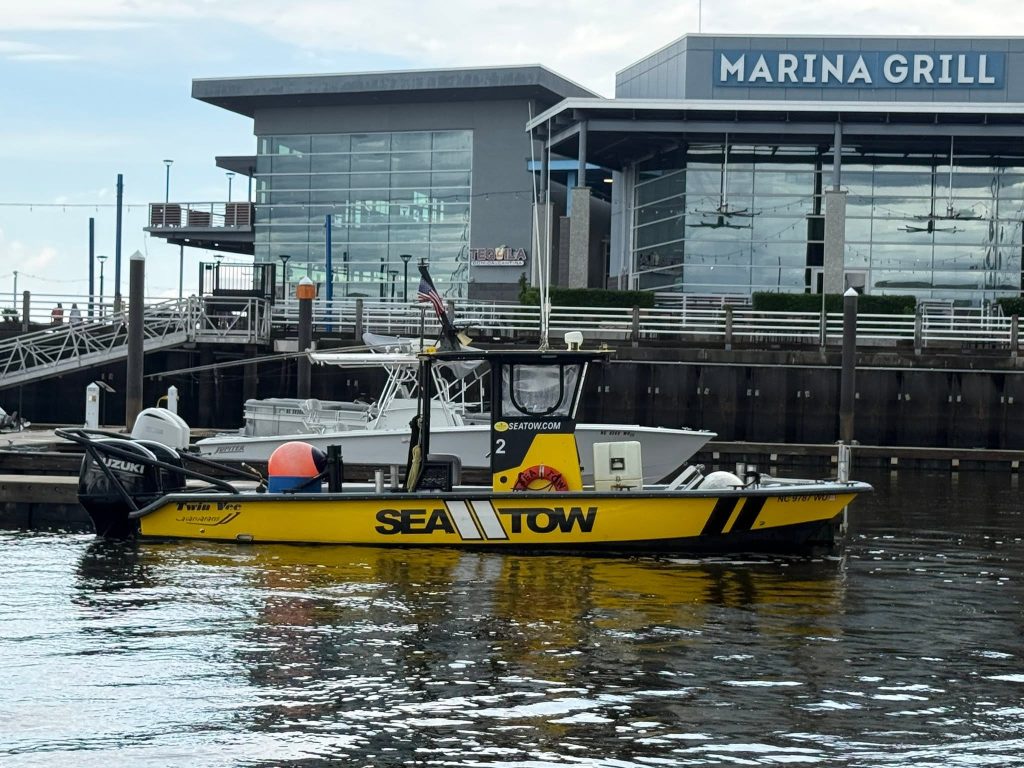
Breaking down on the water is a different kind of helplessness. On the road, you can usually pull onto the shoulder, turn on your hazard lights, and wait for professional help to reach you. On the water, there is rarely a shoulder to rely on. There may be wind pushing your vessel toward a dock, an oyster bar, a grass flat, a jagged rock jetty, or an inlet. There may be children on board, storms building on the horizon, daylight fading into evening, heavy boat traffic passing nearby, and no clear idea of how long it will take for someone to find you. That is the specific scenario where professional boat towing assistance becomes vital.
For many boaters, calling for help feels intimidating because they have never actually done it before. They do not know what specific information they need to provide. They do not know who to call first. They do not know exactly what the captain will do when they finally arrive on the scene. They may not even know whether their particular situation is bad enough to warrant making the call at all. According to Captain Ryan Saporito, the General Manager of Sea Tow Wrightsville Beach and Sea Tow Crystal Coast, the process is usually a lot more straightforward than people imagine. Saporito spent twenty-two years in the United States Coast Guard before joining the Sea Tow team, where he has now worked for more than twelve years. He has spent the vast majority of his professional career helping people on the water, first in search and rescue operations and now in marine assistance and towing. The biggest message he wants boaters to understand is simple: do not wait too long to ask for help. That single decision can make the entire situation safer, easier, and significantly less stressful for everyone involved.
First, Stop the Situation From Getting Worse
Before you even make the call, your first job is to keep a bad situation from turning into a dangerous one. If your boat loses power, will not start, runs aground, or becomes disabled near a channel, shoreline, inlet, bridge, oyster bed, grass flat, or other hazard, the first move is usually to deploy your anchor if it is safe to do so. Saporito said that is one of the most important things a boater can do. That may sound basic to experienced boaters, but it can make a massive difference in the outcome. A boat that is left to drift can quickly move from a simple mechanical problem into a dangerous rescue situation.
Wind, current, waves, and passing boat wakes can push a disabled boat into rocks, oyster beds, shallow water, marsh grass, or into the path of other marine traffic.
An anchor gives everyone on board a chance to slow down, breathe, and think clearly. Saporito said boaters should know exactly how to use their anchor long before they actually need it. They should also ensure they have an anchor that is the right size for their specific boat. He pointed
out that while an anchor is not always required safety equipment on every vessel, he believes it should be treated like essential gear. From his background in the Coast Guard, Saporito said anchoring is one of the first basic control measures taught for many on-water problems. In recreational boating, however, many people are not taught to think about the anchor in that way. On a disabled boat, the anchor is not just something you use at the sandbar for lunch. It is the vital tool that keeps a manageable problem from turning into a drifting emergency.
How Most Boat Towing Calls Start
Years ago, many boat towing calls came over the VHF radio. That still happens, and a working VHF radio is still an important piece of safety equipment that every boater should have. But Saporito said most calls now come by cell phone. Sea Tow also receives some calls through text message from satellite messaging devices such as the Garmin inReach, which is especially helpful for boaters who are outside of normal cell phone range. Another increasingly common option is the use of the Sea Tow mobile app.

Saporito said since the launch of the redesigned app, his local experience with it has been excellent because it helps speed up one of the most important parts of the entire process: finding the boat. The app allows a boater to request assistance by confirming their boat information and selecting the needed service. The job details are then shared with the local Sea Tow Captain along with their GPS location. That location data will populate into the work order, which helps the dispatcher and the captain know exactly where to go. It’s very user-friendly for the customers to just hit a couple of buttons on there to let the team know what is wrong. From there, the boater must call the local office directly to complete the request, and the dispatcher can send the closest available captain to the location. That location-sharing feature really matters because, on the water, being near the inlet or by the island is often not specific enough for a captain to find you quickly.
The Three Things Dispatch Needs Right Away
When a boater calls for boat towing assistance, the Sea Tow dispatcher starts with the basics. According to Saporito, the first three things they want to know are where you are, what is wrong, and what your boat looks like. That information is important because communications can fail. A phone can die. Service can drop. A boater can get cut off in the middle of a call. If the dispatcher can get those three details early, they can at least start sending help in the right direction. If they lose communication after that, they could still get a captain heading to the right area. The location does not have to be perfect, but the more accurate it is, the faster help can arrive. The best-case scenario is a clear GPS position, a shared location pin, or a request sent through the Sea Tow app. If that is not available, boaters should use nearby markers, dayboards, landmarks, inlets, bridges, marinas, water towers, or other highly visible features.
Saporito said boaters on the Intracoastal Waterway should pay close attention to nearby dayboards and markers. Offshore boaters should know how to read latitude and longitude from their GPS. General landmarks can also help. If a boater says they are near a certain water tower, bridge, inlet, or beach, an experienced local captain can often work from that information. Still, bad location information can create real delays. Saporito gave an example of someone saying they were in one inlet when they were actually somewhere else. The captain searched where the boater said they were, did not find them, called back, and then had to run to the correct location. That kind of confusion can add twenty, thirty, or forty minutes to the response. Accurate information saves time, and for non-members who may be paying by the hour, it can also save money.
What Happens After the Call Comes In
Once the dispatcher has the basic information, they create a work order and assign the closest captain. In busy boating areas, Sea Tow captains may already be patrolling high-traffic zones, especially on weekends. Saporito said his local operation may have four or five boats patrolling their area of responsibility on a weekend. The goal is to reduce response times by keeping captains near the places where boaters most often need help. Members receive priority service, and the closest available captain is usually sent to the scene.
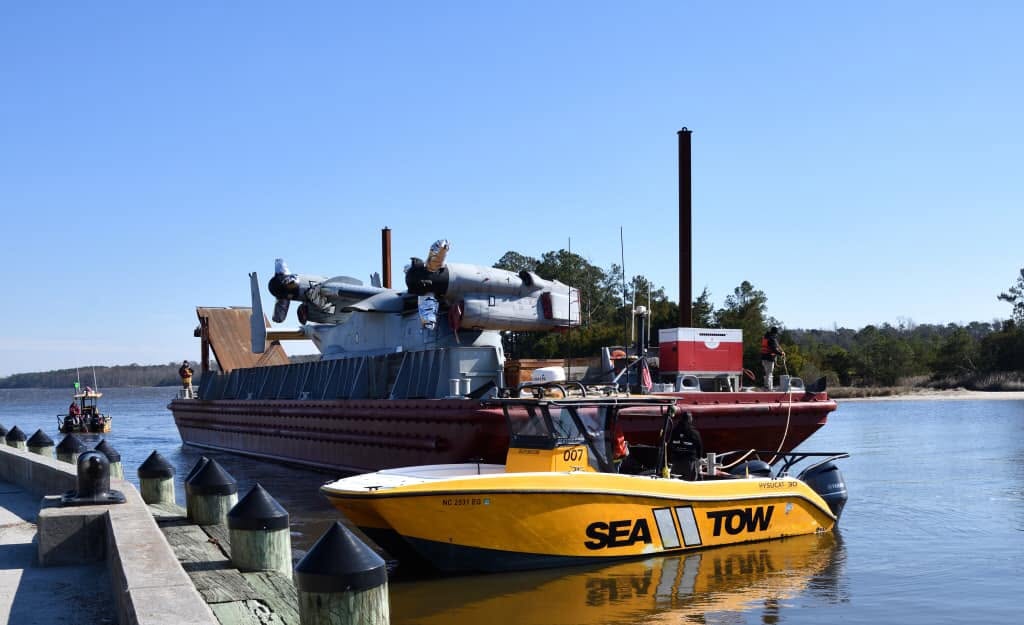
Response time for boat towing assistance depends on several factors. Busy weekends can create a backlog of calls. No-wake zones can slow a response significantly. Boat traffic can delay movement. Weather, distance, and the exact location of the disabled vessel all matter. Saporito said many of their daytime responses are under an hour, and many are under thirty minutes. But every situation is different, which is why the best thing a boater can do is call early, give accurate information, and keep their phone handy.
Sometimes They Can Talk You Through the Problem
One thing many boaters may not realize is that calling for assistance does not always mean the boat will have to be towed. Saporito said that in a fair number of cases, the dispatcher or captain can talk the boater through a simple fix over the phone. It might be a dead battery that is not really dead, a loose connection, a safety kill switch issue, a boat not fully in neutral, or a fuel-related problem. Sea Tow has checklists for common problems, and the captains know the routine. They can ask calm, basic questions that are easy to forget when stress takes over. That matters because boat problems can make even experienced people scatterbrained. Add kids, heat, current, boat traffic, or fading daylight, and it is easy to miss something obvious. Saporito said that is normal. When you are on the boat, you start not thinking of the obvious. A trained voice on the phone can help slow everything down and help troubleshoot. If that gets the boat running, great. If not, help is already on the way.
When to Call Sea Tow and When to Call the Coast Guard
There is an important difference between a disabled boat and a true emergency. Sea Tow is a non-emergency assistance towing company. If the boat is broken down, out of fuel, has a dead battery, is lightly grounded, or needs a tow with no immediate threat to life, that is the kind of call they handle every day. If someone is injured, the boat is taking on water, there is a fire, you are in danger of capsizing, or you believe anyone’s life may be threatened, call 911 or the Coast Guard immediately. Similarly, if your boat is drifting toward rocks, surf, traffic, a bridge, an inlet, or another hazard and you cannot stop it with an anchor, that is no longer just a towing situation. In many cases, boaters may call both the Coast Guard and Sea Tow. But the key is to be honest about the level of danger. A simple breakdown is one thing. A drifting boat with no anchor and a bridge or inlet getting closer is something else entirely.
What to Do While You Wait
Once help is on the way, the best thing to do is to make the boat and passengers safe and easy to find. Make sure the anchor is holding firmly. Make sure everyone is wearing life jackets. Make sure your phone is nearby, charged, and loud enough to hear. If the captain or dispatcher calls for an updated position, answer immediately. Saporito said missed calls can slow everything down, especially at night or when the captain is trying to locate a boat among other vessels and shoreline lights. If you receive a text asking you to share your location, use it. That gives the captain a much better fix on where you are. At night, turn on your navigation lights and keep a lookout. A disabled boat can be hard for other boaters to see, especially in dark channels or busy waterways. Someone on board should be watching for approaching traffic. You can also prepare the boat for towing. Saporito said that, when the water is deep enough, Sea Tow generally wants the motor centered and trimmed all the way down before towing begins. That helps the boat track better behind the tow vessel. But the most important thing is to stay calm and wait for instructions.
What Happens When the Tow Boat Arrives
When the captain arrives, they will assess the situation. They may ask a few more questions. They may try a simple fix one more time, especially if they think the problem might be something that can be solved quickly. If the boat needs to be towed, the captain will explain the next steps. Typically, the tow line is attached to the trailer eye or bow eye at the front of the boat. From there, the tow captain will bring the boat back at a safe speed. The destination depends on the situation. Some boaters need to go back to the ramp where their trailer is waiting. Others need to go to a marina, home dock, or repair facility. The goal is to get the boat and passengers back safely and put the boat somewhere the problem can be handled. For a trailered boat, that may be simple. The tow captain brings the boat back to the ramp, and the owner loads it on the trailer. For a boat kept behind a house, the first tow may only solve the immediate problem by getting the boat back to the dock. Later, when the owner has a trailer available or a repair appointment scheduled, Sea Tow may help move the boat from the home dock to a ramp or repair facility in what is referred to as a dock-to-dock tow. Which is included with membership at no additional cost. Saporito said that is common, especially after weekend breakdowns. The boat may be safe at the dock, but it still has to get fixed.
What Passengers Should Do During the Tow
During the boat towing assistance, passengers should stay seated, calm, and away from the bow. Saporito said Sea Tow’s tow lines are designed not to stretch, but any line under load deserves respect.

People should stay out of the danger zone and listen to the captain’s instructions. The captain may have a specific plan for docking, tying off, or positioning the disabled boat. One common mistake is when people try to guess what the captain wants before he says it. Saporito said customers sometimes start grabbing lines, pulling on things, or tying off in ways that disrupt the captain’s plan. The better move is to wait, listen, and follow directions. Listening to the commands of the captain, the speaker, and just not anticipating what he is going to tell you to do, I think would be the best advice. In other words, you do not have to become part of the tow crew. You just need to stay safe, stay calm, and do what the captain asks.
Do Not Wait Until the Last Minute
One of the worst times to call for help is when a bad situation has already become urgent. Saporito said boaters sometimes wait hours before calling. By then, it may be close to sunset. What could have been handled in daylight now has to be handled in the dark. He also sees boaters wait too long when they are grounded on a sandbar. They may hope the tide, weather, or situation improves on its own. Then a storm starts building, and suddenly many boats need help at once. They get a thunderstorm that is pushing in, and all of a sudden, they have twenty calls for ungroundings. That creates a harder and more dangerous situation for everyone, including the towing crews who are trying to respond around lightning, wind, and rough weather. If you know you are stuck, disabled, or unlikely to make it back safely on your own, do not wait until sunset or until the storm is on top of you. Calling early does not mean you panicked. It means you planned ahead.
How to Be Better Prepared Before You Need Help
The boat towing assistance experience starts before the breakdown ever happens. Have a working anchor and know how to use it. Keep your phone charged and accessible. Carry a VHF radio, especially if you run offshore or in areas with weak cell service. Know how to read your GPS position. Pay attention to channel markers, landmarks, and inlets as you travel. If you have a Sea Tow membership, keep your membership information handy. Saporito recommends downloading the Sea Tow app or saving your digital membership card so dispatch can look you up quickly. That may only save a few minutes, but those minutes matter when you are hot, tired, drifting, anxious, or trying to get home before dark. It also helps to think ahead about where you would want the boat taken if something went wrong. If you trailer your boat, the answer may be the ramp. If you keep your boat in the water, the answer may be your home dock first, then a scheduled tow to a repair facility later. That kind of planning makes a stressful day easier to manage.
The Process Is There to Help You
Nobody wants to call for boat towing assistance. It means the day did not go according to plan. It may mean the fish quit biting, the family beach trip got cut short, or the boat needs a repair you were hoping to avoid. But calling for assistance is not something to be embarrassed about. It is part of boating. Engines fail. Batteries die. Fuel systems clog. Sandbars move. Weather changes. People misjudge tides, currents, and distances. It happens. The important thing is to keep the situation stable, communicate clearly, and call before the problem becomes dangerous. From the moment you call, the process is built around a few simple goals: find you, understand the problem, keep everyone safe, and get the boat back to a place where it can be repaired. That may mean a quick phone fix. It may mean a jump start. It may mean a tow to the ramp. It may mean getting back to your dock and scheduling another move later. Whatever the case, the best thing you can do is stay calm, be clear about where you are, listen to the captain, and ask for help early. Because on the water, a little time and good information can make all the difference.