
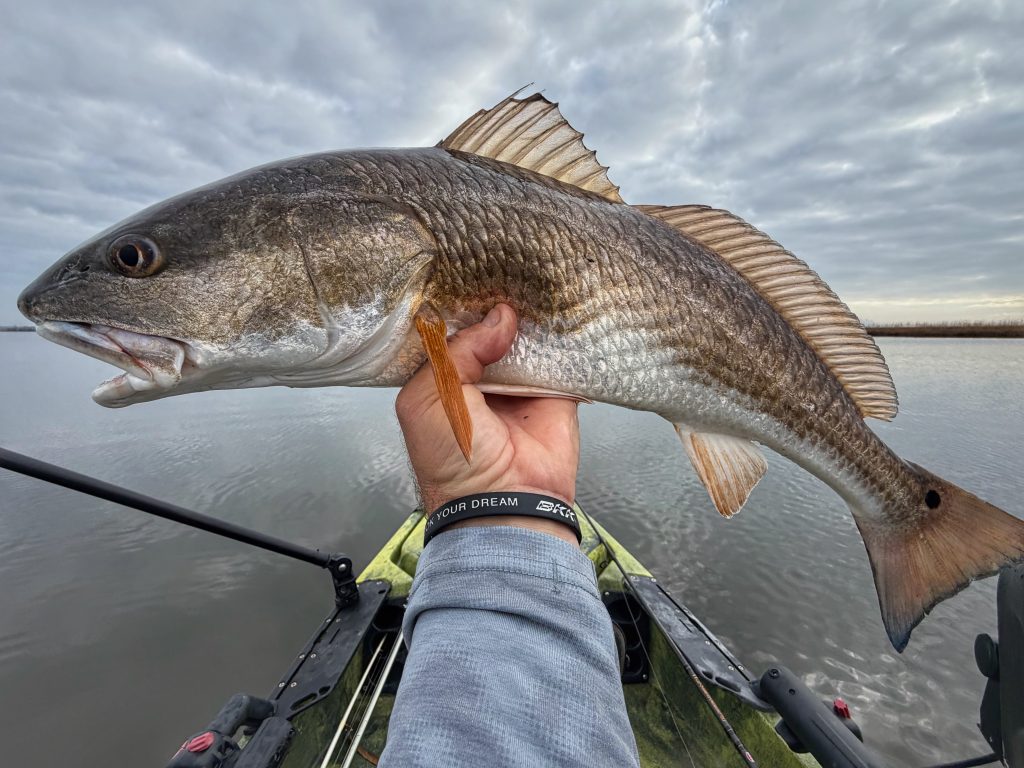
Winter in Northwest Florida has a way of shrinking your options. The wind blows, the water muddies up in the rivers, and the classic, clear, flat bite can feel like it is on pause. That is exactly where chatterbaits for winter redfish belong. When visibility is low, and fish are living tight to cover, you need a lure that fish can find with their lateral line, not just their eyes.
Brandon Barton of Emerald Waters Kayak Charters has been leaning on chatterbaits in the upper river systems for a simple reason. “That thing just makes a lot more noise, a lot more vibration in the water, and it seems to trigger a lot of bites.” In stained water, vibration is not a bonus. It is often the whole deal.
Where to Throw It
The mistake a lot of saltwater anglers make is treating a chatterbait like a deep-water tool. Brandon is fishing it like a bass fisherman would, right in the grass where redfish want to be when the river is dirty. “You’re going to find the area that’s got a lot of grass, and you’re going to throw it up in the grass and kind of rip it through the grass,” he said. That is a winter redfish pattern in one sentence, even if it looks very different from the clear-water setups anglers often associate with sight-fishing winter redfish. Submerged grass edges, little stretches of bank grass that are underwater, and any line where fish can ambush in low visibility are high percentage spots.
What the Bait is Doing for You
If you have thrown gold spoons for reds, the logic will feel familiar. Chatterbaits are just a louder version of the same concept. Brandon put it plainly. “Red fish love vibration. Gold spoons have always been a go-to for red fish.” In muddy water, that thump and flash let the fish locate the lure faster and commit.
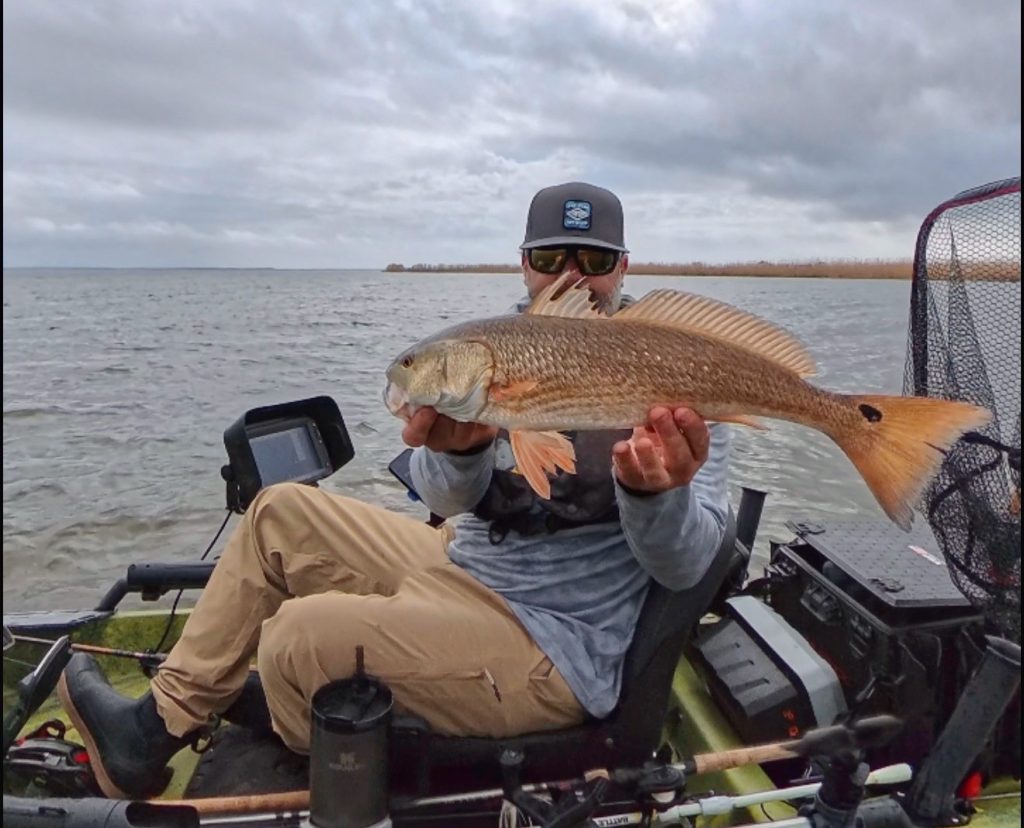
As far as what it is imitating, Brandon keeps it grounded. It has a baitfish profile, but it is really about presence and signal. “It’s just kind of mimicking a bait fish, the profile of bait fish and the movement,” he said, “but it’s got a lot of vibration and a lot of flash with the skirt and the blade.” In dirty river water, that combination is the difference between fishing blind and fishing with a lure that announces itself.
How to Work a Chatterbait Through Submerged Grass
Where chatterbaits really shine is the retrieve. This is not a cast and wind presentation. Brandon is intentionally letting the bait interact with the cover, then using that moment of escape to trigger a reaction. “Letting it fall to the bottom and kind of doing a rip, a lift up to where I feel that vibration,” he said, then letting it drop again. He also described the exact move that triggers bites for a lot of anglers. “Get stuck in the grass, rip it out, let it fall back down, rip it out.” That burst free looks like prey panicking. In winter, when fish may not want to roam far, that is often what gets them to eat.
Trailers and Scent
Trailers matter, mostly for sink rate and how the lure rides through the grass. Paddle tails can slow the fall, straight tails get down faster, and in winter, you are tuning the bait to stay in the strike zone without burying it in vegetation. The best way to think about it is this. You are not just choosing a color. You are choosing how the bait behaves in the grass and how long it lives in front of the fish.

There is also a worthwhile product note here for anglers who care about squeezing every edge they can out of winter fishing. Brandon has been experimenting with Berkley’s saltwater chatterbait, the SlobberKnocker, because it incorporates scent. “Berkley makes a saltwater chatter bait called the slobber knocker that actually has a PowerBait,” he said, noting the skirt material is part of that scented system. Scent is not the main trigger on a chatterbait, and Brandon is honest about that. But if a redfish tracks the lure before committing, he believes scent can be the small nudge that turns a follow into a bite. “If he smells something that smells good, it might just give him a little more edge to bite it.”