
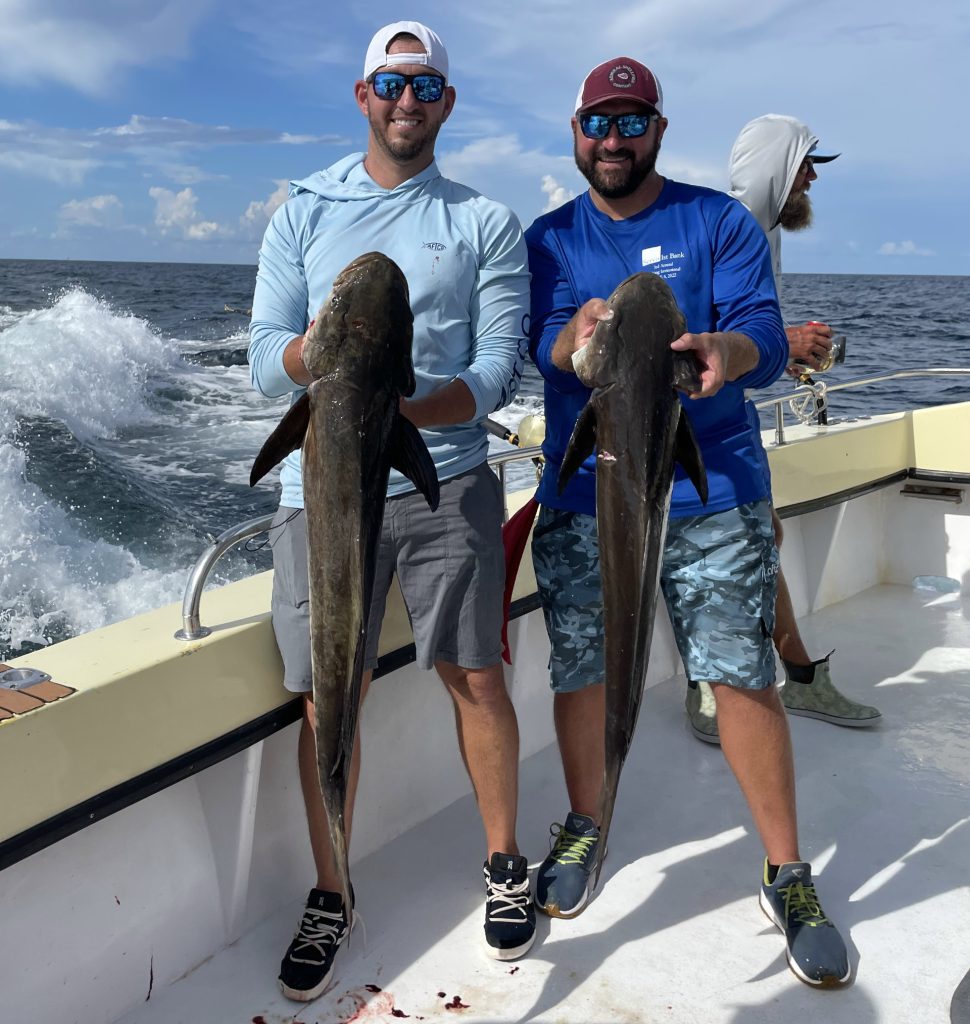
When it comes to targeting trophy fish, few experiences match the thrill of cobia sight fishing. Also known as Black Kingfish, Ling, or Lemonfish, cobia are powerful, pelagic predators found in tropical and warm temperate waters worldwide. While they roam open oceans, they’re often spotted inshore, cruising near beaches, rays, sharks, buoys, debris, or offshore rigs—making them prime targets for sight casting.
Cobia aren’t picky eaters, feeding on everything from squid to hardhead catfish, and are commonly caught in the 30–50 lb range, though giants over 100 lbs aren’t uncommon. Alabama’s state record is a whopping 117.7 lbs, while the world record sits at 135 lbs.
Their mild, steak-like fillets have earned them the nickname “Lemonfish,” and their global range makes them a favorite for both sport and commercial fishing. I spoke with Chesapeake Bay cobia tournament angler Luke Barton and local guide Capt. Richard Rutland of Cold Blooded Fishing to gather their favorite tips and tricks for sight fishing these elusive giants.
Timing The Cobia
Choosing the right time to target a certain species and its movements can be everything, especially with a migratory fish like Cobia. For our area here in coastal Alabama, Capt. Richard says the old timers have a saying surrounding these fish and that generally these fish start showing up around Tax Day (April 15). To Captain Richard, the old timers saying is a good one but the key element to timing the run on these fish is water temperatures.
Capt. Rutland goes on to say that once those water temperatures start creeping up around 66, 68 and 70 degrees is when it really starts to peak his interest and Cobia tournament fisherman Luke Barton says he really feels like these migratory fish are driven by water temperatures.
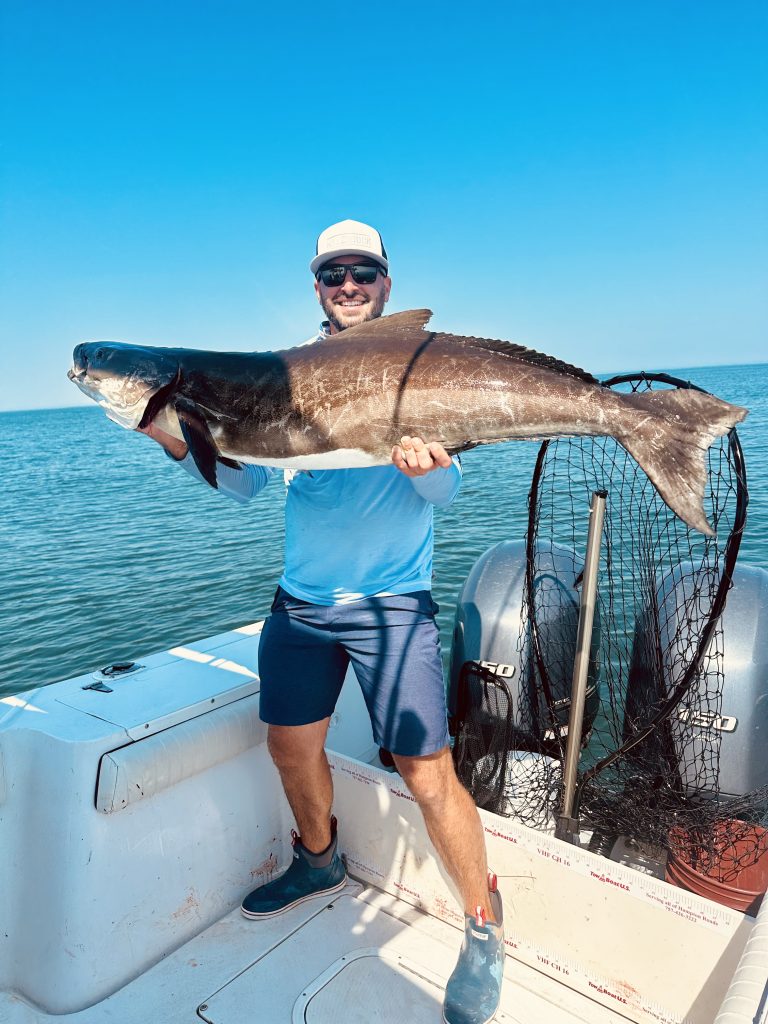
So once these water temps start getting around 66 and 68, that’s when Richard will start thinking he should give it a try and usually he’ll start making some phone calls and putting his ear to the ground to see if anyone has started to see any signs or catch any here and there. When targeting these fish by sight casting, it can be crucial as a fisherman to present the first or second bait that particular fish has seen all day, otherwise those fish may have seen upwards of five, ten or even fifteen baits and may not be interested in what you have to offer by the time he/she has seen so many different or similar “unnatural” presentations. If you can time the Cobia run properly and take conditions into consideration, then as an angler, you’ll be giving yourself one of the earliest and best opportunities to catch a Cobia all year since that fish hasn’t been pressured yet.
What Time Of Day Is Best When Sight Fishing for Cobia?
It’s hard to pinpoint an exact time when sight fishing for cobia is best. Capt. Richard puts it simply: “Always, just always, man. You can’t sight cast ’em from the sofa!”
While fish tend to bite best at dawn and dusk, it’s much easier to spot and accurately cast to them from late morning to mid-afternoon, when the sun is at its highest. Around noon, you can often see these Ling clearly in almost any direction thanks to the overhead light.
Richard, a self-described morning person, often runs his boat eastward toward the sunrise. This puts the sun at his back for the return trip west, helping him avoid glare and spot fish more easily.
Having a tower boat like Richard’s 2024 Contender Bay 26 is a true game changer. It allows both captains and recreational anglers to fish from an elevated position, offering a bird’s eye view that makes locating cobia easier—regardless of the time of day.
How Can You Use the Sun to Your Advantage When Sight Fishing for Cobia?
When sight fishing for cobia, the sun can be a huge advantage. Before diving too deep into technique, it’s worth mentioning that a quality pair of sunglasses is absolutely essential—especially on those bright spring and summer days when you’re targeting cobia near the surface.
Luke Barton uses Smith Optics Chromapop lenses and swears by them when he’s up in the tower scanning the water for Ling. These lenses help cut glare and enhance contrast, making it easier to spot fish cruising just below the surface.
One example of using the sun to your advantage comes from something Capt. Richard Rutland mentioned earlier: position the sun at your back and use the light angles to your benefit. Doing so can make certain sides of the boat—and specific areas of water—much easier to see.
Keep this in mind throughout the day. As the sun shifts, it can reveal parts of the water that were previously harder to read. Rotate your approach to match the light and maximize your visibility from all angles.
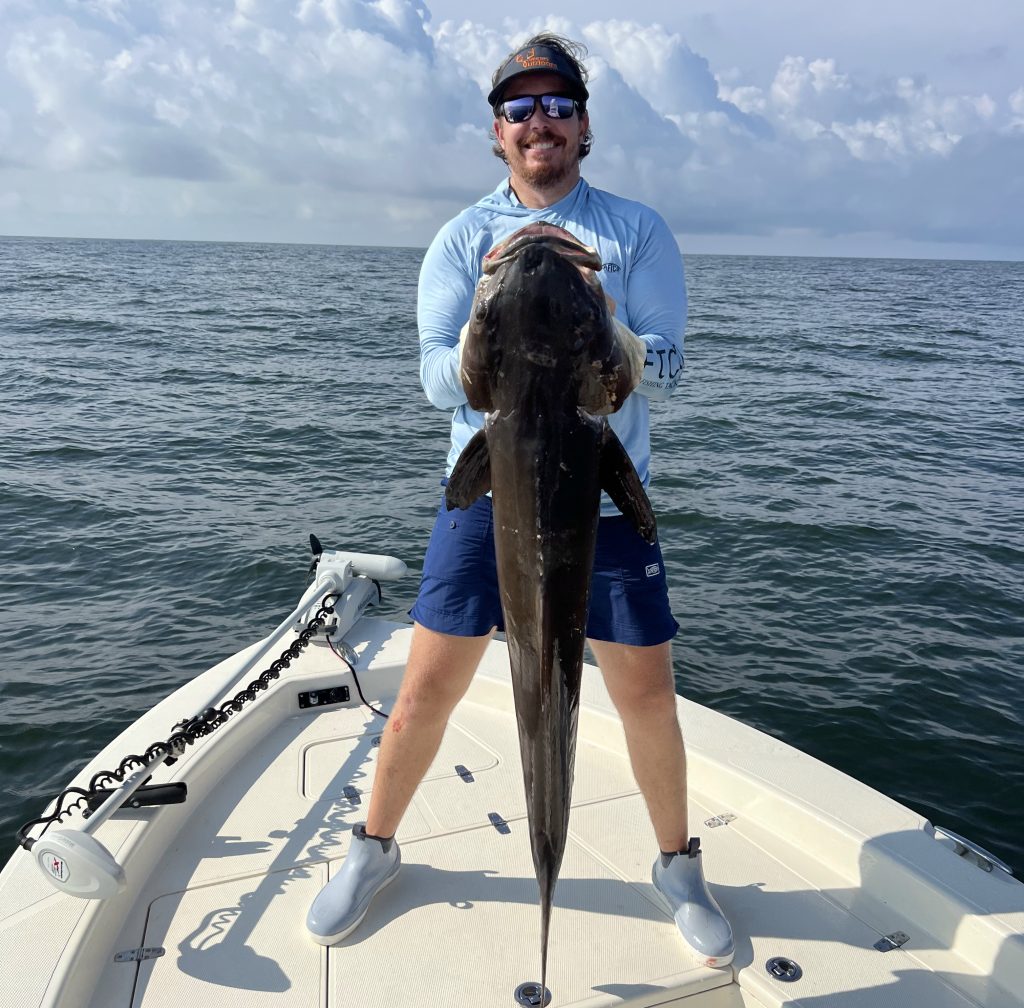
Another example of using the Sun to your advantage is when fishing structures. When circling around structures, whether that’s channel buoys, anchor lines, oil/gas rigs or cargo ships and shrimp boats, there’s always one side of the structure that you can see better down into the water column than others. Circle around those structures, using the sun cast light through any cracks or reveal any shadow of a fish that may be associated with that area. Another way to use the Sun is to find a depth line along the beach and zig zag along it, for Capt. Richard here along Alabama’s Gulf Coast, that optimal depth line for him is somewhere around 20-40ft. in depth. This zig zagging motion while cruising along the beach allows the angler to cover different depths and to see things from the left side of the boat and then see things to the right side of the boat creating a sort of window that keeps you out of what Richard refers to as non-glare water.
How To Catch A Cobia
Cobia, Ling, Black Kingfish, Lemonfish—whatever you want to call them—are absolute dogs when it comes to fighting. These fish are insanely challenging to catch, and actually putting one in the boat is a feat any angler should be proud of.
The first step to catching one is being out there, locating these fish, and actively targeting them. The next is having the right gear and being properly prepared. The right rod, reel, and live bait or lure selection can make all the difference when it comes to turning the fish mid-fight, getting bit, or even just making the cast.
It’s also important to remember that cobia aren’t always in the upper water column. While sight casting is common, different tactics and rigging may be needed to fish deeper—sometimes all the way to the bottom.
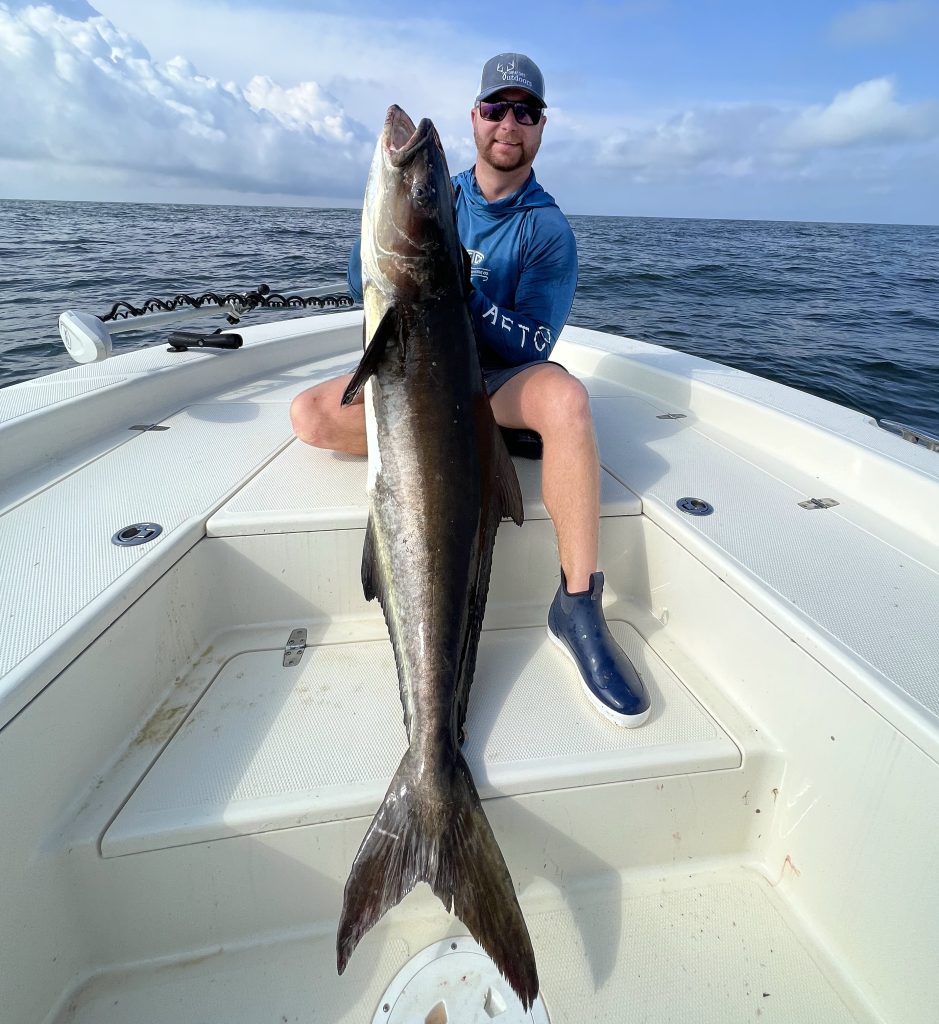
Another key point is having a proper gaff—or, like Luke Barton prefers, a net. Cobia don’t like coming into the boat easily. In places like Coastal Alabama, unlike Luke’s home waters in Virginia, anglers can gaff a legal-sized fish once it’s boat-side. But once hit, these fish often go into an alligator-style death roll and do everything they can to throw the gaff. A quick stick and sweeping motion into the boat is the most effective way to land them.
Capt. Richard Rutland adds another crucial tip: positioning your cast. To avoid spooking the fish or the school, don’t cast directly on top of them or in their line of travel. Instead, lead the fish by about 20–25 feet with both your angle and your cast to give them a clean shot at your bait.
Being careful not to disrupt or scare the fish and leading the fish this way really increases the chance of presenting your bait well to the fish without as much risk of spooking it. Luke Barton adds another cool perspective saying when they’re approaching a school of fish, the jig is what’s thrown first, that way if the fish don’t chase the jig then usually they still stay up and then you’re able to target them with live bait. If you go in live bait first, the fish may go down and never eat your bait and now you’ve taken away an opportunity for that fish to eat again, really cool perspective and tip.
Capt. Rutland was careful to mention three other things, take note of which way the fish is headed, where the boat is positioned and any possible structures those fish could swim towards to potentially break you off before you make your cast and hook up with a fish. This allows you to have a mental gameplan of the most optimal way to find this fish and put it in the boat.
Best Bait For Cobia
Cobia are voracious feeders that will devour almost anything in sight. These fish are known to have various types of species found in their stomachs when they find themselves on the wrong side of the cleaning table. From mantis shrimp and crabs to hardhead catfish and stingrays or anything else between, these guys are seemingly not picky at all. However, there is a common favorite that experienced Ling fisherman have leaned towards: live eels. Other live baits that are good choices are croakers, hardtails, horn bellies, cigar minnows, spanish sardines, pinfish, and menhaden (also referred to as bunker or as a pogy). Luke Barton mentions a cool tip about taking your live bait and almost working it like a lure in front of those fish, whether a single swimmer, small school or a whole wolfpack coming at you, this extra action and struggle of your bait could make for the easy meal one of those fish simply cannot resist.
Cobia Fishing Lures
There are several different types of lures used for Cobia fishing, larger style presentations tend to be the way to go. Eel imitations (Capt. Richard specifically mentions Hogy Eels), feather/bucktail jigs with curly tail trailers, and large swimbaits are go to choices when casting lures at these fish. These lures are typically heavy enough to get nice long casts and be worked upper column when sight casting while still having the option to allow it to sink into the middle – lower column when targeting these fish subsurface or on bottom.
Picking The Best Cobia Rig
There are several different ways to rig up when Cobia sight fishing. When fishing with live bait there seem to be three main options, freelining a free-swimming bait in the upper-middle column, a knocker rig, and a carolina rig. These three different riggings allow you to fish a little bit differently each way.
The freelined live bait set up is perfect for sight casting scenarios and allows an angler to pitch a live bait out where he or she deems fit in order to get bit or to let the bait swim down to the upper-middle column. The knocker rig is perfect for fishing the lower-middle column where those fish suspend on bait balls and under structure as well as on the bottom. The carolina rig is perfect for fishing on bottom and allowing that bait to struggle and kick around on bottom til something swimming down there is curious enough to pick it up. Each one has different(ish) applications and when the fish are on top or mid column then freelining or using a knocker rig with a lighter egg weight is the way to go. When the bait and the fish are on bottom then a heavier knocker rig or heavy carolina rig should be tied up and used to target those fish in those types of situations.
Cobia Rig Mainline, Leader, Knot and Hook Recommendations
When tying up for Cobia and preparing your gear to battle these fish, there are two key perspectives that Capt. Richard Rutland brings to light.
Capt. Richard says that when fishing open waters along the beach or casting at free-swimming fish away from structure, something as light as 30–60 lb braided mainline with a 30–40 lb fluorocarbon leader is acceptable. In these scenarios, the fish can be played out and doesn’t need to be horsed in with a lot of force or resistance.
However, when fishing around structure, heavier gear is necessary. Capt. Richard recommends 40–60 lb braided mainline paired with a 60–80 lb fluorocarbon leader—possibly even up to 100 lb, depending on how heavy the structure is and how close the fish are positioned to it.
For line-to-line connections, Capt. Rutland uses the improved Albright (also known as the Alberto) knot. The uni-to-uni knot is also a solid option, but depending on the size of your rod guides, it can be too bulky to cast and reel in smoothly.
When tying to the hook, the clinch knot can work, but Capt. Richard notes that it’s significantly weaker than other options and may not be the best choice for battling a strong Cobia.

Richard’s preferred Palomar knot and when going to battle with a big fish like a Cobia it’s best to have the strongest knot possible. Richard goes on to say that hook size should be based off of your bait size, when using a knocker rig or pitching out smaller sized baits then he likes to use a 4/0 or 5/0 Owner SSW. When using those riggings for larger baits (ex. Bigger hardtails, hardhead catfish, white trout) then he likes to opt into a 6/0 SSW. When fishing a Carolina rig or what he calls a sal rig, Richard likes to opt into a 6/0 circle hook and feels like it ends up in the corner of the mouth almost every time when targeting those fish on bottom like that.
Choosing the Best Cobia Rod and Reel for Sight Fishing
When choosing a setup for Cobia sight fishing, you’ll want a rod that offers a good balance of sensitivity, accuracy and power. Richard thinks a spinning rod is the way to go, especially when sight casting. Keeping length, power, action, and other factors in mind, a 7’ to 7.5’ rod should work well for these fish. Something around MH power with a Fast or Xtra Fast tip to offer plenty of sensitivity when freelining or attempting to sight cast with live baits. Matching this type of rod with a size 6-8000 spinning reel should get the job done easily and efficiently against these heavy hitters.
Cobia Fishing Conclusion
In conclusion, Cobia sight fishing should definitely be on your list of things to do as a saltwater fishing angler. Sight casting these fish is an exhilarating and challenging experience that requires a specific approach, patience, technique and a little bit of luck. Combining the thrill of the chase with the need for precision and observation, these fish are truly a trophy target. Not only are these fish extremely adept fighters and migratory global travelers, they’re also one of the most delicious fish to harvest and eat. With their steak-like density and mild, lemon-like flakes, this delicious brown and white fish is high on the list as many peoples favorite. With the right gear, techniques, tips and tricks you can significantly increase your chances of landing these exhilarating and exciting fish.
From Luke’s tournament secrets to Capt. Richard’s long time fishing experiences there’s plenty to learn and unpack in this one. Hopefully these interviews and this article led to a new tool you as anglers can add to the toolbox that increases your ability and opportunities to get one of these fish in the boat.