
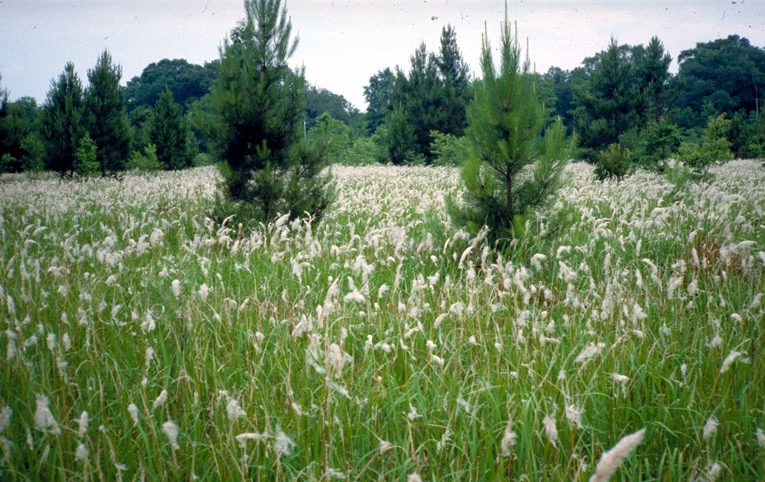
Cogongrass is one of the most aggressive and destructive invasive plants in the Southeast, and once it becomes established, it can fundamentally change the landscape. It shades out native plants, disrupts timber production, degrades wildlife habitat, spreads rapidly, and creates extreme fire risks that are difficult to manage. Many landowners don’t recognize it early, and by the time they do, it has already spread far beyond the first patch.
To understand the issue and how to respond, we spoke with Dr. Nancy Loewenstein, Extension Specialist with the Alabama Cooperative Extension System and Auburn University’s College of Forestry, Wildlife, and Environment. Her work focuses on invasive plant identification and control across the region, and she’s seen firsthand what happens when landowners underestimate this species.
A Habitat Problem That Quickly Becomes a Timber Problem
Cogongrass didn’t arrive here on purpose. It was first introduced in the early 1900s, then spread further through attempts to use it as a forage crop. The plant turned out to have almost no forage value, but by then it had taken root, literally. Today it’s classified as one of the top 10 worst weeds in the world and is listed as a federal noxious weed.
Loewenstein explains that cogongrass doesn’t just grow over other plants; it outcompetes them for light, water, and nutrients. Over time, it crowds out native grasses and forbs that deer, turkeys, and other wildlife rely on. The result is habitat that looks intact from a distance, but offers little actual forage or cover.
The damage goes beyond wildlife. Cogongrass interferes with pine seedling establishment and slows timber stand development. It also creates dangerous fire behavior. The dense thatch it builds burns extremely hot, which can kill even species adapted to regular fire, including longleaf pine(depending on the age of the longleaf stand) in some situations. Loewenstein notes that research has estimated millions of dollars in annual timber losses tied to cogongrass, along with major safety and management challenges for prescribed burning.
Recognizing Cogongrass on the Ground
Cogongrass is easiest to spot once you know the traits to look for. The grass tends to be a yellowish-green, often lighter than surrounding vegetation, and grows two to three feet tall in dense clumps that slowly expand outward. The leaf blade has a distinct off-center midrib, which is one of the clearest visual identifiers.
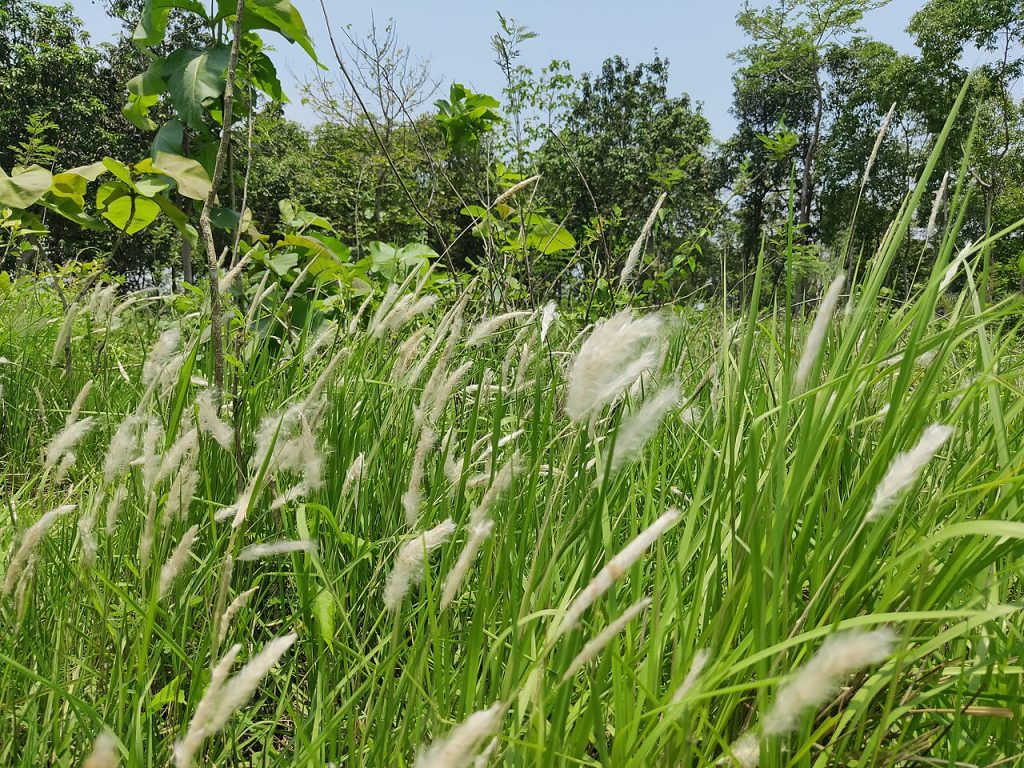
The surest confirmation is underground. Cogongrass spreads through white, segmented rhizomes that form thick mats. These rhizomes have sharp, pointed tips that can even pierce skin. If you dig into the patch and find these, you’re looking at cogongrass. If the rhizomes aren’t present, it’s not cogongrass, even if the leaves look similar. Loewenstein emphasized that this simple check is the quickest way to avoid confusion with look alike native grasses such as yellow Indiangrass.
How It Spreads Without You Noticing
Cogongrass expands outward at roughly 3-6 ft on average per year and can possibly spread 15 feet per year through its rhizomes. However, equipment movement is often the biggest factor in new infestations. Mowing, disking, grading, or even simply driving through an infested patch can carry rhizome fragments to new locations.
This is why cogongrass often first appears along:
- Road shoulders
- Powerline right-of-ways
- Food plot edges
- Skidder trails or log landings
Once it is present, mowing or burning does not control it. In fact, mowing makes it spread faster and burning strengthens it. Many landowners unknowingly make the problem worse simply by managing the land as they normally would.
The Only Proven Control Methods
There are only two effective approaches to cogongrass control: herbicide treatment and deep, repeated tillage, and most landowners will rely on herbicides due to terrain, timber cover, or limited equipment access.
The two herbicides used to control cogongrass are glyphosate and imazapyr. Both are non-selective, meaning they will damage or kill any plant they contact. The difference is that glyphosate is not soil-active, while imazapyr is. Glyphosate is safer to use near hardwoods, but multiple treatments per year are usually needed for effective suppression. Imazapyr offers stronger and longer-lasting control, but it can harm longleaf pine and can temporarily limit what can be successfully planted in the treated area.
Loewenstein stressed that no one should expect a one-and-done solution. The herbicide must reach the rhizomes to be effective, which means multiple years of treatment. A common and effective approach is to spray in late summer or early fall, when the plant is actively transporting nutrients downward. Treatment should stop at least a month before the first hard frost to ensure the herbicide moves into the roots.
Herbicides like glyphosate and imazapyr are readily available online through Chemical Warehouse, which offers them in backpack-sprayer to large-volume sizes and ships directly to landowners. Having reliable access matters, because the best results come when you treat new patches as soon as you find them rather than waiting for availability locally.
When Tillage Works and When It Doesn’t
Deep, repeated tillage can kill cogongrass by exhausting the rhizome network, but this is only practical in open ground that can be worked multiple times. Shallow or infrequent tillage breaks up the rhizomes and spreads the infestation further. For most timber, food plot, and mixed habitat properties, tillage isn’t realistic and should only be done with strict precautions to avoid spreading material.
Longleaf Pine Considerations
Longleaf pine stands require special attention, as imazapyr can damage or kill young longleaf. In cases where cogongrass is intertwined with young longleaf regeneration, landowners may need to make a decision between short-term tree loss and long-term habitat recovery. Where possible, it’s best to treat cogongrass before replanting longleaf to avoid this dilemma altogether.
Act Early
Cogongrass does not stay contained on its own. If it’s present, it is spreading. Early detection and aggressive treatment are always easier and more cost-effective than waiting until patches expand.
Walk your firebreaks, food plots, and road edges. Look for the yellow-green clumps. Dig a section and check for rhizomes. If you confirm it’s cogongrass, make a plan to treat it this season and expect to follow up in subsequent years.
Closing
Ignoring cogongrass allows it to take over more ground and makes eventual control much harder. Treating it early protects your wildlife habitat, your timber value, and your land investment. A small patch today can easily become a multi-acre problem tomorrow. Once you identify it, the best course of action is to begin treatment right away.