

I started bowhunting when I was about 14 years old, and over the better part of two decades since then, I’ve hunted with everything from older compound bows to modern crossbows capable of speeds that would have seemed ridiculous when I started. I’ve built wooden longbows, twisted my own bowstrings, worked as a bow technician in a full-service archery shop, and set up and repaired more compounds and crossbows than I could possibly remember. All of that experience has fundamentally changed the way I look at the crossbow vs compound bow debate.
When crossbows first began becoming legal during general archery seasons in many states, they were controversial. In Alabama, I remember when you needed a physical disability to use one during bow season. As regulations changed, there were plenty of predictions that crossbows would ruin archery hunting, but years later, that obviously hasn’t happened. Compound bows are still everywhere, and so are crossbows; if you walk around a Wildlife Management Area during archery season, you’re likely to see hunters carrying both. While there is still some good-natured ribbing between the two camps, hunters sometimes spend too much time worrying about what somebody else carries into the woods when the more useful question is simply: Which one fits the way you actually hunt?
Compound Bows Require More From the Hunter
For a long time, I hunted primarily with compound bows. I owned several, including an early PSE Stinger and a Mathews Featherlight that I still occasionally wish I had kept. Shooting a compound was also something my dad and I did together when I was young. He would get home from work, I would finish school, and we would shoot in the backyard for hours; sometimes until dark. Sometimes we would just mindlessly fling arrows and chat, while other times we invented games, almost like playing HORSE but with arrows instead of basketballs. We might move the target ridiculously far away, shoot sitting down on the grass, or position the target so that you had to “thread the needle” between two trees in order to hit the target…or risk snapping an arrow as it glanced off the trunk.
That experience gets at one of the best arguments for owning a compound bow: archery itself can become a hobby. If you enjoy shooting, learning proper form, tuning equipment, experimenting with arrows, and gradually becoming better at a difficult skill, there is a tremendous amount to enjoy about a compound bow. However, there is also considerably more to learn.
Proper draw length matters, draw weight matters, your anchor point matters, your peep sight has to be positioned correctly, your rest needs to be adjusted, and your arrows need to be appropriate for the bow. At some point, an archer finds himself deep in the weeds, learning about arrow spine, paper tuning, cam timing, broadhead flight, and all the other little variables that affect how a compound bow shoots. For some people, that is half the fun; if you are the kind of person who enjoys working on an old two-stroke outboard, tinkering with a car in the garage, tying your own flies, or otherwise understanding how your equipment works, you may love compound archery for exactly that reason.
There is also a satisfaction that comes from developing the physical skill required to shoot one well. Small inconsistencies in your grip, anchor point, release, or bow position can change where an arrow lands, and learning to eliminate those inconsistencies takes repetition. That makes shooting a compound rewarding, but it also creates one of its biggest disadvantages for hunters: proficiency takes time.
How Much Practice Does A Compound Bow Require?
I worked with enough new archers in the bow shop to see just how much the learning curve can vary. Some people were progressing remarkably well after a couple of weeks, while others had been shooting for years and still struggled with consistency. When I began shooting as a kid, I practiced for a couple of years before my dad was comfortable turning me loose to hunt with a bow. I wouldn’t say every new bowhunter needs years of preparation, but I would plan on making shooting a regular part of your summer if you expect to hunt confidently in the fall.
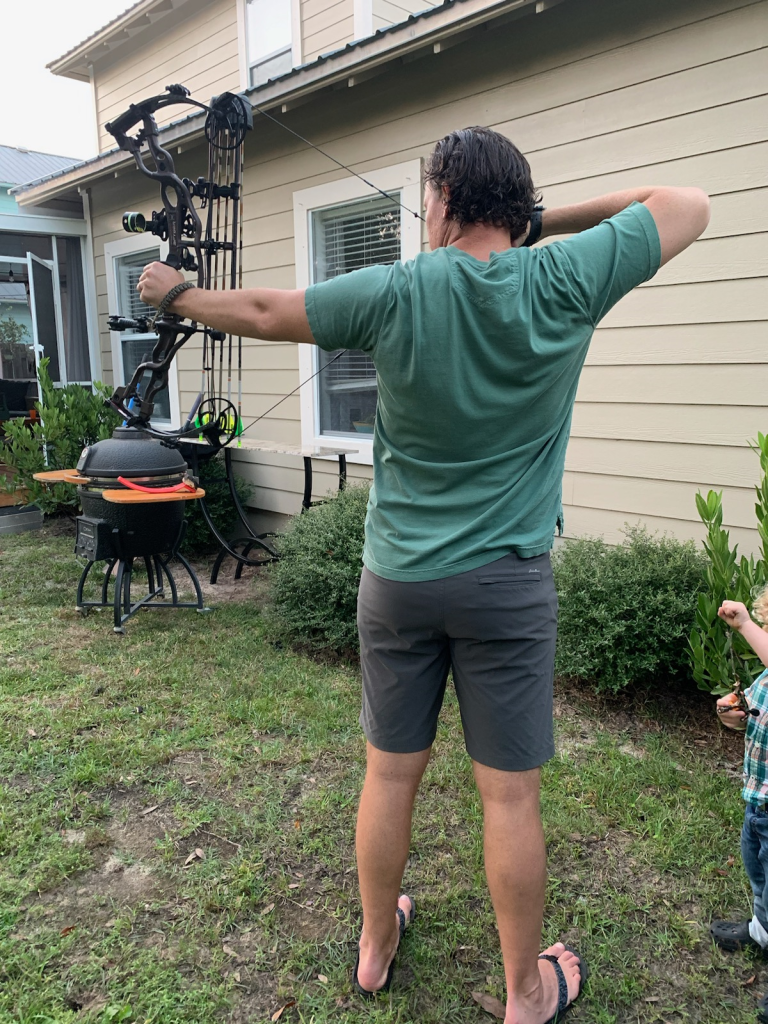
The other issue is that compound-bow accuracy is perishable, and that is an important consideration in the crossbow vs compound bow debate. If you once became proficient, you probably won’t completely forget how to shoot. I haven’t seriously shot a compound in years, and I’m confident I could pick one up and shoot better than someone who had never handled one. But I’m equally confident that I would not shoot nearly as well today as I did when I practiced constantly, and that ultimately became one of the biggest reasons I switched almost entirely to crossbows.
Why I Eventually Chose A Crossbow
My interest in crossbows really began when I started hunting public land in college. Deer were harder to find and generally more difficult to approach, and I was also doing more hog hunting, including stalking, where I found a crossbow convenient. Then I began hunting from the ground more often. Dragging a heavy steel climbing stand or lock-on deep into public land was a chore, and hunting from the ground eliminated that problem, but shooting a compound from the ground added another challenge: I had to draw the bow with a game animal nearby. A crossbow solved that problem.
My first hunting crossbow was an early Wicked Ridge Invader. Since then, I’ve hunted with everything from conventional crossbows to modern high-speed models from companies like Ravin and Barnett, as well as spending years hunting with a Hickory Creek Mini Vertical Crossbow, which remains one of my favorite designs. But the biggest reason I continue hunting with a crossbow today has less to do with the equipment than it does with time.
When I was younger, I could come home and spend an hour shooting arrows in the backyard, but these days, there are a lot more things competing for that hour, family, work, board meetings, fishing, cooking, guitar, and plenty of other things I enjoy doing. I still love deer hunting; what I no longer particularly love is shooting the same target over and over simply to maintain the proficiency I need to hunt responsibly with a compound.
With a crossbow, my preseason routine is remarkably simple. I go to the range, confirm that the scope is still zeroed, shoot enough to make sure everything is functioning correctly, and go hunting. There have been seasons when I fired only a handful of practice shots before opening day and didn’t shoot again until I shot at a deer. For me, that matters. The joy of hunting, for me, is time spent scouting and learning the habits of game animals. Shooting for shooting’s sake is a low priority for me.
Crossbows Have A Much Shorter Learning Curve
For someone already familiar with firearms, learning to shoot a crossbow is especially intuitive, and that is one of the biggest differences in the crossbow vs compound bow comparison. You shoulder the weapon in a familiar way, look through an optic, and use a mechanical trigger and safety. Breath control, trigger control, and maintaining a steady shooting position all transfer reasonably well from rifle shooting.
A compound bow is very different, as the shooter is physically part of the firing system. If you torque the grip, change your anchor point, cant the bow, or alter your release, the arrow can go somewhere different. With a crossbow, assuming it is cocked correctly, much of that consistency is built into the machine, leaving your primary responsibilities as aiming steadily and pressing the trigger cleanly. I think most reasonably competent shooters could become capable of hunting with a crossbow over a weekend, whereas with a compound bow, I would much rather see a beginner give himself a summer.
That accessibility is valuable for new hunters, but it also makes crossbows useful for people who physically struggle with compounds. Shoulder problems, injuries, age, limited strength, or other physical restrictions can make drawing a hunting-weight compound difficult or impossible. Modern compounds are certainly more efficient than the bows many of us started with, and a hunter does not necessarily need to pull 70 or 80 pounds to kill a whitetail, but drawing a compound still requires a particular movement and level of strength that a crossbow largely eliminates.
A Crossbow Is Also Easier When A Deer Actually Appears
Target shooting is only part of bowhunting, and one of the biggest practical differences in the crossbow vs compound bow debate becomes obvious once you get into the woods: with a crossbow, you cock it before the deer arrives. With a compound bow, you have to draw while the deer is close enough to shoot, which might mean trying to make a large movement while an alert whitetail is standing 20 yards away. I lost plenty of opportunities over the years because I could not get drawn without being seen.
A crossbow changes that equation. If I see a deer approaching from 100 yards away, I can shoulder the crossbow while the animal is still well outside shooting range, and by the time the deer gets close, most of the movement has already happened. This is especially useful when hunting from the ground. I spend a fair amount of time sitting in a low turkey-style chair in thick cover, and a crossbow works extremely well for that style of hunting because I can shoot seated and stay low. Depending on the setup, a crossbow can even be fired from positions that would be nearly impossible with a vertical bow.
There is a tradeoff, of course. Crossbows are heavier and bulkier, and even with the narrow limbs and compact designs available today, a compound is generally easier to carry through thick woods. If you routinely walk several miles into public land, that difference matters, but once I am actually set up and hunting, I generally find the crossbow easier to work with.
Crossbows Extend Effective Range, But They Aren’t Rifles
One of the biggest differences in the crossbow vs compound bow comparison is arrow speed. Modern crossbows are dramatically faster than the compounds I grew up shooting, with some current models approaching or exceeding 500 feet per second, while many hunting compounds operate closer to the 300- to 350-fps range. That difference has practical consequences: a faster arrow means a flatter trajectory, so small mistakes in range estimation are less punishing. Misjudging a deer at 30 yards as being 35 yards away can produce a meaningful difference with a compound, whereas with a fast crossbow, that same error is generally much less significant.
That does not mean a crossbow should be treated like a rifle. Five hundred feet per second sounds extremely fast until you compare it with a centerfire rifle cartridge traveling several thousand feet per second, and an arrow or crossbow bolt still takes enough time to reach the animal for movement, range estimation, shot angle, and deer behavior to matter. I think this distinction gets lost when people talk about the impressive effective ranges of modern crossbows, You might be able to hit a target at a particular distance, but that does not automatically mean you should shoot at a deer from that distance.
In my own hunting, most compound-bow opportunities were inside 20 yards, which remains a very realistic distance for many whitetail bowhunters. A crossbow can give a hunter another 10 or 20 yards of practical range, depending on his ability and equipment, and the difference becomes increasingly noticeable beyond about 30 yards. Regardless of what you use, your hunting range should be based on the distance at which you can consistently make the shot under real hunting conditions, not the farthest target you have ever hit in the backyard.
Cost Is Closer Than You Might Think
Cost is another important consideration in the crossbow vs compound bow debate. People sometimes assume crossbows are dramatically more expensive, but I don’t think that is necessarily true once you compare complete hunting setups. A compound bow may need an arrow rest, sight, peep sight, quiver, stabilizer, release aid, and professional setup before it is ready to hunt, whereas many crossbows are sold as complete packages with the optic and basic accessories already included.
Take the Barnett Whitetail II, for example. At around $400, it comes with a 4×32 scope, rope cocking device, quiver, and two arrows. It isn’t the fastest or fanciest crossbow on the market, but it is a perfectly reasonable hunting setup for someone who wants to get into the woods without spending a small fortune. You’ll still need broadheads, a target, and a few additional arrows, but most of the expensive accessories are already included. Compare that with buying a $400 compound bow and then adding a decent sight, rest, release, quiver, and arrows, and suddenly the price difference isn’t nearly as dramatic as you might expect. You can certainly spend considerably more on either type of bow, but you don’t have to spend thousands of dollars to have equipment capable of reliably killing deer.

Crossbows do require specialized targets capable of stopping their more powerful projectiles, and those can cost more, as can the bolts and broadheads. On the other hand, a compound shooter generally fires substantially more arrows over the course of a year, which means worn fletchings, damaged or lost arrows, worn targets, and more practice broadheads. Over time, a lot of those costs begin to balance out, so I would make the purchasing decision based much more heavily on how you intend to use the weapon than on the assumption that one system will automatically save a lot of money.
Is A Compound Bow More Rewarding?
This is where the crossbow vs compound bow decision gets personal. Killing a deer with a compound bow is harder, and for some people, that is precisely the point. If you love archery, enjoy practicing, and get satisfaction from mastering difficult physical skills, a compound can add another layer to the hunting experience. Compound bows can also become a year-round hobby; deer season may only occupy part of the year, but you can shoot a bow in the backyard throughout spring and summer simply because you enjoy it.
For me, however, the act of drawing a compound on a deer no longer adds much to the experience. What I enjoy most about deer hunting is the woodsmanship. Scouting, finding sign, learning how deer use a piece of property, choosing where to set up, playing the wind, and eventually getting close enough to an animal to make a shot. Using a crossbow lets me spend more of my limited recreational time doing those things instead of maintaining my shooting form in the backyard.
There is also an ethical consideration for me. With any archery equipment, a bad shot can result in a wounded animal, and I know from experience that I am more consistently accurate with a crossbow, particularly when I haven’t had the time to practice regularly. Because of that, I personally feel better hunting with the weapon in which I have the greatest confidence to make a clean shot, though someone else may reach a completely different conclusion.
So, Compound Bow Or Crossbow?
If I were introducing a completely new hunter to archery deer hunting, I would probably start him with a crossbow. The learning curve is shorter, giving a beginner a better opportunity to make a good first shot on a deer rather than having the excitement of his first encounter spoiled by struggling to draw, getting caught moving, or making a poor shot. I would also lean toward a crossbow for someone who only hunts a handful of weekends each season, someone coming from a rifle-hunting background, or someone whose primary motivation is simply gaining access to archery seasons and bow-only properties.
If you already enjoy recreational archery, want shooting itself to become part of your hobby, enjoy tinkering with equipment, or are attracted to the additional challenge of hunting with a vertical bow, I would strongly consider the compound. And if tradition matters to you, that matters too. Hunting is supposed to be enjoyable, and there is nothing wrong with deliberately choosing a more difficult way of doing something because you find that challenge satisfying. Driving a manual transmission is more work than driving an automatic, and fly fishing is often more complicated than fishing with conventional tackle, yet neither choice needs to be justified simply because an easier alternative exists.
After hunting extensively with both, I think the crossbow vs compound bow decision has very little to do with whether crossbows count as “real bowhunting” or whether compound hunters are making things unnecessarily difficult. They are simply different tools that create different hunting experiences. Think about your physical abilities, how and where you hunt, and most importantly, think realistically about how much time you are willing to spend practicing. If spending summer evenings shooting arrows sounds almost as enjoyable as sitting in a deer stand, buy the compound; if your real goal is to spend less time practicing and more time scouting, hunting, and taking advantage of archery season, choosing the crossbow is the right move. Ultimately, the right choice is whichever one fits the kind of hunter you actually are.