
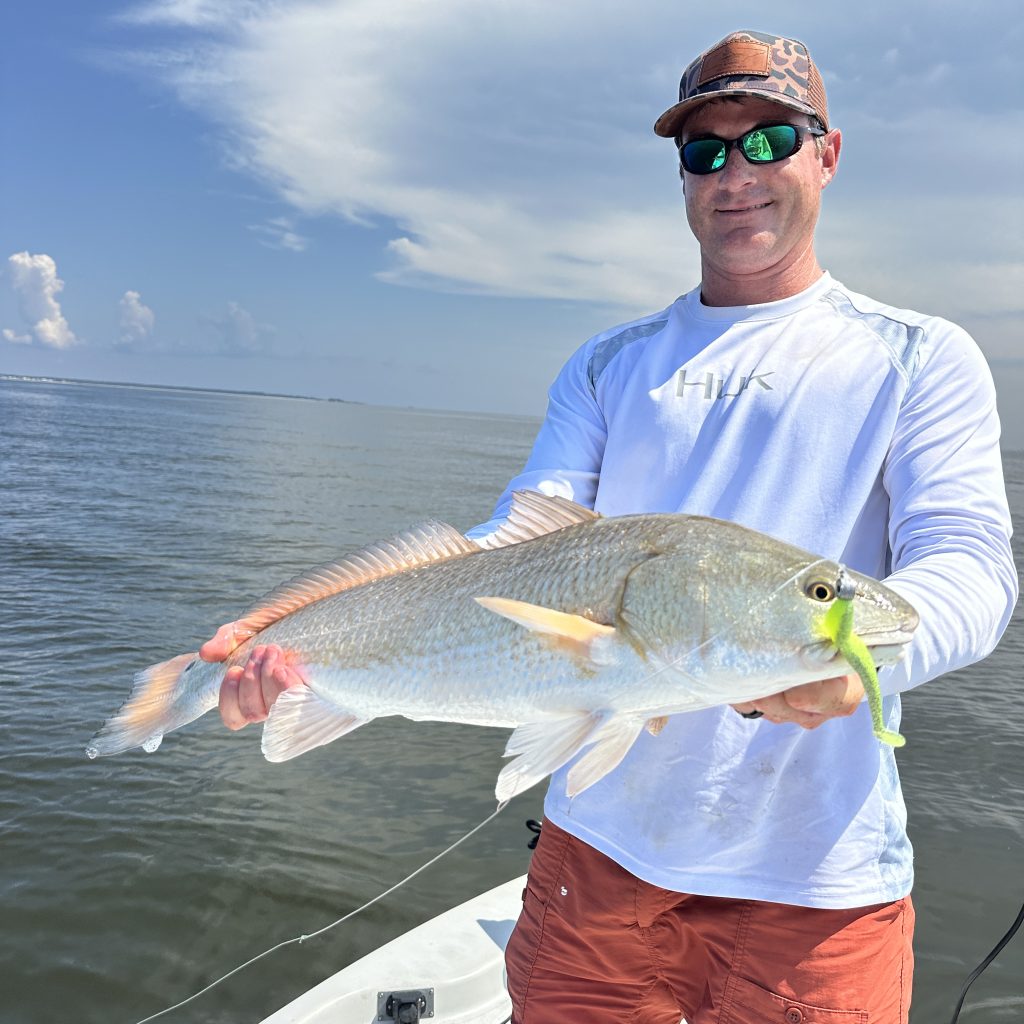
There’s something special about fishing in the Mobile-Tensaw Delta when the fall winds start to cool things down. This is when the redfish and trout bite lights up, and for many anglers, it’s their favorite time to fish the Delta’s maze of creeks, shell beds, and grass lines. I sat down with Captain Patric Garmeson of Ugly Fishing and Captain Brandon Collier to talk about what’s working right now—where to find fish, what to look for, and how to stay consistent once you locate them.
Redfish Rule the Delta Right Now
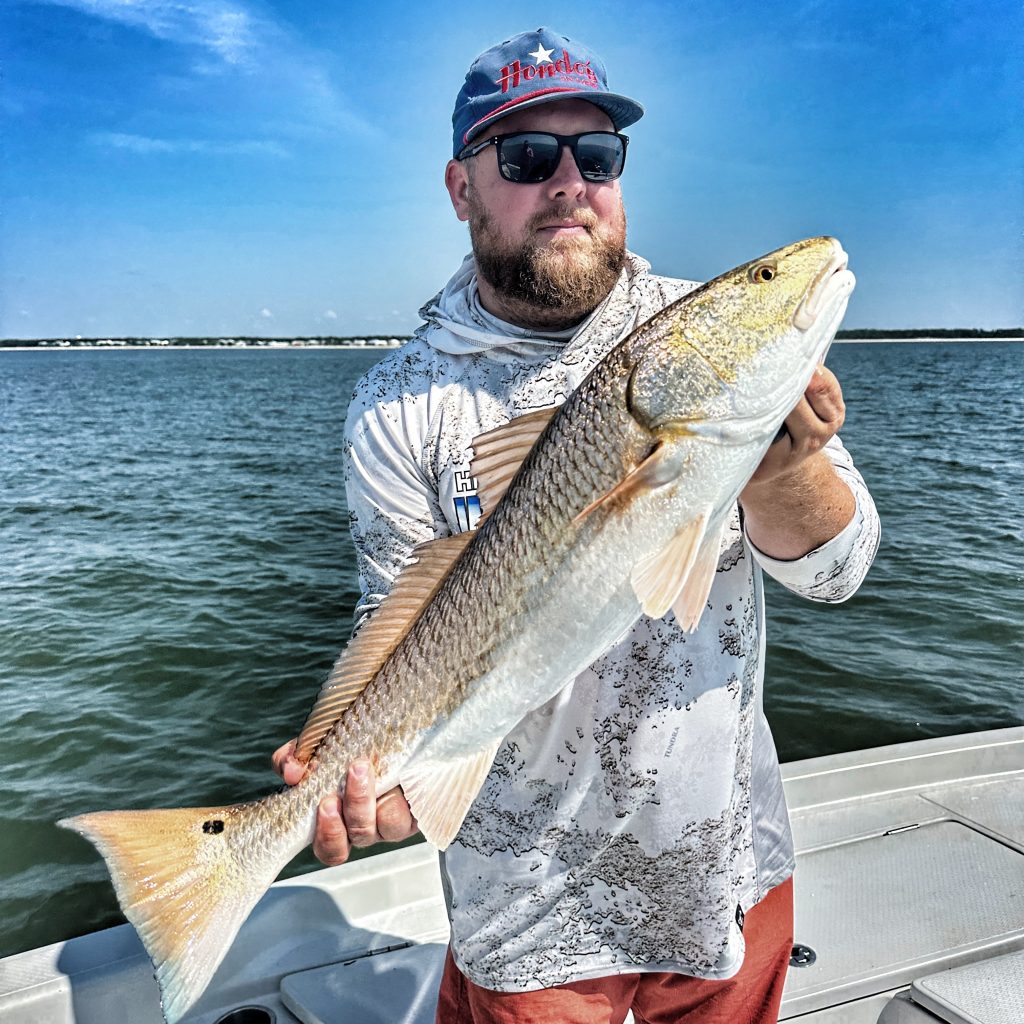
Captain Patrick has been putting clients on plenty of fish. “The redfish bite has been outstanding,” he said. “I’ve been really heavy up on the causeway, and actually finding some speckled trout mixed in too.” With steady north winds and a little freshwater mixing in, the Delta’s brackish edges are holding strong numbers of reds.
Patrick has been keying in on current breaks and shell bottom. “A lot of them that we’re catching, if we don’t catch a fish and you get snagged and pull something in, it’s almost always a clam shell,” he said. “If you know where some clam shell beds are, especially near current, it’s very likely you can find redfish.”
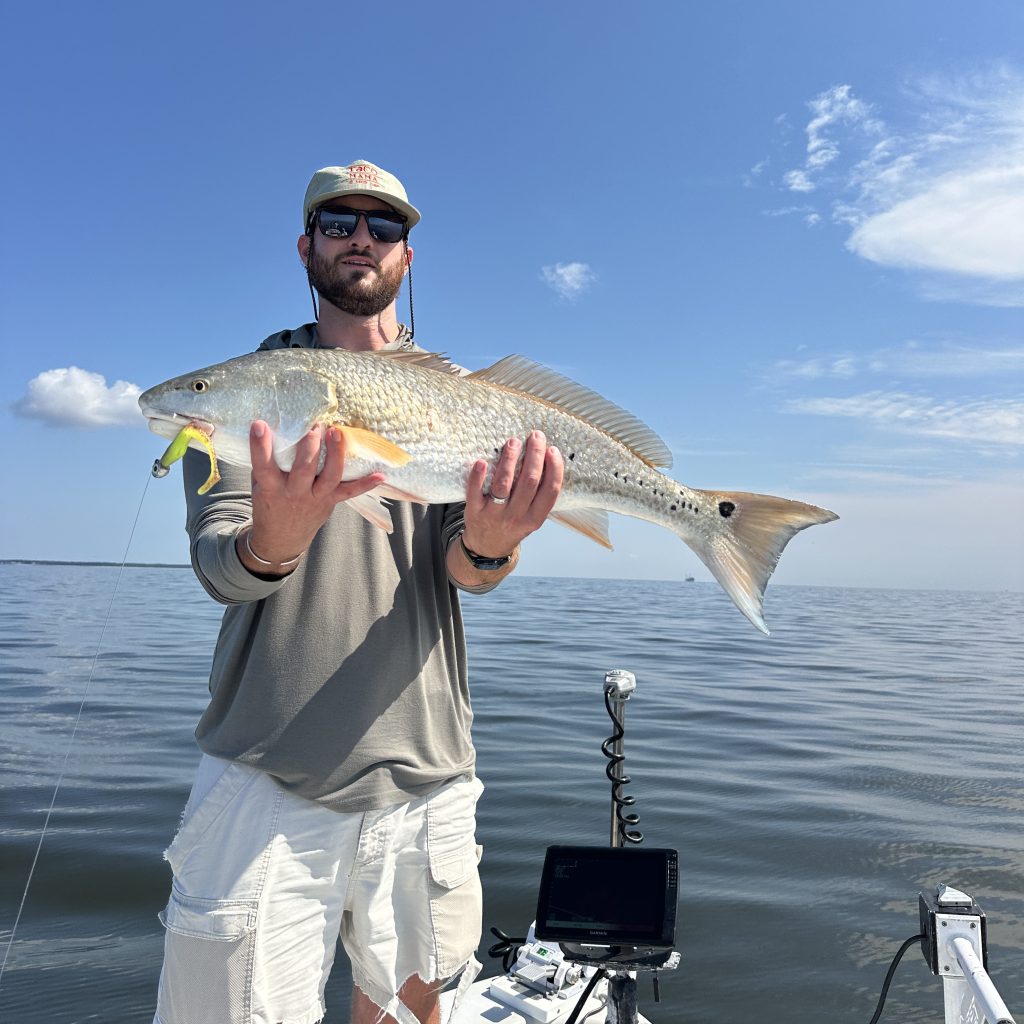
That combination of current, structure, and bait is what defines success in the Delta. “There’s a reason those fish are there,” Patrick explained. “You have to pay attention to what’s around you—clam shells, mullet jumping, bait movement. All of that adds up.”
Bait and Tackle Choices
For redfish, Patrick keeps things simple. “All the redfish have been coming on shrimp or shrimp imitation,” he said. “We’ve been throwing Slick Juniors, Little Slicks, and Z-Man jerk shads. I’ve been finding more success just getting the shrimp down on the bottom and letting them find it.”
While live shrimp is tough to beat, artificial lures that mimic the same action are working just as well when fished near shell or grass edges. A slow drag or hop along the bottom keeps the bait in the strike zone longer.
Captain Brandon added, “When you’re working artificial, pay attention to that leader size. Sometimes it’s a fine line between getting bites and getting ignored.” He prefers fluorocarbon leaders for abrasion resistance, especially when fishing around shell and rocks.
Finding the Right Spot
Locating redfish and trout in the Delta often comes down to small details. “Sometimes these fish seem to be in an area the size of a four-by-four pallet,” Patrick said. “Throw right there—if you miss it, you don’t catch them.” Once you get a bite, he suggests stopping the boat and casting back into the same area immediately. “Keep a conveyor belt of lines going into that same zone. You can keep the bite going by being accurate and fast.”
It’s not just about one magic spot, either. “Some days I can go right back to the same area and have similar success,” Patrick explained. “Other days, I get there and it’s just catfish and croakers. When that happens, keep moving until you find that redfish bite. Once you get it, commit to that area.”
He also mentioned that fish tend to move with the current. “If the bite slows down, start moving downstream,” he said. “You’ll often pick them up again.”
Trout on the Move
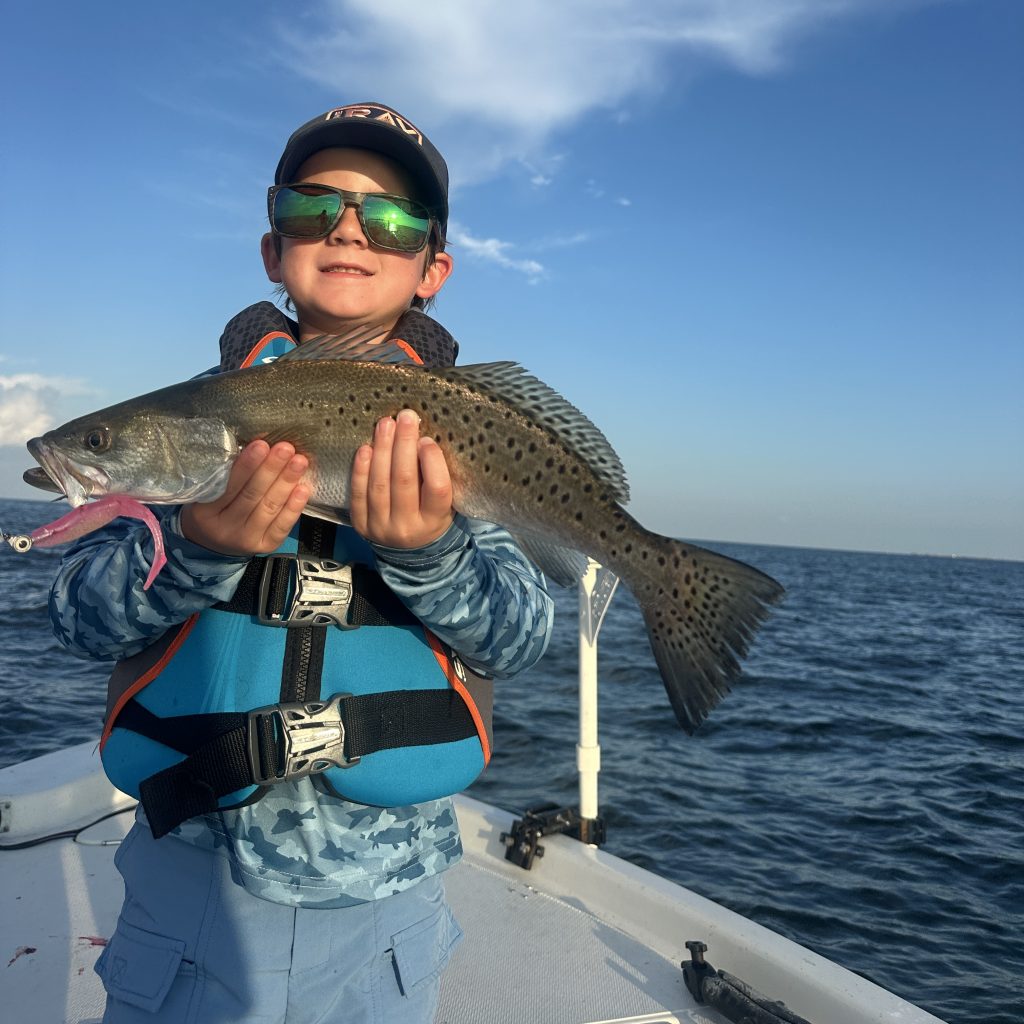
As salinity levels stabilize and the bait thickens up, trout are becoming a more common bycatch for redfish anglers. “I’m getting more and more consistent at catching a trout here or there while we’re redfishing,” Patrick said. “We’re catching them on Vudus and live shrimp under popping corks south of the causeway. But every day, they’re showing more and more up in the Delta.”
The trout are following the same forage patterns—shrimp and mullet pushed by tide and wind along shallow banks and into the mouths of creeks. Working a popping cork near the grass lines or along channel edges can produce steady bites, especially around incoming tides.
Conditions and Timing
Despite heavy winds, the Delta remains one of the most fishable areas on the coast. “It was blowing 22 knots the other day, but it was never uncomfortable being out here,” Patrick said. “There’s just so much protection from the wind up in the Delta.”
Brackish conditions are ideal right now, with most of the freshwater flow coming down the Blakely River. “Further west, like in the Tensaw and Mobile, it’s a lot saltier,” he noted. “The water quality is still good enough that I’m not worried about salinity—it’s perfect for redfish.”
Final Thoughts
Redfish and speckled trout fishing in the Delta is all about paying attention to detail. Look for structure, moving water, and bait. When you find those three, stay alert—fish often stack up tight and feed aggressively. And when that bite starts to fade, don’t hesitate to move a little with the current. The next pocket could be the one that lights up again.
As Captain Patrick summed it up, “The fish are here, the water looks good, and the bite’s been strong. If you can find bait and shells, you’ll find fish.”