

If you’re wondering, as are many other outdoorsmen, what forage fish to stock in your pond to supplementally feed bass and help them grow bigger, quicker, there’s no better expert to consult with than Norman Latona, president of Southeastern Pond Management. For over 30 years, Southeastern Pond Management has helped pond managers meet their management goals. Latona emphasizes that Southeastern Pond always listens to its customers first to learn their goals for their ponds or lakes. In this article, we sat down with him to learn the best forage fish for pond stocking if you are looking to pack some pounds on your bass school.
Threadfin Shad
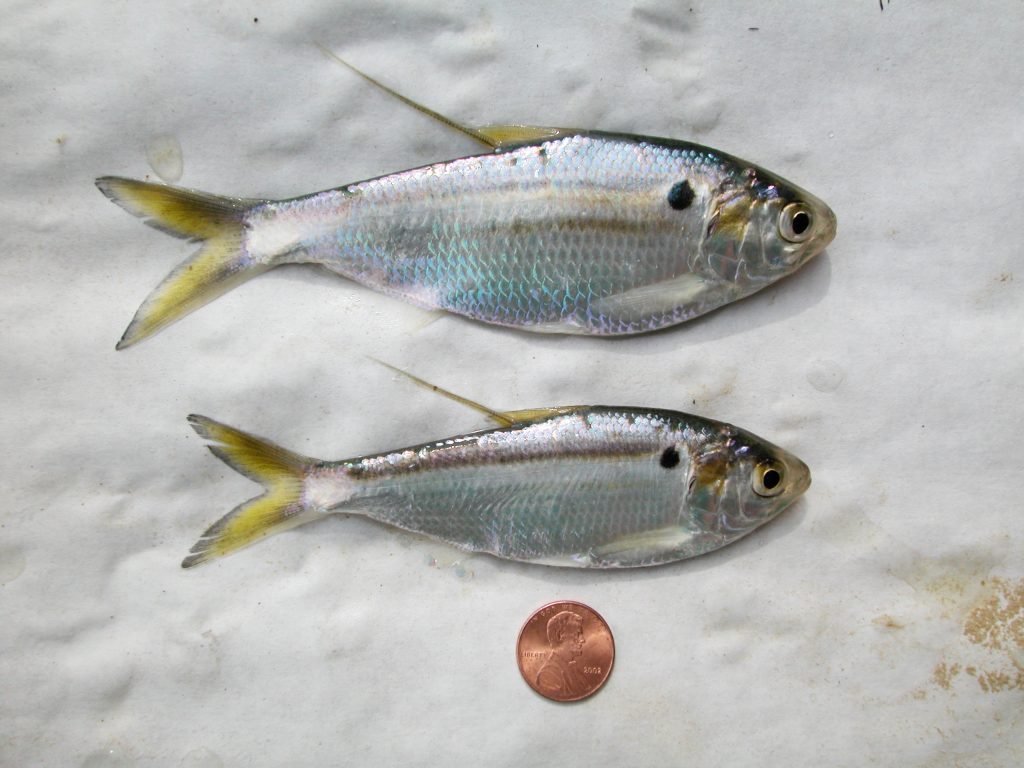
“Threadfin shad are more or less the ‘bell cow’ of the forage fish we stock in private ponds,” Norman Latona says. “We usually stock these in the spring and the fall. These fish are fantastic spawners, they grow rapidly, but they don’t become too big for the bass to eat.
“Threadfin shad are a super addition to stock in ponds to supplement the bluegills and other forage fish in those ponds. They spawn very heavily throughout the season, so there’s always a good crop of them being produced. The bass quickly learn to feed on them. They also provide excellent forage for crappie. Our company stocks threadfin shad in ponds all across the Southeast.”
Latona explains the size of the lake determines the number of shad usually stocked. “Threadfin shad are open-water fish and tend to stay there in big schools. They can defend themselves because of the numbers of shad in their schools. They stay away from where a lot of predator fish live. In larger lakes, we can stock lower rates of shad than we do in smaller lakes. Since the smaller lakes don’t have as much space for the shad to get out and hide in open water, we have to stock threadfin shad at a somewhat higher rate there. The shad meet two needs. The predator fish (bass) can feed on them, and enough threadfin shad will survive to spawn and reproduce more shad.”
Latona mentions that his company uses electrofishing to sample fish populations in a pond or a lake to determine abundance, density and species composition. Electrofishing results in no permanent harm to the fish, which return to their natural mobility state in as little as two minutes after being caught. The size of the lake, the number of predator fish in the lake, and what other forage species are present are all factors that also impact the recommendations Southeastern Pond makes for the number of threadfin shad to be put in a lake.
Threadfin shad are common in lakes, large streams and reservoirs of the Southeast, feeding on plankton and organic debris. They occur in large schools and can be seen on the surface at dawn and dusk. Due to threadfin shad being so sensitive to changes in temperature and dissolved oxygen available, there may be die-offs, if the water temperature drops to 42 degrees. They spawn once the water temperature reaches 60 degrees – generally in the spring.
Golden Shiners and Intermediate-Sized Coppernose Bluegills
Although threadfin shad seem to be the most-popular forage fish for pond stocking, Latona says, “We stock a number of other species, too, like golden shiners and intermediate-sized bluegills.”
Golden shiners are native to eastern North America, and an interesting fact is that they are the only member of their genus. They generally prefer quiet, weedy waters, eating zooplankton, insects, plants and algae and can exist in water temperatures up to 104 degrees.
Bluegills are the main forage base in most ponds and spawn multiple times a year. According to Latona, “We use intermediate-sized bluegills because when many of these lakes get bass-crowded, then there are plenty of 1- and 2-inch bluegills as well as 6, 7 and 8 inch bluegills available in the lakes on which the bass can feed. The medium-sized (intermediate) bluegills are what’s missing. That size of bluegills is easier for the bass to feed on, especially for those 2-, 3- and 4-pound bass that need to grow to the next size, and they do. With crowded bass in a pond, the medium-sized bluegills are the ones the bass feed on, and that’s why we add those to ponds.”
Tilapia
In the spring of the year, Latona recommends tilapia as a forage fish for pond stocking. “These subtropical species of fish generally don’t survive the winters, since they require warmer water. However, tilapia are fantastic summer food for bass. Also, they spawn every three weeks or less and produce large numbers of rapidly growing forage fish for bass. Tilapia also will consume pelleted food.”
Tilapia are of major importance in farmed fishing in Africa and Asia and were significant in ancient Egypt, featured as a symbol of rebirth. Tilapia are fast-growing, tolerant of stocking density, and adaptable.
Crayfish (Crawfish)
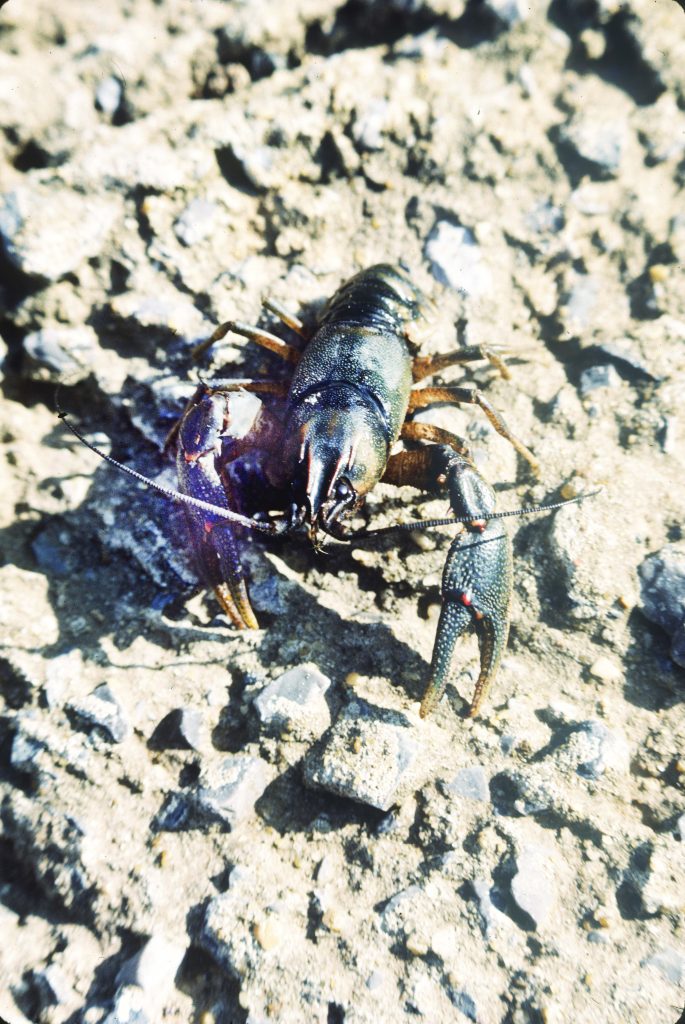
“We stock numbers of crawfish in ponds too,” Latona explains. “I’m not sure the Good Lord made a better bite of food for the largemouth bass than the crawfish. Since crawfish are full of protein and easy for the bass to catch and eat, we stock numbers of those. I guess if bass would eat used tractor tires, then we’d stock numbers of used tractor tires too!. Crawfish are readily available, inexpensive, and easy for bass to capture, while providing a super-high protein base.”
Crawfish live naturally east of the Rocky Mountains and particularly in the Southeast in streams, rivers, lakes and swamps. A member of the same family as the lobster, crawfish are farmed in ponds and wetlands for a value of $200 million per year when sold as gourmet food. Besides bass, crawfish also are a primary food for water birds like herons and mammals such as raccoons. The wide range of foods preferred by crawfish – aquatic plants, leaves, woody debris, insects, tadpoles, snails and salamanders – makes crawfish adaptable to many habitats.
Best Times for Stocking Forage Fish
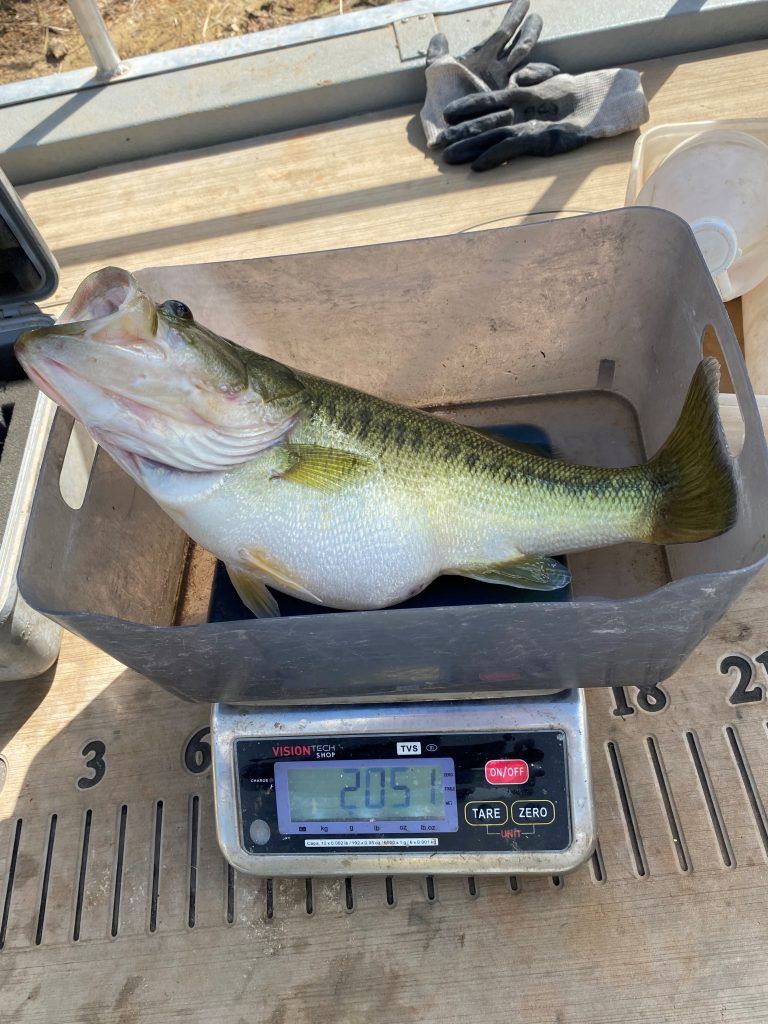
“The key to supplemental feeding of bass is to find a prey species that bass will eat, that’s the right size for the bass to eat and is available at the right time of the year,” Latona says. “We also want to stock a prey species that will reproduce, so that species will be an ongoing source of food for the bass.”
Latona reports that Southeastern Pond usually starts stocking shad in late February or early March and continues to stock shad until early or mid-summer. “We don’t stock shad again, until the fall when the weather is cool. In the fertile ponds that we manage, the shad will spawn almost year-round. I’ve actually seen threadfin shad spawn even in December and January.
“Putting a prey species in the pond that the bass will eat immediately is important. But you don’t want them to eat the prey fish so fast that you have to restock them again. Shad will reproduce like crazy – especially if you’re fertilizing your pond or your lake. Then the shad consistently will produce more crops of shad. The shad also are not really subjected to the hard winter kills that happen in other places. Crawfish, intermediate-sized bluegills and tilapia are other main forage that we introduce to supplementally feed pond bass.”
So, if you want to grow the bass in your pond more quickly, make sure to pick the best forage fish for pond stocking.
To learn more about the locations of Southeastern Pond Management and the services offered, you can go to here. You also can visit here or call 888-830-7663. You can see videos on the Facebook page of stocking fish.