
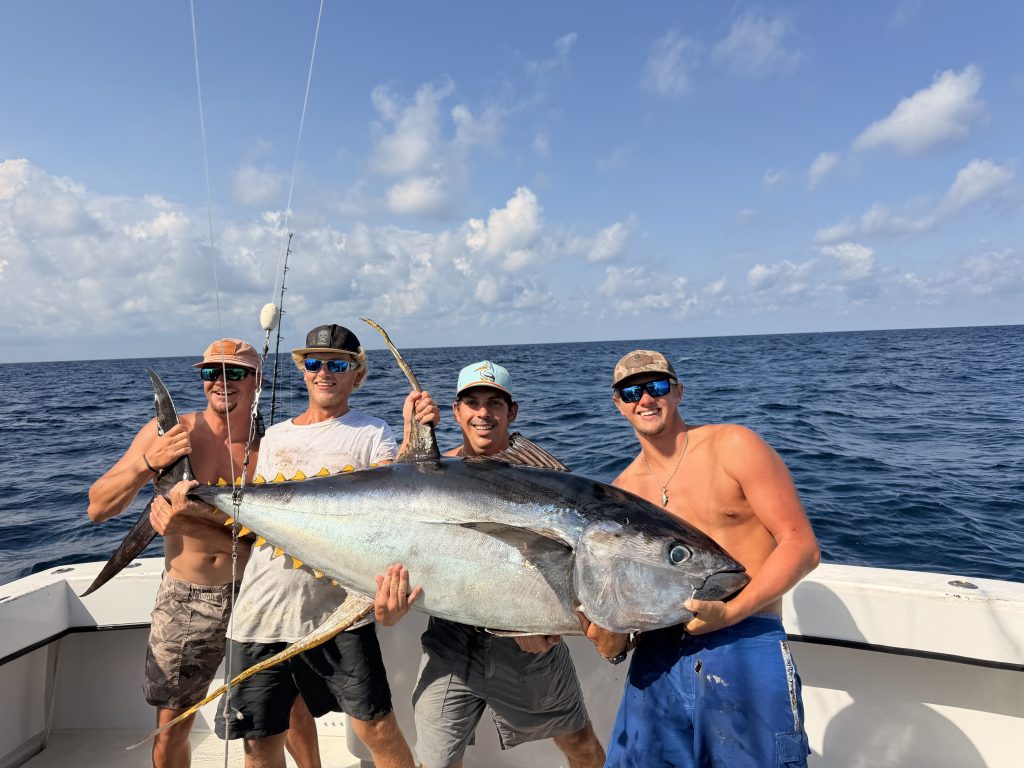
There are a lot of ways to catch a yellowfin tuna in the Gulf of Mexico. You can troll, chunk, jig, throw topwater plugs, or put out a spread and cover water. But when big yellowfin get picky around offshore rigs, one of the most effective tactics can also be one of the most exciting to watch: chumming live bait for tuna fishing.
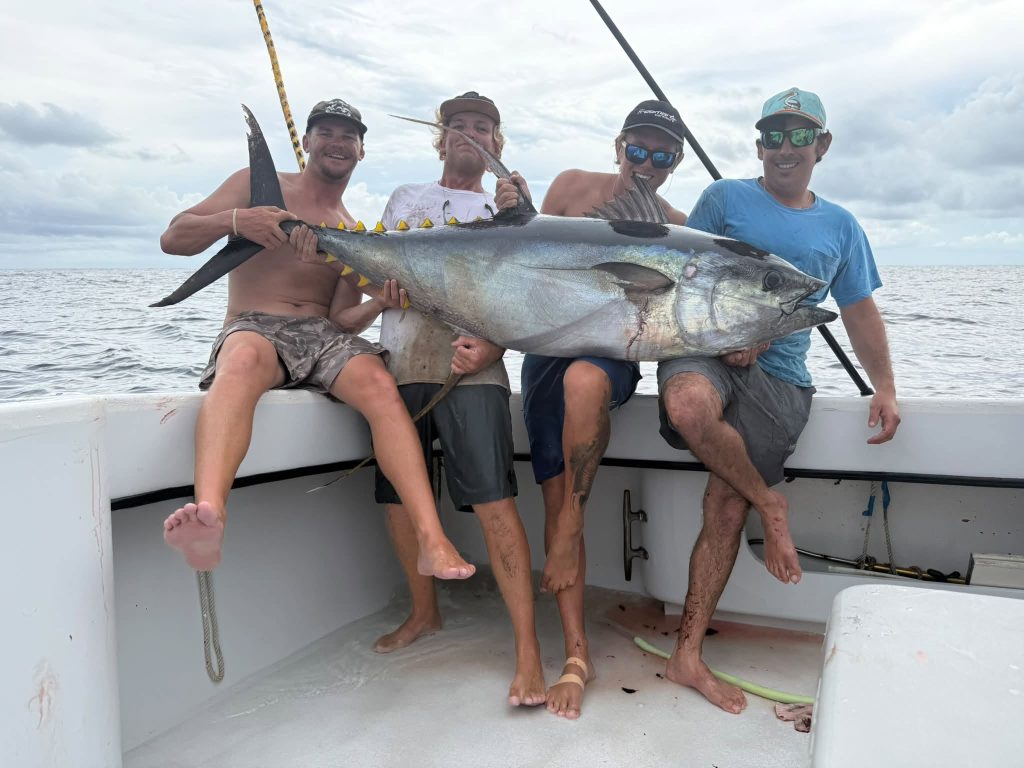
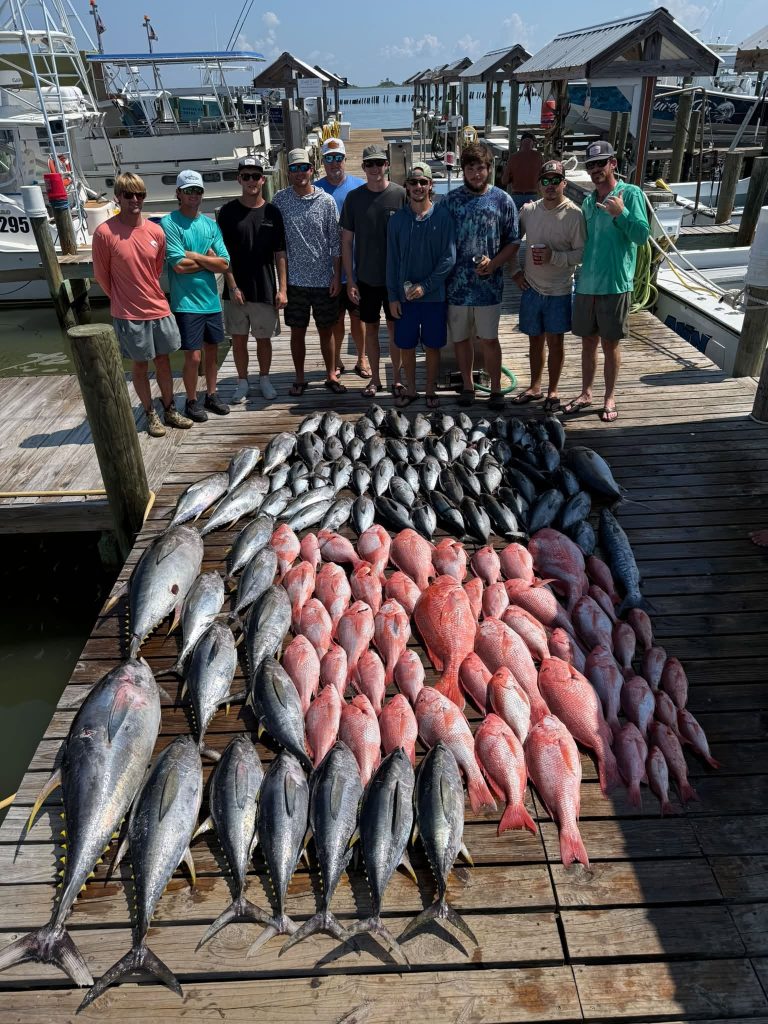
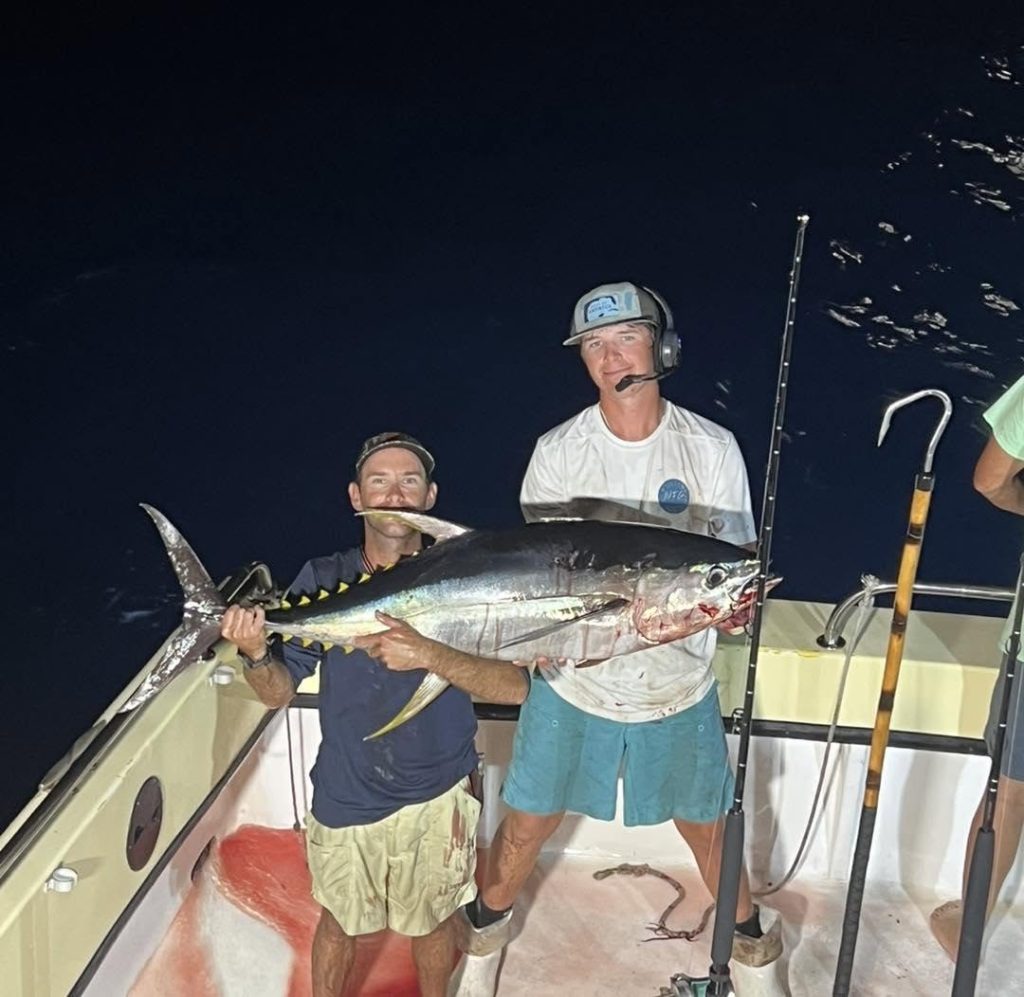
Capt. King Marchand with Captain Mike’s Fishing out of Dauphin Island has been putting this style of live bait for tuna fishing to work on some impressive fish. On a recent trip, his crew landed a 209-pound yellowfin, along with other quality tuna ranging from 60 pounds well into the triple digits.
The interesting part is not just that they are catching big tuna with live bait. It is how much thought goes into every part of the process. Finding the right fish, getting them excited, controlling the live chum, choosing leader size, making the hooked bait look natural, and managing the drag during the fight all matter. King has also learned that when big tuna are involved, sometimes it takes a pile of live baits to convince one to make a mistake.
Big Tuna On Small Live Baits
When you picture a 150- or 200-pound yellowfin eating a live bait, it is easy to imagine somebody bridling a big bonito or blackfin tuna and sending it back. That certainly works, but it is not what King and his crew have been doing.
They have been catching big yellowfin on relatively small live baits, including what we commonly call crazy fish or horn bellies along the northern Gulf Coast. One of King’s big tuna showed exactly how keyed in the fish had become on that bait.
“He had 19 crazy fish the size of your hand inside of his belly,” King said.
King believes those fish were almost certainly part of the live chum they had been throwing. The baits were all in roughly the same stage of digestion, suggesting the tuna had eaten them during a relatively short feeding window. That tells you two things. First, big yellowfin will absolutely eat surprisingly small live baits. Second, live chumming can get them eating in a way that simply putting one bait behind the boat may not.
Live Chumming Creates Competition
One of the coolest things about this type of fishing is getting to actually see the tuna react. King said they will mark the tuna, start throwing live baits, and sometimes see fish boiling behind the boat almost immediately.
“You put them live baits out and in about 15 seconds you’re going to see them come up boiling right behind the boat,” King said. “It’s the coolest thing in the world.”
That is where live bait chumming becomes different from simply using live bait for tuna fishing. The freebies are doing more than feeding the fish. They are changing their attitude.
One lone bait gives a big yellowfin plenty of time to inspect it. Throw 20 or 25 frantic live baits behind the boat, and suddenly the fish are competing. That competition can make a cautious tuna a lot less cautious.
For smaller yellowfin, King said it may only take four or five baits to get a reaction. Bigger tuna are another story.
“If the bigger fish are smarter, your 70-, 80-, and 200-pound fish are going to be smarter than your little 30-inch fish,” King said. “I have to put out probably 25 baits to catch the big ones almost every time. Because if you throw just a few, they just don’t really get that excited.”
It makes sense when you watch it happen. Instead of a tuna studying one suspicious bait, there are live baits scattering everywhere while other tuna are feeding around him. At some point instinct takes over. The challenge is getting them fired up without feeding them so much that everybody gets full.
Do Not Feed Them All Breakfast
There is definitely a fine line with live chumming. On the trip that produced the 209-pound yellowfin, King pulled up to a rig and found exactly what he was looking for. Frigate birds were working the upcurrent side and tuna were busting near the surface.
He scanned the area and marked roughly 25 yellowfin from about 40 to 140 feet deep. The first live bait set produced a triple hookup.
King kept baits going into the water and kept hooked fish in the spread whenever possible. They eventually saw one of the really big tuna jumping behind the boat with live chum hanging out of its mouth. They hooked that fish and ultimately landed it.
When they returned to the rig after the fight, however, things had changed. The tuna were still showing on the electronics, but they were no longer coming up aggressively after the live bait.
“We throw live baits out, and nothing would come up,” King said. “I was like, man, we done fed them up. That’s exactly what happened. They’re full.”
That 19-bait stomach suddenly made a lot of sense. Live chumming is about creating enough excitement to get the tuna competing, but there is a point where you can have too much of a good thing.
Find Tuna That Are Ready To Feed
Before worrying about hooks, leaders, or how many baits to throw, you need tuna underneath the boat. More importantly, you need tuna that are actually in a position to feed.
King runs his depth finder from the surface down to around 400 feet, but pays particularly close attention to approximately 80 to 250 feet.
“A fish that is 180 foot or less is a catchable fish,” King said. “You can almost most of the times catch that fish if you put the baits on top of him.”
That does not mean tuna deeper than 200 feet cannot be caught. But King’s experience has been that yellowfin sitting at 250 or 300 feet can be extremely difficult to make feed.
He recently marked a large number of tuna holding 250 feet and deeper. They tried live bait, weighted live baits and chunking without getting the fish to rise or bite. Instead of continuing to beat on them, he left. When he returned late in the day, those same fish had moved up to around 180 feet. They caught them.
That is an important lesson when using live bait for tuna fishing. Seeing tuna on the machine does not always mean you can catch them right now. Sometimes the smartest decision is to leave them alone and come back when those fish rise in the water column and their attitude changes.
Get The Live Bait Away From The Boat
Once you find catchable fish, getting the hooked bait to behave like the freebies becomes critical. That can be harder than it sounds.
Different bait species behave differently. Hardtails, for example, have a tendency to swim back underneath the boat looking for protection. To get them away from the boat, King may have to bump the boat ahead harder. The problem is that increasing boat speed also increases the amount of pressure and drag on the line. Now the hooked bait may no longer behave like all the free baits swimming naturally around it.
“So what makes your bait not look natural is how much drag is on the belly of the line,” King said.
Current adds another variable. More current means more pressure on the line. More pressure can mean downsizing leader or changing the way the bait is presented.
That is one reason King prefers braid as his main line for this style of fishing. Its smaller diameter cuts through the water better than comparable mono and creates less drag.
“There is really a lot that goes into it,” King said. “Kinds of baits, how much current there is, how much you have to keep the boat in gear. It’s a science, and you’ve got to figure it out pretty much every time you go.”
That is probably the biggest takeaway from all of this. There is no single setting that works every day.
Leader Size Changes With Conditions
King typically starts with 80-pound fluorocarbon. If the tuna are not cooperating, he starts working down.
“We start out with 80, and I will scale all the way down to 40 if we have to,” King said.
Leader size depends heavily on conditions. If there is a lot of current and the hooked bait is dragging around behind the boat looking nothing like the free swimmers, lighter fluorocarbon may get the presentation behaving correctly again.
King typically fishes around 40 to 50 feet of fluorocarbon leader. He also offered a simple rigging tip that can make a big difference. Fresh fluorocarbon often comes off the spool with a lot of memory. Before fishing it, King stretches the leader hard to remove those coils and get it lying straighter.
Again, the whole idea is to eliminate anything that keeps that hooked bait from looking like one more free meal.
Small Circle Hooks For Big Yellowfin
One of the biggest changes King has made over the years is going to a small circle hook.
He remembers a period when they lost a lot of big yellowfin, including fish estimated at more than 100 pounds. They experimented with heavier fluorocarbon and other changes, but King believes switching to the circle hook made the biggest difference.
“The biggest thing that made the difference was the circle hook because you’re not gut hooking near as many fish,” he said.
King uses a small 2/0 circle hook for much of his live bait tuna fishing. It looks awfully small when the fish you are after might weigh 150 or 200 pounds. That is exactly what I told him.
“It’s a tiny little hook. You’re kind of like, is this going to catch a tuna?”
It will. The 209-pound yellowfin came on one of those small hooks.
King said the vast majority of the tuna they hook are pinned cleanly in the corner of the mouth. Once that circle hook finds the hard part of a yellowfin’s jaw, it holds extremely well. That smaller hook also helps the bait swim naturally, which brings us right back to what this whole technique is about. Make the hooked bait look like every other bait in the water.
Live Bait For Tuna Fishing Rod And Reel Setup
King has settled on a fairly simple setup for this fishing. He likes Shimano Talica 25 reels for live baiting, primarily because of their smooth free spool and harness attachment points.
Free spool matters because the boat is usually moving enough that manually pulling line from the rod tip can make it difficult to keep the bait swimming freely. He typically fills those reels with 65-pound braid, although he sometimes goes to 80-pound braid.
On the business end, he starts with approximately 40 to 50 feet of 80-pound fluorocarbon and adjusts downward when conditions or picky fish require it.
For connecting the braid to fluorocarbon, King prefers an FG knot. The advantage is its small diameter. It passes smoothly through the guides and eliminates the additional hardware and water resistance associated with a swivel.
When you are trying to fool a big yellowfin that has probably inspected a lot of baits around offshore rigs, those little details start adding up.
Do Not Push The Drag Too Early
Getting the bite is only half the battle. A big yellowfin can expose every weak point in your tackle during the first few minutes of a fight.
King sets his live bait reels at about 15 to 16 pounds of drag, but that does not mean he immediately pushes the lever to full strike when a tuna eats. Especially with 40- or 50-pound leader, he does the opposite.
“You want to fight that fish for the first 10 minutes on seven or eight pounds of drag because he’s going to make those initial big, big runs, which is where he’s most likely to break you off,” King said.
Let the tuna run. The braid capacity is there for a reason.
Once the fish settles in underneath the boat and that rod tip starts doing what King calls the “tuna bob,” the fight changes. The tuna starts making those familiar circles and the rod tip begins bouncing rhythmically. That is when King starts adding pressure.
But even late in the fight, nothing is set in stone.
“Sometimes they’ll get up to the boat, they’ll see the boat, and they’ll make a big crazy run,” King said. “Lower that drag back down.”
That ability to increase and decrease drag based on what the fish is doing is a major part of consistently landing big tuna on lighter tackle. As King put it, every fish is different.
From Hookup To Harpoon
The 209-pound yellowfin was a perfect example of just how unpredictable the fight can get. After eating a live bait, the fish ran toward the rig like a blue marlin.
King had to maneuver the boat to keep the fish out of the structure. The tuna made another run toward the rig, then dove underneath the boat and stayed shallow enough that the line began rubbing near the running gear.
They spun the boat, chased the fish and eventually got the line back where they wanted it. Then the angle changed. The line finally went straight up and down and the rod tip began that unmistakable tuna bob.
King knew they were looking at the same big fish they had watched crashing live chum behind the boat earlier. Roughly two hours later, they finally got the harpoon into it and brought a 209-pound yellowfin aboard.
That is a long way from throwing a few freebies behind the boat and hoping something eats. It is bait management, electronics, boat handling, leader selection, hook selection, drag management and a whole lot of patience working together.
Pay Attention To The Details
King made one comment during our conversation that probably sums up modern yellowfin fishing better than anything else.
“You’ve got to be very particular with your fishing, especially the way the tuna fishing is nowadays,” he said. “You’ve just got to read the fish, read the line, and be prepared for everything with the best gear.”
When you consider the fuel it takes to reach these offshore rigs, it does not make much sense to get cheap on braid, fluorocarbon, hooks or bait once you get there.
Using live bait for tuna fishing is not particularly complicated on the surface. Find tuna, throw live bait, put a hook in one and hang on. Doing it consistently on big yellowfin is another story.
Sometimes you need five freebies. Sometimes you need 25. Sometimes 80-pound leader works fine. Sometimes you have to drop to 40. Tuna at 140 feet may eat everything you throw at them while tuna at 250 feet act like you are not even there.
Read what the fish are telling you, keep the hooked bait looking as close to the real thing as possible, and be ready to adjust. Because once a big yellowfin loses its caution and grabs that little circle hook, all those small decisions suddenly matter a whole lot.