
One of the most consistent things I’ve seen after interviewing hundreds of professional anglers is that they simply keep hooks in the water more than the average recreational angler. It’s not necessarily that they have better spots, better technique, or better bait, it’s that they make longer casts, are better prepared, and ultimately spend more time actively fishing during any given day. That being said, one arena where professional anglers often do outclass their recreational counterparts is in the area of marine electronics. There is a point where marine electronics stop being just a convenience and start becoming a real fishing advantage, especially when they are integrated into a fully networked boat.
That was one of the clearest takeaways from my conversation with Capt. Justin Leake of Panama City Inshore. Justin spends a lot of time fishing everything from tucked-away creeks to offshore live bottom, and the way he described a fully networked boat made one thing pretty obvious: this stuff is not just about having a pretty screen at the console. It is about efficiency, boat positioning, and keeping yourself focused on actually fishing.
Justin put it simply: “Modern electronics allow us to do so much, not just for safety and navigation, but boat positioning is one of the most important factors.” He said that applies “from bass fishing to billfishing,” because once you find fish, “you’ve got to be able to keep a boat in a good orientation to make a good presentation.”
1. Better Boat Positioning
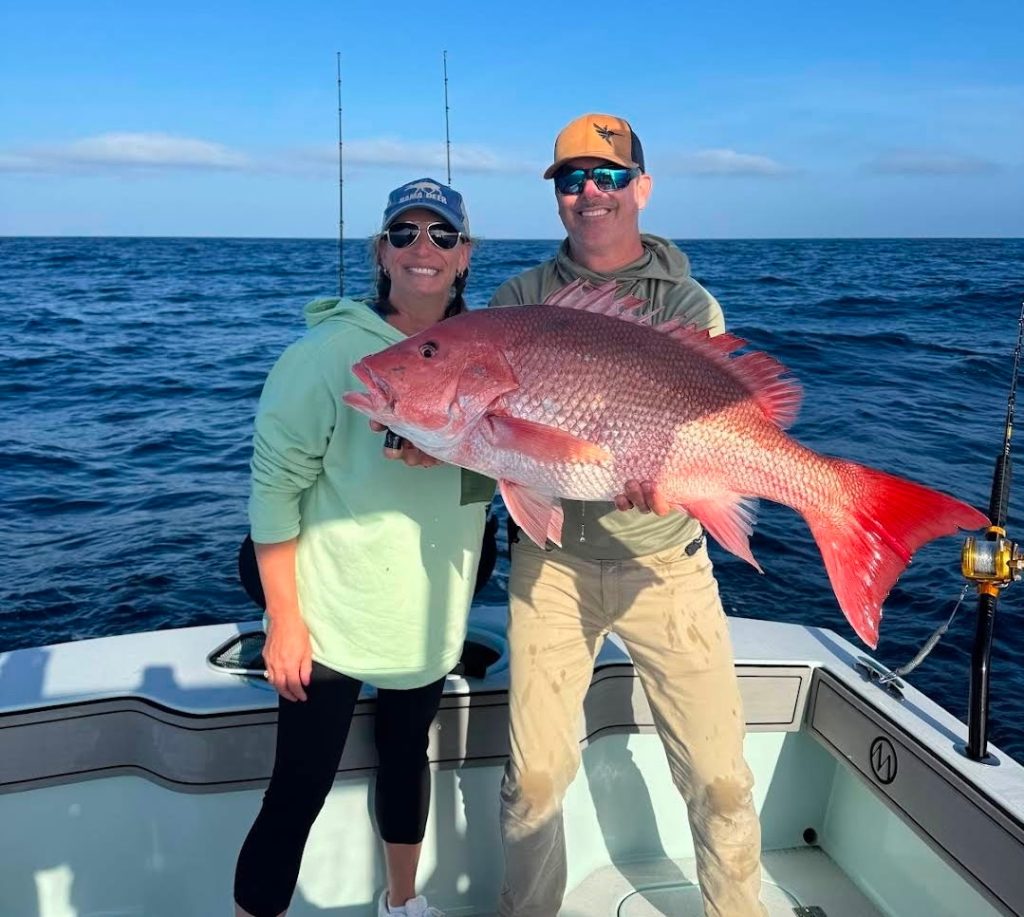
Better boat positioning is where a networked system really separates itself. This isn’t about finding a spot, it’s about fishing it right. It’s the difference between constantly repositioning your trolling motor over a piece of live bottom, constantly re-dropping baits versus actually staying lined up and fishing effectively. Justin pointed to drift mode as a networked feature that changes those exact scenarios. With drift mode, he can simulate having a perfect drift. Offshore, that lets him approach pressured snapper differently: “we’re basically using that drift mode to slow troll, but like super slow troll, and actually cover that entire piece of natural bottom.” He’s moving baits naturally across the structure, sometimes as much as a mile of natural reef, and as he put it, “it’s almost not fair for the snapper… it’s something they haven’t seen before. I hit go, I walk away, and I’m focused on fishing.”
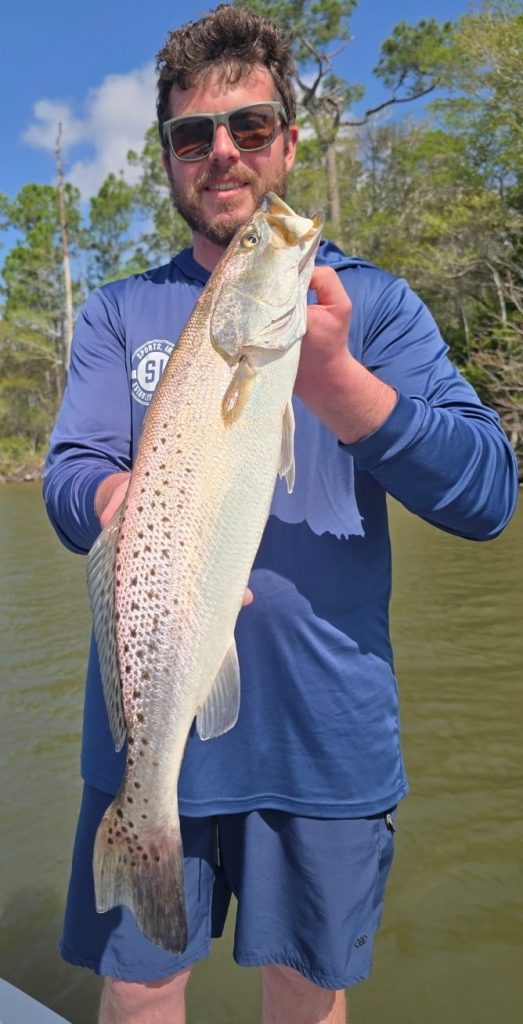
Justin put it simply: “The more efficient you are, the more fish you catch.” Inshore while fishing for Redfish, speckled trout, and flounder in smaller creeks, rivers, and bayous, you’re often trying to methodically ease down a bank without blowing past fish. Additionally, you may find yourself or your guests consistently casting into the marsh or up onto the bank. In this scenario, jog solves a this problem. “If I’m sitting somewhere… and I want to move the boat forward 20 feet, I don’t drive the trolling motor… I just hit the forward jog button four times.” That jog feature moves the boat exactly 5 feet with each push of the button. No guesswork, no overshooting, no taking the trolling motor out of spot lock, motoring, then going back to spot lock, just staying in the strike zone and fishing the entire time.
2. More Time Fishing
Sometimes, a networked boat helps you keep your boat in a better position to effectively present baits. Other times it keeps you on the water vs back at the dock with better data. One of the best examples Justin gave me of this was fuel data on a recent charity bass fishing tournament. He described making a long run after putting 65 gallons of gas in the boat, His fishing partner pointed to the dash, signalling the analog gauge blinking on the last barwarning, but Justin pointed to the MFD, “It tells me I have 18.2 gallons left,” he said, and it even showed his miles to empty based on current fuel burn.
For me, this type of warning signals it’s time to head home, anxious I’ll run out of fuel before I return. But on Justin’s boat, his Yamaha was networked into his MFD through a NMEA connection, and while his analog fuel guage said he was almost out of fuel, his MFD said otherwise. “Now I’m not going, my fuel gauge says I got a little juice left. I know exactly what I have.” That kind of peace of mind keeps you focused on fishing instead of worrying about getting home, and that day led to hours more fishing.
Networking Your Boat
Justin runs a fully integrated system from Johnson Outdoors, a Humminbird MFD, Minn Kota trolling motor, and Minn Kota Raptor, all connected through the “One Boat Network.” That integration allows everything to communicate seamlessly, giving him full control from any screen on the boat without relying on remotes, lanyards, or extra hands. Other manufacturers offer similar networking capabilities, often tying systems together through NMEA, but the takeaway is the same: a networked boat removes friction, keeps you fishing, and ultimately helps you make more effective presentations throughout the day, which, at least for me, is the whole point of being out there.