

If you’ve been following along, you may remember our previous discussion on prepping your outboard for the season. This time, we’re diving into a different but equally important topic: when to do an outboard repower. Upgrading to a new engine is a big investment, and knowing when it’s the right time can be tricky.
To help us navigate this decision, we spoke with Boyd Siegel and Daniel Porter from Saunders Yachtworks. They shared insights on outboard lifespan, maintenance best practices, key warning signs, and what to consider before making the leap to a new engine.
How Long Should an Outboard Last?
One of the first questions most boat owners ask is: How long can I expect my outboard to last?
The answer depends on several factors, but maintenance is the most critical. “I’ve seen guide boats with over 3,000 hours on them,” says Boyd. “But they were constantly in the shop, getting routine maintenance because that engine was their livelihood.”
For recreational boaters, a well-maintained engine can last thousands of hours, but neglecting regular service significantly shortens its life. Simply put, staying on top of oil changes, filter replacements, and other routine maintenance is the best way to maximize longevity.
Manufacturer Guidelines vs. Real-World Maintenance
Modern vehicles come with oil life monitors, but many mechanics advise against relying on them too heavily. The same goes for outboards.
Daniel cautions against waiting for an engine alarm to remind you about oil changes: “That alarm is basically saying you’ve already gone way too long.” Instead, he recommends at least annual service, if not more frequently, depending on usage.

Regular maintenance is key, but how the engine is used also plays a major role. An engine that runs at wide-open throttle all day will wear out much faster than one used more moderately.
Signs Your Outboard Might Be Near the End
So, how do you know when it’s time to repower? Some common warning signs include:
- Loss of Power – If it’s struggling to get on plane or feels sluggish, it may be time for an inspection.
- Increased Fuel Consumption – If you’re suddenly burning more fuel for the same trips, it could indicate wear.
- Water Intrusion – Water in the engine is often a death sentence. In most cases, it’s not salvageable.
- Frequent Repairs – Constantly fouling spark plugs, struggling to start, or experiencing electrical issues are all red flags.
Some engines seem to run forever with minimal issues, while others start acting up much sooner. As Boyd jokes it, “Some people just have luck. Others—like me—can’t make it across the canal without a problem.”
The Repower Decision: Fix It or Upgrade?
A major consideration is whether to continue repairing an aging engine or bite the bullet and repower.
“If you’re spending $1,000 every year just to keep it running, and the engine itself is only worth $2,500, that’s an easy decision,” Boyd explains.
However, cost isn’t the only factor. Repowering can be a major investment, sometimes exceeding the boat’s hull value. The key question is whether you plan to keep the boat long-term. If it’s a boat you love and want to keep for years, a new engine makes sense.
Warranty is another major advantage of repowering. “With a new Yamaha, Mercury, or Suzuki, you’re getting warranty coverage,” Daniel points out. “That’s peace of mind that you just don’t have with an aging outboard.”
The Role of Technology in the Repower Decision
Even if your old engine technically still runs, upgrading to a modern outboard has its perks.
- Quieter Operation – New four-stroke engines are significantly quieter than older two-strokes.
- Better Fuel Efficiency – Advancements in fuel injection and engine design have made today’s outboards far more efficient.
- Improved Reliability – Modern outboards crank right up, with fewer of the quirks that plagued older carbureted engines.
That said, not all advancements are universally loved. Electronic steering, for example, is a game-changer for some, but Boyd remains skeptical. “We’ve heard stories of people offshore losing their electronic steering and having to hold the engine by hand just to steer back in,” he says.
Planning a Repower: Where to Start?
If you’re considering repowering, the process typically starts with a consultation. “We ask about transom height, weight capacity, performance expectations, and personal brand preferences,” Daniel explains.
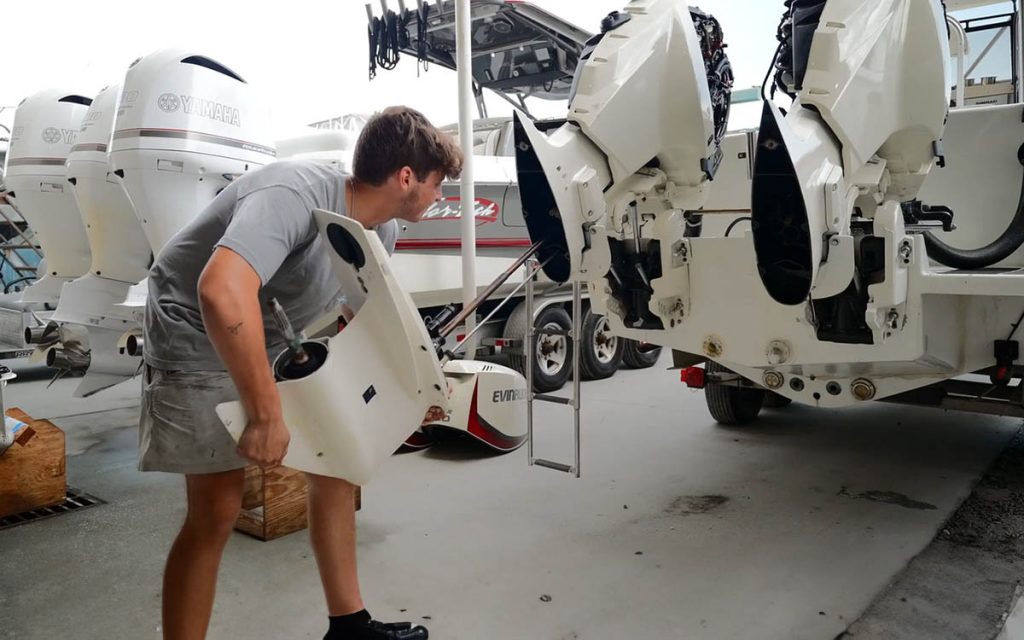
Researching ahead of time is helpful, but Boyd warns against relying too much on online advice. “Your buddy’s boat isn’t your boat,” he says. “Every setup is different. The best approach is to talk to someone in the marine industry you trust.”
When Is the Best Time to Repower?
If you’re looking for the best deal, timing matters. Many manufacturers offer rebates around major boat shows and at the end of the year.
From a scheduling perspective, winter is typically the best time for an outboard repower, as service shops are less busy. However, if your engine fails mid-season, waiting may not be an option.
Choosing the Right Repower Provider
Beyond engine choice, finding a reputable service provider is crucial. Boyd recommends:
- Checking Reviews – Online reviews can provide insight into customer experiences.
- Asking for Recommendations – Fellow boaters can share firsthand accounts.
- Visiting the Shop – Seeing the facility and speaking with the team helps gauge professionalism and expertise.
Trust is key. “If something doesn’t feel right, speak up,” Boyd advises. “A good service provider wants to work through concerns with you.”
Final Thoughts
Repowering an outboard is a big decision, but when done right, it can breathe new life into a beloved boat. Whether you’re chasing better fuel economy, improved reliability, or simply peace of mind, understanding when and why to repower is crucial.
If you’re considering a repower and want expert guidance, Saunders Yachtworks is ready to help. You can reach them at (251) 981-3700 or visit their website for more information.
At the end of the day, as Boyd quips, “Boat math doesn’t make sense—quit trying to make it make sense.” But if your goal is more time on the water and fewer headaches, a well-timed outboard repower might be the best decision you make.