
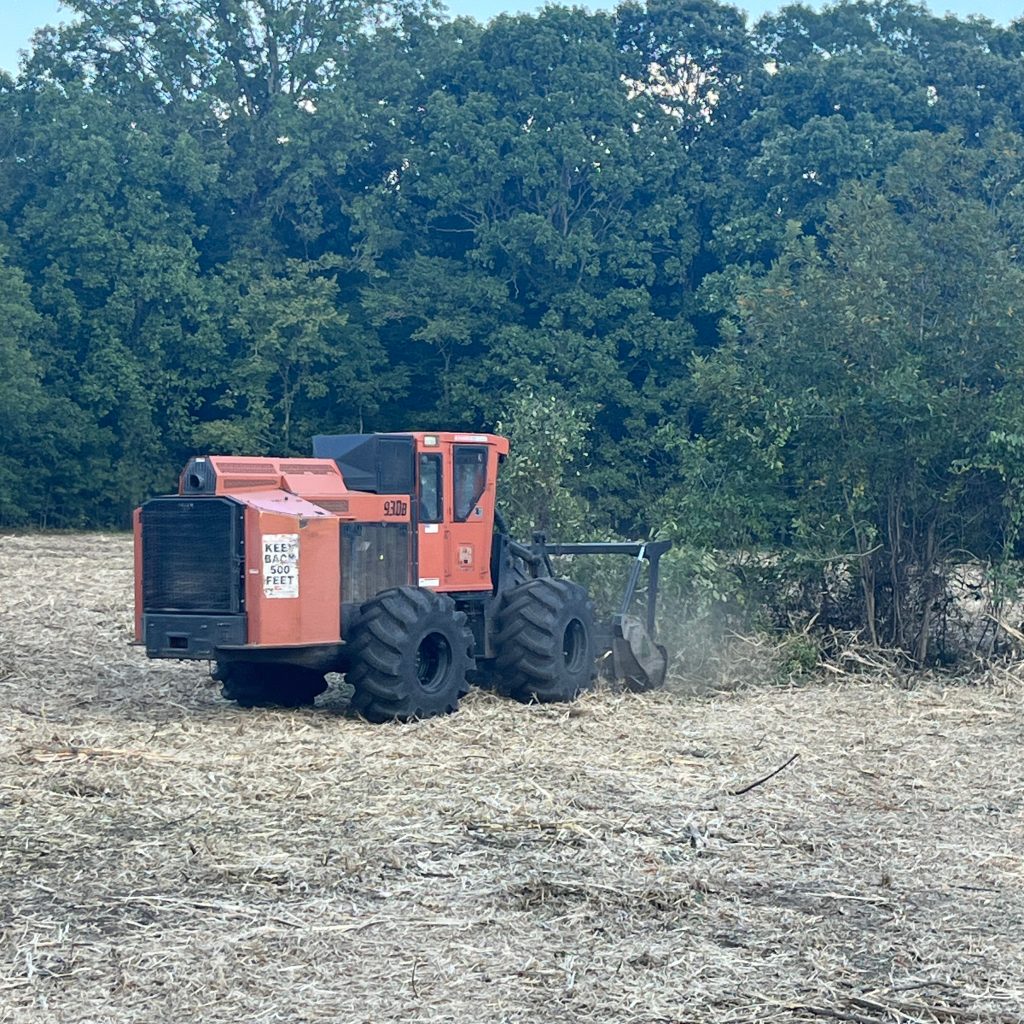
Prescribed fire is one of the most powerful tools we have for managing wildlife habitat in the Southeast. When it works, it opens the woods, feeds native plants, and resets ecosystems that evolved with regular disturbance. But many landowners eventually reach a point where fire alone just doesn’t do the job anymore. The understory is too thick, the midstory has closed in, sunlight can’t reach the ground, and burns either won’t carry or won’t change much at all.
To learn more about how landowners can manage overgrown understory when prescribed fire isn’t an option, we reached out to Jody Pagan of Ecosystems Protection Service and Brian Sheppard of Brush Clearing Services. Between them, they’ve spent decades restoring wetlands, uplands, woodlands, savannas, and forests across the Southeast, often stepping in where fire could no longer do the work by itself.
Hunters First
Both Pagan and Sheppard trace their passion for habitat management straight back to hunting. For Pagan, the connection is direct. “I’m passionate about restoration and management because I love to hunt,” he says. “The best biologists and ecologists I know are passionate about something because they love to hunt the critters. They know that if they can put that habitat back into suitable parameters that critter likes, then they’re going to be more successful hunting.”
That mindset has shaped Pagan’s work for decades, from Wetlands Reserve easements and Farm Bill conservation programs to private duck properties and state wildlife projects. Sheppard’s path followed a similar arc. “I started in the hunting industry as a guide and in the food plot world,” he says. “But this habitat restoration work is the most rewarding thing I’ve ever done. When a landowner calls and says, ‘We had the best duck season we ever had,’ or a biologist says woodpeckers moved in immediately, that’s what drives us.”
When Fire Stops Working
The core problem both men see is land that has simply grown past the point where prescribed fire can help. “A lot of these areas are non-merchantable timber that may never be merchantable,” Sheppard explains. “They’re past the point where fire is going to bend it. You might have ten- to twelve-inch sweetgums that are sixty feet tall. Fire won’t control it, chemical treatment leaves dead standing timber, and no logging crew can make money cutting it. At that point, you’ve basically got a biological desert.”
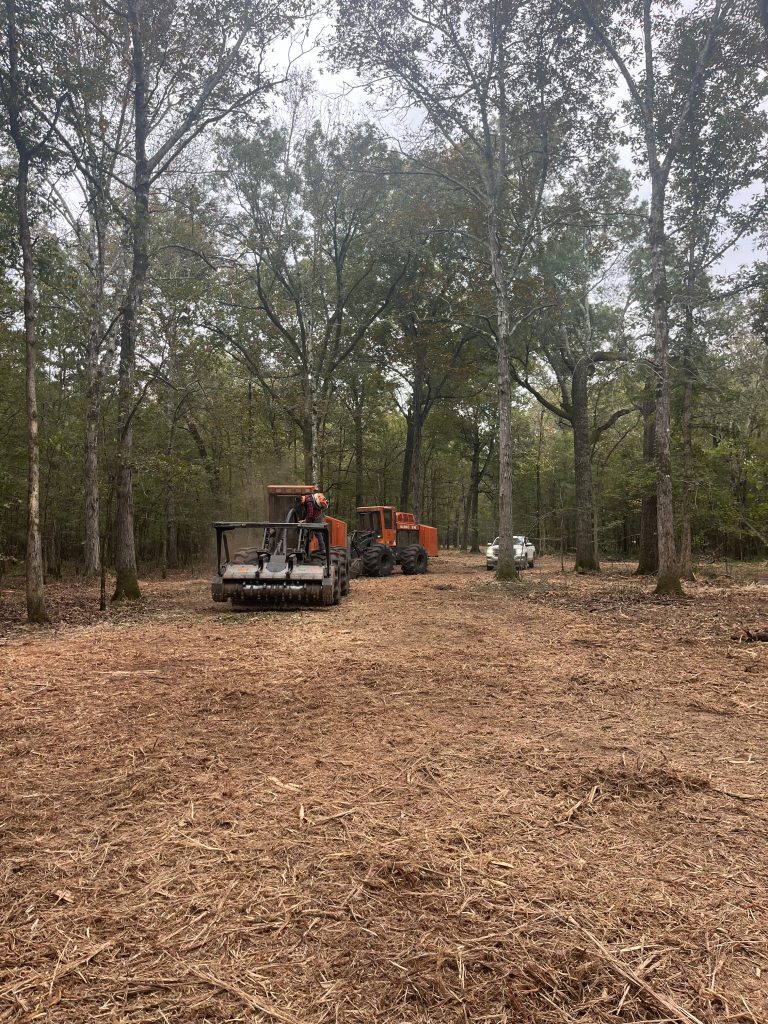
Pagan says this condition is widespread across the Southeast, largely due to decades of fire suppression. “Even areas that burned infrequently used to get fire every eight or ten years,” he says. “That kept the understory open. Since Smokey Bear, that’s gone. Now you can’t retreat or restore it with fire alone.”
Restoration Versus Manipulation
Before talking about machines, Pagan insists on getting the mindset right. “There’s a difference between restoration and manipulation,” he says. “Manipulation is trying to make the land do what you want it to do. Restoration is taking it back to what it wanted to be.” His approach always starts from the ground up, literally. “It all starts with the dirt. Soils, rainfall, geomorphology, species composition. If that dirt wants to grow willow oak and water oak, that’s what belongs there. If it wants to be tallgrass prairie, it’s never going to grow good oak.”
This matters because prescribed fire only works when the system is ready to carry it. “If you don’t have enough herbaceous layer, you don’t have fire,” Pagan says. “The midstory is chewing up all the light. Until you get light back on the ground, fire is ineffective.”
Mechanical Work as a Reset Button
That’s where mechanical understory work comes in, not as a replacement for fire, but as a way to make fire possible again. “What we’re really doing is fuel load reduction,” Pagan explains. “We’re taking it down to where we can reintroduce fire. If it’s a fire-driven system and you never get fire back in it, you’re never going to reclaim it.”
Sheppard describes their role as hitting reset. “We go in with industrial forestry mulchers and take it back to ground zero,” he says. “Once we do that, state agencies or landowners can bring fire back and manage it with fire and herbicide together.”
But both men are clear that mechanical work alone is not the answer. “Forestry mulching gives instant gratification,” Sheppard says. “It looks good. It opens things up. People walk away. Five years later, it’s worse than before if there’s no maintenance.”
The Problem With Too Much Mulch
One of the biggest mistakes they see is leaving too much biomass on the ground. “If you mulch a stand with too much material and leave it waist-deep, you’ve created a moisture barrier,” Sheppard explains. “Fire just top-burns it and doesn’t do anything.” In those cases, Pagan and Sheppard often push for logging first, even when landowners resist. “I’m a huge advocate for getting a timber crew in first,” Sheppard says. “Get as much material out as possible, then come back and clean it up mechanically.”
Pagan agrees. “We’ve had situations where if we ground everything, there was no way to burn it afterward,” he says. “So we work with loggers to remove as much material as possible, then come back and do the finer work.”
No One-Size-Fits-All Prescription
When landowners ask for a simple sequence, Pagan is blunt. “It’s case by case,” he says. “You don’t know the stand history until you walk it. Sometimes you log and burn. Sometimes you grind, burn, herbicide, and burn again. Sometimes you spend enough money you could’ve bought another farm, but you finally get it in check.”
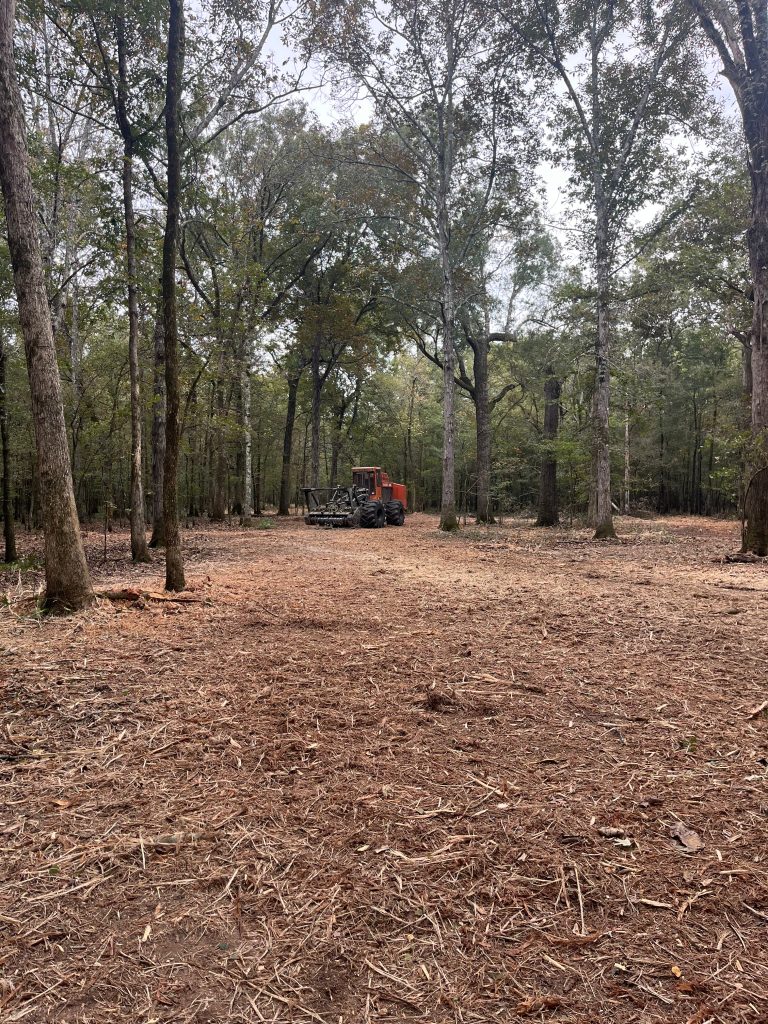
That’s why Pagan emphasizes what he calls “forensic ecology,” reading the land to understand what it used to be and how far it can realistically be brought back. “If you plant longleaf where it doesn’t belong, you might get some trees to live,” he says. “But you’ll never have a hardy community.”
A Look at What’s Possible
One of their most dramatic success stories comes from reclaiming an old reservoir for waterfowl. After mechanical work removed cattails and woody vegetation, Pagan lit the entire site on fire. “It looked like the apocalypse,” Sheppard recalls. “That fire burned everything down to mineral soil.”
The results were immediate. “The next spring, the smartweed was seven feet tall,” Pagan says. “That winter, there were about fifty thousand ducks. If we hadn’t burned it, it would not have happened.”
Start With Free Expertise
Despite their private consulting work, both Pagan and Sheppard strongly encourage landowners to start with free expertise before ever calling a contractor. “Go to your local NRCS office,” Pagan says. “That advice is free. They’ll tell you what you’ve got and where you can go.” Beyond technical guidance, he says NRCS can help landowners understand which conservation practices may qualify for cost-share programs that offset the expense of mechanical work, prescribed fire prep, or long-term habitat restoration. In many cases, having a plan developed through NRCS is the first step toward getting part of the work paid for instead of shouldering the full cost alone.
For projects that still require significant upfront investment, Pagan recommends landowners think beyond writing a check. Mechanical understory work, timber stand improvement, and habitat restoration are long-term improvements to the land itself, and those projects can often be financed through land improvement loans designed specifically for rural properties. Lenders like First South Farm Credit work with landowners to fund conservation and improvement projects that increase both wildlife value and long-term land value, allowing work to happen now rather than being delayed for years while waiting to save the cash.
The key, Pagan says, is sequencing. Start with NRCS to understand what the land needs and what funding programs may apply. Then, if there’s a gap between what cost-share covers and what the project requires, tools like land improvement loans can make the difference between a plan that stays on paper and one that actually gets implemented.
The Big Takeaway
Managing understory when prescribed fire won’t work is rarely cheap, fast, or simple. It requires humility, planning, and often mechanical intervention to undo decades of neglect or fire suppression. But when done correctly, it sets the stage for fire to return and ecosystems to function again.
As Pagan puts it, “If you put back the function and values of the ecosystem, the critters show up.” Mechanical understory management isn’t an alternative to fire. It’s often the only way to bring fire back where it belongs.