
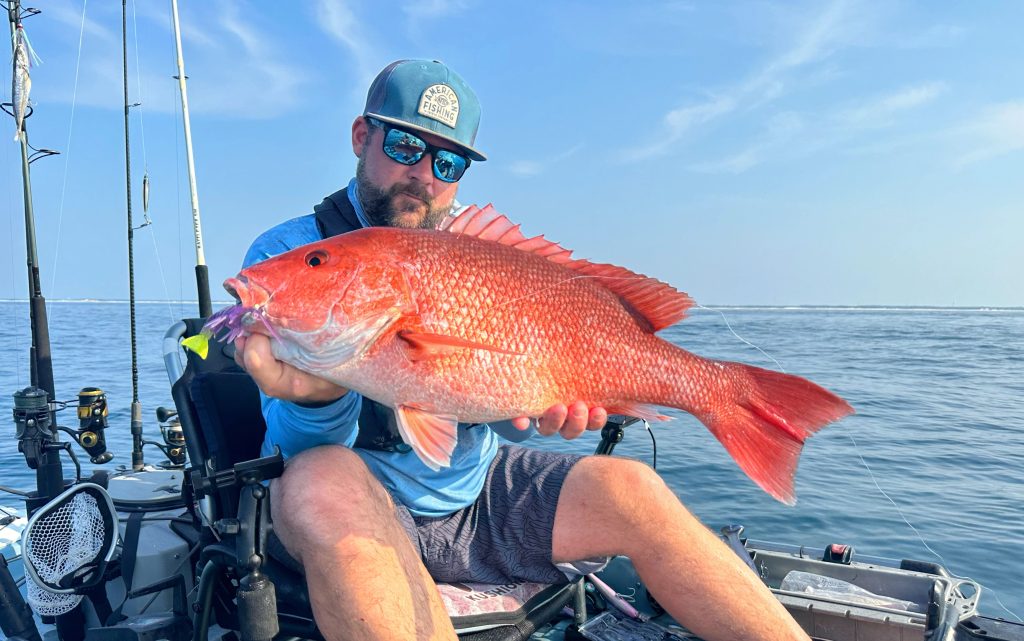
Fishery managers always face a touchy challenge when it comes to setting catch limits and seasons for highly-popular fish like red snapper in the Gulf of Mexico. If they manage too conservatively, they cost charter boaters and waterfront communities millions in lost revenue, and anger a lot of anglers by making the red snapper season too short when the resource could absorb a lot more harvest. If they manage too liberally, too many adult fish are taken, the fishery fails and again, the anglers, charter boaters and waterfront communities are mad at them, to say nothing of their governmental oversight committees.
As a result, federal fishery managers tend to manage conservatively—it’s always easier to open the spigot than to close it.
In mid-2023, the Gulf of Mexico Fishery Management Council increased the allowable Red Snapper harvest just a bit in federal waters, adding about 900,000 pounds to the overall catch. But that poundage is divided among the five Gulf states, resulting in a minimal addition to the fish available to anglers this year outside the 9 nm line that marks federal waters. The quota will remain in place for 2024.
Here’s how it breaks down:
| State Private Angling ACLs* | 2023 | 2024 |
| Florida ACL | 2,069,053 | 2,191,315 |
| Alabama ACL | 558,200 | 591,185 |
| Mississippi ACL | 59,354 | 62,862 |
| Louisiana ACL | 882,442 | 934,587 |
| Texas ACL | 270,386 | 286,363 |
“The catch limits set in that 2023 rule will be in effect for 2024, and until it is superseded by another Red Snapper management action,” Daniel Luers of NOAA Fisheries told Great Days Outdoors.
“Currently, no other actions to change Red Snapper catch limits have are being worked on by the Gulf of Mexico Fishery Management Council, so it is likely these catch limits will be in place for a few years,” Luers said.
“Note that this rule only sets the Federal catch limits, and the private recreational portion is divided up to the Gulf states for management,” Luers said. “So we do not have any control over private recreational season dates or lengths in each state. Those are determined by the state. The one thing we will announce prior to the season opening (on June 1) is the duration of the Red Snapper for-hire (charter and headboat) season. Last year, this season closed on August 25th. I don’t have any information yet on when that season will close this year, but we will announce it prior to the season opening date.”
Alabama and Louisiana have already set their state waters’ seasons. See below for details on all five Gulf states.
Red Snapper Survival
An awful lot of red snapper get caught each year without getting harvested due to the tight regulations in place throughout the Southeast in both federal and state waters. Some anglers report catching a dozen snapper for every one they take home.
Unfortunately, a lot of those “extra” snapper don’t survive, even though they’re released quickly, because of barotrauma. Basically the pressure change when being cranked up quickly from the depths expands their swim bladder to several times normal size and this pushes their internal organs out their mouth. When the fish is released, it can’t dive back down—it’s as though it’s attached to a balloon. It floats away to be eaten by sharks or dolphins.
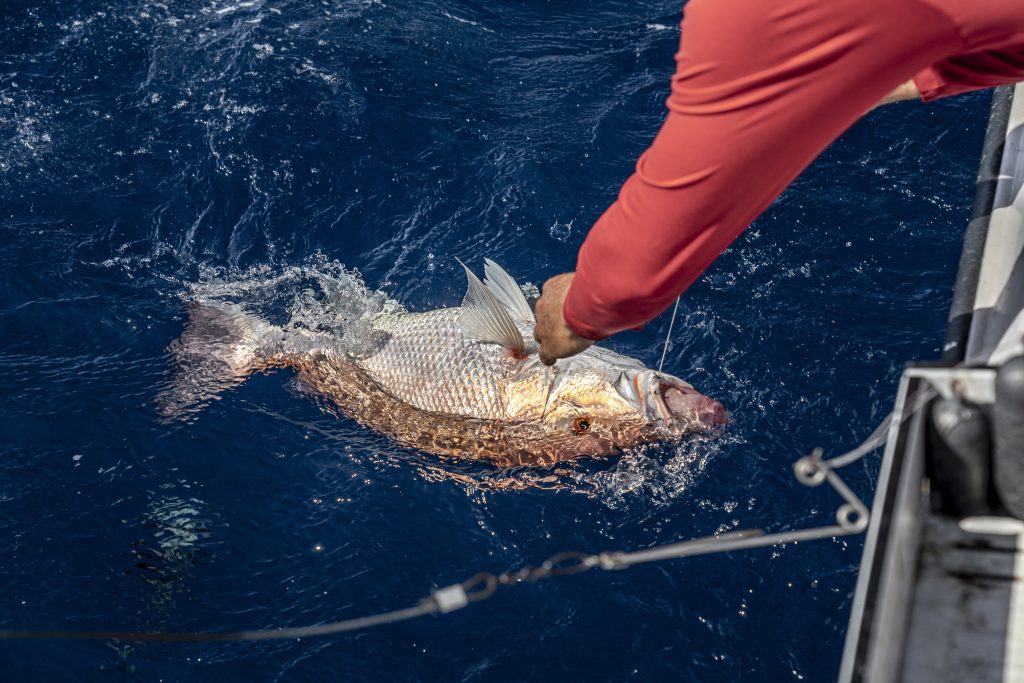
If even half of those “extra” released snapper don’t make it after being released, the goals of reef fish management in the Southeast will be very hard to reach. And if scientists perceive numbers of any species are down, the harvest limits will be ratcheted down to cure the problem—nobody wins.
While most reef anglers are aware that properly venting a fish caught deep, letting the expanded gas out of its body cavity, can help it survive, doing it right is critical. And fisheries experts now say that there are better ways of ensuring survival.
A non-profit program called “Return ‘Em Right” aims to greatly increase the number of anglers who understand how to release reef species for best survival rates. Project partners include Florida Sea Grant, University of Florida, Gulf States Marine Fisheries Commission, NOAA and a coalition of anglers, industry groups, state agencies, universities, government and non-government organizations committed to maintaining healthy fish stocks and fishing access in the Gulf of Mexico.
Nick Haddad, Sustainable Fisheries Communications Manager of the program, says the Return ‘Em Right mission is “to provide free training in best release practices, and also provide the necessary gear at no cost to the angler.”
So far, the program has had impressive participation. It has trained some 28,000 anglers via a 15-minute online presentation in using venting tools and “descending devices”, weighted assemblies that quickly pull a fish back to bottom before releasing it. The fish quickly recovers and swims off when returned to normal depth in most cases.
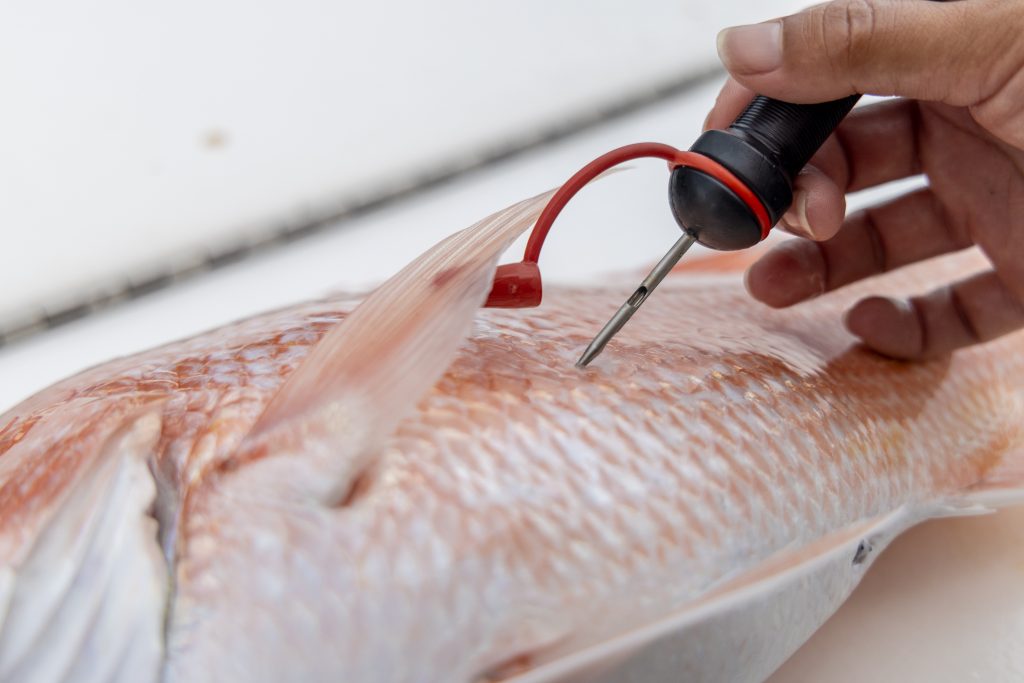
Return ‘Em Right has also trained some 860 professional fishing captains in the program. Over 1,200 fish have been tagged to allow researchers to study survival, and thousands have now been caught and released.
It only takes 15 minutes to learn the basics via video, and Return ‘Em Right will then supply you with a free kit including a descending device for your use. The program is an opportunity for every reef fishing fan to do their part in preserving the fishery. Learn more at https://returnemright.org/ .
Gulf States’ Red Snapper Seasons
Some Gulf states have not yet finalized their seasons. Here’s what we know so far:
Alabama
Colonel Scott Bannon, director of Alabama’s Marine Resources Division, says the season is shaping up to be similar to last year.
“We will open on Friday May 24th for 4-day weekends. We will be open the whole week of Independence Day since it is on a Thursday. The 2 fish per person and 16” minimum length remains the same. Anglers are required to report Greater Amberjack, Grey Triggerfish and Red Snapper in the SnapperCheck app, and they must have a descending device rigged for use or a venting tool onboard,” says Bannon.
“We should see a slight increase over the 591,185 lbs from 2023 announced sometime in April. We will make an announcement when that comes out,” Bannon said.
“Mississippi and Alabama are conducting a year-long fishing effort survey similar to the type used in Louisiana to help determine fishing effort in our states. We are doing this because we feel the Federal Effort Survey (FES) does a terrible job in our states and it inflates the effort.
“NOAA is on record that information may be inflated by 30% and this information is used in management decisions. So we encourage anglers that receive a phone call or email from our survey group that they take the time to respond. This information has the potential to increase opportunities for anglers.”
Learn more about Alabama’s 2024 private angler red snapper season here.
Florida
Florida’s season this year runs from June 1 to July 31, plus an added intermittent fall season.
This year’s fall season dates will be:
September 1-2, 6-8, 13-15, 20-22, 27-29
October 4-6, 11-13, 18-20, 25-27
November 1-3, 8-11, 15-17, 22-24, 28-30
Like Alabama, Florida will have a 2 fish per person limit and a 16” minimum length.
Louisiana
The 2024 private recreational Red Snapper season began on Monday, April 15, 2024, in both state and federal waters. The season will run seven days a week with a daily bag limit of four fish per person and a 16-inch total minimum length limit.
The season will remain open until recreational landings approach or reach Louisiana’s annual private recreational allocation of 934,587 pounds.
Anglers must possess valid Louisiana basic and Saltwater Recreational Fishing Licenses as well as a Recreational Offshore Landing Permit (free of charge) to fish for or possess Red Snapper, as well as other offshore species. Anglers on paid charters do not need the permit.
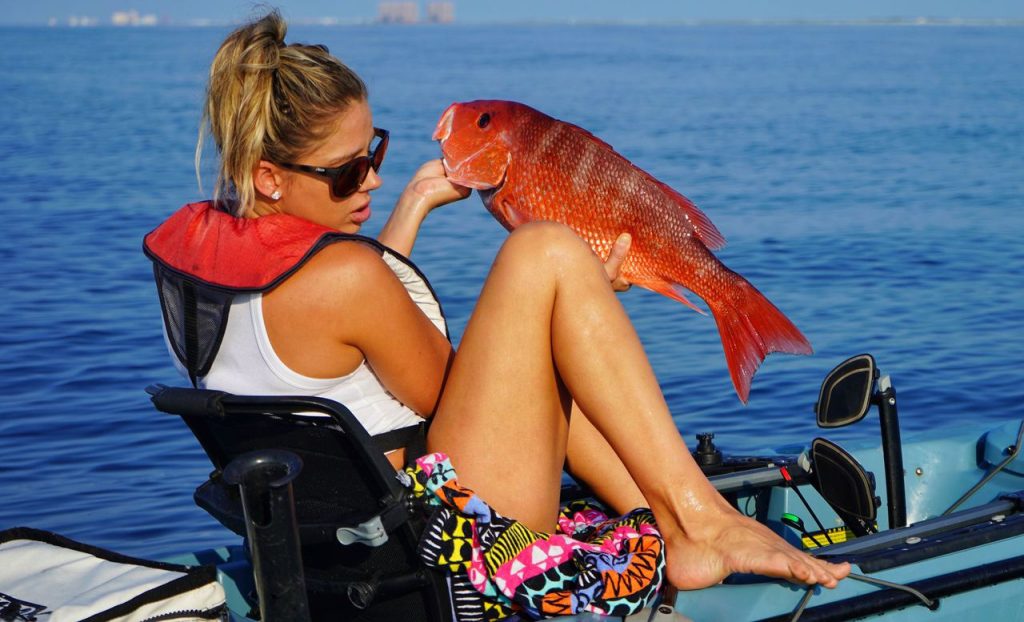
LDWF also encourages anglers to reduce barotrauma while fishing for Red Snapper and other reef fish by using descending devices to return fish to a survivable depth before being released. See the LDWF website at https://www.wlf.louisiana.gov/page/barotrauma for more information.
Mississippi
Mississippi’s Red Snapper season has opened on the Friday of Memorial Day weekend for the last six years and likely will do so again this year according to Eric Gigli, Tails n’ Scales & MS Creel Administrator for the Mississippi Department of Marine Resources, but actual dates have not been set yet.
As with previous years, it’s likely a mid-season closure will allow for Mississippi Department of Marine Resources (MDMR) staff to compile landings information and examine the potential for a season extension. The season will be open seven days a week in both state and federal waters.
The season will close if the annual catch target (ACT) for recreational fishermen is projected to be reached at any point after the season opens. One angler per vessel per trip is required to report through the MDMR Tails n’ Scales system on the catch for the boat. Visit www.tailsnscales.org to download the app. For more, visit the DMR online at www.dmr.ms.gov.
Texas
A study a few years back indicated some 18 million Red Snapper two years or more off the Texas coast, but the fish are not targeted as much here as they are further north and east in the Gulf.
Texas Director of Marine Fisheries Robin Riechers says there are no expected changes in the Lone Star State’s snapper rules for this year.
In 2023, the federal waters season was June 1 to Sept. 1, limit 2 daily, 16” minimum. In state waters, Texas has much more liberal rules than most due to minimal targeting of Red Snapper inside the 9 NM limit—the season is open year round, the bag limit is 4 and the minimum size is 15”. See details here: https://tpwd.texas.gov/regulations/outdoor-annual/fishing/saltwater-fishing/red-snapper.
How To Catch Red Snapper
Red snapper are nearly always found near bottom structure, but usually hang well above it, sometimes forming the legendary “Christmas tree” image on sonar. With good sonar imaging, it’s possible to watch your bait drop to just above the fish, hold it there, and start cranking when one takes hold. (Just don’t drop the bait through the school—they almost never go down to get it.)
While “keeper” size snapper will grab anything from a jumbo shrimp to a squid strip, fish eight pounds and up are much easier to catch on live baits like pinfish, scaled sardines, threadfins and menhaden in the four to five inch range.
Remember you MUST use only non-stainless steel circle hooks for red snapper and all other reef species. Hook sizes of 6/0 to 10/0 are preferred, depending on the size of red snapper you target. (For nearshore fish just over the minimum size limit, most anglers use smaller hooks, typically 5/0 to as small as 3/0.) You must also have a venting tool and descending device aboard to assist in successful release of unwanted fish.
Most anglers use either a knocker rig, with the weight separated from the hook only by a bead to protect the knot, or a Carolina rig, with the weight above a leader three to four feet long. The latter is better in clear water or where the fish are picky. Weights from three to eight ounces are typical, depending on depth and current—use enough to get down to just above the fish quickly.
Leaders as light as 30-pound test are good inshore, while offshore most use 60 or heavier.
Thirty-pound-test tackle is adequate for inshore fish and gets more bites than heavier gear, but of course you never know when a giant might latch on so most anglers opt for 50-pound-test gear or more, particularly as they move farther offshore.
For anglers who have larger boats and are willing to run, the bigger red snapper are usually more than 30 miles offshore where pressure drops off. (If you have a spot-lock type trolling motor on your bow, you have a huge advantage offshore because you can easily stay on the fish without handling hundreds of feet of anchor line.)
Keeper red snapper are frequently found on modest relief bottoms, that is on small rock piles or other structure that may stick up only a couple feet from bottom. This is probably not because that’s their preferred habitat but because all the large fish on the more obvious bottom get caught out. The smaller structures are harder to see unless you have a sharp eye and big-screen sonar, plus the willingness to invest hours in prospecting.