
For anglers here on the northern Gulf Coast region, one of the true big game fishing thrills is not far away, and it’s not that hard to do. Hooking and fighting a mature, migratory tarpon is one of those very reachable world-class angling goals. For anyone who has never had a hundred pound plus rocket of silvery scales, big eyes and bad temper take a bait and rip the line through the water and then shatter the sun’s reflections with a head-high leap and crashing return to the water, a tarpon fishing trip is one of those rewards every angler should strive for- it’s a remarkable thing to connect with a big tarpon. And it’s not a far trip with lots of complications to find these world-class fish- they’re right here on the northern Gulf Coast.
Best Destinations for Tarpon Fishing
In the spring when the Gulf water starts to warm toward the consistent 70 degree mark, tarpon start their migration from the lower Florida waters up the west coast toward the northern Gulf where they will spend the summer.
During this migration, tarpon can be seen easily as they cruise through the clear water just off the white sand beaches of the Emerald Coast. Almost anywhere along the northern Gulf Coast from Panama City toward Destin and then Navarre and Pensacola and on to Alabama and other points west, anglers can expect to encounter some big, mature tarpon.
During this annual migration is one of the best times to go after tarpon.
Captain Mark Hotze of 30A Light Tackle is an experienced guide who knows a great deal about the habits of tarpon, and he provides us with some good advice. Hotze tells us, “I find the best fishing to be away from the people. There’s so much happening on the beaches now – tourists everywhere, jet skiers, parasailers, inflatable bouncy-houses and trampolines – I think it makes these fish a lot more skittish. So if I can get away from them, east of here on 30A to Crooked Island, or far west towards Navarre, I like it a lot more. Plus – the people who run that way typically know what they’re doing and have some sort of etiquette mixed in. Fish don’t grow to be 200 lbs by being dumb. When someone spooks them – they’re a lot tougher to catch. Our water is so clear – they might know you’re there before you see them!”
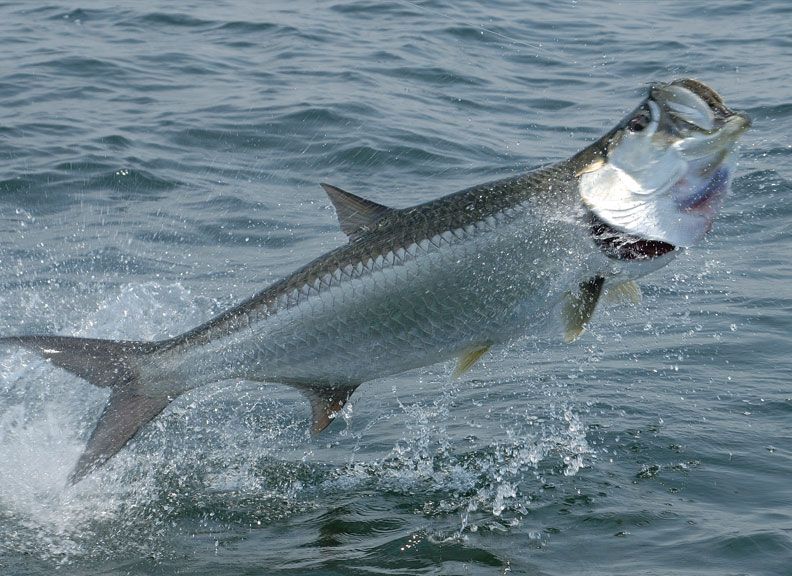
A different kind of northern Gulf Coast tarpon destination is Indian Pass near Port St. Joe, Florida. Indian Pass is not emerald green super-clear water. Instead, it’s a cloudy, super-food rich, powerful flow of water which drains the massive Apalachicola Bay into the Gulf. Tarpon anglers can put a boat in at the public launch ramp at Indian Pass and be in the middle of tarpon in less than ten minutes.
A word of warning- Indian Pass can have very strong current flows, and anglers will need to exercise care when launching and landing a boat- the cross currents can make these operations tricky. But those strong currents are what bring the clouds of pogies, shrimp, crabs and other food sources to the school of tarpons which are waiting there.
Planning Your Tarpon Fishing Trip
The one certain thing about any tarpon fishing trip is that nothing is certain. A particular day might drag on with few or no tarpon showing up to put a bait before. But if patience is shown, quite often a big silver fish will come along to offer some great fun.
Captain Hotze says, “I can’t tell you how many times I’ve had guys on my boat… and halfway through a 6 hour trip they’re like, ‘Ok – can we go get dinner instead?’ So now, all of that is discussed long before we leave the dock! It’s my full time job – so if anyone knows where they’re going to be, what they’re eating, and whatever kind of pattern there is – it’s a guide. I think the best chance you have is with the right person. Think about your job – you do it every day. Would you expect someone else to be better than you?. Plus, our boats are really set up for it. A tower helps a lot, the right electronics, the right gear, and it’s stuff that we already have rigged up and ready. Positioning the boat, a little coaching on the best way to fight a fish (I could discuss that point for hours), and knowing where to go really make a difference. But it’s not necessary. You could go out there on a unicorn floaty and catch one if you get lucky and are in the right spot when they’re coming by. The biggest point of this – is to go try. You can’t catch them, feel that power, get addicted, and have a crazy memory if you don’t try.”
Stay, Savor, and Explore
If you’re making an extended stay with the family, nearby Panama City Beach offers a great “base camp” location. According to Sydney Clifton with Visit Panama City Beach, there are plenty of activities and attractions in Panama City to enjoy beyond just fishing.
“Our tagline is ‘The Real Fun Beach,’” Sydney says. “We have 27 miles of sugar white, sandy beaches, and clear turquoise water. So it’s always fun to be out on the beach. There’s always a large stretch where you can spread out, and it’s really just a great place for all ages and all interests to get away and have a fun time while you’re here.”
In addition to the beaches, Panama City offers numerous shopping and dining opportunities, such as the famous Pier Park.
Says Sydney, “Pier Park is one of our big shopping centers. It houses a lot of department stores, like Dillards, Target, and JC Penney’s, in addition to some smaller boutiques, souvenir shops, and a lot of other fun and different stuff. We also have the Grand IMAX Pier Park 16 theater there, so you can catch any of the latest movies that are coming out. There’s also lots of good food there. One of my personal favorites is Dat Cajun Place. They have some of the best Cajun food around, and their owners are from Louisiana, so you have that authentic feel to all of their food. They have live music every weekend, and it’s just a good place to hang out.”
For outdoor adventures, Clifton recommended exploring the nearby state parks, such as St. Andrew State Park and Camp Helen State Park.
“There’s lots of camping on St. Andrew State Park,” she says. “You can pull in the RVs or just pitch a tent like normal. And you’re right on the water as well. They have tons of trails, and they have a shuttle that goes from the park to Shell Island. It’s an untouched island that I believe is seven miles long. There’s no buildings, restaurants, or anything on it, and it’s just very beautiful and pristine.”
Best Time of Year for Tarpon Fishing
Tarpon fishing on the upper Gulf Coast is a seasonal game. From April until September, the big silver fish are here.
It’s all based on the season and the water temperatures. When the water warms toward 70 degrees, the tarpon come back. When the water cools in fall to below 70 degrees, the tarpon start their return migration down the west coast of Florida toward the Keys where they will winter.
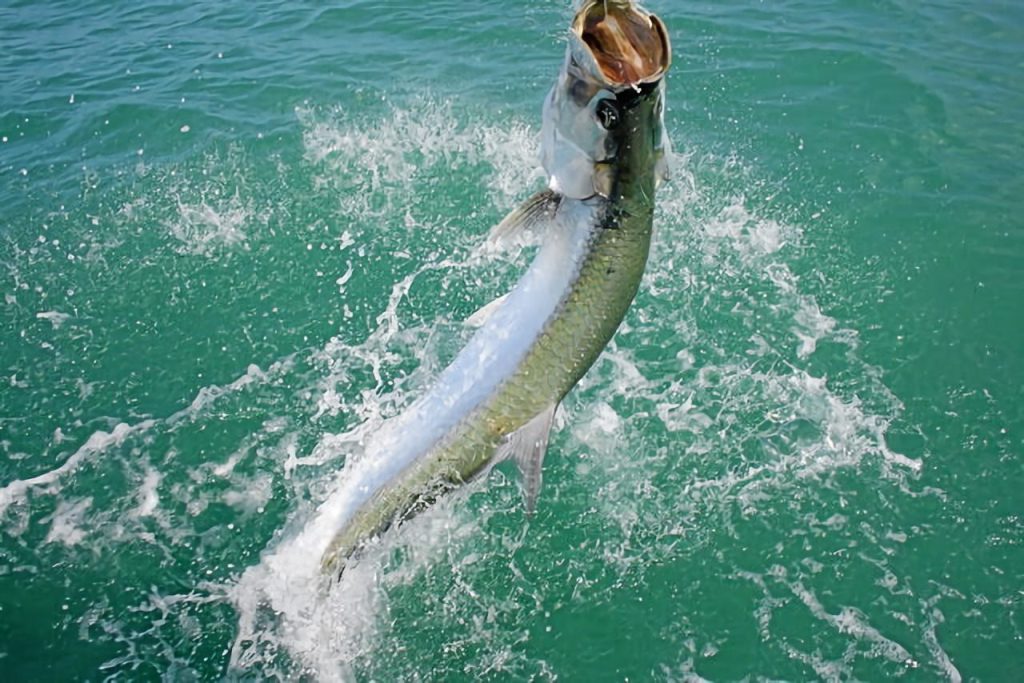
Almost any time in the warm-weather season is a good time to go after tarpon here on the northern Gulf Coast.
Gear and Techniques for Tarpon Fishing
Captain Mark tells us, “I like to fish with an 8000 size spinning reel with 40lb braid and a 60lb fluoro leader. This is a little heavier than I normally use for most fish in our gulf. I like to pair it with an 8′ rod that’s heavy enough to sling 5 oz lures but be light enough to not pull hooks. I think that’s plenty of juice to get a short fight (if you know what you’re doing), and get that thing to the boat for a nice picture and a healthy release. The shorter the fight – the better. Once that fish starts dictating the fight – you’re in trouble and that can last a long time and really hurt the chance of survival for the fish. Respect these fish – they’re awesome.”
For those in need of a good, budget tarpon rig, the Fenwick Elite Inshore Rods and PENN Spinfisher VII Spinning Reel offer an excellent combination of lightweight feel, sensitivity, and powerful stopping power. The Elite Inshore rods feature Powerlux 200 resin and 30-ton graphite, ensuring durability without compromising sensitivity. Paired with the Spinfisher VII, which boasts a fully sealed HT-100 carbon fiber drag system and CNC gear technology, this setup promises long casts and the ability to handle any saltwater fish.
For those looking to step up in price and performance, consider the Fenwick World Class Inshore Rods combined with the PENN Slammer IV Spinning Reel. The World Class rods utilize ultra-premium materials for optimal weight, balance, and sensitivity, while the Slammer IV, packed with features like IPX6 sealing and a redesigned drag system, offers the ultimate in performance and durability. With these setups, anglers can confidently tackle the challenges of tarpon fishing.
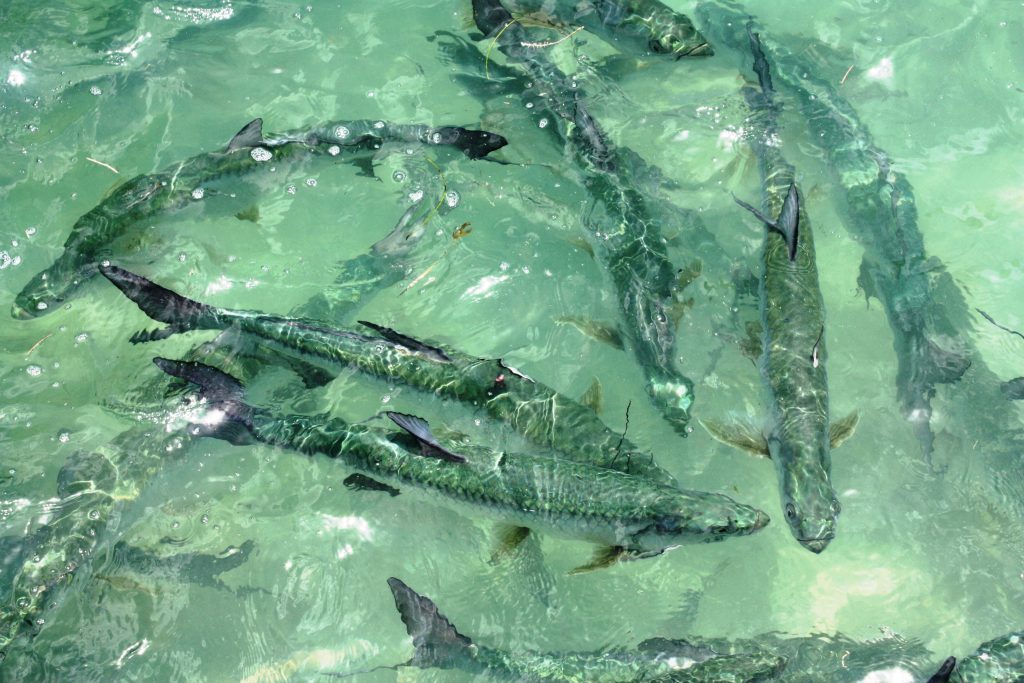
Hotze continues, “ Live bait gives the best chance – rigged usually on a 7/0 Owner mutu light hook (hook sized to bait size). I also really like the Z-Man Ela-Z-tech swim baits on a big G-Eye Jig head. We typically keep a variety of stuff rigged up and ready on the boat. Much like Cobia fishing – sometimes they like the second or third offering better than the first! There’s also some options in case you do spook them and they head offshore into deeper waters – there are definitely some trade secrets to get more hookups!”
Capt. Hotze says, “Side note – there are a lot of techniques and tactics to discuss. How to motor towards them, wait for them, where to cast, how to move the lure, etiquette on other people fishing a school, and most importantly – how to fight/steer/bow to that fish once you hook it. If there’s one easy thing to type – let that fish come to you. Don’t motor towards it, don’t chase those fish, let them come to you. And also – don’t bring your bait towards them. In no natural occurrence does bait swim towards a predator – you want your bait moving away from the fish like it’s scared.”
Final Thoughts
Captain Hotze winds up his advice with this, “If you are contemplating, ‘ Why go fish for tarpon?’ – then clearly you haven’t hooked one before. Imagine seeing them coming, sight casting, and hooking a 100-200lb dinosaur swimming your way, and then line screaming off and that thing dancing and jumping out of the water. Inexperienced anglers may lose a lot of fish, but in my opinion, if you can get it to jump – that’s the most exciting part. Sometimes, I won’t see any all day. That sure sucks – but it makes the bite so much better when we do get one.
One tip – learn from me. If you’re going tarpon fishing – go tarpon fishing. Don’t quit halfway into the trip and go out and catch red snapper. I promise you’ll remember that tarpon more than your red snapper.